
招行金

Search documents
金价真是大变天了!全国金店最新价出炉,现在入手还划算吗?
Sou Hu Cai Jing· 2026-02-17 06:36
Core Insights - The significant price disparity of 481 yuan per gram of gold on Chinese New Year's Eve highlights the complexities of the gold market, with prices varying widely between retail, investment, and recovery channels [1][3][6] Price Discrepancies - On February 16, 2026, the retail price of gold jewelry at Lao Feng Xiang was 1548 yuan per gram, while the price at Chow Tai Fook was 1529 yuan, contrasting sharply with the investment gold bar price from China Merchants Bank at 1121.60 yuan and recovery prices around 1067 yuan [1][3][5] - The price differences stem from various factors, including brand premiums, craftsmanship costs, and the nature of the products being sold, with retail prices incorporating significant additional costs beyond the base gold price [6][8] Market Dynamics - The Shanghai Gold Exchange was closed from February 14 to February 23, 2026, leading to a disconnect between retail prices and the international gold market, where prices remained active [3][14] - The international gold price was stable around 5023 to 5024 USD, while the domestic benchmark price was fixed at 1108.50 yuan per gram, illustrating the lack of synchronization between domestic and international markets during the holiday [3][14] Consumer Choices - For consumers purchasing gold for personal use, such as wedding jewelry, the price difference between retail and wholesale can be significant, with potential savings of up to 8800 yuan by opting for wholesale gold and self-processing [9][11] - For investment purposes, consumers are advised to focus on bank gold bars, which offer a closer alignment to the raw material price and lower associated costs compared to retail jewelry [11][12] Recovery Market - The gold recovery market presents its own challenges, with sellers facing potential exploitation through inaccurate weighing and purity claims, emphasizing the need for consumers to engage with reputable recovery services [15][16] - The recovery price reflects the intrinsic value of gold, devoid of any brand or craftsmanship premiums, highlighting the stark contrast between different market segments [8][16] Market Influences - Central banks globally, including China's, have been increasing their gold reserves, which supports the current high gold prices, alongside market expectations of potential interest rate cuts by the Federal Reserve [14] - The upcoming Chinese New Year traditionally boosts gold demand, although a significant portion of consumers express reluctance to purchase high-priced jewelry due to perceived excessive premiums [14]






银行金条到底怎么买?这些门道早知道早省钱
Sou Hu Cai Jing· 2025-10-24 07:51
Group 1 - The article discusses practical tips for purchasing gold bars from banks, highlighting the differences in gold bar names and prices among various banks [4][8] - It emphasizes that banks do not produce gold bars but act as intermediaries, selling gold bars produced by precious metal manufacturers, with a purity of 99.99% [4] - The current gold price in Shanghai is noted as 942.2 yuan per gram, with specific prices for different banks, such as 956.7 yuan for CCB gold and 966.7 yuan for ABC's gold [4] Group 2 - The purchasing process for gold bars is outlined, indicating that customers can either visit a bank in person or use online banking apps to buy gold [8][10] - For online purchases, customers can select from various categories and complete the transaction easily, with delivery typically handled by a courier service [8] - An alternative method called "accumulated gold" allows customers to buy gold incrementally at real-time prices, which is more budget-friendly for workers [10] Group 3 - The article explains how to liquidate gold bars, noting that they should remain in their original packaging for bank buyback, although some banks do not buy back their own gold bars [11] - It warns about potential scams in the gold buyback process, advising customers to choose reputable stores for selling their gold [11] - The article mentions that some larger stores offer better buyback prices compared to banks, highlighting the importance of selecting trustworthy establishments for transactions [11]
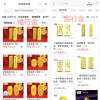
飚至3124美元!黄金回购火爆,释放什么信号?
Zhong Guo Jing Ying Bao· 2025-03-28 08:35
Core Viewpoint - The international gold price has reached a new high, with COMEX gold futures hitting $3124.4 per ounce, leading to a surge in the gold repurchase market as banks accelerate their gold repurchase services [1][2]. Group 1: Gold Price and Market Dynamics - Gold prices are experiencing a rapid increase, with Goldman Sachs raising its 2025 year-end gold price forecast from $3100 to $3300 per ounce [1]. - The supply of recycled gold is on the rise, projected to reach 1370 tons in 2024, accounting for 27.5% of total gold supply, as banks and gold institutions engage in repurchase activities to secure more supply [3]. Group 2: Bank Strategies in Gold Repurchase - Banks are expanding their gold repurchase services, not only for their own branded gold but also for "civilian gold," indicating a shift in strategy to meet customer demand for liquidity [1][2]. - Industrial and Commercial Bank of China (ICBC) has introduced a repurchase service that includes various types of physical gold products, with specific pricing structures based on gold purity [2]. Group 3: Challenges and Market Regulation - The gold repurchase market faces challenges, including technical barriers in gold purity assessment and varying customer acceptance of online repurchase models [2][6]. - There are concerns about market irregularities, such as inaccurate weighing and purity assessments, which can lead to sellers receiving lower prices than expected [5]. Group 4: Competitive Advantages of Banks - Banks possess advantages in the gold repurchase market due to their policy and qualification benefits, credit and funding advantages, and compliance cost benefits, positioning them as market leaders [6]. - The future of the gold repurchase market is expected to be characterized by bank dominance, technology-driven solutions, and regulatory development, with banks acting as stabilizers in the market [6].