日用消费品

Search documents
全球消费4Q25业绩回顾
2026-03-26 13:20
Summary of Key Points from Conference Call Records Industry Overview - **Global Consumer Market**: The fourth quarter of 2025 shows a bifurcated recovery, with emerging markets like India and Southeast Asia driving growth, while the US and Europe face challenges due to high bases and policy changes [1][3] - **Luxury Goods Sector**: The luxury goods industry is experiencing a slowdown, with LVMH's leather goods revenue declining by 3% year-on-year. North America and Japan are weak, while Greater China benefits from consumer return [1][5] - **Automotive Market**: The US automotive market saw a 3.6% decline in sales due to subsidy cancellations, while Europe’s penetration rate for new energy vehicles rose to 34% [1][6] - **Beauty Industry**: The global beauty sector shows resilience, with a year-on-year growth of 8% in mainland China. High-end brands are regaining market share [1][8] - **HVAC Industry**: The commercial HVAC market in North America is booming due to data center demand, while the residential market is struggling with inventory issues [1][11] Core Insights and Arguments - **Consumer Sentiment**: In North America, low-income consumers are struggling with confidence, impacting overall spending. However, segments like luxury goods and energy drinks are performing well [3][4] - **Geopolitical Risks**: The situation in the Middle East could affect European tourism and inflation, while potential US tax refunds and continued recovery in China may act as catalysts for growth in 2026 [2][3] - **Pricing Strategies**: Companies are focusing on cost reduction and brand strategy adjustments to cope with uncertainties like tariffs and raw material price fluctuations. Strong pricing power and innovation will provide competitive advantages [4][10] Important but Overlooked Content - **Luxury Market Dynamics**: The luxury market is seeing a shift from tourist spending to local consumption, particularly in Greater China and South Korea, which may continue into 2026 [5][6] - **Energy Drinks Performance**: The energy drink segment is thriving, with brands like Monster and Celsius significantly outperforming the broader market [1][16] - **Household HVAC Market Outlook**: Despite a significant drop in sales, inventory levels in the North American residential HVAC market are returning to normal, with expectations of a potential recovery in the second half of 2026 [12][13] - **Food and Beverage Sector**: The food and beverage industry is facing high prices that suppress sales, with notable performance in energy drinks and regional disparities in consumer demand [16][17] Regional Market Insights - **China**: The beauty market in China is recovering, with a year-on-year growth of 8% in Q4 2025, driven by improved consumer sentiment and promotional activities [8][9] - **North America**: The beverage sector is performing better than food, with Coca-Cola achieving volume and price growth, while snack categories face pressure from low-income consumers [16][17] - **Emerging Markets**: India and Southeast Asia are highlighted as strong growth areas, with significant contributions to overall market performance [3][16] Future Outlook - **2026 Projections**: The global beauty industry is expected to grow at a normalized rate of 4-5%, with emerging markets likely to outperform developed regions. The US market may see continued improvement in mass-market beauty products [10][18] - **Consumer Behavior Trends**: The disparity in consumer spending power across income levels in the US is likely to persist, affecting overall demand for consumer goods [18]
800%的暴涨!俄罗斯疯狂抛售黄金,中国照单全收,这盘棋你看懂了吗?
Sou Hu Cai Jing· 2026-02-16 16:53
Core Viewpoint - The article discusses the significant increase in China's import of physical gold from Russia, which reached 25.3 tons valued at $3.29 billion, marking an 800% increase compared to the same period last year. This transaction reflects a shift in the global financial landscape, where gold is being used as a medium of exchange to bypass the dollar system, particularly in the context of sanctions against Russia [2][5][9]. Group 1: Russia's Gold Export - Russia is selling gold due to financial constraints caused by Western sanctions, which froze over $300 billion of its foreign reserves and excluded it from the SWIFT system [5][9]. - The 25.3 tons of gold sold to China represents less than 1% of Russia's total gold reserves of over 2,300 tons, indicating that this is a manageable liquidity release for Russia [5][9]. - The transaction is structured so that Russia receives renminbi in exchange for gold, which it then uses to purchase essential goods from China, such as automotive parts and industrial equipment [7][8]. Group 2: China's Strategic Move - China's gold reserves have been increasing, reaching 74.19 million ounces, but still represent only 9.7% of its total foreign reserves, which is significantly lower than the global average of 15% [11][12]. - The purchase of gold is not for speculative purposes but is a strategic move to enhance the stability of China's financial system amid rising geopolitical tensions and the risks associated with holding dollar-denominated assets [15][16]. - This transaction allows China to secure hard assets that are not reliant on any country's credit, providing a form of insurance against unpredictable external environments [13][14]. Group 3: New Settlement Logic - The transaction exemplifies a new settlement logic where gold serves as both a value reserve and a credit bridge, facilitating trade without relying on the dollar [18][20]. - A new triangular structure is emerging in international trade, where resource-rich countries provide commodities, manufacturing countries supply industrial goods, and financial infrastructure is developed by countries like China [19][20]. - This model is being replicated by other nations, indicating a structural shift in the global financial system, where gold is gaining prominence as a safe haven, potentially surpassing U.S. Treasury bonds in value [21][23]. Group 4: Implications for the Global Financial System - The transaction between China and Russia is a response to Western financial sanctions, demonstrating that countries with resources and partnerships can operate outside the dollar system [23][25]. - The article suggests that the traditional credit system is facing a trust crisis, prompting a return to tangible assets like gold, which are seen as more reliable in uncertain times [25][27]. - The actions of China and Russia are characterized as pragmatic rather than retrogressive, highlighting the importance of having transaction options that do not depend on the goodwill of adversarial parties [27].


联合利华:第四季度总收入为126亿欧元
Jin Rong Jie· 2026-02-12 07:29
Group 1 - The core revenue for Unilever in the fourth quarter was €12.6 billion, which fell short of market expectations of €12.92 billion [1] - The projected basic earnings per share for 2025 is €3.08 [1] - The total revenue forecast for 2025 is €50.5 billion, below the market expectation of €51.3 billion [1] Group 2 - The expected basic operating profit for 2025 is €10.08 billion, compared to the market forecast of €10.3 billion [1]

额敏县农资“护春耕”、消费“保新春”市场监管在行动
Zhong Guo Shi Pin Wang· 2026-02-11 11:39
Core Viewpoint - The article emphasizes the importance of ensuring the quality of agricultural materials and consumer goods ahead of the Spring Festival, aiming to protect the safety of rural consumers and enhance their awareness of product quality and rights protection [1][2]. Group 1: Agricultural Materials Quality Assurance - The market supervision administration in Emin County initiated the "Entering Thousands of Enterprises to Assist Tens of Thousands of Households" campaign to promote quality safety of agricultural materials [1]. - The campaign focused on educating farmers about quality identification techniques and standards for purchasing agricultural products such as agricultural film, drip irrigation belts, and fertilizers [1]. - Key points highlighted include checking product certificates, testing reports, production dates, and trademarks to prevent the purchase of unqualified or substandard agricultural materials [1]. Group 2: Consumer Goods Safety Awareness - The initiative also addressed consumer goods frequently purchased during the Spring Festival, such as toys and power banks, emphasizing the importance of 3C certification, safety warning labels, and quality assurance [1]. - Parents were advised to be cautious of toys without safety labels and low-quality materials, which pose potential risks [1]. - The campaign included distributing promotional materials, face-to-face Q&A sessions, and case studies to provide comprehensive consumer guidance [1]. Group 3: Consumer Rights Protection - The program aimed to enhance the rights protection capabilities of rural consumers, encouraging them to retain shopping receipts and report quality issues or disputes through the 12315 complaint hotline [1][2]. - The overall goal was to create a safe, reliable, and orderly market environment for rural consumers, ensuring a joyful Spring Festival and smooth agricultural activities for farmers [2].
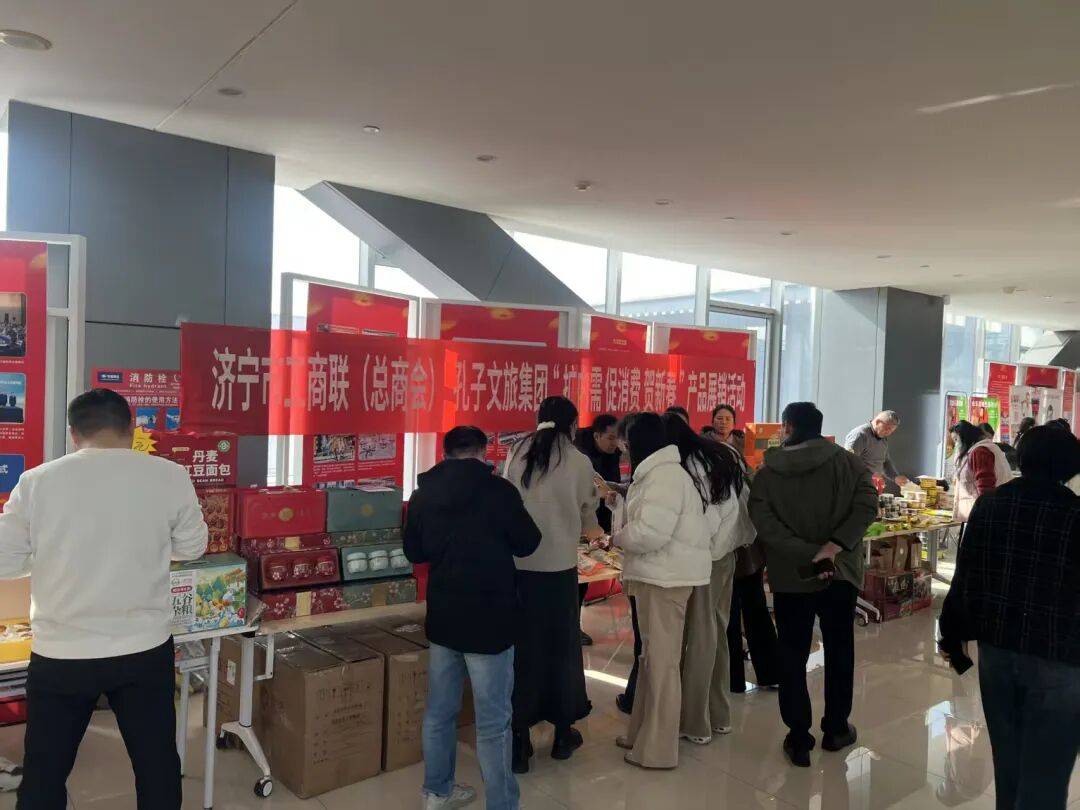
市工商联(总商会)“扩内需 促消费 贺新春”产品展销活动成功举办
Sou Hu Cai Jing· 2026-02-10 13:03
Group 1 - The event "Expand Domestic Demand, Promote Consumption, Celebrate the Spring Festival" was held from February 2 to 4, organized by the Municipal Federation of Industry and Commerce in collaboration with Jining Confucius Cultural Tourism Group to stimulate consumer potential and broaden sales channels for private enterprises [1] - The event focused on the characteristics of Spring Festival consumption, featuring high-quality products from member enterprises of the Municipal Federation of Industry and Commerce, including specialty agricultural products, cultural and creative products, and daily consumer goods, to meet the diverse purchasing and cultural consumption needs during the Spring Festival [3] - The event attracted a large number of visitors, creating a lively atmosphere and receiving widespread acclaim, indicating strong consumer interest and engagement [3] Group 2 - The Municipal Federation of Industry and Commerce plans to further establish a platform for production and sales connections, innovate the format of exhibition and sales activities, and enrich the content of events to enhance the influence of local products and support the high-quality development of the private economy [4] - The initiative aims to inject more momentum into the economic and social development of the city by empowering consumption [4]
海南5家日用消费品免税店即将开业
Jing Ji Guan Cha Wang· 2026-02-06 16:26
Core Viewpoint - Hainan Province is set to open its first five duty-free stores for daily consumer goods on February 11, with a focus on enhancing local consumption and providing tax benefits to residents [1] Group 1: Duty-Free Store Launch - The first five duty-free stores in Hainan will officially open on February 11 [1] - The initiative aims to boost local consumption and cater to the needs of Hainan residents [1] Group 2: Tax Exemption Details - Each individual is allowed a maximum annual tax-free purchase amount of 10,000 RMB [1] - The product list includes 202 tax categories, focusing on frequently purchased, moderately priced, and consumable fast-moving consumer goods [1] Group 3: Target Audience - The duty-free policy is applicable to Hainan residents, specifically Chinese citizens holding Hainan ID cards, residence permits, or social security cards, as well as foreign individuals living and working in Hainan with valid residency documents [1]
海南封关看变化:日用消费品“零关税”政策三个“拓展”特点凸显
Zhong Guo Xin Wen Wang· 2026-02-06 08:04
Core Viewpoint - The Hainan Free Trade Port's "zero tariff" policy for imported consumer goods aims to enhance the living standards of local residents by expanding the scope of tax exemptions and making essential daily goods more accessible [1] Group 1: Expansion of Zero Tariff Policy - The zero tariff policy has broadened the range of goods eligible for tax exemption, shifting focus from production materials to daily consumer goods, thereby creating a policy loop between production and daily life [1] - The beneficiaries of the zero tariff policy have expanded from primarily enterprises to a wider group of local residents, transforming the policy from industrial empowerment to a more inclusive approach that directly benefits the public [1] - The policy has also expanded the scenarios for tax-free consumption, moving beyond specific situations like duty-free shopping for travelers to include everyday shopping for local residents, highlighting the policy's focus on improving the quality of life [1]
日用消费品“零关税”哪些人能买?权威解读来了
Jing Ji Guan Cha Wang· 2026-02-06 07:34
Core Viewpoint - The introduction of the "zero tariff" policy for daily consumer goods in Hainan Free Trade Port is a significant step in enhancing the tax system and improving the living standards of residents, marking the first incremental tax policy since the full closure of the port in December 2025 [1][2]. Policy Overview - The "zero tariff" policy allows residents to purchase imported goods at designated locations without paying import duties, value-added tax, or consumption tax, effectively reducing tax costs by approximately 20% [2]. - The policy aims to lower living costs and meet diverse shopping needs, ensuring that the benefits of the Free Trade Port are more accessible to local residents [2]. Beneficiary Scope - The policy covers a wide range of beneficiaries, including local residents with Hainan ID cards, residence permits, or social security cards, as well as foreign individuals working and living in Hainan [3]. - This inclusivity reflects an open and welcoming stance towards both local and international talents, allowing more individuals to benefit from the policy [3]. Tax Exemption Limits - Each resident is allowed a tax-free purchase limit of up to 10,000 RMB per year, which is designed based on average annual spending on daily consumer goods [3]. - This limit is structured to be flexible, allowing families to benefit significantly, with a three-person household having a total exemption of 30,000 RMB annually [3]. Product List and Management - The "zero tariff" product list includes 202 essential items that cater to daily needs, such as food, household goods, and baby products, with plans for dynamic adjustments to include more items in the future [4]. - The policy establishes clear guidelines for the management and approval of operating entities to ensure smooth implementation [4]. Risk Management - The policy includes measures to prevent resale of exempted goods and establishes a comprehensive governance framework to ensure safety and control over the policy's execution [4]. - The focus is on personal use of goods, with strict regulations to mitigate risks associated with the policy [4]. Key Features - The policy expands the scope of "zero tariff" from production materials to daily consumer goods, creating a comprehensive policy loop that connects production and daily life [5]. - It broadens the beneficiary base from primarily enterprises to a wider range of residents, transforming the policy focus from industrial empowerment to public welfare [5]. - The policy extends the application of tax exemptions from specific scenarios like tourism to everyday shopping for residents, emphasizing the policy's orientation towards improving living standards [5].
继续“国补”,支持以旧换新,但专家说民众消费意愿弱?
Sou Hu Cai Jing· 2026-01-31 11:42
Core Viewpoint - The Chinese government is committed to promoting domestic consumption through policies such as subsidies and the "two new" policy, which focuses on large-scale equipment updates and consumer goods exchange programs [1][4][7] Group 1: Policy Implementation - The "two new" policy aims to encourage both enterprises and residents to upgrade equipment and exchange old consumer goods for new ones with government subsidies [4] - The Ministry of Finance has confirmed ongoing support for consumer goods exchange programs, emphasizing the importance of stable employment and increased income to boost consumption [4][7] - The government plans to continue implementing special consumption initiatives and adjust subsidy standards to enhance domestic consumption capacity [7] Group 2: Economic Context - China is the world's largest producer of daily consumer goods, making the promotion of domestic consumption crucial for healthy economic development [7] - There is a positive correlation between disposable income levels and consumption patterns; stagnant or declining disposable income may lead to conservative spending behaviors [7][10] - Experts suggest that while Chinese residents have high consumption capacity, their willingness to spend is lower than the international average, indicating a need to enhance consumer confidence [10] Group 3: Consumer Behavior Insights - Chinese citizens have the highest savings rate globally, with their total savings now accounting for 30% of the world's total, up from 5% three decades ago [13] - Historical comparisons indicate that economic crises and rising living costs contribute to a cautious consumer mindset, leading to higher savings and lower discretionary spending [13][14] - Addressing fundamental issues such as housing, childcare, and retirement could significantly improve consumer willingness to spend [14]
2025年第四季度全球企业十大并购案:金佰利收购科赴、阿克苏诺贝尔与艾仕得合并
Sou Hu Cai Jing· 2025-12-29 03:45
Group 1: Overview of Mergers and Acquisitions - The fourth quarter of 2025 saw a surge in global mergers and acquisitions, with significant deals exceeding $40 billion in sectors such as media, entertainment, data centers, and consumer goods [1] - A total of ten representative large-scale mergers and acquisitions were highlighted, providing insights into the trends and activities in the market [1] Group 2: Notable Mergers and Acquisitions - A consortium led by BlackRock, Nvidia, and Microsoft is set to acquire Aligned DataCenters for approximately $40 billion, aiming to expand next-generation cloud and AI infrastructure [2] - Airbus, Leonardo, and Thales signed a memorandum to merge their space businesses into a new company expected to generate annual revenues of about €6.5 billion, with a workforce of 25,000 in Europe [4] - Novartis agreed to acquire Avidity Biosciences for around $12 billion to enhance its portfolio for rare muscle diseases [7] - Kimberly-Clark will acquire Kenvue for approximately $48.7 billion, creating a major consumer health products company with projected annual net revenues of about $32 billion by 2025 [9] - Pfizer has successfully acquired Metsera, a weight-loss drug startup, in a deal valued at over $10 billion [10] - AkzoNobel plans to merge with Axalta Coating Systems, resulting in a combined company valued at $25 billion, with expected annual revenues of $17 billion [12] - Abbott Laboratories is acquiring Exact Sciences for $23 billion, marking its largest acquisition in nearly a decade [13] - Netflix agreed to acquire Warner Bros. Discovery's TV and film production and streaming assets for an enterprise value of $82.7 billion [14] - IBM will acquire Confluent for $11 billion to strengthen its cloud computing offerings [17] - ByteDance has established a new joint venture in the U.S. for TikTok, with a consortium of investors holding 50% of the shares [20] Group 3: Completed Mergers and Acquisitions - Lowe's completed its acquisition of Foundation Building Materials, marking its largest acquisition to date [21] - Omnicom Group's acquisition of Interpublic Group was approved by the EU, making it the largest marketing communications group globally with revenues exceeding $25 billion [21] - Mars Incorporated completed its acquisition of Kellanova for a total consideration of $35.9 billion [21] - XRG completed its acquisition of Covestro, marking a significant step in its goal to become one of the top three chemical investment companies globally [22] - Boeing and Airbus completed their acquisition of Spirit AeroSystems' assets, integrating thousands of employees into their operations [22] - Geely Automobile announced its merger with Zeekr, with a total consideration of approximately $2.399 billion [23] Group 4: Failed Mergers and Acquisitions - BHP Group abandoned its acquisition proposal for Anglo American, focusing on its existing asset portfolio [25] - Performance Food and US Foods terminated their merger discussions, which would have created a significant competitor in the food distribution industry [25]