
政策性贷款

Search documents
钱从哪来?2026 地方项目资金拼盘,避开融资坑
Sou Hu Cai Jing· 2026-01-02 02:22
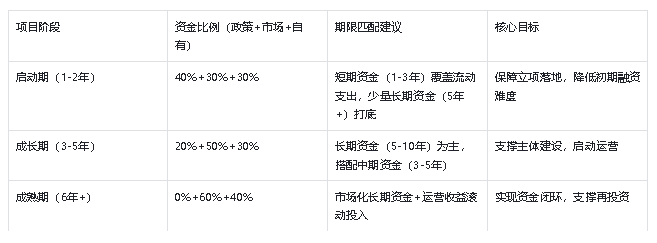
Core Viewpoint - In 2026, local project construction will enter a "dual hard constraint" era, where compliance cannot be compromised and benefits must be preserved. The focus has shifted from "Are there projects?" to "Where does the money come from?" [1] Funding Challenges - Relying solely on fiscal resources is unsustainable due to increasing revenue-expenditure contradictions and fluctuating land income [2] - Special bonds alone are insufficient due to intense competition for quotas and limited usage scope [3] - Pure market financing is risky and costly, leading to hesitance in its use [4] Solution: Funding Combination - The core solution to the funding dilemma is a "funding combination," which involves a multi-faceted approach that integrates policy funds, market funds, and self-owned funds to create a virtuous cycle of financing, construction, operation, debt repayment, and reinvestment [4][6] Value of Funding Combination - The essence of funding combination is to address funding challenges throughout the project lifecycle while maintaining compliance and efficiency [5][6] - It helps cover project lifecycle gaps, reduce costs, optimize risks, and activate vitality through diverse partnerships [7][9][11][14] Practical Implementation - The funding combination must be executed in two steps: determining funding ratios based on project stages and optimizing term mismatches to avoid short-term loans for long-term needs [16][18] - A structured approach is necessary, with specific funding ratios and term suggestions for different project phases [21] Project Size Variations - Different funding strategies are required for small, medium, and large projects, with distinct funding compositions and operational focuses [22][30][38] - Small projects (under 50 million) focus on policy subsidies and small loans, while medium projects (50 million to 500 million) rely on special bonds and bank loans. Large projects (over 500 million) utilize a mix of special bonds, social capital, and policy financial tools [25][33][41] Summary of Core Principles - The key principles for financing local projects in 2026 include not putting all eggs in one basket, combining policy funds effectively, deeply binding social capital, and revitalizing existing assets [43][45] - Precise calculations and adaptable funding channels are essential to ensure compliance and avoid hidden debts [46]

亚行批准5亿美元贷款支持菲律宾发展蓝色经济
Zhong Guo Xin Wen Wang· 2025-12-11 04:22
Core Viewpoint - The Asian Development Bank (ADB) has approved a $500 million policy loan to support the sustainable management of the marine ecosystem in the Philippines, aiming to develop a resilient and low-carbon blue economy [1] Group 1: Loan Details - ADB's loan will focus on enhancing the ecological health and adaptive capacity of coastal areas in the Philippines [1] - The funding will also strengthen the value chain for plastic and solid waste management, improving productivity and diversity in the marine industry [1] Group 2: Economic Impact - Over half of the Philippine population relies on marine resources for food and livelihood, highlighting the significant potential of the blue economy for inclusive, resilient, and low-carbon development [1] - According to official statistics, the blue economy-related industries in the Philippines are projected to reach 1.01 trillion pesos (approximately $170.9 billion) in 2024, accounting for about 3.8% of the country's GDP [1] Group 3: Environmental Challenges - The marine ecosystem in the Philippines faces threats from plastic and solid waste pollution, as well as exacerbated extreme weather conditions [1]
亚行批准4亿美元贷款支持菲律宾优化营商环境
Zhong Guo Xin Wen Wang· 2025-12-10 12:24
Core Viewpoint - The Asian Development Bank (ADB) has approved a policy loan of $400 million to support the Philippines in improving its business environment and enhancing investment attractiveness [1] Group 1: Loan Purpose and Impact - The loan aims to assist the Philippine government in reforming laws and regulatory frameworks related to business, simplifying licensing and investment approval processes to facilitate easier establishment and operation of enterprises [1] - ADB emphasizes the importance of the private sector as a key driver of economic growth and job creation in the Philippines, indicating ongoing support for a more competitive institutional environment and a vibrant business ecosystem [1] Group 2: Digital and Sectoral Development - The funding will support the development of digital platforms, such as the Philippine Business Regulations Information System (PBRIS), to provide investors with clear and reliable regulatory information and online guidance [1] - The investment will also focus on key sectors such as renewable energy and digital infrastructure, contributing to green transformation and reducing greenhouse gas emissions [1]
亚行提供5000万美元贷款支持柬埔寨加强金融体系建设
Zhong Guo Xin Wen Wang· 2025-11-24 13:50
Group 1 - The Asian Development Bank (ADB) has approved a $50 million policy loan to support Cambodia in strengthening its financial system [1] - The funding will aid the development of banks and non-bank financial institutions in Cambodia, enhancing digital financial infrastructure and sustainable financial capabilities [1] - This initiative is part of ADB's first phase of the "Inclusive and Sustainable Financial Development Program" for Cambodia [1] Group 2 - The first phase of the program aims to improve the financial regulatory environment, enhance financial stability, expand market depth, and strengthen consumer protection [1] - It will also involve the formulation of financial strategic planning, regulatory frameworks for digital assets and cryptocurrencies, and the promotion of financial education [1] - A green finance working group will be established to enhance the sustainable financial system, along with guidelines for corporate sustainability information and a sovereign sustainable bond issuance mechanism [1]
我省多措并举推动“老旧小木”渔船整改
Liao Ning Ri Bao· 2025-11-15 01:02
Core Viewpoint - The provincial government is implementing measures to enhance fishing safety by focusing on the renovation of old wooden fishing boats, aiming for comprehensive upgrades by 2028 to improve safety standards and operational efficiency [1][2]. Group 1: Policy and Implementation - The province emphasizes a "market-oriented, government-guided" approach, with a goal to fully renovate old wooden fishing boats by 2028, enhancing safety and modernizing equipment [1]. - Financial incentives include a 30% subsidy on the cost of boat renovations, with a tiered reduction policy for interest and fees to encourage early participation from fishermen [1]. Group 2: Financial Support - A comprehensive financial support system is being established, including policy loans, personalized commercial loans, insurance, and guarantees, with the aim of providing extensive financial backing for boat renovations [2]. - Current loan rates for agricultural development have been reduced to 2.85%, with efforts to extend loan terms up to 20 years, while other banks offer loans with rates around 3% for terms up to 10 years [2]. Group 3: Standardization and Cost Reduction - The province is actively promoting the approval of standardized boat types, with 11 types already passing initial reviews, focusing on safety, functionality, and ecological management [2]. - To reduce production costs, the provincial authorities are collaborating with local steel companies to facilitate joint procurement of materials for boat construction [2]. Group 4: Project Progress - As of November 6, two fishing boat renovation projects in Dalian, with a total investment of 8.9 billion, have secured 7 billion in loans, aiming to renovate 892 boats and construct 372 new ones [3]. - The provincial government plans to continue advancing standardization, financial policy implementation, and approval processes, deploying teams to address fiscal policy and subsidy issues on-site [3].
农发行吴江区支行科创学院项目发放1515万元贷款助力服务长三角一体化发展
Jiang Nan Shi Bao· 2025-08-05 02:56
Core Viewpoint - The Agricultural Development Bank of China (ADBC) Wujiang Branch has successfully issued a policy loan of 15.15 million yuan to the new development construction company of the Yangtze River Delta Integration Demonstration Zone for the Sci-Tech Park project, providing strong financial support for regional development [1] Financial Support - The loan is primarily aimed at the construction of supporting facilities for the Sci-Tech Park, with the core goal of enhancing the level of agricultural technology [1] - The funding will facilitate the improvement of rural infrastructure and promote agricultural quality enhancement and efficiency [1] Strategic Alignment - ADBC Wujiang Branch is actively implementing the national strategy for the integration of the Yangtze River Delta by optimizing credit processes and accurately matching project needs [1] - The bank ensures efficient fund allocation to support the deep integration of agricultural technology and production [1] Future Plans - The bank will continue to leverage its policy financial advantages, focusing on sustainable agricultural development and rural revitalization [1] - ADBC aims to inject more financial resources into the high-quality development of the Yangtze River Delta integration [1]