敦煌壁画

Search documents
巍巍莫高窟 一眼望千年
Xin Lang Cai Jing· 2025-12-19 16:22
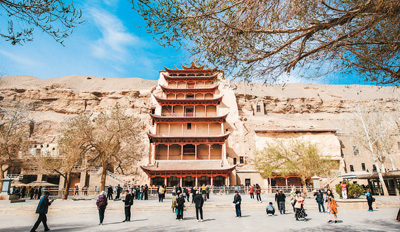
Core Viewpoint - The article highlights the historical and cultural significance of Dunhuang and the Silk Road, emphasizing its role as a melting pot of civilizations and a treasure trove of cultural heritage [3][4][5]. Group 1: Historical Significance - Gansu, where Dunhuang is located, is a crucial birthplace of Chinese civilization and has been a significant area for cultural exchange since the Han Dynasty [3]. - The Silk Road, which traverses Gansu, served as an international trade route connecting the East and West, facilitating cultural and commercial interactions [3][4]. Group 2: Cultural Heritage - Dunhuang is home to over 100 grottoes, including the famous Mogao Caves, which are recognized as a vital part of human cultural heritage [6]. - The Mogao Caves contain 492 existing caves, 3,390 sculptures, and 45,000 square meters of murals, showcasing a blend of artistic styles influenced by various cultures [7]. Group 3: Artistic Contributions - The murals and sculptures in the Mogao Caves reflect the historical evolution of Chinese art, incorporating elements from Iranian, Indian, and Greek artistic traditions [7][9]. - The "Nine Color Deer" mural is a notable example of Tang Dynasty art, illustrating the rich storytelling tradition and cultural values of the time [8][9]. Group 4: Modern Relevance - Dunhuang continues to attract numerous visitors, including scholars and artists, who are drawn to its historical and artistic significance [10]. - The site remains a focal point for the study of ancient Chinese art and culture, contributing to the ongoing discourse in "Dunhuang Studies" [8].

敦煌缘何成为创新土壤(艺坛走笔)
Ren Min Ri Bao· 2025-05-24 21:52
Core Viewpoint - The vitality of cultural arts lies in innovation and creation, exemplified by the enduring legacy and continuous evolution of Dunhuang art, which has become a significant cultural symbol of China [1][5]. Group 1: Historical Context and Development - Over 80 years, generations of artists have followed in the footsteps of Chang Shuhong, integrating Dunhuang aesthetics into their work, leading to significant contributions in various art forms [2]. - The establishment of the Dunhuang Research Institute in 1944 marked a pivotal moment in the preservation and promotion of Dunhuang art, with Chang Shuhong advocating for the study and creation of new art styles rooted in Dunhuang traditions [1][2]. Group 2: Modern Innovations and Applications - The application of digital technology has become a focal point for the creative transformation of traditional Chinese culture, with numerous exhibitions showcasing Dunhuang art through high-precision digital reproductions and immersive experiences [3]. - Recent exhibitions, such as "Like This Mogao," highlight the use of multimedia to enhance the presentation of Dunhuang art, making it accessible to a global audience [3]. Group 3: Contemporary Artistic Practices - Contemporary artists, including Chang Shuhong's daughter, Chang Shana, have successfully incorporated Dunhuang elements into modern architecture and design, reflecting the ongoing relevance of Dunhuang aesthetics [4]. - The collaboration between fashion designers and the Dunhuang Research Institute has led to innovative clothing designs that blend traditional aesthetics with modern sensibilities, showcasing the versatility of Dunhuang art in various cultural contexts [4]. Group 4: Insights and Future Directions - The ongoing practices surrounding Dunhuang aesthetics provide valuable insights into the importance of understanding and applying Chinese styles and spirit in cultural and artistic innovations aimed at future audiences [5].
浓浓敦煌情 编织新故事(我在中国·行耕记)
Ren Min Ri Bao Hai Wai Ban· 2025-05-02 22:01
Core Viewpoint - The article highlights the efforts of international scholars, particularly American Sinologist Shi Hanwen and Russian teacher Olya, in studying and promoting Dunhuang art, showcasing the cultural exchange and collaboration between China and the world [2][3][6]. Group 1: Cultural Exchange and Research - Shi Hanwen's research reveals similarities between Dunhuang murals and Da Vinci's works, indicating cultural exchanges along the Silk Road [3]. - Olya, a Russian scholar, has dedicated years to studying and promoting Dunhuang culture, emphasizing the importance of language as a medium for cultural exchange [8][11]. - Both scholars have engaged in various educational activities, including lectures and workshops, to share Dunhuang's rich cultural heritage with international audiences [6][11]. Group 2: Personal Journeys and Contributions - Shi Hanwen's journey began in 1987 when he first visited Dunhuang, leading to a long-term commitment to studying its culture [4]. - Olya's connection to Dunhuang started in 2007, and she has since become a significant figure in promoting its art and culture in China and abroad [8][9]. - Both scholars have received recognition for their contributions, with Olya being awarded the "Dunhuang Prize" and recognized as a prominent figure in cultural exchange [8][9]. Group 3: Future Endeavors - Shi Hanwen is set to collaborate on an international documentary produced by George Lucas, aimed at showcasing the significance of Dunhuang in global narrative art [7]. - Olya continues to build academic exchange platforms and promote cooperation between Chinese and international students, enhancing cultural understanding [11].