新一代电子信息产品

Search documents
上海实施先进制造业转型升级三年行动方案
Ke Ji Ri Bao· 2026-02-12 02:01
Core Viewpoint - The "Three-Year Action Plan for Supporting the Transformation and Upgrading of Advanced Manufacturing in Shanghai (2026-2028)" aims to accelerate the establishment of a modern industrial system centered on advanced manufacturing, promoting green and intelligent transformation across various enterprises in Shanghai [1][2]. Group 1: Action Plan Overview - The action plan includes four major actions and 17 measures to enhance the development of advanced manufacturing [1]. - By 2028, Shanghai aims to add 100 manufacturing enterprises with an annual output value exceeding 1 billion yuan and increase the number of large-scale industrial enterprises in the supply chain by 500 [1]. Group 2: Industry Development Paths - The plan outlines three development paths: - For traditional advantageous industries, it emphasizes "optimization and enhancement" [1]. - For leading industries, it promotes "strategic guidance" [1]. - For key and emerging industries, it focuses on "expansion and development" [1]. Group 3: Innovation and Resource Support - The action plan supports enterprises in high-level R&D and high-value product transformation, addressing industry pain points and overcoming key core technologies [2]. - It encourages full-process upgrades, AI integration in manufacturing, and carbon footprint management to achieve quality and efficiency improvements [2]. Group 4: Financial Incentives - The plan provides substantial financial support for R&D, including: - A one-time subsidy of 10 million yuan for enterprises with annual R&D expenditures of 100 million yuan or more [2]. - A one-time subsidy of 5 million yuan for those spending between 50 million and 100 million yuan [2]. - A one-time subsidy of 2 million yuan for R&D expenditures between 1 million and 5 million yuan [2]. Group 5: Additional Financial Support Measures - The plan includes subsidies for fixed asset investment loans related to technology upgrades, with a maximum of 20 million yuan [3]. - Companies upgrading energy-saving processes and equipment can receive rewards based on coal consumption, up to 10 million yuan [3]. - A one-time reward of 200,000 yuan is available for enterprises recognized as national green factories [3].
直辖市重大调整!一个史无前例的新“省会”,诞生了
商业洞察· 2025-11-19 09:55
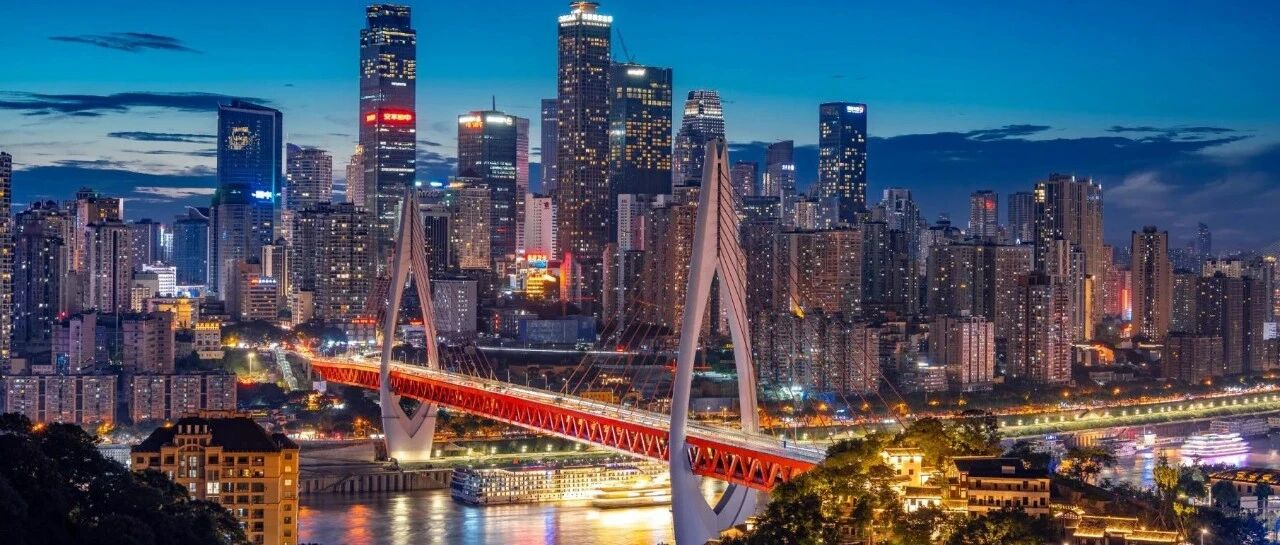
Core Viewpoint - The article discusses the significant administrative restructuring in Chongqing, where the two existing districts, Jiangbei and Yubei, have been merged into the newly established Liangjiang New Area, marking a transition from an economic function zone to an official administrative district [5][6][9]. Group 1: Administrative Restructuring - On November 6, Chongqing announced a major administrative restructuring approved by the State Council, merging Jiangbei and Yubei districts into Liangjiang New Area, reducing the total number of districts from 38 to 37 [6]. - Liangjiang New Area, previously an economic function zone, now serves as a formal administrative district, addressing issues of management overlap and fragmentation that hinder regional development [9][10]. - The new Liangjiang New Area covers approximately 1,360 square kilometers and has a population of about 3.52 million, with a projected GDP exceeding 600 billion yuan, positioning it as the largest economic and population center in the central and western regions of China [10]. Group 2: Economic Significance - The restructuring is seen as a strategic move to enhance Chongqing's role as a "strong provincial capital," similar to Chengdu, which has seen significant economic growth and population influx due to its provincial capital status [12][13]. - Liangjiang New Area contributes around 20% of Chongqing's GDP while occupying less than 2% of the city's area, highlighting its importance as the economic heart of the city [14][15]. - The area is home to key infrastructure such as Jiangbei International Airport and Guoyuan Port, making it a central hub for Chongqing's development as an inland open gateway [15]. Group 3: Industrial Development - Chongqing's manufacturing sector is robust, producing nearly 50% of the world's laptops and ranking second in automotive production in China, with significant contributions from companies like Changan and Seres [16][17]. - The city is implementing a "33618" modern manufacturing cluster system, focusing on three trillion-level leading industries, three five-hundred billion-level supporting industries, six thousand billion-level characteristic industries, and eighteen emerging industries [18]. - Liangjiang New Area is pivotal in this strategy, housing two of the three leading trillion-level industries: intelligent connected new energy vehicles and next-generation electronic information manufacturing [20]. Group 4: Automotive and Electronics Industry - As the heart of Chongqing's automotive industry, Liangjiang New Area is expected to produce 1.25 million vehicles in 2024, with nearly 580,000 of those being new energy vehicles, accounting for about 58% of the city's total output [21][22]. - The area is also a hub for the new generation of electronic information manufacturing, with a complete industrial chain from display panels to smart terminals, driven by companies like BOE and Unisoc [26][28]. - The integration of the automotive and electronics sectors is anticipated to create a synergistic effect, particularly in the development of intelligent connected vehicles, which is projected to become a trillion-yuan market by 2025 [29][30].