新疆香梨

Search documents
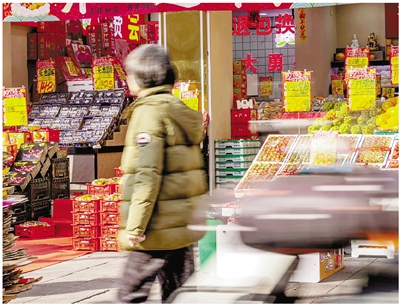
水果市场有杆“秤”
Hang Zhou Ri Bao· 2026-02-14 03:19
Core Insights - The article highlights the vibrant fruit market in Hangzhou during the pre-Spring Festival period, emphasizing the importance of freshness and quality in consumer choices [3][6][8] Group 1: Market Dynamics - Fruit stores are well-stocked and attract customers with a variety of fresh fruits, creating a warm shopping environment [3][4] - Consumers are increasingly discerning, using their own "value scales" to assess the quality and freshness of fruits before making purchases [4][6] - The price of cherries has become more affordable this year, with wholesale prices dropping by nearly 100 yuan per box compared to last year, leading to lower retail prices [6][7] Group 2: Consumer Behavior - Shoppers are actively engaged in selecting fruits, often checking for quality and freshness, indicating a strong consumer awareness [4][5] - The demand for seasonal fruits like cherries and citrus is high during the festival, with many customers willing to travel long distances for quality products [7][8] Group 3: Regulatory Oversight - The Hangzhou market regulatory authority has increased inspections of fruit vendors to ensure safety and quality, focusing on imported and seasonal fruits [7][8] - The regulatory body aims to maintain consumer trust by ensuring accurate measurements and quality control in the fruit market [8]

“疆品南下”惠飘香!广东对口援疆地区名优产品体验馆(惠州馆)焕新升级
Nan Fang Nong Cun Bao· 2025-09-06 06:05
Core Viewpoint - The Guangdong Xinjiang Product Experience Hall in Huizhou has been upgraded to enhance the market visibility and consumer recognition of Xinjiang specialty products through various promotional strategies [2][4][10]. Group 1: Upgrade and Promotion - The Huizhou Hall's upgrade is part of the "Xinjiang Products Southbound, Guangdong Products Northbound" initiative, aiming to optimize products and enhance e-commerce capabilities [3][4]. - From September to December this year, the Huizhou Hall will distribute coupons to attract consumers to purchase Xinjiang specialty products [5]. Group 2: Sales Performance - Since its operation began in 2024, the Huizhou Hall has sold over 400,000 yuan worth of Xinjiang products, serving as a significant platform for showcasing these products in the Greater Bay Area [9]. Group 3: Product Variety and Consumer Engagement - The upgraded hall features a variety of Xinjiang products, including gray dates, white apricots, milk slices, and raisins, which align with Guangdong consumers' demand for high-quality food [12][13]. - New additions to the product lineup include Xinjiang pears, plums, and fresh beef and lamb, with interactive activities planned to enhance consumer experience [17][18]. Group 4: Online Sales Expansion - The Huizhou Hall plans to expand its online sales channels by creating a "Xinjiang Flavor Live Room" and leveraging the "Huipinhui Youxuan" online shopping platform for regular promotional live events [21][23]. - This strategy aims to integrate online and offline sales channels, thereby accelerating the "Xinjiang Products Southbound" initiative and broadening the sales coverage [24][26].

重庆市永川区市场监督管理局关于208批次食品安全抽检情况的通告(2025年第4号)
Zhong Guo Zhi Liang Xin Wen Wang· 2025-06-18 08:38
Core Viewpoint - The Chongqing Yongchuan District Market Supervision Administration conducted a food safety inspection of 208 batches of edible agricultural products, with 204 batches passing and 4 batches failing the safety standards [2]. Summary by Relevant Sections Inspection Results - A total of 208 samples were tested, with 204 samples meeting the food safety national standards, resulting in a compliance rate of approximately 98% [2]. - The 4 non-compliant samples were identified, and specific issues were noted, such as the presence of pesticide residues exceeding the allowable limits [2]. Actions Taken - The local market supervision authorities initiated legal actions against the non-compliant products as per the Food Safety Law of the People's Republic of China [2]. - Risk control measures were implemented, including tracing the product flow, recalling, and removing the non-compliant products from the market [2]. Non-Compliant Products - Specific details of the non-compliant products include: - Peas with a pesticide residue of 0.051 mg/kg, exceeding the standard of 0.02 mg/kg [2]. - Cowpeas with a pesticide residue of 1.02 mg/kg, exceeding the standard of 0.4 mg/kg [2]. - White radishes with a pesticide residue of 0.77 mg/kg, exceeding the standard of 0.3 mg/kg [2]. - Peas with a residue of 0.059 mg/kg, exceeding the standard of 0.02 mg/kg [2]. Compliance Information - The report also included information on compliant products, indicating a wide range of food items that passed the inspection, contributing to overall food safety in the region [2].