无人驾驶出租车(robotaxi)

Search documents
对2026 年 AI 发展的 17 个预测
3 6 Ke· 2026-01-28 23:26
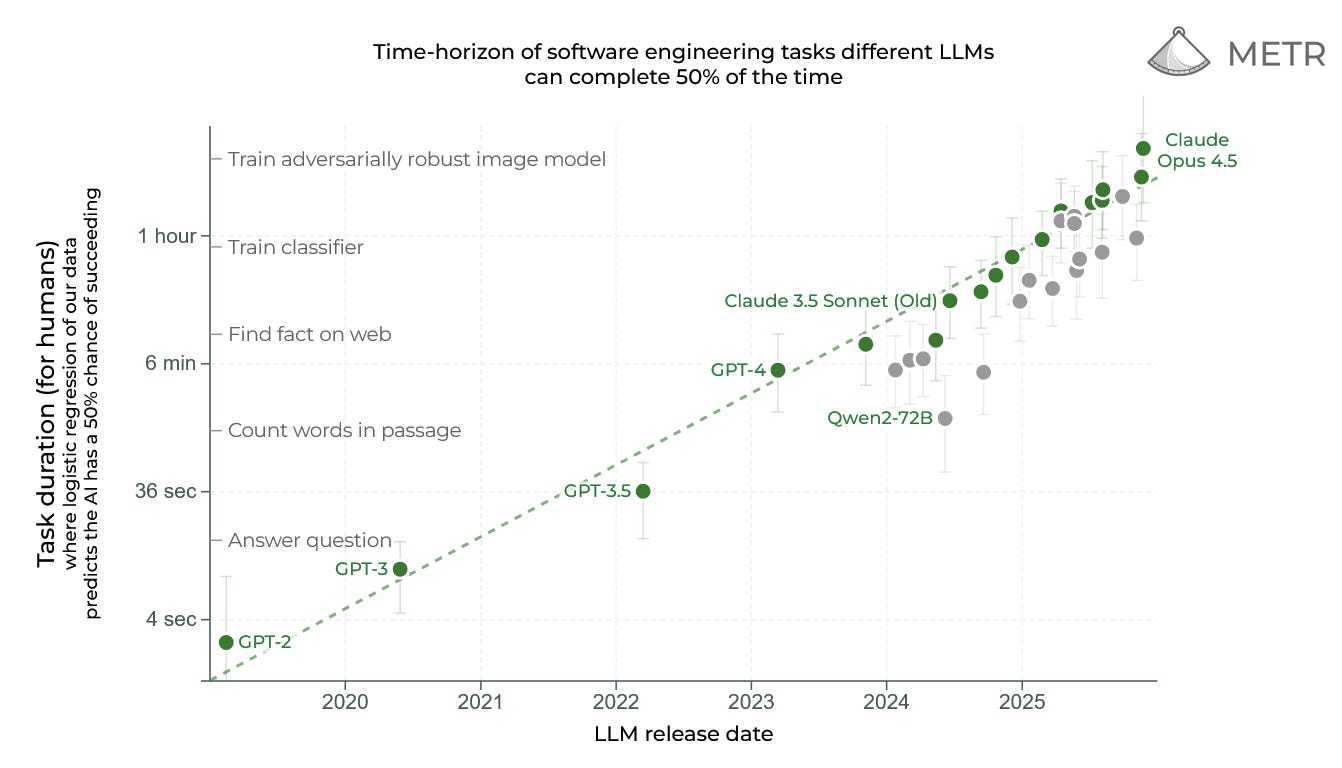
Core Insights - The article emphasizes that while the AI bubble will not burst in 2026, the hype surrounding it may diminish, marking a transition from experimental phases to practical business applications [1] Group 1: Capital Expenditure Predictions - Major tech companies' capital expenditures are expected to exceed $500 billion in 2026, up from $400 billion in 2025, driven by significant investments in AI [2][3] - The increase in capital spending is seen as a potential indicator of an AI bubble, but industry leaders argue that these investments are necessary to meet current customer demands [2] Group 2: Revenue Growth of AI Companies - OpenAI and Anthropic are projected to meet or exceed their revenue targets for 2026, with OpenAI aiming for $30 billion and Anthropic for $15 billion [4][11] Group 3: AI Model Capabilities - The context window for leading AI models is expected to stabilize around 1 million tokens, as larger windows become less cost-effective for most tasks [6][7] - AI models are anticipated to complete software engineering tasks that typically take 20 hours, achieving a 50% success rate [10][14] Group 4: Economic Growth Predictions - The U.S. GDP growth rate is predicted to remain below 3.5% in 2026, despite expectations of AI-driven economic improvements [8][9] Group 5: Legal and Regulatory Landscape - The legal landscape for AI companies is expected to evolve, with courts imposing operational restrictions to prevent copyright infringement, indicating a shift towards more stringent regulations [15] Group 6: Autonomous Vehicle Developments - A Chinese company's autonomous taxi fleet is projected to surpass Waymo's by 2026, driven by faster scaling and production capabilities [20][21] - The first fully autonomous consumer vehicle is expected to be launched by a company other than Tesla, with Tensor being a potential candidate [22][23] Group 7: AI Technology Trends - Text diffusion models are anticipated to gain mainstream attention, potentially offering advantages over traditional autoregressive models [26] - The number of media reports linking AI to suicide is expected to double, although actual suicide rates are projected to remain stable [29] Group 8: Open Weight Models - U.S. open weight models are expected to catch up with Chinese models by 2026, as Western companies show renewed interest in developing competitive open-source AI technologies [30][31]

2026年买新能源车恢复征税,车购税至少缴5%;本田12日将发售新款微型EV,并同步推出全新充电网络服务丨汽车交通日报
创业邦· 2025-09-11 10:12
Group 1 - Nissan's CEO Ivan Espinosa emphasizes the need to accelerate the new car launch process to adapt to market trends, aiming to reduce the development time of new models from over 50 months to 37 months [2] - Nissan has a debt of over $5 billion maturing next year, with plans to raise funds, having already secured 850 billion yen, but denies obtaining a £1 billion loan guaranteed by the UK Export Finance Agency [2] Group 2 - Amazon's Zoox has launched a robotaxi service in Las Vegas, intensifying competition in the autonomous taxi sector against Tesla, Waymo, Uber, and others [2] Group 3 - Honda announced the release of its new micro EV "N-ONE e:" with a range of 295 kilometers, and will also introduce a new charging network service "Honda Charge" to support the EV launch [2] - Honda plans to deploy thousands of charging stations across its dealerships and commercial facilities by 2030 [2] Group 4 - Starting in 2026, China will reinstate vehicle purchase taxes on new energy vehicles (NEVs) at a reduced rate of 5%, with a maximum tax reduction of 15,000 yuan per vehicle [2] - The tax exemption for NEVs will end in 2025, but a half-rate tax will apply for purchases made between January 1, 2026, and December 31, 2027 [2] Group 5 - Yu Qiankun, former CTO of SAIC's Zhiqi Intelligent, has joined Hello Auto Driving as a co-founder, focusing on high-level autonomous driving technology [3] - Hello Auto Driving plans to launch robotaxi services in over 10 cities in China by 2026 [3]