日产Micra

Search documents
当“懂中国”的CEO开始提速:雷诺如何将“生态协同”升维为全球执行力引擎
Zhong Guo Qi Che Bao Wang· 2026-01-19 08:33
Core Insights - The global automotive industry is undergoing a deep adjustment period, where the ability to establish differentiated competitive advantages through forward-looking layouts and efficient collaboration is crucial [1] - The Chinese market serves as both a competitive arena and a testing ground for effective strategic execution and ecological collaboration models [1] Group 1: Strategic Initiatives - Renault Group's CEO, François Provost, is leveraging his extensive experience in the Chinese market to transform the "agile execution and ecological collaboration" mechanisms validated in China into global operational capabilities for the group [2] - The strategic focus is not on disruptive changes but on elevating existing strategies based on Chinese experiences, emphasizing ecological collaboration as a core element for global competitiveness [2][3] Group 2: Collaborative Ecosystem - Provost's "dual-engine" elevation plan involves external ecological collaboration with partners to create a flexible cooperation network and internal activation of agile R&D capabilities through ACDC [3] - The Renault Group is moving towards a multi-layered, multi-threaded ecological collaboration model, moving away from traditional single-point partnerships [3][5] Group 3: Global Partnerships - The Renault-Nissan-Mitsubishi Alliance is deepening its collaboration, with joint projects based on the Ampere platform set to launch by 2025 [5] - Renault is enhancing its partnership with Geely through a joint venture in Brazil, integrating new energy platforms and products with local manufacturing, showcasing a clear product rhythm extending to 2026-2027 [5] - A strategic collaboration with Ford is set for the end of 2025, focusing on developing electric vehicles based on the Ampere platform, emphasizing platform sharing and joint development rather than capital binding [5] Group 4: Leadership and Vision - Provost's dual understanding of the Chinese market and Renault's strategic framework positions him to effectively bridge local insights with global strategies, enhancing the group's competitive edge during the electric transformation phase [7] - The global ecological layout led by Provost is a strategic upgrade inspired by successful Chinese practices, focusing on global win-win scenarios through an open ecological network [7]


为避免欧盟罚款,跨国车企正选择中国车企共享碳排放
Guan Cha Zhe Wang· 2025-10-21 09:39
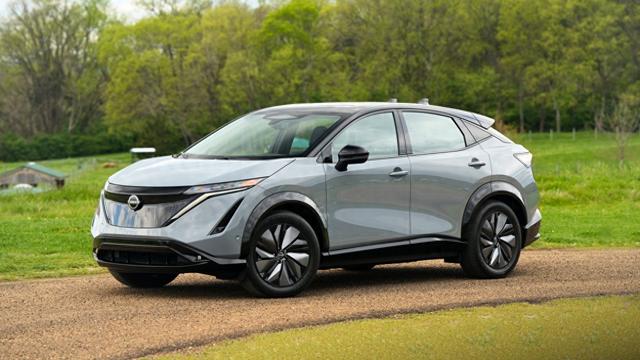
Group 1 - The core point of the article is that Nissan Europe is partnering with BYD to integrate carbon dioxide emissions in order to meet the EU's reduction targets for 2025-2027 [1][3] - Nissan previously had a joint carbon emission agreement with its alliance partners Renault and Mitsubishi, which ended in 2024, and is now looking for alternatives to meet stringent European carbon regulations [1][3] - The partnership with BYD is seen as a strategic move for Nissan to continue its transition towards zero emissions, especially as it faces challenges in proving its value to capital markets and partners after a decline in global sales and profits [1][3] Group 2 - As of August this year, Nissan's electric vehicle sales in Europe were only 1.3 million units, accounting for 6.5% of its total sales, with the Ariya model being the only notable performer [3] - In contrast, BYD sold 95,000 vehicles in the same period, with approximately 60% being pure electric vehicles, highlighting the competitive advantage BYD holds in the market [3] - The European automotive market is under pressure to address carbon emissions, with many traditional manufacturers needing to quickly resolve their carbon balance issues despite a three-year buffer period for strict emissions standards [3][5] Group 3 - Other automotive alliances, including those involving Toyota, Ford, and Stellantis, are forming emission credit pools with Tesla, although Tesla's sales in Europe have been declining [5] - Chinese electric vehicles are rapidly gaining market share in Europe, with sales of 212,000 units in the first three quarters of the year, representing over 15% market share [5] - The EU allows manufacturers to form alliances for carbon emissions until the end of this year, prompting more multinational companies to collaborate with Chinese automakers to address emissions challenges [5][6]

“中国车企改变欧洲市场:采用中国流行的电池技术,可帮助降价”
Guan Cha Zhe Wang· 2025-06-09 02:47
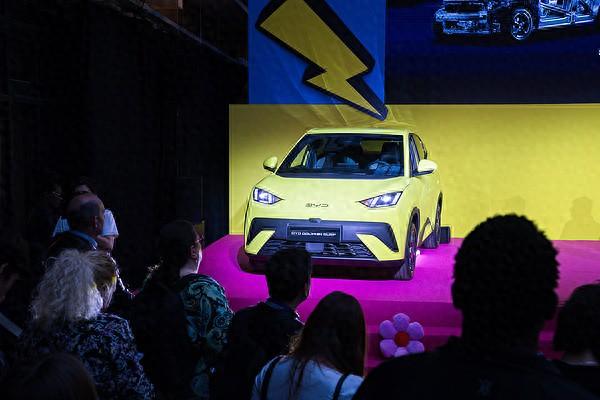
Core Viewpoint - European automakers are responding to the strong competition from Chinese electric vehicle manufacturers like BYD by planning to launch a series of low-cost small cars to enhance their competitiveness [1][4]. Group 1: Market Dynamics - BYD has become the world's largest electric vehicle manufacturer, surpassing Tesla last year, and recently launched the compact hatchback "Dolphin Surf" in Europe, with a starting price of €22,990 (approximately ¥188,500) and a range of 322 km [1]. - The compact segment is seen as the "next frontier" for electrification in Europe, with significant potential for growth [1]. - The European electric vehicle market is accelerating this year, driven by EU emissions regulations that require a 15% reduction in CO2 emissions for new cars and trucks compared to 2021 levels, increasing to 55% by 2030 [4]. Group 2: Competitive Landscape - Analysts indicate that BYD's entry into the small car market is a strong signal, with the potential to disrupt the small car market due to its competitive pricing [2][4]. - European consumers prefer small electric vehicles for practical, environmental, and price reasons, with a demand for cars priced below €25,000 (approximately ¥205,000) [5]. - The introduction of Chinese models like Dacia Spring and Leapmotor T03, priced below €20,000 (approximately ¥164,000), is pushing European manufacturers to focus on developing smaller, more affordable electric vehicles [5]. Group 3: Future Projections - By 2028 or 2029, the cost of small electric vehicles is expected to equal that of internal combustion engine vehicles, revitalizing the small car market [4]. - The small electric vehicle market is projected to continue expanding, with prices approaching €20,000 [7]. - Despite facing challenges from European manufacturers, Chinese companies like BYD are expected to maintain a competitive edge due to lower production costs and a broader vehicle lineup [8][9].