日经平均股指期货

Search documents
加息难挡贬值压力,日元将跌至160?
日经中文网· 2025-12-22 03:23
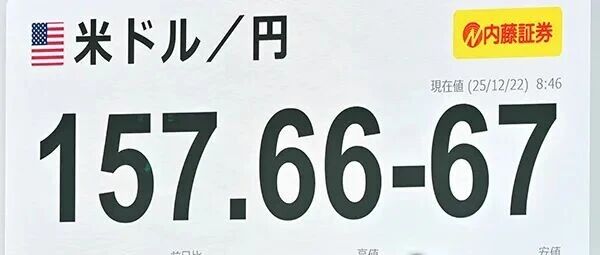
Core Viewpoint - The Bank of Japan raised interest rates to 0.75% on December 19, but the lack of a clear hawkish stance from the governor led to unexpected depreciation of the yen, with potential for further decline towards 160 yen per dollar [2][4][6]. Group 1: Interest Rate and Currency Impact - The long-term interest rates in Japan rose to 2% for the first time in 19 years following the interest rate hike, but the yen's exchange rate remained relatively stable around 155.80 yen before the announcement [4]. - After the press conference, the yen quickly depreciated, reaching a low of 157.70 yen per dollar, marking a one-month low due to the unexpected lack of aggressive monetary tightening signals from the Bank of Japan [6][8]. - Market participants expect the yen to depreciate further, with many anticipating a rate of around 160 yen by the end of March 2026 [6][8]. Group 2: Market Reactions and Predictions - Analysts predict that the next interest rate hike by the Bank of Japan may not occur until October 2026, leading to a potential depreciation of the yen to 162 yen in the first quarter of 2024 [8]. - Concerns about currency intervention have arisen, especially as the yen approaches the 160 yen mark, with officials indicating readiness to respond to excessive movements [8]. - Some analysts believe that the yen's depreciation may be limited, with expectations of a potential appreciation back to 155 yen by March 2024, influenced by anticipated actions from the U.S. Federal Reserve [9]. Group 3: Stock Market Implications - The depreciation of the yen is expected to benefit export-oriented companies, potentially driving up stock prices, with forecasts suggesting the Nikkei average could rise to between 50,000 and 55,000 points [10]. - Concerns about fiscal expansion and political developments, such as potential early elections, could pose risks to stock prices, with some analysts suggesting a possible adjustment to around 45,000 points [10].

洪灏:中国股市仍被低估
日经中文网· 2025-11-21 07:43
Group 1 - The core viewpoint is that the U.S. stock market is significantly overvalued, while there are still many undervalued stocks in the Chinese stock market, leading to a continuous rise in major indices in China [1][3] - The Chinese economy has experienced three phases of growth: post-1978 reform and opening up, attracting foreign investment in the 1990s, and the housing system reform in 1998 [1] - The management of Hong Kong Lianhua Asset Management has been focusing on market research and fund management, indicating a positive outlook on the Chinese market [3] Group 2 - The company has been managing a macro fund that includes various assets such as stocks, commodities, and currencies, and has maintained a position in Nikkei average stock index futures [3] - The positive attitude towards monetary easing in Japan is expected to contribute to the rise of the Nikkei average stock index futures [3] - The deterioration of U.S.-China relations is identified as a risk factor for the investment landscape [1]