
中性利率

Search documents
鲍威尔:通胀改善前不会降息,调查期间不会离开美联储,必要时将以临时主席身份履职
美股IPO· 2026-03-19 00:04
Core Viewpoint - The Federal Reserve is unlikely to lower interest rates until further improvements in inflation are observed, with discussions about potential rate hikes being reintroduced [3][11]. Group 1: Interest Rate Policy - The Federal Reserve maintains the federal funds rate target range at 3.5%-3.75% and will not consider rate cuts without further inflation improvements [3][11]. - Discussions about the possibility of future rate hikes have begun within the committee, although this is not the prevailing assumption among most officials [3][11]. Group 2: Inflation Dynamics - Current inflation cooling progress has significantly slowed, with short-term inflation expectations rising again in recent weeks [3][8]. - Tariffs and rising energy prices are creating a "double whammy" effect on inflation, with price pressures from tariffs still transmitting to core inflation [3][4]. - The potential for commodity inflation to decrease significantly may not materialize until at least mid-year [3][4]. Group 3: Labor Market Conditions - The labor market appears stable on the surface, but there are accumulating downside risks, with job growth at low levels and a fragile balance in the job market [3][8]. - The energy crisis is not only pushing prices higher but may also negatively impact consumption, corporate costs, and disrupt supply chains, affecting employment and overall economic activity [3][4]. Group 4: Energy Market Impact - The ongoing energy crisis, exacerbated by the Iran conflict, has led to significant increases in international oil prices, with Brent crude surpassing $107 [4]. - The uncertainty surrounding the duration and impact of this energy shock on the U.S. and global economies is considerable [4][9]. Group 5: AI and Economic Productivity - Current macro-level indicators show that AI has not yet significantly boosted productivity, and in the short term, it may actually raise neutral interest rates due to increased demand for goods and services from large-scale data center construction [4][5]. Group 6: Federal Reserve Leadership - The Federal Reserve Chairman confirmed he will not leave the Fed during the investigation period and will continue to serve as "acting chairman" if a successor is not confirmed by the Senate [5][11].

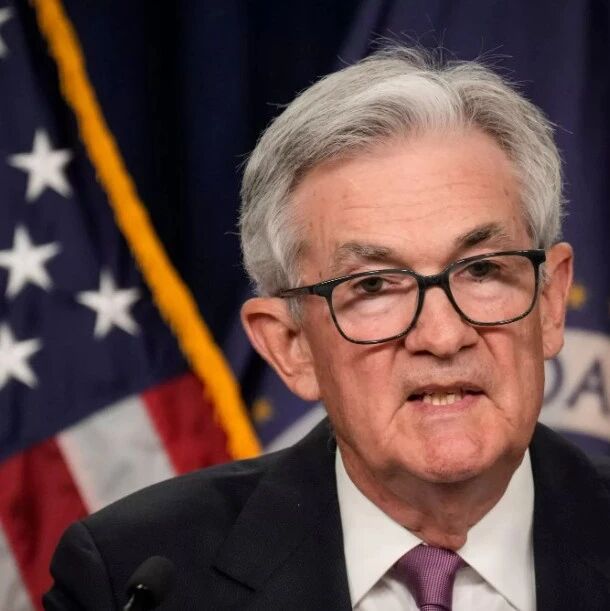
Oil price spike likely to keep rates on hold but deepen divisions among Fed officials this week
Yahoo Finance· 2026-03-16 09:00
Core Viewpoint - The ongoing Iran war and resulting oil price shock may create divisions within the Federal Reserve regarding future interest rate policies, complicating the economic outlook and inflation trajectory [1][4]. Economic Conditions - The Federal Reserve was previously optimistic about the economy, buoyed by tax refunds, low gas prices, a stabilizing job market, and diminishing tariff impacts [3]. - Consumer spending, which constitutes 70% of economic growth, is under pressure from rising prices, indicating that even minor economic shifts could lead to a reduction in consumer spending [5]. Inflation Trends - Inflation has remained above the Fed's 2% target for over five years, exacerbated by tariffs and the recent oil price shock [6]. - The Personal Consumption Expenditures index, the Fed's preferred inflation measure, indicated a sticky inflation rate of 3.1% at the start of the year, primarily driven by rising service prices [6].
“缩表+降息”的均衡
Bank of China Securities· 2026-03-06 08:59
1. Report Industry Investment Rating - The report did not explicitly provide an investment rating for the industry [1] 2. Core Viewpoints of the Report - Wash's "balance-sheet reduction + interest rate cut" equilibrium may have advantages for US Treasuries and disadvantages for gold prices, but it faces multiple challenges [4][63][64] 3. Summary by Directory 3.1 Wash's "Balance-Sheet Reduction + Interest Rate Cut" Monetary and Economic Equilibrium Points - Wash has a clear monetarist tendency, believing that controlling the money supply is the core of his monetary policy concept [11][12] - He is a fiscal hawk, thinking that the Fed's over-issuance of the US dollar in non-crisis conditions has encouraged fiscal overspending by the US government and Congress [12] - Wash's "vision" of interest rate cuts is that if the Fed reduces its balance sheet and fiscal policy becomes more responsible, inflation and interest rates will decline [13] 3.2 Fiscal and Financial Aspects under the "Balance-Sheet Reduction + Interest Rate Cut" Equilibrium - If the monetization rate and deficit rate can decline simultaneously, it will reduce both the supply and demand of US government debt [18] - If the money valve continues to tighten, there is a high probability of a further decline in inflation [19] 3.3 Employment Market under the "Balance-Sheet Reduction + Interest Rate Cut" Equilibrium - AI-related investments have a substitution effect on employment, resulting in slower employment growth [23] - The actual situation of private non-farm employment in the US may be weaker than official data, and the employment market is showing a weakening trend [29] 3.4 Inflation under the "Balance-Sheet Reduction + Interest Rate Cut" Equilibrium - The current US non-farm employment market remains balanced, and if employment growth continues to slow, inflation pressure may further ease [38][40] - If the Fed reduces its balance sheet, it can lower inflation and interest rates [40] 3.5 Main Dilemmas of the "Balance-Sheet Reduction + Interest Rate Cut" Equilibrium - Whether Wash can be successfully appointed and gain support within the Fed is uncertain [44] - US fiscal and tariff policies may not be able to cooperate with Wash's policy ideas [45] - US immigration policy is also controversial [45] 3.6 Potential Impact of the "Balance-Sheet Reduction + Interest Rate Cut" Equilibrium - If the equilibrium is achieved, it will be beneficial to US Treasuries, and the Fed may cut interest rates below 3% in this round, driving the yield of US Treasuries to continue to decline [46][52][64] - It may have a negative impact on gold prices, and the assumption of continued over-issuance of US dollar liquidity may be challenged [53][57][64] 3.7 Main Conclusions - Wash's policy concept includes monetarism, fiscal hawkishness, and a "vision" of interest rate cuts [63] - The "balance-sheet reduction + interest rate cut" equilibrium may face three dilemmas, but if achieved, it will be beneficial to US Treasuries and negative for gold prices [64]
布米普特拉北京投资基金管理有限公司:美联储理事沃勒反驳市场对ai的过度担忧
Sou Hu Cai Jing· 2026-02-26 12:20
Core Viewpoint - Federal Reserve Governor Lisa Cook warns that the Fed may lack effective tools to address rising unemployment rates potentially triggered by the widespread application of artificial intelligence (AI) [1][3] Group 1: Economic Impact of AI - Cook analyzes that if AI continues to enhance overall economic productivity, the unemployment rate may rise due to faster job turnover, yet economic growth could remain strong [3] - The rising unemployment rate may not indicate significant idle resources in the economy, complicating the Fed's demand-side monetary policy [3] - Cook's remarks are part of a broader discussion among Fed officials regarding the potential impact of AI on future monetary policy [3] Group 2: Neutral Interest Rate Dynamics - There is a possibility that the current neutral interest rate could be higher than pre-pandemic levels due to strong demand driven by investment booms [5] - However, this trend could reverse if AI-driven productivity gains are fully realized or if labor market transformations exacerbate income inequality, potentially lowering the neutral interest rate [5] Group 3: Labor Market Observations - Recent labor market data supports the view of stabilization, with the overall unemployment rate currently at a relatively low 4.3% and recent layoff indicators remaining moderate [8] - Cook notes an increase in unemployment rates among recent college graduates, as some companies begin to utilize AI for tasks traditionally handled by entry-level employees [8] Group 4: AI's Long-term Effects - The significant impact of AI on overall economic productivity statistics may take five to ten years to fully manifest [8] - The Fed has incorporated AI factors into its forecasting framework, focusing on its potential effects on neutral interest rates and data center investments [8] Group 5: Market Reactions and Diverging Views - As discussions within the Fed continue, market concerns regarding AI risks are rising, with a recent report highlighting potential risks AI poses to various sectors of the global economy [8] - Fed Governor Christopher Waller expressed a contrasting view, suggesting that the report may exaggerate AI's potential impact on employment, emphasizing that AI is a tool that will not replace humans [8]

中国外汇投资研究院:日本央行很可能在下半年加息
Xin Lang Cai Jing· 2026-02-25 11:47
Group 1 - The core viewpoint is that the Bank of Japan's interest rate hike is constrained by the uncertainty surrounding the actual level of neutral interest rates, making the decision-making environment more complex [1] - Multiple members of the Bank of Japan are concerned about the level of neutral interest rates, but they generally acknowledge that accurately predicting this level is extremely difficult [1] - The Bank of Japan is likely to initiate a new round of interest rate hikes in the second half of 2026, gradually advancing the rates, with a potential endpoint of 1.25% around June 2027 [1]
铂:震荡偏强钯:总体跟随偏强
Guo Tai Jun An Qi Huo· 2026-02-25 02:03
Report Industry Investment Rating - Platinum: Oscillating with an upward bias [1] - Palladium: Generally following an upward trend [1] Core Viewpoints - The report presents the price, trading volume, position, inventory, spread, and exchange rate data of platinum and palladium, as well as macro and industry news [1][4] Summary by Relevant Catalogs Fundamental Tracking Price - Platinum futures 2606 closed at 551.85 with a 1.28% increase; the Shanghai Gold Exchange platinum was at 545.09 with a 3.82% increase; the New York platinum continuous contract (previous day) was 2178.60 with a 0.60% increase; the London spot platinum (previous day) was 2171.50 with a 1.08% increase [1] - Palladium futures 2606 closed at 438.45 with a 1.95% increase; the RMB spot palladium was at 430.00 with an 8.86% increase; the New York palladium continuous contract (previous day) was 1809.50 with a 4.23% increase; the London spot palladium (previous day) was 1774.00 with a 0.51% increase [1] Trading Volume and Position - The trading volume of Shanghai platinum (kg) was 6123, a decrease of 2011 from the previous day, and the position was 25767, an increase of 17 [1] - The trading volume of NYMEX platinum (kg) was 28388, a decrease of 941 from the previous day, and the position was 80620, a decrease of 1173 [1] - The trading volume of Shanghai palladium (kg) was 3502, a decrease of 33 from the previous day, and the position was 9070, an increase of 96 [1] - The trading volume of NYMEX palladium (kg) was 17287, a decrease of 1309 from the previous day, and the position was 38273, an increase of 20786 [1] ETF Position - The platinum ETF position (ounces) (previous day) was 3270158, an increase of 2843 [1] - The palladium ETF position (ounces) (previous day) was 1178415, an increase of 988 [1] Inventory - The inventory of NYMEX platinum (ounces) (previous day) was 578195, with no change [1] - The inventory of NYMEX palladium (ounces) (previous day) was 186269, with no change [1] Spread - The spread between PT9995 and PT2606 was -6.76, a decrease of 0.99 from the previous day [1] - The spread between Shanghai platinum 2606 contract and 2610 contract was 11.55, a decrease of 0.60 from the previous day [1] - The cost of cross - period arbitrage of buying Shanghai platinum 2606 and selling 2610 was 6.80, an increase of 0.01 from the previous day [1] - The spread between Shanghai platinum main contract and London platinum (considering VAT) was 7.01, a decrease of 4.37 from the previous day [1] - The spread between RMB spot palladium price and PD2606 was -8.45, an increase of 18.65 from the previous day [1] - The spread between Shanghai palladium 2606 contract and 2610 contract was 3.20, a decrease of 5.25 from the previous day [1] - The cost of cross - period arbitrage of buying Shanghai palladium 2606 and selling 2610 was 5.46, with no change from the previous day [1] - The spread between Shanghai palladium main contract and London palladium (considering VAT) was -7, a decrease of 16.66 from the previous day [1] Exchange Rate - The US dollar index was 97.90, an increase of 0.16% [1] - The US dollar against the RMB (CNY spot) was 6.91, a decrease of 0.03% [1] - The US dollar against the offshore RMB (CNH spot) was 6.89, a decrease of 0.15% [1] - The US dollar against the RMB (6M forward) was 6.81, a decrease of 0.15% [1] Macro and Industry News - Takamatsu Sanae expressed concerns about further interest rate hikes during a meeting with the Bank of Japan governor last week [4] - The Trump administration will use AI to set reference prices for key minerals, and will set reference prices for germanium, gallium, antimony, and tungsten for the first time [4] - Regarding the Iran situation: The White House reiterated that Trump's primary choice is diplomacy but will use force if necessary; the Iranian foreign minister hopes to reach a fair agreement with the US in the shortest possible time; the US military deployed 11 F - 22 fighter jets to Israel; Iran held a military exercise in the southern coastal area [4] - Regarding the Federal Reserve: Cook said the AI investment boom may raise the neutral interest rate in the short term and may not be able to alleviate the AI - driven unemployment wave without triggering inflation risks; Goolsbee believes it is inappropriate to cut interest rates before there is more evidence that inflation is falling and is optimistic about further interest rate cuts this year; Bostic said the Fed still needs to focus on inflation even if productivity rises; Collins and Waller expect AI not to cause a major upheaval in the job market and are likely to maintain the current interest rate for some time; Barkin said monetary policy is currently in a favorable position to deal with risks and productivity improvement is not only due to AI [4] - Musk envisions launching AI satellites from the moon via electromagnetic catapult [4] - The EU expects the US to ease the impact of metal tariffs in the coming weeks [4] - China's Ministry of Commerce included 20 Japanese entities in the watch list and 20 Japanese entities in the export control list [4] - China's Ministry of Commerce spokesperson said that China will decide to adjust counter - measures against US tariffs as appropriate in response to the US recent tariff adjustment measures [4] Trend Strength - The trend strength of platinum is 0; the trend strength of palladium is 0. The range of trend strength is an integer in the [-2, 2] interval, with -2 indicating the most bearish and 2 indicating the most bullish [3]
金荣中国:美联储释放“鹰派”信号,金价扩大回落加剧震荡
Sou Hu Cai Jing· 2026-02-25 01:52
Market Overview - International gold prices experienced fluctuations, opening at $5195.94 per ounce, reaching a high of $5249.75, a low of $5093.09, and closing at $5150.29 [1] Economic Insights - Federal Reserve Governor Cook indicated that artificial intelligence (AI) is causing a generational shift in the U.S. labor market, potentially leading to increased unemployment rates. The Fed may not be able to respond effectively through interest rate cuts [3] - Cook noted that while AI presents new opportunities, job displacement may occur before new jobs are created, leading to a potential rise in unemployment and a decline in labor force participation [3] - Collins from the Fed mentioned that recent economic data shows improvement in the labor market, suggesting that interest rates may remain unchanged for some time, although inflation risks persist [4] - Goolsbee, Chicago Fed President, stated that further rate cuts are inappropriate until there is more evidence of sustained inflation decline [4] Trade Developments - President Trump implemented a 10% global tariff, marking a continuation of his trade agenda. This follows a Supreme Court ruling that rejected his initial comprehensive trade measures [5][6] - There are plans to potentially increase the tariff rate to 15%, although the timeline for this increase remains uncertain [6] Geopolitical Developments - The U.S. has deployed 12 F-22 fighter jets to Israel, indicating ongoing military support in the region [7] Gold ETF Holdings - The SPDR Gold Trust, the largest gold ETF, increased its holdings by 7.72 tons, bringing the total to 1094.19 tons [8] Market Expectations - The probability of a 25 basis point rate cut by the Fed by March is 2%, with a 98% chance of maintaining current rates. By April, the probability of a 25 basis point cut rises to 15.9% [8]

【美联储理事警告:美联储货币政策可能无法应对AI引发的失业潮 】库克称,AI已引发美国劳动力市场的代际更迭,可能导致失业率上升,美联储可能无法以降息应对,货币政策可能陷入两难——降息既无法有效应对结构性失业,又可能推高通胀;AI或先推高、后压低中性利率;生产率统计数据或需五到十年才体现AI...
Sou Hu Cai Jing· 2026-02-25 00:14
Core Viewpoint - The Federal Reserve faces challenges in addressing potential unemployment caused by AI advancements, as monetary policy may not effectively respond to structural unemployment while also risking inflation [1] Group 1: Federal Reserve's Monetary Policy - The Federal Reserve's monetary policy may be caught in a dilemma, where lowering interest rates could fail to address structural unemployment caused by AI and may also lead to increased inflation [1] - AI is expected to initially raise and then lower the neutral interest rate over time [1] Group 2: Labor Market Impact - AI is causing a generational shift in the U.S. labor market, potentially leading to an increase in unemployment rates [1] - Productivity statistics may take five to ten years to reflect the impact of AI on the labor market [1] Group 3: Diverging Opinions - Federal Reserve Governor Waller believes that a report by Citrini, which triggered a significant drop in software and other industry stocks, exaggerates the potential impact of AI on employment [1] - Waller emphasizes that AI is a tool and will not replace human workers [1]

Fed official warns rate cuts depend on lower inflation
Yahoo Finance· 2026-02-24 22:33
Core Viewpoint - The Federal Reserve is not expected to cut interest rates in the near term until there is more evidence of declining inflation, as stated by Chicago Federal Reserve President Austan Goolsbee [1] Group 1: Interest Rate Decisions - The FOMC voted 10-2 to hold interest rates steady at 3.50% to 3.75% in January after three consecutive quarter-point cuts in its last three meetings of 2025 [5] - The last pause in interest rates occurred in September 2023, maintaining the funds rate at 5.25% to 5.50% after a tightening cycle aimed at curbing post-pandemic inflation [11] - Fed Governors Christopher Waller and Stephen Miran dissented during the January meeting, preferring a quarter-point cut due to softening in the labor market [6] Group 2: Inflation and Economic Outlook - Goolsbee expressed optimism for potential rate cuts later in the year, contingent on actual progress in reducing inflation towards the target of 2% [2] - The Supreme Court's decision to strike down many of President Trump's global tariffs could contribute to cooling inflation [1] - The Fed's dual mandate requires balancing full employment and price stability, which often conflict and are influenced by unpredictable global events [8] Group 3: Implications for Consumers - A delayed rate cut may result in higher borrowing costs for consumers, which could persist longer than anticipated [6] - Lower interest rates generally support hiring but can also fuel inflation, while higher rates may cool prices but weaken the job market [10]
美联储理事警告:货币政策可能无法应对AI引发的失业潮
Hua Er Jie Jian Wen· 2026-02-24 20:13
Core Viewpoint - The restructuring of the labor market driven by artificial intelligence (AI) may create a dilemma for monetary policy, as interest rate cuts may not effectively address structural unemployment and could potentially increase inflation [1][2]. Group 1: Labor Market Implications - AI is causing a generational shift in the U.S. labor market, potentially leading to an increase in unemployment rates, while traditional monetary policy tools may not be effective in addressing these issues [1][2]. - Cook highlighted that the current rise in unemployment does not necessarily indicate excess capacity in the economy, suggesting that conventional demand-side monetary policies may exacerbate inflation without resolving employment issues [2][3]. - Early signs in the job market indicate a decline in demand for roles heavily influenced by AI, with the unemployment rate for recent college graduates rising in recent years due to employers integrating AI into entry-level positions [2][3]. Group 2: Neutral Interest Rate Perspectives - Cook provided contrasting views on the short-term and long-term impacts of AI on the neutral interest rate, suggesting that current investments in AI could elevate the neutral rate above pre-pandemic levels [3][4]. - However, she cautioned that as AI productivity gains are fully realized, or if labor market transformations exacerbate income inequality, the neutral interest rate could decline under unchanged conditions [4]. Group 3: Federal Reserve's Evolving Discussion on AI - Cook's remarks reflect a deepening discussion within the Federal Reserve regarding the implications of AI for monetary policy, indicating that this topic is moving from the periphery to a central focus in decision-making [5]. - Following three consecutive interest rate cuts, the Federal Reserve decided to maintain the policy rate in January, citing signs of stabilization in the labor market, with market expectations indicating that rate cuts may not resume until mid-year [5].