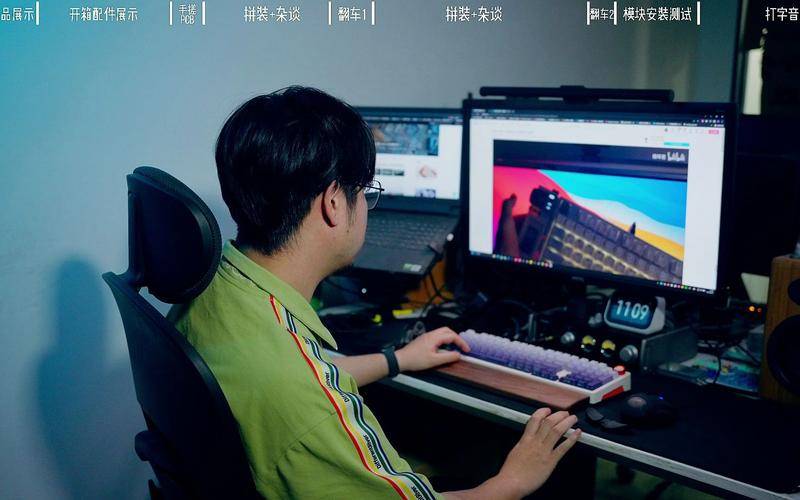
昇腾计算产品线

Search documents
十位离职华为的「天才少年」
投资界· 2025-09-30 03:07
Core Insights - The article discusses the "Genius Youth" program initiated by Huawei, highlighting the transition of talented individuals from the company to various sectors, particularly in AI and entrepreneurship [2][41]. Group 1: Overview of the "Genius Youth" Program - The "Genius Youth" program was launched by Huawei in 2019 to attract top talent in fields such as intelligent connectivity, basic research, and cloud computing, offering competitive salaries and extensive training [41][45]. - The program has produced significant results, with participants achieving groundbreaking innovations in a short time [45][46]. Group 2: Career Paths of Participants - Participants of the program have predominantly chosen two paths: entrepreneurship and academia, with six opting for startups and four returning to educational institutions [2][41]. - Notable entrepreneurs include 彭志辉, who co-founded 智元机器人, and季宇, who established 行云集成电路, both focusing on AI and chip technology [5][18][19]. Group 3: Profiles of Key Individuals - 彭志辉, a prominent figure in the program, transitioned from Huawei to become the CTO of 智元机器人, which has secured significant funding and contracts [7][19]. - 季宇, after leaving Huawei, founded 行云集成电路, focusing on AI model inference chips, and has successfully raised substantial investment [18][19]. - 丁文超, another participant, has moved between academia and industry, contributing to significant advancements in intelligent driving systems [24][25]. Group 4: Academic Contributions - Several participants, such as 周满 and 任宇翔, have returned to academia, where they continue to contribute to research in cybersecurity and AI, respectively [30][33]. - Their academic work includes publishing numerous papers in top-tier journals and conferences, showcasing their ongoing influence in the field [33][37]. Group 5: Industry Impact - The departure of these talented individuals from Huawei reflects a broader trend in the tech industry, where skilled professionals are increasingly pursuing entrepreneurial ventures or academic careers [46]. - The article emphasizes that despite leaving Huawei, these individuals continue to impact the industry significantly, embodying the spirit of innovation and entrepreneurship [2][41].


十位离职华为的「天才少年」
猿大侠· 2025-09-29 04:11
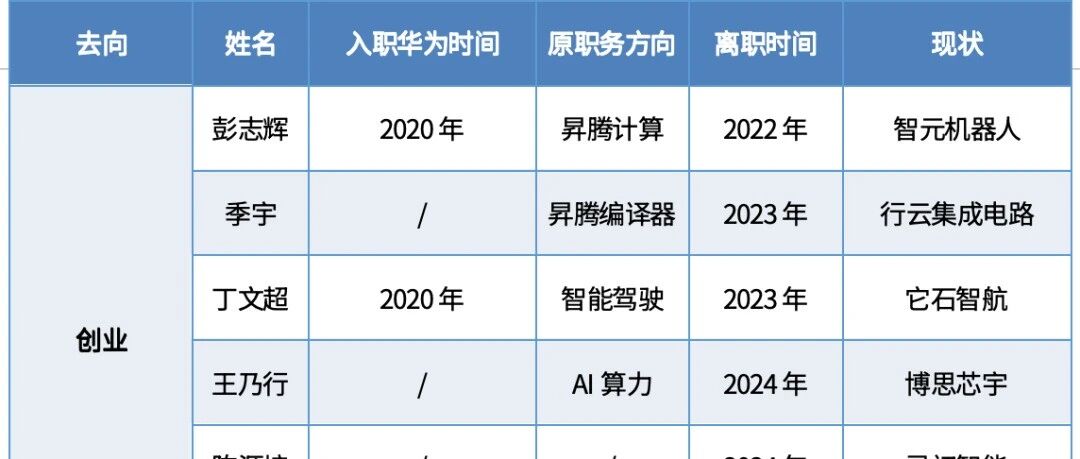
Core Viewpoint - The article discusses the transition of Huawei's "Genius Youth" program participants, highlighting their shift from Huawei to various entrepreneurial and academic paths, particularly in the AI sector, reflecting the dynamic nature of talent movement in the tech industry [1][4][71]. Summary by Sections Talent Movement - The "Genius Youth" program, initiated by Huawei, aimed to attract top talent in fields like AI, cloud computing, and smart devices, offering competitive salaries and opportunities for innovation [74][77]. - A total of 10 notable individuals from this program have left Huawei, with 6 choosing to start their own companies and 4 returning to academia [71][72]. Entrepreneurial Paths - **Peng Zhihui**: Joined Huawei in 2020, left in 2022 to co-found Zhiyuan Robotics, which has secured significant funding and contracts [9][13][15]. - **Ji Yu**: Worked on AI chip compilers at Huawei, co-founded Xingyun Integrated Circuits in 2023, focusing on large model inference chips [32][34]. - **Ding Wenchao**: A key figure in Huawei's autonomous driving systems, returned to academia before co-founding Tashizhi Hang in 2025, focusing on embodied intelligence [40][43]. - **Wang Naixing**: After working on AI chip research, he founded Boshi Chenyu, focusing on AI chip lifecycle management [37][39]. - **Chen Yuanpei**: Co-founded Lingchu Intelligent in 2024, focusing on developing intelligent robotic systems [22][25]. - **Huang Qingqiu**: Known for his work on lidar algorithms at Huawei, is also venturing into entrepreneurship in embodied intelligence [49][51]. Academic Paths - **Zhou Man**: Transitioned to Huazhong University of Science and Technology, focusing on cybersecurity [56]. - **Ren Yuxiang**: Joined Nanjing University as an assistant professor, specializing in graph computing and AI [61][63]. - **Xu Ke**: Returned to Nanjing University, contributing to data intelligence and visualization research [66][67]. - **Shao Dian**: Joined Northwestern Polytechnical University, focusing on AI and computer vision [70]. Program Impact - The "Genius Youth" program has been influential in shaping the careers of its participants, leading to significant contributions in both industry and academia [74][81]. - The program's success has prompted other companies to adopt similar talent attraction strategies, reflecting a broader trend in the tech industry [81].
十位离职华为的「天才少年」
3 6 Ke· 2025-09-28 23:15
Core Insights - The article discusses the transition of Huawei's "Genius Youth" program participants, highlighting their shift from the company to various entrepreneurial and academic pursuits in the AI sector. This reflects a broader trend of talent migration within the tech industry in China [1][51]. Group 1: Talent Migration - The "Genius Youth" program, initiated by Huawei in 2019, aimed to attract top talent in fields such as intelligent connectivity, foundational research, and cloud computing, offering competitive salaries averaging over 1 million yuan [52][53]. - A total of 10 notable individuals from this program have left Huawei, with 6 choosing to start their own companies and 4 returning to academia [51]. Group 2: Entrepreneurial Ventures - 彭志辉, a key figure in the program, left Huawei to co-found 智元机器人, which has secured significant funding and contracts, indicating strong market confidence in its prospects [6][8]. - 季宇, another participant, founded 行云集成电路, focusing on AI chip development, and has successfully launched a new product aimed at reducing AI computing costs [20][21]. - 王乃行 established 博思芯宇, targeting AI computing lifecycle management, reflecting a strategic response to industry challenges [24][25]. - 丁文超 transitioned from Huawei to academia and then co-founded 它石智航, which is developing advanced embodied intelligence systems [28][29]. Group 3: Academic Pursuits - 周满, after leaving Huawei, joined 华中科技大学 as a researcher, focusing on intelligent device security [37][38]. - 任宇翔 returned to 南京大学, where he continues research in graph computing and AI, contributing to the academic community [44][45]. - 徐科 also returned to 南京大学, where he is involved in data intelligence research, emphasizing the importance of data-driven decision-making [46][47]. - 邵典 joined 西北工业大学, focusing on AI and computer vision, showcasing the ongoing contributions of former Huawei talents to academia [49]. Group 4: Program Impact - The "Genius Youth" program has been influential in shaping the careers of its participants, many of whom have achieved significant accomplishments in their respective fields, both in entrepreneurship and academia [56][58]. - The program's success has prompted other tech companies to adopt similar talent attraction strategies, indicating its impact on the broader industry landscape [56].
十位离职华为的「天才少年」
量子位· 2025-09-28 11:54
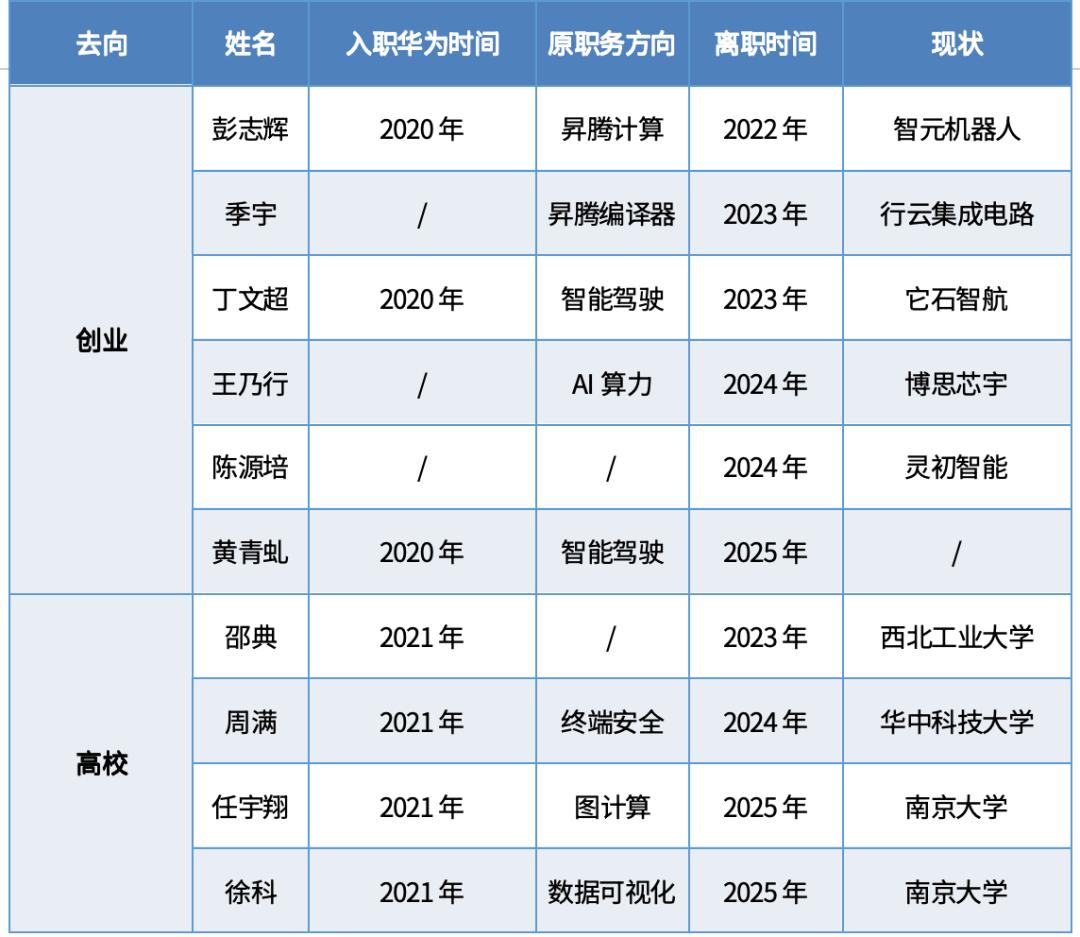
Core Viewpoint - The article discusses the transition of Huawei's "Genius Youth" program participants, highlighting their shift from Huawei to various entrepreneurial and academic paths, particularly in the AI sector, showcasing their contributions and achievements in the industry [1][2][82]. Group 1: Entrepreneurial Paths - The "Genius Youth" program has produced notable entrepreneurs, with six out of ten participants choosing to start their own companies [82]. - 彭志辉, a prominent figure, left Huawei to co-found 智元机器人, which has secured significant funding and contracts, indicating strong market potential [10][15]. - 季宇 founded 行云集成电路, focusing on AI chip development, and has successfully launched a new product with competitive pricing [34][36]. - 王乃行 established 博思芯宇, targeting AI chip lifecycle management, and has also secured substantial funding [41][43]. - 丁文超 transitioned from Huawei to academia and then co-founded 它石智航, which focuses on embodied intelligence and has achieved significant funding milestones [48][50]. - 黄青虬, known for his work in laser radar algorithms, is also venturing into entrepreneurship in the field of embodied intelligence [56]. Group 2: Academic Paths - Four participants returned to academia, contributing to research and education in their respective fields [82]. - 周满 joined 华中科技大学, focusing on cybersecurity and wireless systems [62][63]. - 任宇翔 became an assistant professor at 南京大学, specializing in graph computing and AI models [70][72]. - 徐科 returned to 南京大学, where he is involved in data intelligence and visualization research [75][76]. - 邵典 took a position at 西北工业大学, focusing on AI and computer vision [81]. Group 3: Background of the "Genius Youth" Program - The "Genius Youth" program was initiated by 任正非 in 2019, aiming to cultivate top talent in key technological fields [85][88]. - Participants were offered competitive salaries, with the highest tier reaching up to 201 million yuan, attracting elite graduates [88][90]. - The program has been influential in shaping the careers of its participants, many of whom have made significant contributions to the tech industry [91][92].
天才少年放弃200万年薪:离职华为后,每天十多个投资人找我投钱
Sou Hu Cai Jing· 2025-05-26 06:28
Core Insights - The story of Zhi Hui Jun, a former Huawei employee with a high salary of 2 million yuan, highlights the motivations driving young tech elites to pursue entrepreneurship despite the risks involved [5][11][26] - Zhi Hui Jun's departure from a stable and lucrative position at Huawei signifies a deeper exploration of personal values and dreams, emphasizing the importance of passion over monetary rewards [4][12][26] Group 1: Career Transition - Zhi Hui Jun, known for his contributions as an AI algorithm engineer, gained recognition through Huawei's "Genius Youth Program" and was responsible for the full-stack development of Ascend computing products [11] - His decision to leave Huawei, a surprising move for many, reflects a desire to pursue his true interests and passions in technology rather than remain in a high-paying but potentially limiting role [5][12] Group 2: Entrepreneurial Spirit - The choice to embark on an entrepreneurial journey indicates Zhi Hui Jun's willingness to face uncertainty and challenges, showcasing his courage and determination to follow his dreams [7][14][26] - His upcoming entrepreneurial focus on robotics technology, along with securing angel investment, demonstrates his commitment to innovation and personal growth [14] Group 3: Influence and Community Engagement - Zhi Hui Jun has built a significant following on Bilibili, with nearly 2.3 million fans, where he shares his technological creations and engages with his audience, enhancing his influence in the tech community [4][16][21] - His content, which includes projects like a self-made Iron Man mechanical arm and autonomous bicycles, reflects his strong technical skills and passion for innovation [15][18] Group 4: Broader Implications - Zhi Hui Jun's journey serves as an inspiration for other young individuals, encouraging them to pursue their dreams and embrace the challenges that come with entrepreneurship [25][26] - The narrative emphasizes that true value lies not only in material success but also in the pursuit of one's passions and the courage to explore the unknown [26]