星流

Search documents
一款产品,同时为人类和 Agent 设计,LibTV 是怎么做的?
Founder Park· 2026-03-19 12:23
Core Insights - The article discusses the launch of LibTV, an AI video creation platform by LiblibAI, which aims to serve both human creators and AI agents simultaneously, marking a significant shift in video production tools [4][10][11]. Group 1: Product Overview - LibTV is designed to cater to both human creators and AI agents from its inception, providing two distinct entry points within the same product architecture [11]. - The platform features a highly controllable workflow canvas for human creators, allowing them to integrate text, images, videos, audio, and scripts seamlessly [12][14]. - For AI agents, LibTV offers a Skill interface that enables them to execute video creation tasks autonomously, with the ability to track project progress and make real-time adjustments [15][18]. Group 2: Market Context - The AI product landscape is evolving, with companies like Figma, Canva, and Spotify integrating AI capabilities, indicating a growing recognition of AI agents as legitimate users [7][34]. - The article highlights the need for products to adapt to the unique requirements of AI agents, which differ significantly from human users in terms of interaction and functionality [19][20]. Group 3: Design Philosophy - The design approach for AI agents differs fundamentally from that for human users, as agents do not require visual interfaces or spatial layouts to function effectively [19][21]. - LibTV's design philosophy emphasizes the need for a balance between automation and user control, allowing agents to operate efficiently while still providing a robust interface for human creators [21][22]. Group 4: Economic Considerations - The cost structure of video creation tools is critical, as AI agents require affordable access to generate multiple versions and conduct comparisons, making pricing a key factor in the platform's viability [27][29]. - LibTV's pricing strategy is positioned to lower the trial-and-error costs for creators and ensure that agents can operate economically, facilitating broader adoption [28][30]. Group 5: Industry Implications - The emergence of platforms like LibTV reflects a broader industry trend where AI agents are increasingly recognized as distinct user entities, necessitating tailored product designs [34][36]. - The article suggests that companies must prepare for the integration of AI agents into their workflows, as this shift is expected to redefine product development and user interaction in various sectors [35][36].


年度AI产品十大赛道TOP 3|量子位智库AI 100
量子位· 2026-01-31 07:30
Core Insights - The article discusses the significant evolution of AI products in 2025, highlighting a shift from merely "talking" to "doing" [3][4] - The focus is on the transformation of interaction paradigms and the integration of AI into both digital and physical realms [5][6] - The article introduces the "AI 100" product list, categorizing AI products into flagship and innovative segments, along with five major application categories [6][9] Group 1: AI Product Development - AI products have shown differentiated growth across various sectors, with strong demand in general scenarios and AI efficiency, while AI life products are exploring better user experiences [14] - The common goal across all sectors is moving towards end-to-end delivery of productivity, shifting the value measurement from "how well it answers" to "how completely it delivers" [14][15] Group 2: Flagship AI Products - The "Flagship AI 100" and "Innovative AI 100" categories represent the strongest and most promising AI products, respectively [7][13] - The article outlines ten core tracks for AI applications, including AI smart assistants, AI agents, AI browsers, AI workstations, Vibe Coding, AI education, AI entertainment, AI health, multimodal creation, and AI consumer hardware [9][10] Group 3: AI Smart Assistants - AI smart assistants are the most traffic-intensive and revenue-near segment, evolving from answering questions to solving problems [16] - Top products in this category include: - Doubao from ByteDance, with over 57 million daily active users [18] - DeepSeek, known for its innovative interaction method that showcases AI reasoning [20] - Tencent Yuanbao, integrating various social networks for enhanced user experience [22] Group 4: AI Agents - AI agents have transitioned from mere conversational tools to executing tasks [23] - Notable products include: - Nano AI from 360 Group, which integrates over 80 large models for task execution [24] - Kouzi, a one-stop AI office space from ByteDance, automating complex workflows [26] - Xingliu, a new generation AI creation tool from Singularity Star, facilitating end-to-end creative processes [30] Group 5: AI Browsers - AI browsers are evolving from passive information displays to active task executors [32] - Key products include: - QQ Browser from Tencent, which integrates AI capabilities to understand user intent [33] - Quark from Alibaba, combining search, reading, and creation functionalities [36] - Fellou, focusing on a unified search and task experience [40] Group 6: AI Workstations - The competition in AI workstations has shifted from the number of features to complete workflow integration [41] - Leading products include: - Baidu Wenku, transforming from a document tool to a knowledge productivity platform [42] - Feishu, integrating AI capabilities into team workflows [46] - Tiangong, focusing on enhancing office and creative efficiency [50] Group 7: AI Education - AI education products are evolving to provide personalized tutoring and enhance learning experiences [61] - Top products include: - KuaiDui AI from Zuoyebang, focusing on personalized tutoring [62] - XiaoYuan AI from Yuanfudao, assisting parents and teachers in managing homework [65] - CapWords, an innovative language learning tool [69] Group 8: AI Entertainment - AI entertainment products are exploring how to provide unique value beyond traditional non-AI products [70] - Notable products include: - Kapi Camera, which enhances user photography experiences [73] - Xingye, a platform for emotional companionship and content creation [76] - DouDou Game Partner, focusing on gaming companionship [79] Group 9: AI Health - The AI health sector is cautiously exploring compliance and user experience [80] - Key products include: - Antifufu, a health management assistant from Ant Group [81] - XiaoHe AI Doctor, providing health consultations based on authoritative medical data [85] - OtterLife, a gamified health management product [88] Group 10: Multimodal Creation - AI creation tools are becoming integral to daily workflows for content creators [90] - Leading products include: - Jidream AI, focusing on video creation processes [91] - Liblib AI, a comprehensive AI creation platform [95] - Keling AI, a creative productivity platform leveraging short video and advertising [97] Group 11: AI Consumer Hardware - The AI consumer hardware sector is characterized by rapid innovation and high turnover [98] - Notable products include: - Plaud Note, an AI note-taking tool [99] - Thunderbird V3 AI glasses, integrating various functionalities [102] - CocoMate, an emotional companion toy [107]
网上创业平台有哪些:在抖音做AI美女视频每月多挣5000+
Sou Hu Cai Jing· 2025-10-11 12:22
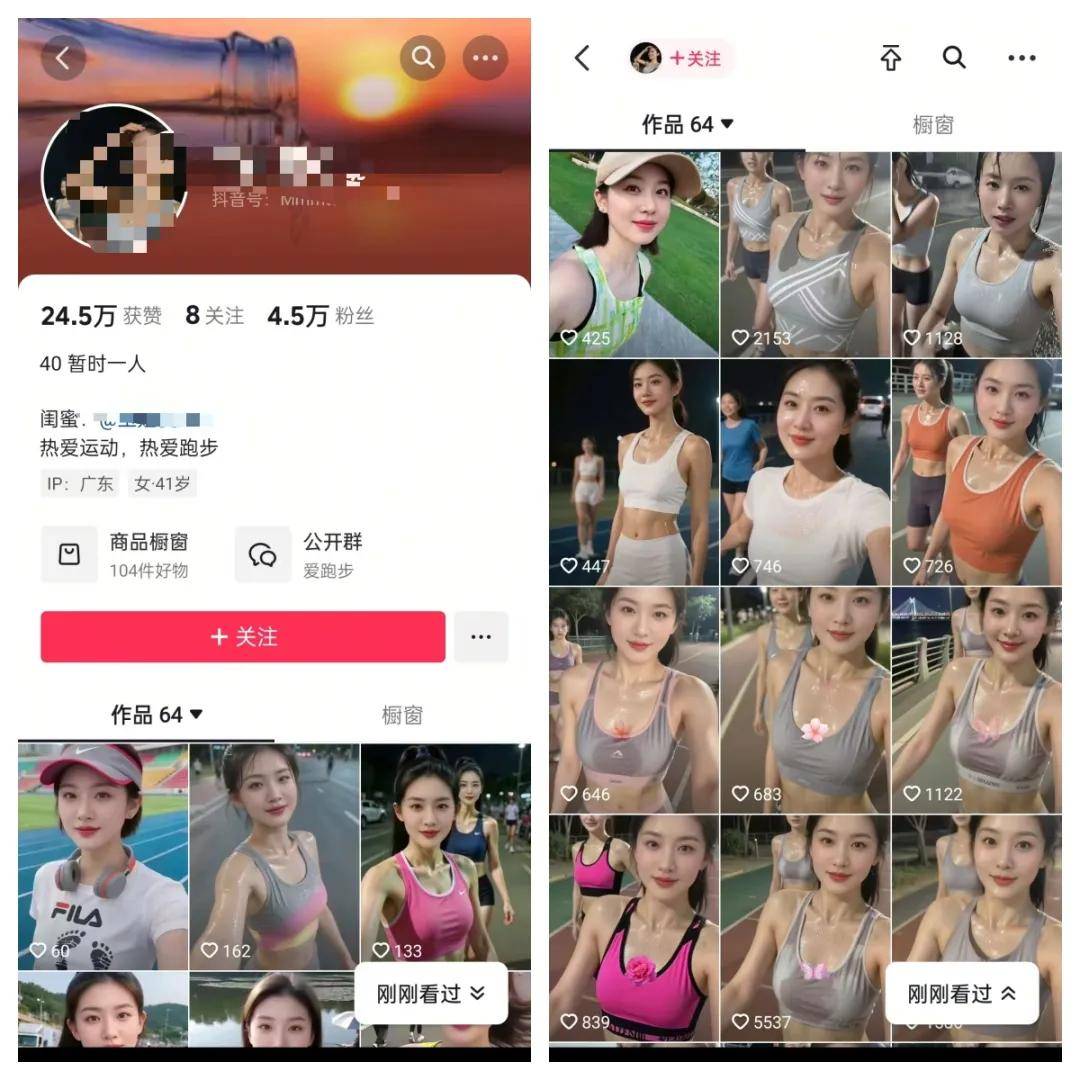
Core Insights - The discussion around AI-generated beauty accounts on Douyin is gaining significant attention, indicating a potential growth area in social media marketing and content creation [1] - The article provides a Q&A format to address common questions and concerns regarding the operation and profitability of these AI accounts [1] Group 1: Growth Potential - AI accounts are currently in a "redemption period," with examples showing rapid follower growth; one account gained 45,000 followers from just 64 posts [4] - The potential for earning additional income through these accounts is highlighted, with claims of making an extra 5,000 to 6,000 yuan per month being achievable [3] Group 2: Content Creation Techniques - No drawing skills are required to create original AI images; users can utilize tools like "Xingliu" to generate new images from screenshots of popular videos [5] - To maintain a consistent character image, the "AI Avatar" feature in the "Xinghui" app allows users to upload images of the same face to create a unique character model [7][11] - Enhancing the realism of AI-generated images can be achieved by adding details like sweat effects using tools like "Jimeng AI" [17] Group 3: Video Content Generation - Dynamic video content can be created by importing processed images into tools like "Nanomi AI," which allows users to select action models and generate videos based on simple prompts [20] Group 4: Operational Complexity - The operational process for these AI applications is straightforward, with all mentioned tools available for download in mobile app stores [22] - While the methods provided are market-validated for effective follower growth, actual monetization success depends on individual circumstances and operational skills [23]