AI创业

Search documents
第一批出海摆摊的程序员,已靠AI回本
创业邦· 2026-03-23 00:06
Core Insights - The article discusses how AI technology is transforming the landscape of entrepreneurship, particularly for independent developers venturing into international markets without the need for significant funding or large teams [4][31]. - It highlights two case studies: a Chinese programmer named Nanchuan in Thailand and a recent graduate named Rick in Nepal, both utilizing AI to create innovative products that resonate with local cultures [4][31]. Group 1: Nanchuan's AI Project - Nanchuan developed the "Lanna Demon Mirror," an interactive AI application that matches users' facial features with local cultural deities, completing 69 transactions in one night and earning 2,000 Thai Baht (approximately 450 RMB) [7][10]. - The project was conceptualized and executed in just 12 days, showcasing the rapid development capabilities enabled by AI tools [10][20]. - Nanchuan's approach involved using AI to analyze static facial features rather than expressions, leading to a more accurate matching mechanism for the cultural deities [8][10]. Group 2: Rick's AI Application - Rick created "OCTA," an app that provides Feng Shui advice based on environmental scanning, developed in just 48 hours during a hackathon [13][15]. - The app leverages AI's multimodal capabilities for image and video processing, making it suitable for the modern Feng Shui market, which is gaining popularity in Western countries [11][13]. - Rick's team has seen positive feedback from early users, indicating a strong demand for their product in international markets [13][15]. Group 3: Trends in AI Entrepreneurship - The article notes a significant increase in AI applications targeting international markets, with over 156 projects expected by April 2025, reflecting a growth of over 300% compared to the previous year [20][21]. - The lowering of technical barriers due to open-source AI models allows individual developers to create sophisticated applications at minimal costs, fundamentally changing the cost structure of entrepreneurship [21][22]. - The shift towards lightweight AI applications focuses on solving specific needs rather than grand narratives, as seen in the projects developed by Nanchuan and Rick [22][31]. Group 4: Community Support and Collaboration - The article emphasizes the role of community spaces, like the Chiang Mai guesthouse, in supporting entrepreneurs by providing resources and networking opportunities [24][28]. - These communities facilitate knowledge sharing and collaboration, enabling developers to navigate the complexities of launching products in foreign markets [27][28]. - The trend of community-driven entrepreneurship is growing, with platforms like WayToAGI becoming significant hubs for AI developers [27][29].


AI 创业的焦虑,已经不只是在产品上了
Founder Park· 2026-03-05 10:11
Core Insights - The AI startup landscape has shifted from merely showcasing products to addressing specific operational challenges such as hiring, fundraising, and international expansion [1][2]. Group 1: Challenges Faced by Founders - Founders are increasingly focused on practical issues like low-cost user acquisition, compliance with data regulations, and securing subsequent funding rounds [2][31]. - There is a recognized need for education and support in these areas, indicating a gap in knowledge and resources among early-stage founders [3]. Group 2: Initiatives by Founder Park - Founder Park has been organizing a series of closed-door workshops called the "Overseas Startup Toolbox" to address these pain points [4][16]. - The community has identified a growing demand for professional service providers with real-world experience to assist founders [5][6]. Group 3: Community Partnership Recruitment - Founder Park is launching a recruitment initiative for community partners who can provide valuable solutions and share practical experiences with early-stage entrepreneurs [6][12]. - The ideal partners should have a strong background in areas such as overseas marketing, compliance, and financing strategies [9][10]. Group 4: Benefits of Partnership - Partners will gain access to a targeted audience of high-potential AI entrepreneurs through workshops that are strictly curated for quality [13][18]. - Participation will enhance brand visibility and credibility, as insights shared during workshops will be disseminated through Founder Park's channels [15]. Group 5: Workshop Structure and Goals - The workshops are designed to be interactive, lasting approximately 90 minutes, and focus on connecting service providers with entrepreneurs [17][19]. - The overarching goal is to create a supportive ecosystem that provides entrepreneurs with effective tools and resources to navigate their growth challenges [20][22].

马斯克xAI雪崩!24小时两联创离职,一月内连失三位华人创始人,12人梦之队只剩一半
猿大侠· 2026-02-14 04:11
Core Viewpoint - The recent wave of departures from xAI, including three key Chinese co-founders within a month, raises concerns about the company's stability and future direction as it prepares for a potential IPO following its acquisition by SpaceX [1][34][41]. Group 1: Departures of Key Personnel - Three Chinese co-founders, Tony Wu, Jimmy Ba, and Greg Yang, have left xAI within a month, marking a significant loss for the company [2][5][6]. - The original founding team of 12 has seen 6 members depart in less than three years, indicating a troubling trend in talent retention [6][28]. - The departures include notable figures such as Tony Wu, who was a key expert in mathematics and symbolic reasoning, and Jimmy Ba, known for his contributions to deep learning [17][19][22]. Group 2: Reasons Behind Departures - The high-pressure work culture at xAI, exemplified by Greg Yang's health issues attributed to overwork, is a significant factor in the recent departures [30][31]. - Strategic shifts within the company, including the acquisition by SpaceX and the integration with the social platform X, may have led to disagreements among founding members regarding the company's future direction [34][36]. - xAI is facing external pressures, including regulatory scrutiny over its AI products, which could impact its operational stability and reputation [38][40]. Group 3: Implications for xAI - The loss of key personnel raises questions about xAI's ability to maintain its competitive edge against giants like OpenAI and Google [40]. - The ongoing talent exodus could pose risks to the company's planned IPO, as losing half of the founding team in under three years may lead to skepticism from investors [41][42]. - The current environment in the AI sector, characterized by a surge in startups, may provide opportunities for the departing scientists, hinting at a broader trend in the industry [43][44].

马斯克xAI雪崩!24小时两联创离职,一月内连失三位华人创始人,12人梦之队只剩一半
Sou Hu Cai Jing· 2026-02-12 07:10
Core Insights - xAI has recently experienced a significant leadership exodus, losing three key Chinese co-founders within a month, raising concerns about the company's stability and future direction [1][3][24] - The departures include Tony Wu, Jimmy Ba, and Greg Yang, who were integral to the company's AI development and research efforts [5][10][12] - The loss of these key figures, who contributed to critical areas such as mathematical reasoning and deep learning, poses a challenge for xAI in maintaining its competitive edge against industry giants like OpenAI and Google [24][25] Group 1: Recent Departures - Tony Wu announced his departure from xAI, expressing a desire to explore new opportunities in a rapidly evolving era of AI [8] - Jimmy Ba, known for his contributions to deep learning, also announced his exit shortly after Wu, highlighting the significance of 2026 for human development [10] - Greg Yang had previously left due to health issues, marking a troubling trend of talent loss within the company [3][5] Group 2: Company Culture and Strategic Changes - The high-pressure work culture at xAI, attributed to Elon Musk's management style, has been cited as a contributing factor to the recent departures [18][19] - Strategic shifts, including the acquisition of xAI by SpaceX and the integration with the social platform X, have led to potential disagreements among founding members regarding the company's future direction [21][23] - Regulatory pressures and product challenges, particularly concerning Grok AI's capabilities, have further complicated the company's operational landscape [23][24] Group 3: Implications for Future Operations - The loss of key personnel raises questions about xAI's ability to sustain its technological advantages in a competitive market [24][25] - The ongoing talent exodus could hinder the company's plans for a future IPO, as losing half of the founding team within three years raises concerns among investors [25][26] - The current environment in the AI sector, characterized by a surge in startups, may influence the future paths of the departing scientists [26]
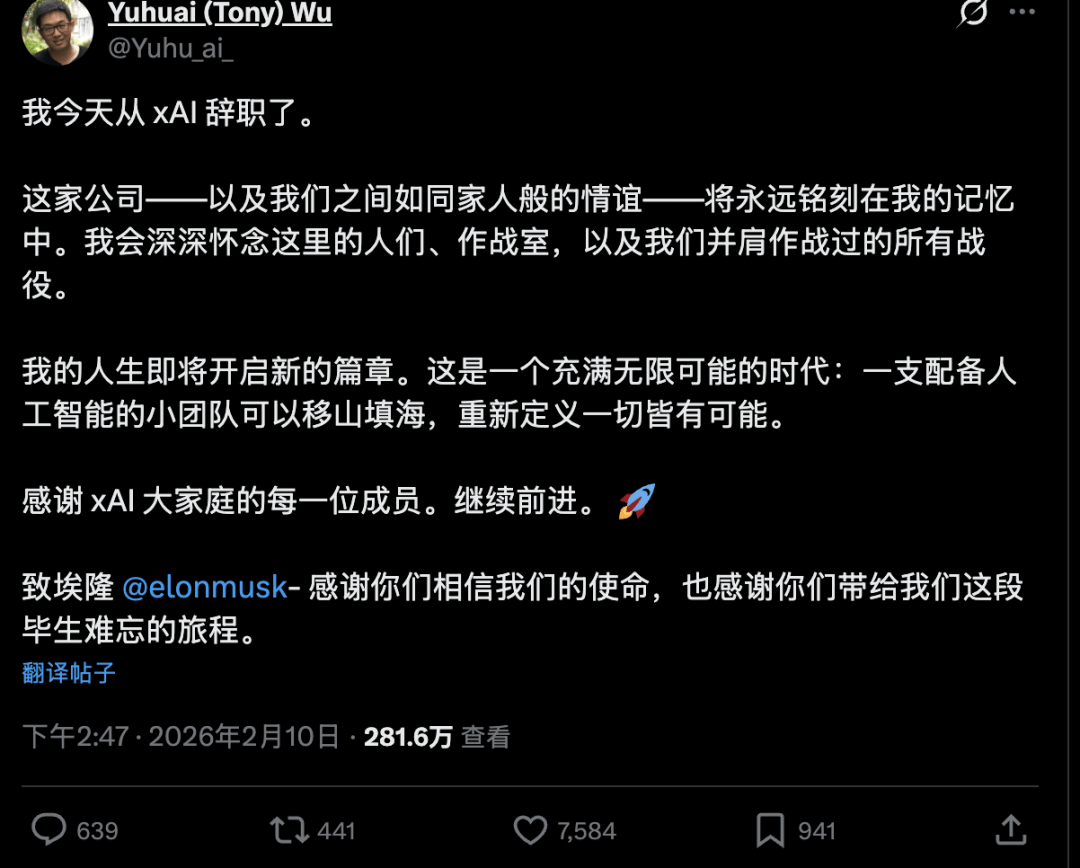
马斯克xAI雪崩!24小时两联创离职,一月内连失三位华人创始人,12人梦之队只剩一半
量子位· 2026-02-11 04:10
Core Viewpoint - The recent wave of departures from xAI, particularly among its Chinese co-founders, raises concerns about the company's stability and future direction, especially in light of its impending IPO plans and the competitive landscape in the AI sector [1][5][40]. Group 1: Departures of Key Personnel - Within 24 hours, two Chinese co-founders, Tony Wu and Jimmy Ba, announced their departures from xAI, following the earlier exit of Greg Yang due to health issues [2][4][9]. - In total, three out of five Chinese scientists from the original founding team have left xAI within a month, contributing to a total of six departures from the initial twelve-member team since its inception [5][22][27]. - The departures include significant figures such as Wu, who was a key expert in mathematics and symbolic reasoning, and Ba, known for his contributions to deep learning theory [16][18][21]. Group 2: Reasons Behind Departures - The high-pressure work culture at xAI, characterized by intense workloads and direct pressure from Elon Musk, has been cited as a contributing factor to the departures, with Yang attributing his health issues to overwork [30][31]. - Strategic shifts within the company, including the recent acquisition by SpaceX and the potential for an IPO, may have led to disagreements among founding members regarding the company's future direction and roles [33][34][40]. - xAI is also facing regulatory pressures and challenges related to its products, such as Grok AI, which has been criticized for creating problematic synthetic images, further complicating its operational landscape [37][39]. Group 3: Implications for xAI - The loss of key personnel, particularly those involved in critical areas like mathematical reasoning and deep learning, poses a risk to xAI's competitive edge against major players like OpenAI and Google [39][40]. - The ongoing talent exodus raises questions about the company's ability to maintain its technological advantages and execute its ambitious plans, especially with half of its founding team now departed [40][41]. - The current environment in the AI sector, characterized as a golden age for startups, may provide opportunities for the departing scientists, although their future plans remain uncertain [42][43].

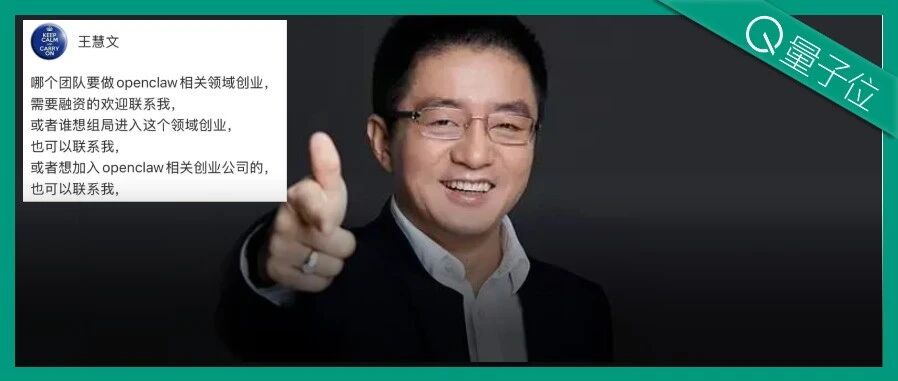
王慧文欲投资OpenClaw赛道,再发英雄帖:「需要融资的欢迎联系我」
3 6 Ke· 2026-02-09 00:10
Core Insights - Wang Huiwen is actively seeking investment opportunities in the OpenClaw startup sector, inviting entrepreneurs and those interested in joining related companies to reach out for support [1] - OpenClaw has gained significant traction, with its GitHub stars increasing from 100,000 to 171,000, indicating a strong community interest [6][7] - The OpenClaw sector is characterized by its unique approach to integrating APIs into user workflows, distinguishing it from traditional AI models [5] Investment Landscape - Wang Huiwen has invested approximately $70 million in Kimi, a key player in the OpenClaw ecosystem, which recently announced free access to its Kimi K2.5 model for users [16][23] - The OpenClaw community has demonstrated strong engagement, with over 1,000 fans attending its first offline gathering in San Francisco, showcasing its potential for sustained user loyalty and brand development [18] Market Dynamics - The rise of OpenClaw has sparked interest in related projects, such as rentahuman.ai, which aims to create a labor market for AI tasks, reflecting a broader trend of innovation in the AI space [9] - Concerns have emerged regarding the authenticity of user engagement on platforms like Moltbook, suggesting that the rapid growth of AI-related products may be accompanied by scrutiny over their sustainability [14] Future Outlook - The OpenClaw sector is viewed as having substantial commercial potential, with its product philosophy validated by market interest and community support [18] - Wang Huiwen's ongoing investments in AI startups, including his support for SiliconFlow, indicate a strategic focus on building a comprehensive AI infrastructure across various layers of the industry [22][23]
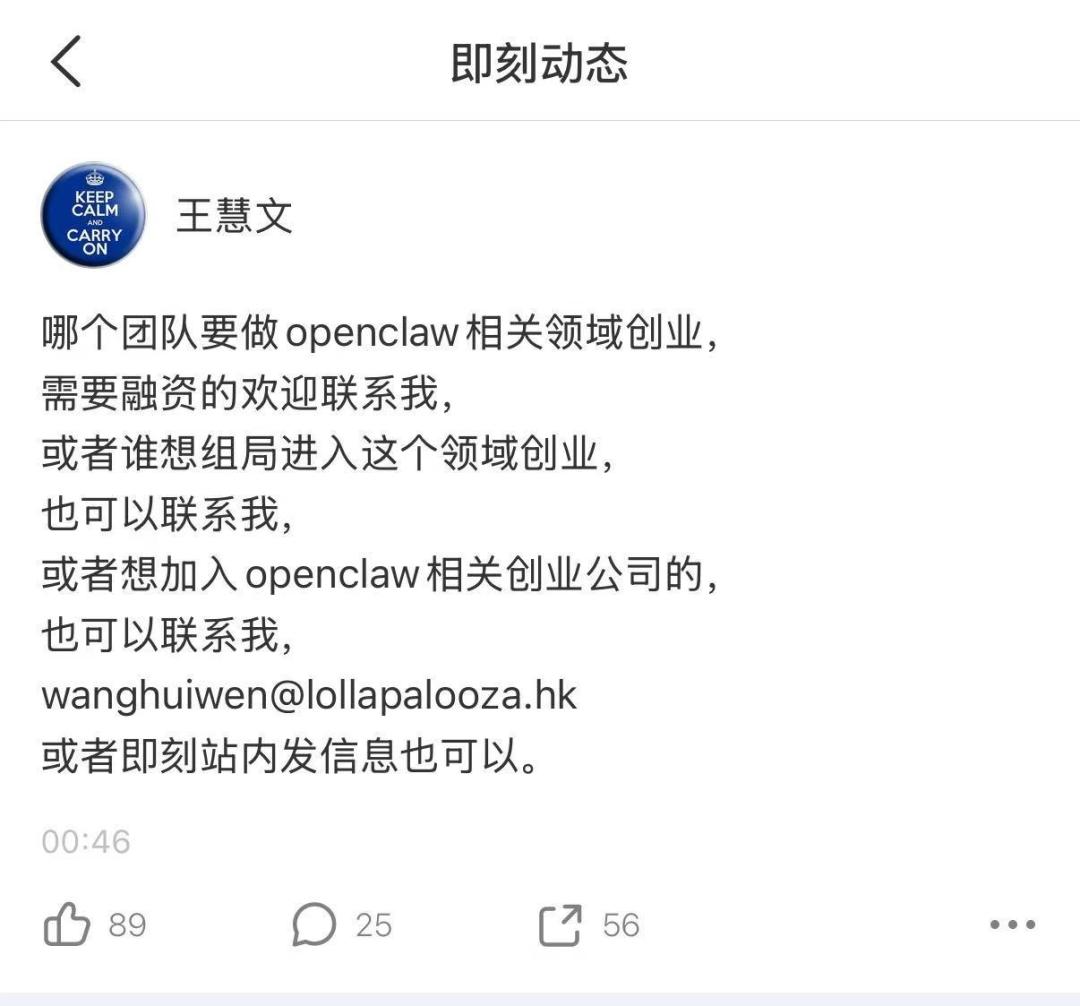
AI创业必看,YC划出最新10个黄金赛道,下一个巨头或将诞生在这些领域
Sou Hu Cai Jing· 2026-02-08 08:20
Core Insights - Y Combinator's 2026 RFS highlights a shift in entrepreneurial focus from traditional software to sectors like finance, government, industrial, energy, and manual labor, indicating a transformative phase in entrepreneurship driven by AI [1][24] - The document emphasizes that AI is moving beyond enhancing workflows to reconstructing entire systems, suggesting a significant evolution in how businesses operate and innovate [1][24] Group 1: AI in Product Management - Y Combinator proposes a new approach to product management, where AI tools can analyze customer feedback and usage data to generate actionable product outlines, thus streamlining the decision-making process for product managers [3][4] - The traditional reliance on product managers to sift through extensive data to identify user pain points is seen as outdated, with AI expected to take over this function [4] Group 2: AI in Finance - The concept of AI-native hedge funds aims to replace human decision-making in finance with AI, allowing for real-time analysis of vast amounts of unstructured data to develop complex investment strategies [5][6] - This model seeks to create a decentralized network of intelligent agents that can autonomously generate superior returns, moving beyond traditional quantitative trading methods [7] Group 3: AI in Service Industries - Y Combinator identifies a shift in service industries from a labor-based model to one driven by AI, allowing companies to sell finished products rather than services, significantly increasing profit margins [8][10] - Examples include design firms using AI to generate custom designs before contracts are signed, and law firms producing legal documents in minutes instead of weeks [10][11] Group 4: Stablecoin Financial Services - The emergence of stablecoins is seen as a bridge between traditional banking and cryptocurrency, offering the safety of regulated financial products with the speed and efficiency of digital currencies [12] - Y Combinator believes that stablecoins will enable new financial services that combine the advantages of both worlds, facilitating faster and cheaper cross-border transactions [12] Group 5: AI in Government Operations - The document discusses the potential for AI to enhance government efficiency by automating processes that currently rely on outdated manual workflows, thus improving public service delivery [13][14] - Y Combinator highlights the challenges of selling to government entities but notes the significant long-term opportunities available once a system is adopted [14] Group 6: AI in Manufacturing - Y Combinator emphasizes the need for modernizing traditional manufacturing processes through AI-driven production scheduling and real-time execution systems, aiming to enhance efficiency and reduce waste [15][16] - This approach seeks to transform metalworking from a low-margin industry into a high-profit sector driven by software [16] Group 7: AI in Labor - The potential for AI to assist manual labor through real-time guidance is discussed, enabling less skilled workers to perform complex tasks with the help of AI technology [17][18] - This shift could address labor shortages by compressing training periods and creating higher-paying job opportunities [18] Group 8: AI Model Development - Y Combinator calls for the creation of standardized infrastructure to simplify the model training process, aiming to enhance efficiency in AI development [22][23] - The focus is on developing tools that abstract complex underlying logic, making it easier for developers to create specialized models [23] Group 9: Government Fraud Prevention - The document outlines a vision for using AI to streamline the process of recovering funds lost to government fraud, proposing a system that can quickly analyze data and generate legal documents for prosecution [20][21] - This initiative is seen as a lucrative opportunity for startups that can effectively leverage AI in this domain [21]


王慧文杀入OpenClaw赛道,再发英雄帖:「需要融资的欢迎联系我」
量子位· 2026-02-07 07:02
Core Viewpoint - Wang Huiwen is actively seeking to engage with entrepreneurs and projects related to OpenClaw, indicating a strong interest in the AI sector and local agent development [1][2][30]. Group 1: OpenClaw and Its Impact - OpenClaw has gained significant traction, with its GitHub stars increasing from 100,000 to 171,000, nearly double that of PyTorch [10][11]. - The platform represents a new product approach in the AI era, focusing on integrating APIs into user workflows rather than just model development [8][9]. - OpenClaw's community engagement is evident, with over 1,000 fans attending its first offline gathering in San Francisco, showcasing strong user loyalty and brand presence [42][46]. Group 2: Wang Huiwen's Investments - Wang Huiwen has invested approximately $70 million in Kimi, which recently announced free access to its Kimi K2.5 model, marking a significant development for users and investors alike [36][37]. - His investment strategy spans various AI sectors, including foundational infrastructure, model development, and application layers, indicating a comprehensive approach to the AI landscape [68]. - Wang's previous ventures include the acquisition of OneFlow and investments in Trooly.AI, reflecting his ongoing commitment to AI innovation and entrepreneurship [60][67]. Group 3: Market Dynamics and Trends - The AI market is witnessing a surge in interest, with products like Moltbook and rentahuman.ai gaining popularity, although some skepticism exists regarding their user metrics and authenticity [20][25]. - The local agent sector is emerging as a hot trend, with significant potential for commercialization and user engagement, as evidenced by the sustained interest in OpenClaw [46][69]. - The rapid evolution of AI products and platforms suggests a dynamic market environment, where user engagement and community building are becoming increasingly important for success [41][45].
5000家AI企业,都在疯狂试错|一线
Sou Hu Cai Jing· 2026-02-06 09:54
Core Insights - The rapid development of AI technology is outpacing the number of professional users, leading to a disconnect between innovation and practical application [32]. Group 1: AI Startup Landscape - AI entrepreneurship is booming, with over 5,000 AI companies in China as of September 2025, a significant increase from 1,454 five years prior [6]. - Events organized by AI communities, such as EPIC, attract large audiences, indicating strong interest and engagement in the AI startup ecosystem [3][4]. - The AI startup community is diverse, comprising grassroots entrepreneurs, large tech companies, and academic backgrounds, all experimenting and iterating rapidly [9][12]. Group 2: Challenges Faced by AI Entrepreneurs - AI startups are grappling with two main challenges: identifying genuine user pain points and managing the costs associated with utilizing large AI models [17][21]. - The average utilization rate of GPU resources in AI centers is below 30%, highlighting inefficiencies in the market [19]. - The cost of model usage can account for 40-70% of total variable costs for AI startups, creating pressure to commercialize quickly [22]. Group 3: Market Dynamics and Globalization - AI entrepreneurs are increasingly looking towards global markets for opportunities, as international users tend to have a stronger willingness to pay for AI solutions [24]. - The disparity in market maturity between China and the U.S. affects the commercialization of AI products, with U.S. users being more receptive to subscription models [24]. - Investment opportunities in the global AI infrastructure are projected to reach $3-4 trillion by 2030, with significant interest from major tech firms [28]. Group 4: Future Outlook - The AI startup ecosystem is characterized by a mix of excitement and anxiety, as companies navigate the rapid pace of AI development while facing practical challenges [32]. - There is a consensus that while AI technology is advancing quickly, the number of professional users remains limited, which could hinder broader adoption [32].



2025小宇宙年度播客趋势报告-小宇宙编辑部
Sou Hu Cai Jing· 2026-01-21 14:46
Core Insights - In 2025, podcasts have become a significant medium for public expression and individual communication, deeply rooted in cultural and conversational contexts [7] - The Chinese podcast ecosystem continues to thrive, with the Xiaoyuzhou platform adding 64,032 new podcast programs and 696,698 episodes [7][9] Group 1: Key Trends in Podcasting - Family and education podcasts have surged, with a 99.57% increase in keyword search volume for "education" content, reflecting a growing interest in parenting topics [18][21] - Global perspective podcasts are gaining traction, with a staggering 456.06% increase in keyword search volume for "current affairs" content, indicating a heightened interest in international issues [42] - AI entrepreneurship podcasts have emerged as a new hotspot, with a 310% increase in episode numbers, showcasing the innovation and dynamism in the AI sector [55] Group 2: Content Categories and Engagement - Historical and business podcasts focus on contemporary relevance, with total playback durations reaching 10.3 billion minutes for history-related content and 11.6 billion minutes for business narratives [2] - Cultural and travel podcasts have evolved into "deep travel soundscapes," with a 54.23% increase in episode numbers, catering to listeners' desires for exploration and travel references [3] - Crime narrative podcasts have shifted towards real-world relevance, with episode numbers and playback increasing by 66.5% and 77.7% respectively, integrating legal perspectives and social discussions [3]