
星火·链网

Search documents
深耕七大领域、六大方向!“星火”TA生态基于“信任”与“智能”,深化链接,持续扩展
Sou Hu Cai Jing· 2026-01-01 06:21
Core Viewpoint - The "Starfire" TA ecosystem aims to accelerate the development of new productive forces in the digital economy through technological breakthroughs and ecological construction, focusing on trust and intelligence as its operational mechanisms [1][3]. Group 1: Ecosystem Structure and Principles - The "Starfire" ecosystem is designed to transition from a unidirectional industrial economy to a multidimensional networked relationship in the digital economy, promoting an open, green, and symbiotic ecosystem [3][4]. - The ecosystem focuses on seven major business areas, including industrial internet, blockchain, internet, data, IoT, AI, and future industries, aiming for comprehensive digital transformation across various sectors [4][5]. Group 2: Infrastructure Development - Three foundational infrastructures—industrial internet, blockchain, and internet—have been established to support the "Starfire" TA ecosystem, with significant achievements in each area [5][6]. - In the industrial internet sector, over 370 secondary nodes and more than 500,000 connected enterprises have been established, with a registration volume exceeding 650 billion and a daily resolution volume of over 120 million, leading globally in key metrics [5]. - The blockchain sector has developed a national data service network with a dual-layer architecture, covering nine cities and extending to 18 provinces, facilitating cross-border digital trust ecosystems [6]. Group 3: Innovation and Application - The "Starfire" TA ecosystem is advancing in four innovative business areas: data, IoT, AI, and future industries, which are crucial for its large-scale development [7][8]. - A new product authorization plan focusing on the integration of identification and data has been launched, aiming to promote 500 applications across key sectors such as finance and digital healthcare [7][8]. Group 4: Evolution and International Standards - The evolution of the "Starfire" TA ecosystem is shifting from empowering industries to participating in the formulation of international standards, with diverse applications being developed based on the "Starfire Chain Network" [9][10]. - The ecosystem is addressing international challenges such as carbon tariffs and digital carbon passports by establishing a unified carbon data management system to enhance enterprises' governance capabilities [10][11]. - Over 3,000 enterprises are now involved in the ecosystem, which aligns with national strategies for manufacturing, networking, and digital transformation, supporting compliance in global trade and contributing to high-quality digital economic development [11].

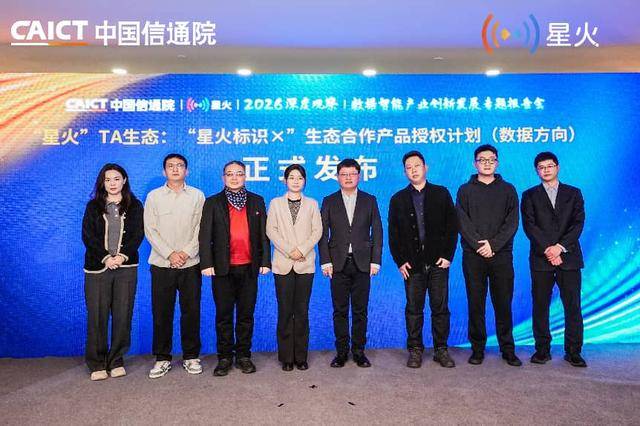
中国信通院发布多项成果:DPPaaS分级评测指标体系与“星火·链网”共驱数智融合
Zheng Quan Shi Bao Wang· 2025-12-14 02:51
Core Insights - The conference on December 13, 2026, focused on the integration of data elements and intelligent technologies, highlighting the rapid development of data infrastructure in China and the shift from "usable" to "usable and effective" data [1][2] Group 1: Data and Intelligent Technology Integration - The synergy between artificial intelligence and data elements is accelerating, with data becoming a crucial production factor for AI development [2] - China has established a reliable data circulation technology foundation represented by industrial internet identification and blockchain infrastructure, facilitating cross-system and cross-industry data utilization [2][3] Group 2: Key Work Directions - The China Academy of Information and Communications Technology (CAICT) outlined three main work directions: building a data infrastructure centered on data circulation, creating high-quality data sets for key industries, and developing a multi-dimensional evaluation system supported by comprehensive standards [3][4] - The focus is on evolving data from "usable" to "effective" through standard assessments and certifications, enhancing the overall development ecosystem [3] Group 3: Definition and Global Competition - Data intelligent services are defined as a comprehensive system utilizing big data, AI, and cloud computing to create new intelligent capabilities and service models, transitioning industries from traditional to intelligent processes [4] - In the global competitive landscape, the U.S. leads in original innovation, Europe focuses on regulatory balance, while China leverages its complete industrial system and vast market data to promote large-scale applications [4] Group 4: Product Digital Passport Service Capability - The CAICT introduced the Product Digital Passport Service Capability (DPPaaS) grading evaluation system to standardize industry development and address issues like lack of standards and fragmented technology routes [5][6] - The DPPaaS system includes a "SCORE" model with 24 core indicators across five dimensions, categorizing service capabilities into five levels from basic to leading [6] Group 5: Starfire Infrastructure and Cross-Border Trade - The CAICT has developed multiple trusted data service platforms based on national-level infrastructures to facilitate cross-border trade and cultural data assetization [7][8] - The Starfire Quality Code public service platform aims to create a global blockchain data service network, enhancing product lifecycle data management and supporting trade facilitation [7] Group 6: Cultural Data Assetization - The Starfire initiative addresses challenges in cultural digitization by utilizing blockchain technology for data registration and transaction authorization, enhancing the value of cultural data assets [8][9] - The initiative has already integrated numerous effective scenarios and components, significantly shortening development processes and enhancing the international dissemination of Chinese culture [9]