星际X皮卡

Search documents
上汽商用车“五连涨”透视:一场由战略、产品与生态驱动的系统革命
汽车商业评论· 2025-10-26 23:07
Core Viewpoint - The commercial vehicle industry is undergoing a significant transformation driven by market fluctuations, the acceleration of new energy and intelligent technologies, and intense competition, leading to a shift from "scale expansion" to "system resilience" as the new survival logic for companies [4][13]. Industry Overview - In the first nine months of 2023, domestic commercial vehicle production and sales reached 3.091 million and 3.117 million units, respectively, representing year-on-year growth of 9.4% and 7.8%, with exports increasing by 10.2% to 748,000 units [4]. - The commercial vehicle market is experiencing structural differentiation due to challenges such as the shrinking traditional fuel vehicle market and the long return cycles of new energy transitions [4]. Company Performance - SAIC Commercial Vehicles reported retail sales of 187,000 units in the first nine months of 2023, a year-on-year increase of 4.6%, marking five consecutive months of positive growth [6]. - In the light commercial vehicle market, SAIC holds an 18.9% market share, with the "Danna" series experiencing a 129% year-on-year increase in cumulative sales [6][8]. - The new energy vehicle segment saw SAIC's sales reach 46,020 units, with a penetration rate of 30.6%, significantly above the industry average [8][9]. Market Dynamics - The new energy commercial vehicle market has become a crucial growth driver, with sales reaching 566,000 units in the first nine months, a 61.4% year-on-year increase, accounting for 23.9% of total commercial vehicle sales [8]. - SAIC's new energy vehicle sales grew by 63.1%, with the "Danna" series recognized as a benchmark in the sector [9]. Strategic Initiatives - SAIC Group has emphasized the importance of the commercial vehicle business, establishing it as a core OEM alongside passenger vehicles, and appointing key leadership to enhance decision-making efficiency [13][15]. - The company aims to double its light commercial vehicle sales in five years and achieve leadership in domestic and global markets [13]. Product and Technology Development - SAIC is focusing on product innovation with a diverse range of new models, including the "Danna" series and new energy light trucks, designed to meet various market demands [17]. - The company has achieved significant safety ratings, with models like the "Danna V1" receiving platinum safety ratings from EuroNCAP [17]. Ecosystem and Market Positioning - SAIC is transitioning from a traditional vehicle manufacturer to an ecosystem provider, creating a comprehensive solution for logistics and transportation needs through the "Lingju Ecosystem" [19][20]. - The company is enhancing its digital presence and user engagement through innovative online and offline strategies, aiming to provide value throughout the vehicle lifecycle [19][22]. Future Outlook - The "Fifteen Five" strategic plan aims to position SAIC as a technology-driven commercial vehicle group, focusing on providing comprehensive transport solutions rather than just selling vehicles [22]. - The company's systematic reforms across strategy, organization, product, channel, and globalization are expected to drive sustainable growth and reshape the commercial vehicle industry landscape [22].


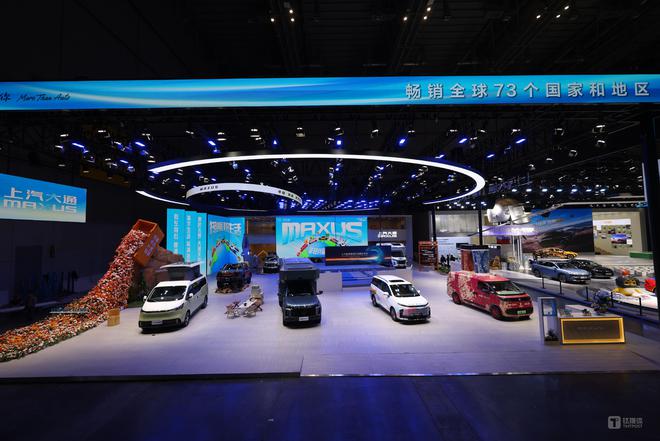
上汽打造全新商用车战略,全速进攻新能源商用车市场
Tai Mei Ti A P P· 2025-04-24 03:12
Core Viewpoint - SAIC Maxus is undergoing a transformation to become a new ecosystem, focusing on commercial vehicle strategy and resource integration to enhance competitiveness in the market [2][15]. Group 1: Strategic Transformation - SAIC Group announced a new commercial vehicle strategy centered around SAIC Maxus, aiming to create a globally leading development system for commercial vehicles [2]. - The restructuring involves transitioning from a divisional model to a more integrated operational model, with SAIC Maxus focusing on light commercial vehicles [2][5]. - The new commercial vehicle system aims to improve decision-making efficiency and concentrate resources on enhancing the competitiveness of light commercial vehicles [2][5]. Group 2: Market Challenges and Opportunities - The commercial vehicle industry is facing rapid changes due to electrification trends and stricter environmental regulations, necessitating strategic transformation for SAIC Maxus [4]. - SAIC Maxus aims to leverage market opportunities while addressing challenges through focused resource allocation and collaborative innovation [4][5]. Group 3: Product Focus and Innovation - SAIC Maxus is prioritizing the development of successful products in the wide-body light van, pickup, and multi-person MPV segments, emphasizing quality over quantity in product development [5][6]. - The company is committed to enhancing product individuality and has showcased innovative models like the Cyberster and the Starship X pickup [6]. Group 4: Core Competitive Pillars - The strategic core of SAIC Maxus is built around four pillars: user-centric total cost of ownership (TCO), ecosystem collaboration, influential industry position, and differentiated highlights [7][8]. - The goal is to establish a TCO benchmark through flagship products, providing users with cost-saving solutions over the vehicle's lifecycle [7]. - SAIC Maxus aims to achieve a sales target of 500,000 units by 2030, regaining a leading position in the commercial vehicle sector [8][9]. Group 5: Collaboration with Huawei - SAIC Maxus has partnered with Huawei to enhance its smart commercial vehicle offerings, integrating advanced technologies for improved user experience [10][11]. - The collaboration includes the development of smart off-road pickups and autonomous buses, leveraging Huawei's technology for optimized route planning and communication [13][14]. - This partnership is expected to elevate SAIC Maxus's brand image and technological appeal in the commercial vehicle market [14]. Group 6: Future Outlook - The strategic transformation and collaboration with Huawei position SAIC Maxus to aggressively pursue the new energy commercial vehicle market [15]. - The company aims to redefine the global competitive landscape of the commercial vehicle industry through innovation and strategic positioning [15].