Cyberster

Search documents
汽车视点丨 “两年13款、All in 新能源” ,上汽MG年轻化再升级
Zhong Guo Jin Rong Xin Xi Wang· 2025-07-01 09:51
Core Viewpoint - The Chinese automotive industry is undergoing a significant transformation with a strong focus on new energy vehicles (NEVs), as exemplified by MG's commitment to an "All in NEV" strategy, which aims to launch 13 new models over the next two years, covering various energy forms including pure electric, hybrid, and extended-range vehicles [1][4][5]. Group 1: MG's Strategic Moves - MG has launched two new models, the 2026 MG5 starting at 59,900 yuan and the 2026 Cyberster starting at 319,800 yuan, with plans for the MG4 to be released in September [1]. - The brand's strategy emphasizes that "All in NEV" does not equate to abandoning fuel vehicles, as the newly launched MG5 is a fuel vehicle, indicating a dual approach to meet current and future market demands [4][5]. - MG's sales have seen a significant increase, with May sales up over 60% year-on-year and a cumulative increase of 29% from January to May [6]. Group 2: Market Position and Challenges - Despite strong sales, MG faces challenges such as reliance on price incentives and a fragmented product line, with a price gap from 60,000 to 300,000 yuan that may confuse brand identity [6][7]. - The brand aims to fill this price gap with new models across various price ranges, enhancing its market presence and addressing current pain points [7]. - MG's focus on technology integration, including a partnership with OPPO for a new car-machine ecosystem, aims to attract younger consumers and enhance brand appeal [8][9]. Group 3: Industry Context - Major traditional automakers like Audi and Volvo are adjusting their electrification timelines, indicating a cautious approach to fully abandoning fuel vehicles [3][4]. - The industry is expected to see a 25% year-on-year increase in sales of plug-in hybrid and pure electric vehicles, reaching 22 million units by 2025, while many automakers will continue to offer both fuel and electric vehicles [4].



上汽打造全新商用车战略,全速进攻新能源商用车市场
Tai Mei Ti A P P· 2025-04-24 03:12
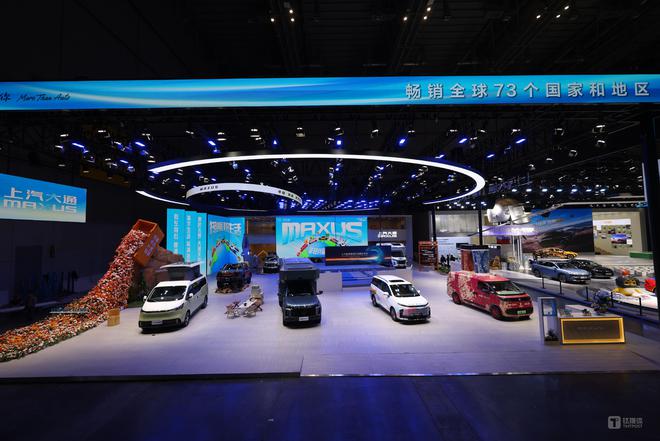
Core Viewpoint - SAIC Maxus is undergoing a transformation to become a new ecosystem, focusing on commercial vehicle strategy and resource integration to enhance competitiveness in the market [2][15]. Group 1: Strategic Transformation - SAIC Group announced a new commercial vehicle strategy centered around SAIC Maxus, aiming to create a globally leading development system for commercial vehicles [2]. - The restructuring involves transitioning from a divisional model to a more integrated operational model, with SAIC Maxus focusing on light commercial vehicles [2][5]. - The new commercial vehicle system aims to improve decision-making efficiency and concentrate resources on enhancing the competitiveness of light commercial vehicles [2][5]. Group 2: Market Challenges and Opportunities - The commercial vehicle industry is facing rapid changes due to electrification trends and stricter environmental regulations, necessitating strategic transformation for SAIC Maxus [4]. - SAIC Maxus aims to leverage market opportunities while addressing challenges through focused resource allocation and collaborative innovation [4][5]. Group 3: Product Focus and Innovation - SAIC Maxus is prioritizing the development of successful products in the wide-body light van, pickup, and multi-person MPV segments, emphasizing quality over quantity in product development [5][6]. - The company is committed to enhancing product individuality and has showcased innovative models like the Cyberster and the Starship X pickup [6]. Group 4: Core Competitive Pillars - The strategic core of SAIC Maxus is built around four pillars: user-centric total cost of ownership (TCO), ecosystem collaboration, influential industry position, and differentiated highlights [7][8]. - The goal is to establish a TCO benchmark through flagship products, providing users with cost-saving solutions over the vehicle's lifecycle [7]. - SAIC Maxus aims to achieve a sales target of 500,000 units by 2030, regaining a leading position in the commercial vehicle sector [8][9]. Group 5: Collaboration with Huawei - SAIC Maxus has partnered with Huawei to enhance its smart commercial vehicle offerings, integrating advanced technologies for improved user experience [10][11]. - The collaboration includes the development of smart off-road pickups and autonomous buses, leveraging Huawei's technology for optimized route planning and communication [13][14]. - This partnership is expected to elevate SAIC Maxus's brand image and technological appeal in the commercial vehicle market [14]. Group 6: Future Outlook - The strategic transformation and collaboration with Huawei position SAIC Maxus to aggressively pursue the new energy commercial vehicle market [15]. - The company aims to redefine the global competitive landscape of the commercial vehicle industry through innovation and strategic positioning [15].