
智慧农机

Search documents
第32届杨凌农高会闭幕
Shan Xi Ri Bao· 2025-10-30 00:23
Core Insights - The 32nd China Yangling Agricultural High-tech Achievements Expo concluded successfully, with a record attendance of 1.61 million offline visitors and 18.93 million online viewers, marking a new high in the last five sessions [1][2] - The total signed amount during the expo reached 25.8 billion yuan, with on-site transaction volume at 273 million yuan, and overall revenue increased by over 20% year-on-year [1][2] Group 1: Event Highlights - The theme of this year's expo was "New Quality Productivity, New Future for Agriculture," focusing on the development of new agricultural productivity through various exhibition formats including indoor, field, cloud, and overseas exhibitions [1] - The expo showcased over 9,600 technological achievements from more than 1,800 enterprises, with an indoor exhibition area of 140,000 square meters covering 43 specialized topics [2] - The event attracted participation from over 50 countries and regions, with an overseas exhibition held in Tashkent, Uzbekistan, featuring over 130 enterprises displaying technologies such as smart greenhouses and agricultural IoT [2] Group 2: Agricultural Innovation and Cooperation - The 7th Yangling Seed Industry Innovation Forum featured 10 academicians sharing cutting-edge research findings, and the establishment of a national-level molecular breeding innovation service platform was announced [1] - The expo facilitated 15 technology cooperation and production-sales matching projects during the International Apple Industry Technology Innovation Conference [1] - The 5th World Dairy Sheep Industry Development Conference introduced China's first dairy sheep breed "Yuansheng Aite Dairy Sheep," resulting in a 1 billion yuan production-sales cooperation agreement [2] Group 3: Market Transformation and Continuous Development - The "Agricultural Products Exchange" platform was launched, transitioning the expo from a 5-day event to a year-round sales platform [2] - The expo's market-oriented transformation was highlighted by activities such as "Live with Hui," achieving sales exceeding 57 million yuan [2] - The commitment to modern agriculture and rural development was reiterated by officials, emphasizing the ongoing efforts to enhance the quality and level of the Yangling Agricultural Expo [3]
领跑中国重装“出海” 山东重工集团做对了什么?
Zheng Quan Ri Bao Zhi Sheng· 2025-10-20 13:13
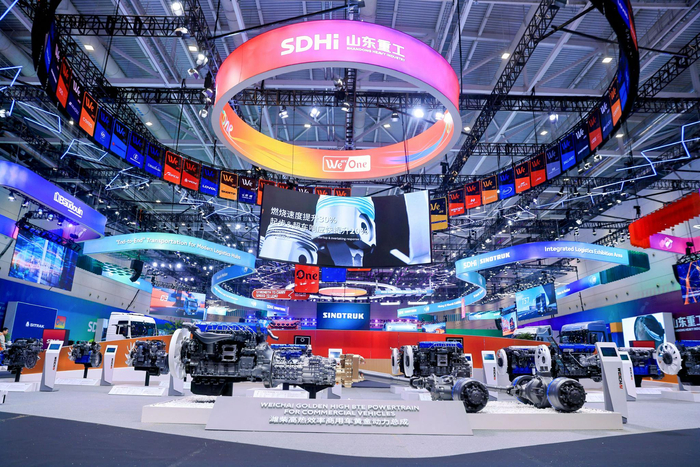
Core Insights - Shandong Heavy Industry Group has demonstrated strong growth despite global economic pressures, achieving nearly 440 billion yuan in revenue in the first three quarters of 2025, a year-on-year increase of over 9% [2] - The group emphasizes technological innovation and R&D investment as key drivers for its competitive edge in international markets [2] Group Performance - The group's export revenue reached 72.7 billion yuan, with a year-on-year growth of 6% to 7%, and is expected to exceed 100 billion yuan for the year, marking a fourfold increase from 20 billion yuan in 2020 [2] - R&D expenses are projected to be 13.6 billion yuan in 2024, maintaining a research intensity of 4.2% [2] Product Development - Weichai Group has released the world's highest thermal efficiency diesel engine, achieving 53% efficiency [2] - The sales of Weichai's large-bore engine data center business have surged by 400% year-on-year in the first three quarters [2] Heavy Truck Sector - China National Heavy Duty Truck Group (CNHTC) exported 111,000 heavy trucks in the first three quarters, a year-on-year increase of 24.5%, maintaining its position as the top exporter of heavy trucks in China [4] - Shaanxi Heavy Duty Truck has become the second-largest exporter of heavy trucks in China [4] New Energy Initiatives - The group showcased its latest products and technologies in the new energy sector at the Global Partner Conference, with expected sales revenue of nearly 30 billion yuan from new energy businesses this year [5] - Weichai Group's new energy segment has seen a 122% year-on-year growth in its "three new" business [5] International Strategy - 30% of the group's overseas revenue comes from its industrial layout in Europe and the U.S., while another 30% is generated from localized manufacturing and sales of domestic products [8] - The group is focused on localizing teams, management, manufacturing, and R&D in overseas markets to enhance resilience against economic fluctuations [8]

数智赋能现代农业 产业升级动能持续释放
Zheng Quan Ri Bao· 2025-10-12 15:43
Core Insights - The 2025 Smart Agriculture and Service Trade Conference highlighted the rapid digital and intelligent transformation of China's agriculture sector, showcasing over a hundred agricultural enterprises from more than 20 provinces [1] - The conference served as a platform for resource integration and innovation in smart agriculture, facilitating the transition of technology from laboratories to practical applications in the field [1] Policy Support - The Ministry of Agriculture and Rural Affairs issued the "National Smart Agriculture Action Plan (2024-2028)" to enhance smart agriculture through existing projects and policies, aiming for a coordinated policy framework [2] - Financial institutions are encouraged to establish differentiated credit assessment systems for technology innovation in agriculture, with increased credit loan limits for smart agriculture and related sectors [2] Local Initiatives - Beijing's implementation plan for smart agriculture aims for comprehensive data coverage and utilization in rural areas by 2030, enhancing the value of agricultural data [3] Technological Innovation - A report from Beihai City indicated that 77.7% of respondents believe smart agriculture technologies have reduced production costs and improved efficiency, while 63% noted enhancements in product quality and economic benefits [5] - Digital agriculture demonstration zones in Jiangsu and Hebei have achieved a 15% increase in water and fertilizer utilization efficiency and a 10% increase in yield per unit area [5] - The market size for smart agriculture and related industries in China is expected to exceed 120 billion yuan by 2025, with an annual growth rate of around 15% [5] Industry Significance - Smart agriculture is seen as essential for achieving high-quality development in the agricultural sector, addressing challenges such as low production efficiency and resource constraints [6]
智造世界 创造美好
Ren Min Ri Bao· 2025-09-29 22:30
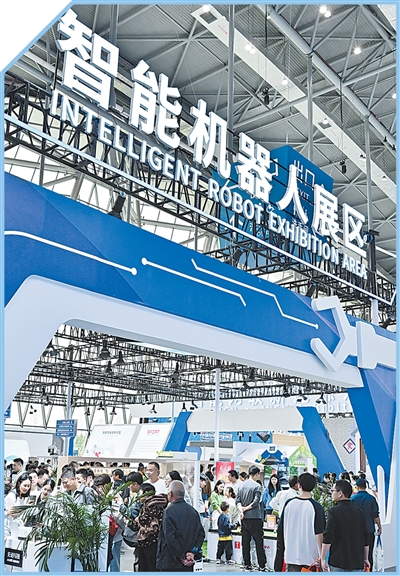
Core Insights - The 2025 World Manufacturing Conference was successfully held in Hefei, Anhui from September 20 to 23, focusing on the theme "Intelligent Manufacturing, Creating a Better Future" [13] - The conference attracted guests from over 40 countries and regions, featuring 4 major events, 6 project matchmaking activities, and 23 specialized activities [13] - The exhibition showcased achievements in new industrialization, particularly in artificial intelligence, with a dedicated robot section and the release of several large model technologies and application scenarios [13] Group 1 - The conference served as an important platform for international cooperation and was approved by the State Council, aligning with national diplomatic strategies [13] - A total of 735 cooperation projects were facilitated during the conference, with a total investment of 380.2 billion yuan, marking a 2.4% increase in project numbers and a 3% increase in investment compared to the previous year [15] - Manufacturing projects accounted for over 90% of the total, with the Yangtze River Delta region contributing more than 50% of the project numbers and total investment [15]
2025年中国(广西)—东盟农业与减贫合作会议在南宁举行
Zhong Guo Xin Wen Wang· 2025-09-18 12:01
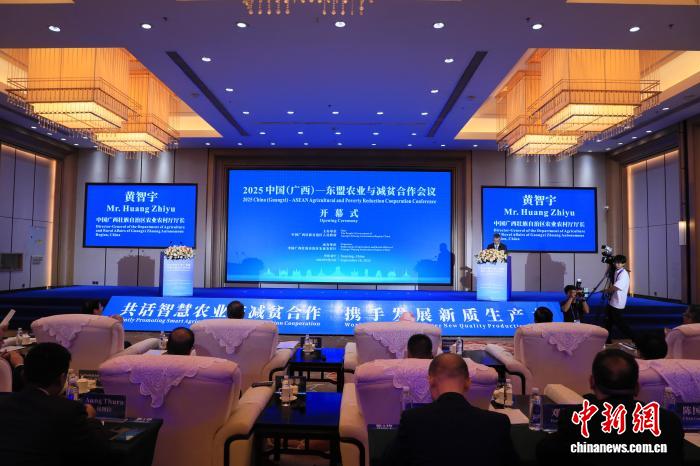
Core Viewpoint - The China-ASEAN Agricultural and Poverty Alleviation Cooperation Conference aims to enhance regional agricultural cooperation and poverty alleviation through dialogue and collaboration among various stakeholders [1][3]. Group 1: Conference Objectives and Themes - The conference focuses on "Smart Agriculture and Poverty Alleviation Cooperation, Hand in Hand to Develop New Quality Productivity" [3]. - Representatives from China, Brunei, Cambodia, Myanmar, and other countries, along with experts and business representatives, engage in discussions on smart agricultural technology innovation, poverty alleviation models, resource optimization, and the development of new quality productivity [3]. Group 2: Achievements and Future Directions - Agricultural cooperation between Guangxi and ASEAN countries has a long history, with recent years seeing an expansion in cooperation areas and methods, resulting in significant achievements [3]. - The total import and export volume of agricultural products between Guangxi and ASEAN countries is projected to reach 30.29 billion yuan in 2024, a 56.5% increase compared to 2018 [3]. Group 3: Strategic Initiatives - Guangxi is leveraging national artificial intelligence initiatives to build a development path that integrates research and development from major cities with applications in ASEAN, aiming to enhance agricultural trade and investment [3]. - The conference advocates for a new framework for smart agricultural cooperation and the establishment of a digital technology collaborative innovation system [5]. Group 4: Key Collaborations and Projects - Four significant cooperation projects were established, including cross-border animal disease prevention and smart agriculture technology collaboration with Laos [5]. - Guangxi Agricultural Vocational and Technical University signed a cooperation agreement with relevant enterprises in Laos to promote various aspects of agricultural technology and education [5]. Group 5: Exhibition and Promotion - The conference featured the first "AI + Agriculture" exhibition area, showcasing advanced technologies such as smart agricultural machinery and agricultural big data platforms [5]. - Over 100 agricultural enterprises from Guangxi participated in the exhibition, promoting local specialty products like Liubao tea and dragon fruit, thereby expanding cooperation in agricultural technology and trade with ASEAN [5].
科技助力让“三夏”插上“智慧的翅膀” 田间地头一片忙碌景象
Yang Shi Wang· 2025-06-19 02:43
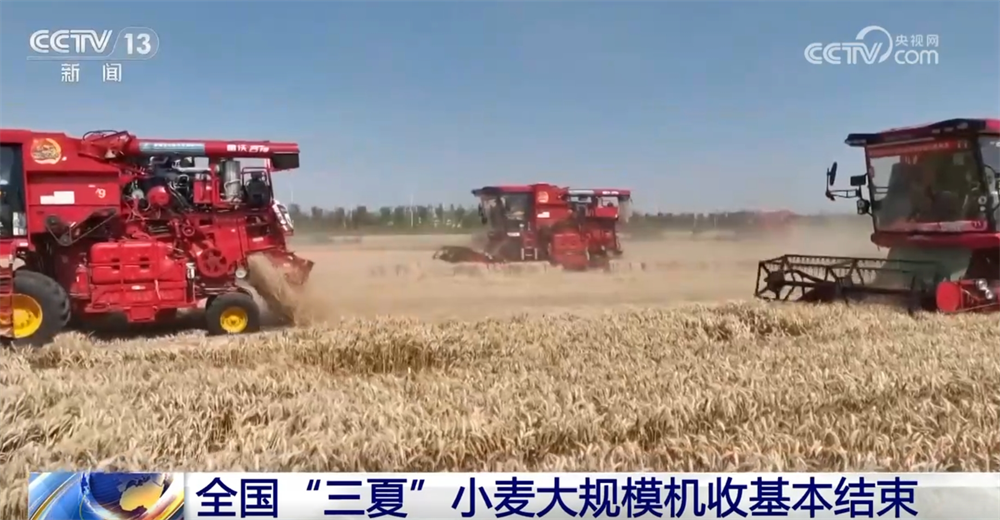
Core Viewpoint - The agricultural sector has made significant progress in wheat harvesting and summer planting, with mechanization and digitalization playing key roles in enhancing efficiency and productivity [1][3][5]. Group 1: Wheat Harvesting Progress - As of June 18, the wheat harvesting progress reached 96%, indicating the completion of large-scale mechanized harvesting for this year's "Three Summers" [1]. - The harvesting began on May 15 in the southwestern wheat region and expanded nationwide by May 26, with the process being 2 to 3 days faster than usual [1]. - In Anhui province, 160,000 high-performance combine harvesters were deployed, achieving a peak daily harvest of over 7 million mu, which is 3 days ahead of last year [3]. Group 2: Mechanization and Technology - The dominant model for cross-regional harvesting this year is the 9-10 kg/s large feeding capacity combine harvester, which has improved efficiency by over 30% compared to five years ago, with an average daily harvest area of 80 mu per machine [3]. - In Hebei, 27,000 low-loss, high-efficiency combine harvesters were introduced, with an expected average mechanical harvesting loss rate of less than 1% [7]. Group 3: Digitalization in Agriculture - Henan province is advancing the entire process of "plowing, planting, managing, and harvesting" through digital platforms that provide real-time information on machinery deployment and operation [5]. - In Shandong, 280,000 agricultural machinery operators and technicians are engaged in operations, utilizing smart machinery equipped with navigation systems [5]. Group 4: Summer Planting Initiatives - The summer planting and management processes are progressing steadily, with significant efforts in rice planting in Hunan and Jiangxi provinces [9][11]. - In Jiangxi, the introduction of precision seeding machinery is expected to reduce seed costs by approximately 10% [11]. - In Jiangsu, new agricultural power supply systems have been installed to support the charging of modern farming equipment during the summer planting season [13]. Group 5: Weather Impact and Recommendations - The Central Meteorological Observatory forecasts significant rainfall from June 18 to 20, advising farmers to expedite planting and ensure proper seedling management to enhance crop quality [17].
智慧“新成员”大展身手服务“三夏”生产 “减损增收”从目标变为现实
Yang Shi Wang· 2025-06-08 08:08
Group 1 - The current wheat harvesting season is in full swing, with significant progress reported in various regions including Hebei, Henan, Shandong, and Jiangsu, aided by favorable weather conditions [1] - As of June 6, Jiangsu has achieved over 54% of its wheat harvesting progress, with a mechanization rate of 99%, showcasing the effectiveness of smart agricultural machinery and IoT systems [1] - The integration of "smart machinery" and socialized services in Lianyungang has led to a reduction in impurity rates to below 0.8% through the use of advanced harvesting equipment [6] Group 2 - In Xuzhou, the use of technologies such as Beidou navigation and IoT allows operators to remotely control harvesting machines, ensuring efficient and precise operations [8] - Local authorities in Pizhou have organized a comprehensive distribution and scheduling of agricultural machinery, deploying 130,000 harvesters and 37,000 dryers for the 2025 summer harvest [10] - The introduction of new agricultural technologies has transformed traditional harvesting methods into more intelligent processes, significantly reducing losses from 2%-3% to below 1% [15] Group 3 - In Dongying District, over 200,000 acres of wheat are maturing, with farmers utilizing advanced machinery to optimize the harvesting process [11] - Agricultural technicians are employing drones equipped with multispectral sensors to monitor wheat maturity, providing real-time data on key physiological metrics [13] - The combination of precise harvesting timing and smart machinery has effectively minimized losses, enhancing overall yield and efficiency in wheat production [15]
从跨区机收看农业现代化关键密码
Jing Ji Ri Bao· 2025-05-21 22:41
Core Viewpoint - The successful practice of cross-regional mechanized harvesting in China is supported by a modern agricultural social service system, which includes information platforms, maintenance stations, fuel guarantees, and financial services, enabling efficient nationwide movement of dispersed agricultural machinery resources [1][3][4] Group 1: Importance of Cross-Regional Mechanized Harvesting - The summer grain harvest, particularly wheat, is crucial as it accounts for about one-fifth of the total annual grain production, with wheat making up 90% of that [1] - Cross-regional mechanized harvesting is key to ensuring timely collection of wheat, preventing losses due to adverse weather conditions [1][4] - China, as the world's largest wheat producer, utilizes over 300,000 harvesting machines during the summer harvest, showcasing the scale of agricultural mechanization [1] Group 2: Technological Advancements - The application of advanced technologies such as artificial intelligence, IoT, and big data is reshaping agricultural operations, providing new momentum for cross-regional mechanized harvesting [2] - Smart harvesting machines equipped with Beidou navigation can accurately assess crop maturity and optimize harvesting parameters, significantly reducing missed cuts [2] - Autonomous harvesting machines can process terrain data in real-time and plan optimal paths, enhancing operational efficiency [2] Group 3: Supportive Infrastructure - The establishment of digital platforms like "Farm Machinery Direct" and "Smart Agricultural Machinery" facilitates effective supply-demand matching, improving operational efficiency and reducing labor costs [3] - Logistics support along harvesting routes includes "Farm Machinery Stations" providing fuel, maintenance, and accommodation services, ensuring uninterrupted operations [3] - The innovative "order-based service + contiguous operation" model implemented by agricultural cooperatives stabilizes farmer expectations and enhances machinery utilization [3][4] Group 4: Historical Context and Modernization - Cross-regional mechanized harvesting, which began in the 1990s, exemplifies China's agricultural modernization, addressing the challenges faced by small-scale farmers [4] - The model of resource allocation for agricultural machinery has resolved the dual issues of "having machinery without land" and "having land without machinery," preventing resource wastage [4] - Currently, over 98% of wheat harvesting in China is mechanized, with cross-regional harvesting playing a significant role in this achievement [4]