
智能仓库

Search documents
9568亿!刘强东将拿下第七家上市公司!
Sou Hu Cai Jing· 2026-01-30 02:40
Core Insights - JD Property, a key player in JD's supply chain infrastructure, is set to go public on the Hong Kong Stock Exchange, marking a significant step in its journey after a previous IPO attempt was paused for nearly three years [4][5]. Group 1: Company Overview - JD Property has evolved from an internal logistics department to an independent company with an asset management scale exceeding 120 billion yuan, establishing itself as an industry leader over the past decade [4]. - The company manages 285 infrastructure assets across 29 provincial-level administrative regions and 10 countries, with a total construction area of 27.1 million square meters [5]. Group 2: Financial Performance - For the first nine months of 2025, JD Property reported revenue exceeding 3 billion yuan, reflecting a year-on-year growth of 21.2%, with adjusted net profit reaching 823 million yuan, more than tripling compared to the entire year of 2023 [6]. - External clients contributed 62.5% of the revenue, showcasing a diverse customer base that includes major companies like BMW and BYD, indicating a shift away from reliance solely on JD [7]. Group 3: International Expansion - JD Property's international projects have increased, with overseas assets rising from 3.7% at the beginning of 2023 to 12.8% by September 2025 [7]. - The company has secured four high-standard warehouses in Singapore, totaling 176,000 square meters, enhancing its supply chain network in the Asia-Pacific region [7]. Group 4: Market Context - JD Group's overall revenue reached 956.8 billion yuan in the first three quarters of 2025, marking a 17.86% year-on-year increase, attributed to a strategic focus on core business areas [8]. - The trend in the industry is shifting from diversification to a focus on core competencies, which is expected to shape the competitive landscape in the coming decade [8].


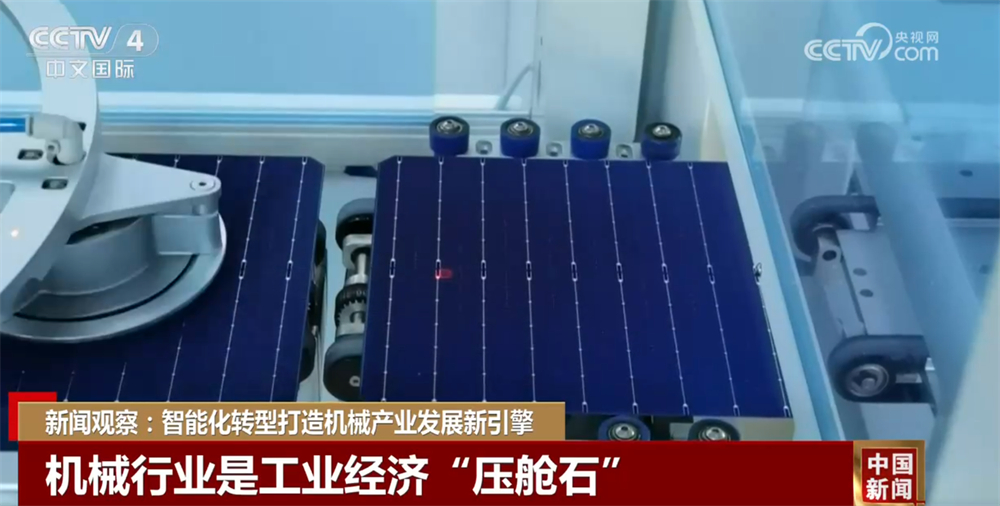
智能化转型打造工业经济“压舱石”发展新引擎 机械行业“向稳向好”有支撑
Yang Shi Wang· 2025-09-30 06:54
Core Viewpoint - The "Mechanical Industry Stabilization Growth Work Plan (2025-2026)" aims to expand effective demand, tap into existing market potential, foster new demand, and promote digital and intelligent transformation in the mechanical industry, which is crucial for the national economy and defense [1][11]. Group 1: Effective Demand Expansion - The plan emphasizes the need to comprehensively expand effective demand, focusing on tapping into existing market potential through significant technological upgrades and large-scale equipment renewal in the manufacturing sector [1][3]. - The implementation of major technological renovations and large-scale equipment updates is expected to inject vitality into the existing market while promoting high-end intelligent manufacturing and green energy-saving technologies [3]. Group 2: Intelligent Transformation - Intelligent transformation is identified as a key development strategy, with the plan outlining the implementation of innovative development projects for intelligent equipment, targeting three main areas: industrial mother machines, intelligent agricultural machinery, and high-end intelligent robots [5]. - The integration of technologies such as artificial intelligence and Beidou navigation is highlighted as a means to enhance the capabilities of mechanical equipment, effectively giving them a "smart brain" [5]. Group 3: Digital Transformation in Manufacturing - Regions are accelerating the deep integration of digital and physical industries, with examples such as the deployment of humanoid robots in new energy production lines and the creation of highly intelligent production workshops using 5G, big data, and AI technologies [7]. - A case study from a manufacturing company illustrates that the use of an intelligent warehouse significantly reduces the workforce needed for the same volume of parts storage, showcasing the efficiency gains from digital transformation [9]. Group 4: Future Growth Targets - The plan sets a target for the mechanical industry to maintain a stable and positive operational trend, aiming for revenue to exceed 10 trillion yuan with an average annual growth rate of approximately 3.5% during 2025-2026 [11]. - It also aims to cultivate new demand by developing new economic models such as the silver economy, smart tourism, and expanding applications for service and special robots, elderly rehabilitation equipment, and additive manufacturing equipment [11].
推动物流业迈向“智”高点
Jing Ji Ri Bao· 2025-09-07 22:15
Core Insights - The express logistics sector serves as a "barometer" for economic vitality, with a reported cumulative express delivery volume of 1120.5 billion items in the first seven months of the year, reflecting a year-on-year growth of 18.7% [1] - The growth in logistics efficiency is attributed to supportive government policies aimed at enhancing the modern commercial circulation system and improving rural delivery logistics [1][2] - The ongoing implementation of the domestic demand expansion strategy is expected to further leverage China's vast market advantages, necessitating higher efficiency in the express delivery industry [2] Group 1: Industry Performance - The express logistics industry is experiencing significant growth, with a total of 1120.5 billion items delivered in the first seven months of the year, marking an 18.7% increase compared to the previous year [1] - The logistics sector is described as the "muscle" of the real economy, connecting production and consumption, as well as domestic and foreign trade [1] Group 2: Technological Advancements - The full-chain intelligent upgrade from warehousing to last-mile delivery is crucial for enhancing efficiency in the express logistics sector, with AI optimization systems improving sorting accuracy to over 99.5% and route planning efficiency by 30% [2] - High-tech equipment is being utilized to overcome challenges posed by complex terrains and adverse weather conditions, ensuring timely and accurate delivery [2] Group 3: Challenges and Recommendations - Despite advancements, the express logistics industry faces challenges such as the need for improved application of new technologies like AI and drones, a lack of standardized systems, and a shortage of skilled professionals [2][3] - Recommendations include enhancing hardware support for smart logistics, accelerating the intelligent upgrade of logistics infrastructure, and fostering a standardized system tailored to the industry's needs [3]