
智能网联汽车零部件

Search documents
观察丨龙头企业持续扩资西青背后,经济大区如何跑出增长“加速度”?
Xin Lang Cai Jing· 2026-01-27 02:43
Core Insights - The core focus of the news is the development and expansion of the intelligent connected vehicle industry in the Xiqing District of Tianjin, with a significant increase in production capacity and value expected from leading companies like Jingwei Hengrun by 2025 [1][2][9] Group 1: Industry Growth and Development - Jingwei Hengrun plans to launch a new production line for intelligent connected vehicle components in Q4 2025, aiming for a 50% increase in annual output value [1] - The district has seen a rise in industrial output, with 652 industrial enterprises expected to achieve a total industrial output value of 153.63 billion yuan in 2025, reflecting a year-on-year growth of 5.6% [2] - The intelligent connected vehicle industry is rapidly evolving, with the integration of AI and communication technologies, and the establishment of a comprehensive testing system for vehicle development [3][4] Group 2: Policy and Support - Xiqing District has implemented a robust policy framework to support emerging industries, including a nurturing system for small and medium-sized enterprises, which has led to the cultivation of 20 national-level "little giant" enterprises [11][12] - The district is committed to enhancing its support for high-tech projects, with plans to attract and support projects with high technological content and strong market potential [6][12] Group 3: Talent and Urban Development - The integration of industry and urban development in Xiqing is evident, with initiatives aimed at improving living conditions and attracting talent, such as the establishment of residential projects and enhanced public services [15][18] - The district's focus on creating a favorable business environment and quality of life is designed to retain talent and foster innovation, contributing to a vibrant economic ecosystem [16][19]


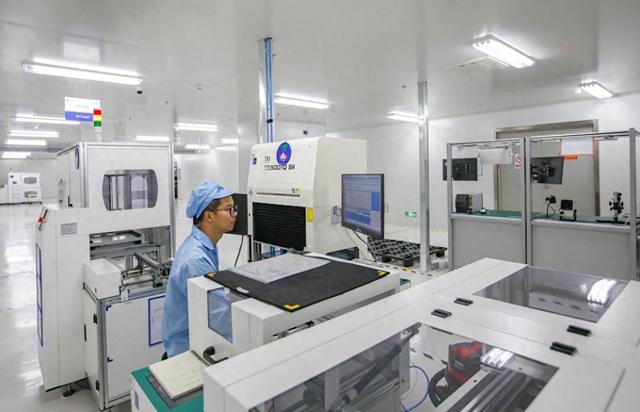
中国(温州)智车谷启动建设 浙江瑞安探寻汽车产业新未来
Zhong Guo Xin Wen Wang· 2025-12-05 13:31
Core Insights - The global automotive industry is undergoing a profound transformation characterized by electrification, intelligence, and low carbon initiatives, driven by technological and industrial innovation [1] - The establishment of the China (Wenzhou) Smart Vehicle Valley is a crucial step for Ruian to keep pace with industry trends and promote industrial transformation and upgrading [2] Group 1: Industry Transformation - The arrival of the new energy vehicle era has fundamentally changed the automotive industry ecosystem, necessitating a shift from traditional fuel vehicles to smart connected vehicles [1] - The complexity of smart connected vehicles means that a single fault can affect the entire intelligent system, pushing auto parts companies towards AI-driven transformations [1] Group 2: Innovation and Collaboration - Ruian has been actively promoting innovation in the automotive parts industry, collaborating with the China Society of Automotive Engineers to establish the Ruian Key Components Industry Engineer Collaborative Innovation Center, which has helped local companies secure over 1 billion yuan in orders since its inception in 2021 [1] - The Smart Vehicle Valley will focus on the intelligent connected vehicle industry, emphasizing the transition from traditional components to integrated systems, leveraging artificial intelligence as a core variable [2] Group 3: Development Strategy - The development strategy for the Smart Vehicle Valley includes a core area, a development cluster, an industrial expansion zone, and an ecological corridor, forming a comprehensive technology innovation system that covers research, incubation, and industrialization [2] - Ruian aims to become a key hub and supportive station in the new energy intelligent connected vehicle sector, enhancing the entire value chain from research and manufacturing to sales and services [2]
“顶住了峰、兜住了底” 今夏为何不缺电?
Ren Min Ri Bao· 2025-08-29 21:59
Core Points - In July, China's electricity consumption exceeded 1 trillion kilowatt-hours for the first time, marking an 8.6% year-on-year increase, which is unprecedented globally [1] - The stable electricity supply during the summer peak is attributed to the orderly commissioning of various power sources, ensuring sufficient supply [2] - The total installed power generation capacity in China reached 3.67 billion kilowatts by the end of July, a year-on-year increase of 18.2% [2] - Renewable energy generation increased by 15.6% in the first half of the year, with one-third of the total electricity consumption coming from green energy [3] - The optimization of the power grid has ensured stable electricity delivery, with significant contributions from inter-regional power transmission [4][5] - A new electricity trading mechanism has been established, allowing for cross-regional electricity transactions, enhancing the overall electricity supply security [6] - The rapid growth of new energy storage systems has improved the flexibility of electricity supply, with a nearly 30-fold increase in installed capacity over five years [7] - Demand-side management initiatives, such as peak load shaving and residential energy-saving programs, have been implemented to alleviate electricity pressure [8] - The future of China's power system aims to be clean, low-carbon, safe, efficient, and flexible, contributing to economic vitality [9]