站产城融合

Search documents
大战略牵引新开局|站产城融合让“流量枢纽”变身高质量发展“黄金接口”
Yang Guang Wang· 2026-02-12 14:46
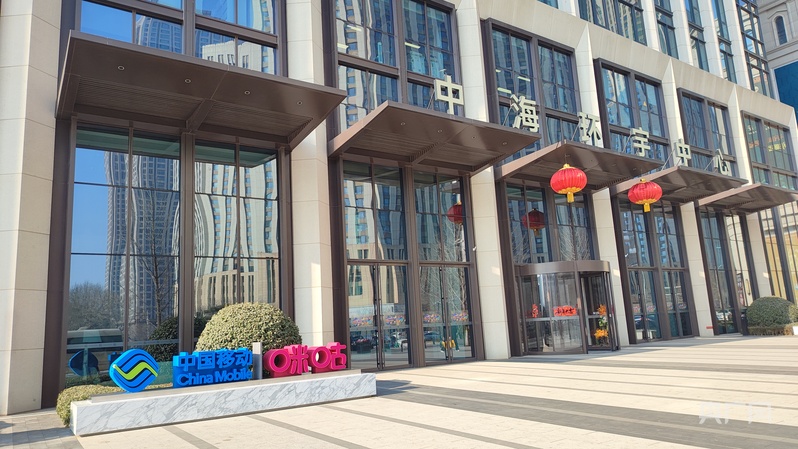
Group 1: Government Initiatives and Urban Development - The Tianjin government aims to integrate into the capital's commuting circle, focusing on enhancing the synergy between transportation and industry for high-quality development [2][3] - The 2026 Government Work Report emphasizes the importance of transforming high-speed rail hubs into growth drivers for local industries [2] Group 2: Digital Economy and Corporate Development - China Mobile's subsidiary, Migu, has established a presence in Tianjin, contributing to the region's digital economy and facilitating the integration of transportation and urban development [3][4] - Migu's operations in Tianjin are supported by a strong talent pool from local universities, enhancing its capabilities in digital content and risk management [6] Group 3: Healthcare and Wellness Industry - The Tianjin Pengruili Health City, a comprehensive health service park, has been developed with a total investment of 5 billion yuan and aims to provide integrated medical, elderly care, and commercial services [7][9] - The health city includes the first wholly foreign-owned tertiary hospital in China, which offers a wide range of medical services and aims to attract patients from the broader region [9][13] Group 4: Energy Innovation and Technology - Zhongxuan Zhikong (Tianjin) Technology Co., Ltd. focuses on intelligent coal selection technology, leveraging regional policies and transportation advantages to drive innovation in the energy sector [14][15] - The company has established a closed-loop system for research and development, pilot testing, and nationwide application of its technologies [15][18] Group 5: Future Prospects and Strategic Planning - The ongoing implementation of the "Modern Capital Urban Circle Spatial Coordination Plan (2023-2035)" is expected to further enhance Tianjin's role in the coordinated development of the Beijing-Tianjin-Hebei region [19]

观察丨龙头企业持续扩资西青背后,经济大区如何跑出增长“加速度”?
Xin Lang Cai Jing· 2026-01-27 02:43
Core Insights - The core focus of the news is the development and expansion of the intelligent connected vehicle industry in the Xiqing District of Tianjin, with a significant increase in production capacity and value expected from leading companies like Jingwei Hengrun by 2025 [1][2][9] Group 1: Industry Growth and Development - Jingwei Hengrun plans to launch a new production line for intelligent connected vehicle components in Q4 2025, aiming for a 50% increase in annual output value [1] - The district has seen a rise in industrial output, with 652 industrial enterprises expected to achieve a total industrial output value of 153.63 billion yuan in 2025, reflecting a year-on-year growth of 5.6% [2] - The intelligent connected vehicle industry is rapidly evolving, with the integration of AI and communication technologies, and the establishment of a comprehensive testing system for vehicle development [3][4] Group 2: Policy and Support - Xiqing District has implemented a robust policy framework to support emerging industries, including a nurturing system for small and medium-sized enterprises, which has led to the cultivation of 20 national-level "little giant" enterprises [11][12] - The district is committed to enhancing its support for high-tech projects, with plans to attract and support projects with high technological content and strong market potential [6][12] Group 3: Talent and Urban Development - The integration of industry and urban development in Xiqing is evident, with initiatives aimed at improving living conditions and attracting talent, such as the establishment of residential projects and enhanced public services [15][18] - The district's focus on creating a favorable business environment and quality of life is designed to retain talent and foster innovation, contributing to a vibrant economic ecosystem [16][19]

天津武清:站产城融合流量变留量
Jing Ji Ri Bao· 2025-10-17 21:57
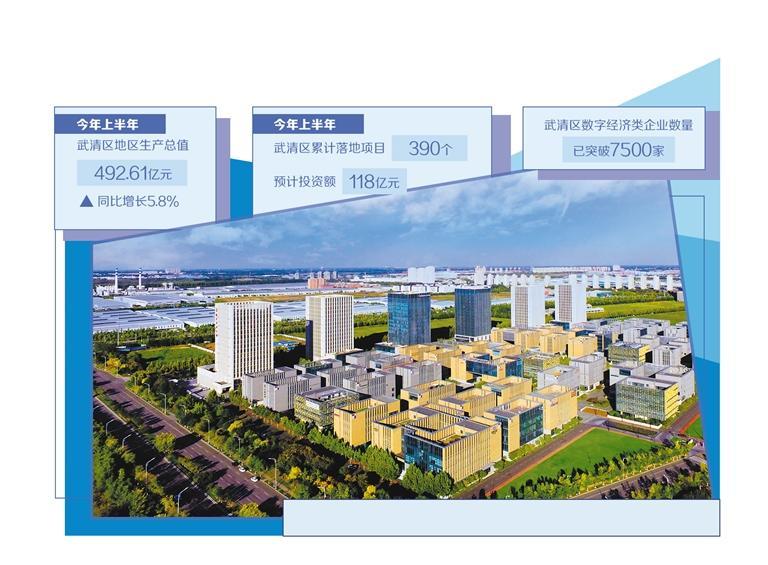
Core Viewpoint - The article highlights the development of Wuqing District as a key area benefiting from the integration of the Beijing-Tianjin-Hebei region, focusing on transportation, industrial growth, and urbanization to enhance economic activity and attract talent [2][4][7]. Transportation Development - Wuqing District is enhancing its transportation network, integrating rail, highways, and public transport to create a multi-layered transit system [3][4]. - The introduction of direct intercity trains has significantly reduced commuting time between Wuqing and Beijing, from over 80 minutes to just 16 minutes [2][3]. - The Wuqing Station currently operates up to 70 trains daily, with peak passenger numbers reaching 13,000 [2]. Industrial Growth - The Wuqing District is home to the largest and most powerful computing power cluster in the Beijing-Tianjin-Hebei region, with over 7,500 digital economy enterprises established [5][7]. - The district is actively developing the intelligent connected vehicle industry, with 12 projects launched and 62 in negotiation since the establishment of the intelligent connected vehicle technology ecological port [6][7]. - The overall investment in projects in the first half of the year reached 118 billion yuan, with 390 projects initiated [4][7]. Urbanization and Economic Impact - The district's GDP reached 492.61 billion yuan in the first half of the year, reflecting a year-on-year growth of 5.8% [7]. - Wuqing has established a comprehensive urban infrastructure, including 20 new schools and partnerships with major hospitals, enhancing public services [7]. - The district is developing new commercial areas, such as the Florence Town, to attract high-end consumers and boost local tourism [8][9]. Cultural and Recreational Development - Wuqing is leveraging its cultural heritage along the Grand Canal to promote eco-tourism and recreational activities, attracting over 600,000 visitors this year [10]. - The district is creating a new consumption landscape by integrating agriculture, culture, and tourism, enhancing the overall visitor experience [10].
天津红桥:聚集资源提速项目建设
Zhong Guo Jing Ji Wang· 2025-08-19 03:57
Group 1 - China Coal Energy Group signed a cooperation agreement with the Beijing-Tianjin-Hebei National Technology Innovation Center for a key national R&D project focused on disruptive technology innovation in low-carbon energy [1] - The Energy Low-Carbon Innovation Center aims to transform disruptive green energy technologies and is rooted in Tianjin Hongqiao [1] - An investment fund for disruptive technology innovation in the low-carbon energy sector was established, and a national competition for disruptive technology innovation in low-carbon energy was launched [1] Group 2 - The Tianjin Hongqiao District has accelerated the construction of the Beijing-Tianjin-Hebei Integrated Business District, with significant progress on major projects over the past two years [2] - The integration of transportation modes ("subway + high-speed rail + airplane") at Tianjin West Station enhances the development of the business district [2] - The district's GDP grew by 6.1% year-on-year, fiscal revenue increased by 10.1%, fixed asset investment rose by 16.4%, and retail sales of consumer goods increased by 12.1% in the first half of the year [2]