
智能语音技术

Search documents
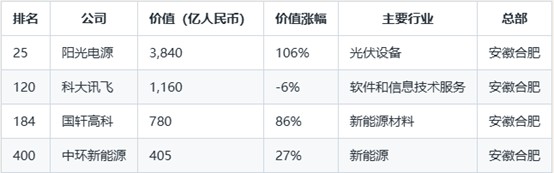
2025胡润中国500强出炉:合肥4家企业再度上榜 阳光电源、科大讯飞、中环新能源(01735)……
智通财经网· 2026-02-10 09:52
Core Insights - The HuRun Research Institute released the "2025 HuRun China 500 Strong," ranking 500 non-state-owned enterprises in China based on their value, with Hefei having four companies listed [1] - Hefei ranks sixth in the "Most Favored Manufacturing Bases" according to the HuRun China 500 Strong [1] Company Summaries - **Sungrow Power Supply**: Ranked 1st with a value of 384 billion RMB, showing a 106% increase, leading in the photovoltaic equipment sector [2] - **iFlytek**: Ranked 120th with a value of 116 billion RMB, experiencing a 6% decrease, recognized as a leader in artificial intelligence and software services [2] - **Guoxuan High-Tech**: Ranked 184th with a value of 78 billion RMB, up by 86%, focusing on new energy materials and strategic partnerships with automotive companies [2] - **China National Building Material Group**: Ranked 400th with a value of 40.5 billion RMB, showing a 27% increase, rapidly developing integrated solutions in new energy and storage [2] Industry Trends - The photovoltaic and new energy sectors are undergoing a significant transformation, with companies like Sungrow, Guoxuan, and China National Building Material Group demonstrating strong operational capabilities and growth potential [3] - The global energy transition is accelerating, with expectations that the total installed capacity of photovoltaic systems will exceed 5000 GW by 2030, driving demand in the market [3] - The synergistic development of "photovoltaics + energy storage" is expected to address intermittency issues and enhance market competitiveness [3]




人民日报专访科大讯飞董事长刘庆峰
Sou Hu Cai Jing· 2025-12-04 03:55
Core Viewpoint - The article emphasizes the importance of a long-term perspective in the development of artificial intelligence (AI), highlighting the need for companies to focus on their strengths and avoid overextending themselves in various sectors [1]. Group 1: Company Strengths and Market Focus - The company has a strong foundation in intelligent voice recognition technology, which serves as a basis for its development of large language models [3][4]. - The strategy of "AI + Industry" is chosen to ensure that AI applications have tangible benefits and measurable outcomes in various fields such as education and healthcare [4]. - The company aims to optimize its product lines, focusing on areas where it has historical expertise and can meet user needs effectively [6]. Group 2: R&D Investment and Profitability - Despite an increase in revenue, the company experienced a decline in net profit due to significant investments in research and development, which accounted for approximately 20% of sales revenue [6][7]. - The company believes that increasing R&D investment is essential to remain competitive in the emerging era of general artificial intelligence [6]. Group 3: Domestic Capabilities and Innovation - The company emphasizes the importance of using domestic computing power for training large models to avoid reliance on foreign technology and ensure long-term development security [7][8]. - There is a recognition of the existing gap between domestic and foreign computing capabilities, and the company advocates for a commitment to innovation and integration across the AI industry [8][9]. Group 4: Social Impact and Responsibility - The company acknowledges the potential of AI to transform lifestyles and improve productivity, while also addressing the need for social safety nets for workers displaced by AI advancements [14][15]. - It is committed to using AI for social good, providing services to special education schools and assisting hearing-impaired individuals through voice recognition technology [16]. Group 5: Talent Development and Industry Collaboration - The company stresses the need for cultivating interdisciplinary talent who understand both AI and various professional fields to facilitate the application of AI across industries [15]. - It advocates for increased collaboration with private capital to accelerate the transformation of technological achievements into practical applications [15].
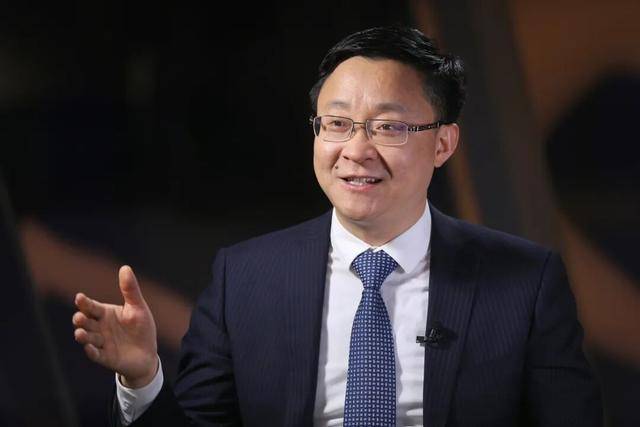
发展人工智能,要有长期主义精神(与企业家谈“新”) ——科大讯飞董事长刘庆峰访谈
Ren Min Ri Bao· 2025-12-03 21:52
Core Viewpoint - The rapid iteration of artificial intelligence (AI) technology is profoundly changing human production and lifestyle, reshaping the global industrial landscape. The company emphasizes the importance of focusing on specific sectors to leverage its strengths in AI development and application [1][4]. Group 1: Company Strategy and Focus - The company has transitioned from a speech recognition team to a competitive player in the AI field, leveraging its technological foundation established through its cognitive intelligence laboratory [1][2]. - The strategy of "AI + industry" is chosen to ensure that AI applications have tangible scenarios and measurable outcomes, with ongoing development of the "Xunfei Spark Model" aimed at various sectors [2][4]. - The company acknowledges the need to focus on its core competencies, reducing the number of product lines from over 200 to optimize its offerings and support other entrepreneurs through an open platform [3][4]. Group 2: Financial Performance and Investment - Despite revenue growth, the company experienced a decline in net profit due to increased investment in technology research and development, which accounts for approximately 20% of sales revenue [4][10]. - The company stresses the importance of long-term investment in R&D to avoid being left behind in the era of general artificial intelligence [4][10]. Group 3: Domestic Innovation and Challenges - The company emphasizes the necessity of using domestic computing power for training large models to ensure long-term development and avoid reliance on foreign technology [6][7]. - There is recognition of the existing gap between domestic and foreign computing capabilities, and the company advocates for deep integration and innovation across the AI industry chain [7][8]. Group 4: Social Impact and Responsibility - The company believes that AI can fundamentally change lifestyles and improve productivity, but it also highlights the need for social safety nets for those displaced by AI advancements [13][14]. - The company is committed to using AI for social good, providing services to special education schools and assisting hearing-impaired individuals with over 200 million minutes of free transcription services [15].
智能语音如何从可用到好用
Jing Ji Ri Bao· 2025-10-09 22:12
Core Insights - The article highlights the rapid integration of intelligent voice technology into various sectors, driving economic growth and enhancing human-machine interaction [1][2][3] - China's digital economy is flourishing, with several companies emerging as global leaders in artificial intelligence, particularly in voice recognition and semantic understanding technologies [1] - Despite the advancements, challenges remain in the form of insufficient high-quality scenario-based datasets and integration with core business processes [1][2] Group 1: Industry Development - Intelligent voice technology is becoming a crucial interface for human-machine interaction, significantly impacting economic growth [1] - China's rich resource base, complete industrial chain, and large user market provide strong support for the implementation of intelligent voice technology [1] - The technology has the potential to empower the aging economy and explore new spaces for industrial intelligence [1] Group 2: Application and Integration - There is a need for collaboration between industry authorities and leading enterprises to ensure that technology aligns with actual business needs, avoiding a disconnect between supply and demand [2] - The focus should be on enhancing capabilities in complex environments, such as noise reduction and professional terminology recognition, to improve machine understanding of continuous dialogue [2] - Intelligent voice technology has already found applications in sectors like healthcare, education, and finance, but there is still significant room for deeper integration with core business processes [2] Group 3: Consumer Expectations and Market Trends - User expectations for voice products have evolved from basic functionality to more sophisticated capabilities, including understanding and executing tasks [3] - There is a push for creating an integrated service ecosystem that spans multiple devices and scenarios, enhancing user experience and functionality [3] - The recent government initiative emphasizes the deep integration of artificial intelligence with the economy and society, indicating vast development opportunities for intelligent voice technology [3]