智能门

Search documents
奥维云网:2025中国智能门行业消费洞察白皮书
Sou Hu Cai Jing· 2026-02-14 03:45
Group 1 - The report "2025 China Smart Door Industry Consumer Insight White Paper" analyzes the current development status and consumer characteristics of the smart door industry, emphasizing that standardization and deepening user demand will be core directions for industry development [1][2] - The rise of smart doors is a natural result of economic structure optimization, continuous technological breakthroughs, policy support, and changes in consumer perceptions, while the homogenization competition in the traditional security door industry drives companies towards smart transformation [1][2] - The online smart door market is experiencing rapid growth, with retail volume expected to increase by over 300% year-on-year from January to November 2025, and price structures concentrating in the mid-to-high-end range of 6,000 to 15,000 yuan [1][2] Group 2 - The consumer demographic for smart doors primarily consists of married families, with a focus on high-knowledge middle-class individuals aged 36-50 in high-tier cities, while potential users are younger and concentrated in new first-tier and second-tier cities [2] - Safety is the core driving force for purchasing, with e-commerce platforms being the most trusted channels for information acquisition, and actual spending concentrated between 3,000 to 6,000 yuan, while potential users show a higher acceptance for products priced above 8,000 yuan [2] - Post-purchase satisfaction among existing users is high, with an overall satisfaction rate of 83%, indicating strong product recognition based on quality and reliability [2] Group 3 - The smart door industry is at a critical stage of initial development, presenting dual opportunities for technological and consumer upgrades, necessitating a focus on standardization to overcome development bottlenecks and optimize products and services [2][15] - The report highlights the need for the industry to address non-standardization and insufficient collaboration in the supply chain, advocating for a unified approach to technology innovation and standardization to enhance consumer safety and convenience [15][18] - Experts emphasize the importance of focusing on consumer core demands, enhancing product safety and embedded smart functions, and improving installation and after-sales service experiences to build a sustainable industry ecosystem [18][20]


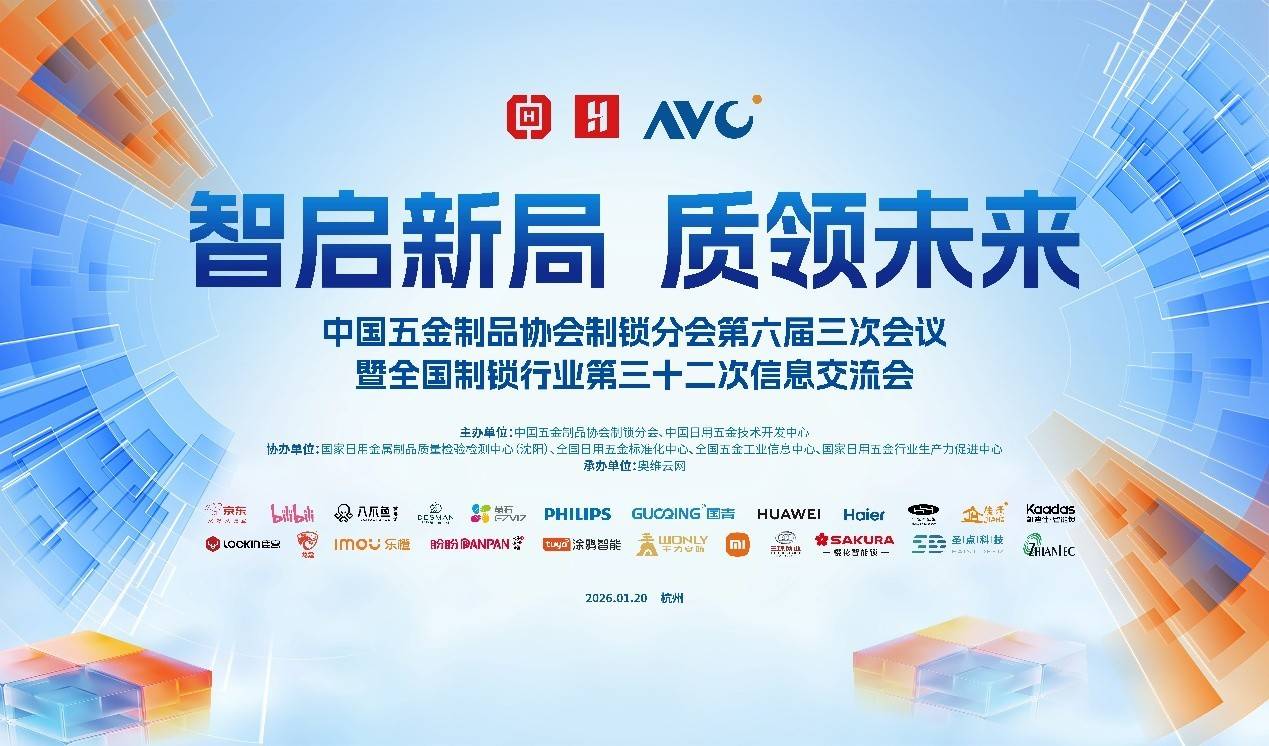
智启新局质领未来——全国制锁行业第三十二次信息交流会在杭州隆重召开
Sou Hu Cai Jing· 2026-01-22 04:50
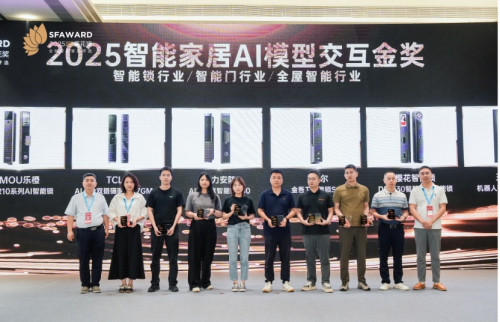
Core Insights - The conference focused on the theme "Intelligent Initiation of New Situations and Quality Leadership of the Future," highlighting the integration of digital economy and smart home industries, particularly in the smart lock sector [1][5][49]. Group 1: Industry Challenges and Opportunities - The smart lock industry is experiencing robust growth driven by new and replacement demand, but it faces challenges such as severe competition, product quality inconsistency, and inadequate after-sales service [5][9]. - The industry is urged to move towards high-quality development, emphasizing innovation, product quality, and safety as core competitive advantages [5][49]. Group 2: Market Trends and Consumer Insights - The market penetration of smart locks in China remains low, indicating significant potential for new user acquisition [11]. - The 2025 market research report indicates a positive outlook for the smart lock industry, with increasing upstream shipment volumes and clearer supply chain dynamics [9]. Group 3: Technological Innovations - Companies are integrating AI technology into smart locks to enhance user experience and security, with products like the MiyaAI smart lock series showcasing advanced interaction capabilities [16][18]. - Innovations such as the LockinAuraCharge technology by Luokai aim to address power supply issues, enabling wireless charging and continuous operation of smart locks [24]. Group 4: Standardization and Industry Collaboration - The launch of the "Smart Door Group Standard" aims to establish a unified framework for the industry, promoting standardized development and high-quality growth [35]. - The conference emphasized the importance of collaboration among government, associations, and enterprises to foster a healthy and sustainable industry ecosystem [49]. Group 5: Recognition and Awards - The conference recognized leading brands in the smart lock industry, awarding titles such as "China Smart Lock Leading Brand" and "Consumer Preferred Brand" to companies like Deshman and Kaidishi [37][43]. - The event also highlighted high-end products and best-selling smart locks, reinforcing the importance of quality and consumer trust in the market [39][41].
2025年中国智能门市场发展商机及创新前景分析报告
Sou Hu Cai Jing· 2025-11-30 02:20
Group 1 - The core viewpoint of the article focuses on the development and analysis of the smart door market in China from 2021 to 2025, highlighting economic indicators, market characteristics, and competitive landscape [3][4][5]. Group 2 - The smart door market is defined and categorized, emphasizing its significance in the national economy and its unique market characteristics [3]. - Economic indicators such as profitability and growth rate are analyzed, indicating a positive trend in the smart door market [4]. - The market's potential for value addition and barriers to entry are discussed, suggesting a competitive yet evolving landscape [4]. Group 3 - The political and legal environment affecting the smart door market is examined, including regulatory frameworks and industry policies [4][5]. - The macroeconomic environment's impact on the smart door market is analyzed, indicating a correlation between economic conditions and market performance [4]. - Social and technological environments are assessed, highlighting trends and advancements that influence market dynamics [4][5]. Group 4 - Global smart door market trends from 2021 to 2025 are analyzed, with a focus on demand and market size across different regions [5]. - The competitive landscape within the smart door industry is evaluated, including market structure, competitive advantages, and SWOT analysis [6][7]. - Key players in the smart door market are profiled, detailing their competitive advantages, product offerings, and strategic directions [7][8]. Group 5 - Future market forecasts for the smart door industry from 2026 to 2032 are presented, including supply and demand predictions [9]. - Investment opportunities and strategies for the smart door market are discussed, emphasizing the importance of strategic planning and customer management [9][10].

破题“中国制造2025” 王力安防打造传统产业数智跃迁范本
Sou Hu Wang· 2025-07-30 09:39
Core Insights - The core viewpoint of the articles highlights the transformative journey of the company in the traditional door industry through technological innovation, leading to significant achievements and recognition in the market [1][9]. Group 1: Achievements and Recognition - The company won 12 prestigious awards at the 9th "Kite Flower Award" ceremony, including "Leadership Brand" and "Innovative Competitiveness Brand" in the smart lock and door industry, marking its ninth consecutive year of such accolades [1]. - The brand value of the company reached 35.066 billion yuan in 2024, maintaining its position as the industry leader for 13 consecutive years [9]. Group 2: Technological Innovation - The company has invested nearly 100 million yuan annually in R&D for smart technology and product innovation, supported by a professional team of over 400 researchers [4]. - The company has developed an "Industrial Brain" smart manufacturing system that redefines production standards in the door industry, facilitating a shift towards digitalization and intelligence [1][12]. Group 3: Smart Manufacturing Practices - The "Future Factory" in Zhejiang Yongkang, covering 230,000 square meters, has achieved full-process automation, significantly enhancing production efficiency and reducing production cycles from at least 7 days to 1 day, with a 300% increase in capacity [3][6]. - The application of smart manufacturing technologies has optimized resource utilization, reducing the area required for producing a single door from 38.07 square meters to 12.33 square meters, achieving over a threefold increase in space efficiency [6]. Group 4: Quality Control and Logistics - The company has revolutionized quality control by implementing a smart detection line that transitions from subjective human judgment to data-driven quantitative standards, eliminating human error in quality assessment [6]. - In logistics, the company has adopted an innovative "space-for-land" strategy, utilizing large automated storage systems that enhance space utilization by 3.6 times, ensuring precise material scheduling and timely production dispatch [8]. Group 5: Market Validation and Strategic Partnerships - The company has established a robust service network with over 10,000 sales service points, serving more than 200 million users globally, and has been recognized as a preferred supplier for top real estate developers for 12 consecutive years [9]. - The company's products have been utilized in major national projects, including the Beijing Daxing International Airport and the G20 Summit, validating their reliability and establishing their benchmark status in the industry [9]. Group 6: Future Directions - The company aims to integrate smart security solutions into a comprehensive home automation ecosystem, addressing common industry pain points and leading the development of full-home intelligence [9][11]. - The ongoing development of AI models in traditional manufacturing is expected to address long-standing issues such as quality fluctuations and high costs, driving the industry towards greater efficiency and intelligence [12].