
工业大脑

Search documents
布局中国“工业大脑”的核心赛道
量化藏经阁· 2026-03-04 00:09
Core Insights - The article emphasizes the significance of industrial software as the "brain and nerve" of the industrial system, facilitating the digitalization of industrial knowledge, processes, and workflows across various stages including R&D, manufacturing, and management [1][48]. Group 1: Industrial Software Landscape - Industrial software encompasses various types such as CAD, CAE, EDA for product design, ERP for business management, PLM for product lifecycle management, and MES for production execution, forming the core digital foundation of manufacturing [5][48]. - The industrial software industry is structured in three layers: foundational support, core R&D, and industry applications, with strong policy support and the integration of AI technologies driving growth [6][10]. Group 2: Market Opportunities and Growth - The Chinese industrial software market is projected to grow from CNY 31.86 billion in 2024 to CNY 76.5 billion by 2029, with a compound annual growth rate (CAGR) of approximately 19.1% [6][24]. - The integration of AI into industrial software is expected to see a CAGR of 41.4% from 2024 to 2029, significantly outpacing the overall industrial software growth rate [9][50]. Group 3: Investment Value of the National Industrial Software Index - The National Industrial Software Theme Index (980034.CNI) was launched on February 17, 2015, and includes 50 stocks that reflect the overall performance of the Chinese industrial software industry [2][29]. - The top ten stocks in the index account for 56.37% of its weight, with a notable increase in R&D investment from 4.31% in 2022 to 9.22% by the third quarter of 2025 [2][30]. Group 4: Profitability and Growth Potential - The index is expected to see a net profit growth rate of 59.22% in 2025 and 30.12% in 2026, with earnings per share growth rates of 59.93% and 59.32% respectively, indicating a positive outlook for profitability and growth [3][37]. - The index includes 34 specialized and innovative companies, representing 68% of its constituents, which is significantly higher than mainstream broad-based indices [40][50]. Group 5: Long-term Risk-Return Profile - The index has shown an annualized return of 2.52% from 2017 to February 2026, with a Sharpe ratio of 0.23, outperforming other indices such as the CSI Computer and CSI Software Service indices [45][50]. - The industrial software sector is entering a golden development period, driven by accelerated domestic substitution, AI integration, and robust policy support [50].


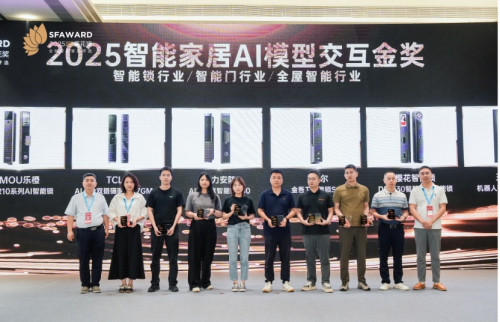
破题“中国制造2025” 王力安防打造传统产业数智跃迁范本
Sou Hu Wang· 2025-07-30 09:39
Core Insights - The core viewpoint of the articles highlights the transformative journey of the company in the traditional door industry through technological innovation, leading to significant achievements and recognition in the market [1][9]. Group 1: Achievements and Recognition - The company won 12 prestigious awards at the 9th "Kite Flower Award" ceremony, including "Leadership Brand" and "Innovative Competitiveness Brand" in the smart lock and door industry, marking its ninth consecutive year of such accolades [1]. - The brand value of the company reached 35.066 billion yuan in 2024, maintaining its position as the industry leader for 13 consecutive years [9]. Group 2: Technological Innovation - The company has invested nearly 100 million yuan annually in R&D for smart technology and product innovation, supported by a professional team of over 400 researchers [4]. - The company has developed an "Industrial Brain" smart manufacturing system that redefines production standards in the door industry, facilitating a shift towards digitalization and intelligence [1][12]. Group 3: Smart Manufacturing Practices - The "Future Factory" in Zhejiang Yongkang, covering 230,000 square meters, has achieved full-process automation, significantly enhancing production efficiency and reducing production cycles from at least 7 days to 1 day, with a 300% increase in capacity [3][6]. - The application of smart manufacturing technologies has optimized resource utilization, reducing the area required for producing a single door from 38.07 square meters to 12.33 square meters, achieving over a threefold increase in space efficiency [6]. Group 4: Quality Control and Logistics - The company has revolutionized quality control by implementing a smart detection line that transitions from subjective human judgment to data-driven quantitative standards, eliminating human error in quality assessment [6]. - In logistics, the company has adopted an innovative "space-for-land" strategy, utilizing large automated storage systems that enhance space utilization by 3.6 times, ensuring precise material scheduling and timely production dispatch [8]. Group 5: Market Validation and Strategic Partnerships - The company has established a robust service network with over 10,000 sales service points, serving more than 200 million users globally, and has been recognized as a preferred supplier for top real estate developers for 12 consecutive years [9]. - The company's products have been utilized in major national projects, including the Beijing Daxing International Airport and the G20 Summit, validating their reliability and establishing their benchmark status in the industry [9]. Group 6: Future Directions - The company aims to integrate smart security solutions into a comprehensive home automation ecosystem, addressing common industry pain points and leading the development of full-home intelligence [9][11]. - The ongoing development of AI models in traditional manufacturing is expected to address long-standing issues such as quality fluctuations and high costs, driving the industry towards greater efficiency and intelligence [12].

制造业借AI东风加速跃迁 ——2025世界人工智能大会探馆侧记
Zhong Guo Hua Gong Bao· 2025-07-30 02:18
Group 1 - The World Artificial Intelligence Conference 2025 (WAIC2025) highlights the accelerating integration of AI in various industries, particularly in manufacturing and chemical sectors, driving a shift towards intelligent and green transformations [1][2] - AI applications, such as the Time Series Model (TPT) and Plantbot solutions, have shown significant results in the chemical industry, reducing operational times and costs, with examples including a reduction in oil switching operation time to under 2 hours and waste liquid treatment time to under 1 hour [2][3] - The integration of AI with digital twin technology and industrial metaverse is expected to enhance decision-making across the entire chemical production chain, moving towards zero-carbon and zero-accident manufacturing [3][6] Group 2 - The conference showcased advancements in robotics, with companies like Shanghai Electric and Shenzhen Cyborg introducing humanoid and heavy-load robots that significantly improve operational efficiency and reduce labor intensity [4][5] - The collaboration between large models and smaller models in robotics is anticipated to advance the technology, making robots more capable and their actions more fluid and natural [4] - The conference also featured discussions on the intersection of AI and scientific discovery, emphasizing the importance of AI in enhancing research capabilities and innovation [5][6] Group 3 - Breakthrough innovations were presented, such as the ChemBOMAS framework, which optimizes chemical reactions and significantly improves yield while reducing catalyst usage [6] - Industry leaders, including the chairman of Innovation Works, emphasized that 2025 will mark a significant year for the large-scale application of AI, comparable to the Industrial Revolution [6]



湖北开展数字化转型行业行活动
Zhong Guo Hua Gong Bao· 2025-07-02 01:34
Group 1 - The event in Yichang focused on the digital transformation challenges in the chemical industry, aiming to empower the sector through policy interpretation, experience sharing, case demonstrations, and on-site research [1] - Hubei Province has achieved significant progress in manufacturing digital transformation, being the first in the nation to cover provincial-level small and medium-sized enterprise digital transformation city pilots [1] - The province has established 170,000 5G base stations, with computing power exceeding 14,000 P (1 P equals 10 quadrillion floating-point operations per second), showing a year-on-year growth of over 200% [1] Group 2 - The theme of the conference was "Intelligent Empowerment and Contribution Points," featuring discussions on building an "Industrial Brain" and the importance of integrating factory equipment data to create an efficient chemical production system [2] - Experts from various institutions provided insights on the latest policies, concepts, trends, and technological support for digital transformation in the industry, covering transformation paths, provincial policy support, and application of identification and resolution [2] - Leading companies in Hubei, such as Hubei Sanning Chemical Co., Hubei Yihua Group Co., and Hualu Hengsheng, showcased their smart factory achievements, presenting replicable "Hubei experience" [2]

AI+垃圾发电,京企创新应用场景探路传统产业升级
Bei Jing Ri Bao Ke Hu Duan· 2025-04-08 00:44
Core Viewpoint - The collaboration between Green Power Group and Guhigh Technology aims to integrate AI into the waste-to-energy sector, promoting smart development and digital transformation in response to carbon neutrality goals [1][2]. Group 1: Strategic Collaboration - Green Power Group and Guhigh Technology have signed a strategic cooperation agreement to advance the smart development of the waste-to-energy industry through AI applications [1]. - The partnership will focus on areas such as intelligent inspection robots, drones, zero-carbon smart park construction, carbon reduction, and carbon capture [1][2]. Group 2: Technological Innovations - Green Power Group has initiated a pilot project for "digital and intelligent technology" in waste incineration, set to start in March 2024, in collaboration with Alibaba Cloud [2]. - The innovative technology aims to achieve precise predictions, intelligent control, stable operation, and efficient combustion through big data analysis and machine learning [2]. Group 3: Economic and Environmental Impact - After nearly six months of trial operation, the project has significantly improved environmental stability and economic benefits, with an automatic input rate exceeding 95% and a reduction in pollutant emissions [3]. - Key performance metrics include a 5.93% increase in steam generation, a 9.86% reduction in plant electricity consumption, and a 4.48% increase in grid electricity output [3].