
智药解决方案

Search documents
IPO周报 | 爱芯元智、海致科技登陆港交所;群核科技获上市备案通知书
IPO早知道· 2026-02-15 01:58
Core Viewpoint - The article provides an overview of recent IPO activities in Hong Kong, the US, and China, highlighting key companies and their market positions in the AI and technology sectors. Group 1: Aixin Yuan Zhi - Aixin Yuan Zhi Semiconductor Co., Ltd. officially listed on the Hong Kong Stock Exchange on February 10, 2026, under the stock code "0600," becoming the first Chinese edge AI chip company to go public [2] - Since its establishment in 2019, Aixin Yuan Zhi has delivered over 165 million SoCs, with significant growth in sales of its edge computing and terminal computing SoCs, which increased by approximately 69% and 400% respectively in 2024 compared to 2023 [3] - By 2024, Aixin Yuan Zhi became the fifth largest supplier of visual edge AI inference chips globally, holding a market share of 24.1% in the mid-to-high-end segment [3][4] - The company's revenue grew from 0.50 billion yuan in 2022 to 4.73 billion yuan in 2024, with a compound annual growth rate of 206.8% [4] Group 2: Haizhi Technology - Haizhi Technology Group Co., Ltd. listed on the Hong Kong Stock Exchange on February 13, 2026, under the stock code "2706," becoming the first company to focus on AI graph computing technology to eliminate large model hallucinations [6] - The company has developed the Atlas graph solution and industry-level intelligent agents, achieving a market share of approximately 50% among AI intelligent agent providers in China [7] - Revenue from Haizhi Technology increased from 3.13 billion yuan in 2022 to 5.03 billion yuan in 2024, with a significant growth of 872.2% in revenue from the Atlas intelligent agent in 2024 [8] Group 3: Qunkong Technology - Qunkong Technology received a listing application notice from the China Securities Regulatory Commission on February 14, 2026, aiming to become the first "Hangzhou Six Little Dragons" company to complete an IPO [10] - The company focuses on spatial intelligence solutions and has developed the SpatialVerse platform, which integrates core capabilities in spatial reconstruction and generation [10][11] - Qunkong Technology's revenue reached 400 million yuan in the first half of 2025, with a gross margin of 82.1%, marking a significant improvement from 72.7% in 2022 [12] Group 4: Hairou Innovation - Hairou Innovation submitted its prospectus to the Hong Kong Stock Exchange on February 13, 2026, aiming for a main board listing [13] - The company has developed the HaiPick system, which revolutionizes warehouse automation, achieving a global market share increase from 24.2% in 2023 to 31.4% in 2024 [15] - By the end of September 2025, Hairou Innovation had signed contracts with over 800 clients, including more than 70 companies listed in the Fortune Global 500 [16] Group 5: Magnesium Health - Magnesium Health updated its prospectus for a main board listing on the Hong Kong Stock Exchange, reporting a revenue increase of 33.85% to 1.873 billion yuan in the first ten months of 2025 [18] - The company aims to transform China's medical payment system by linking patients, insurers, and pharmaceutical companies, with a focus on innovative drug and insurance solutions [20] - By October 31, 2025, Magnesium Health had served approximately 2 million patients and partnered with all top 20 insurance companies in China by premium income [22]

镁信健康更新招股书:中国最大医药多元支付平台,「AI+洞察」重塑支付生态
IPO早知道· 2026-02-12 05:24
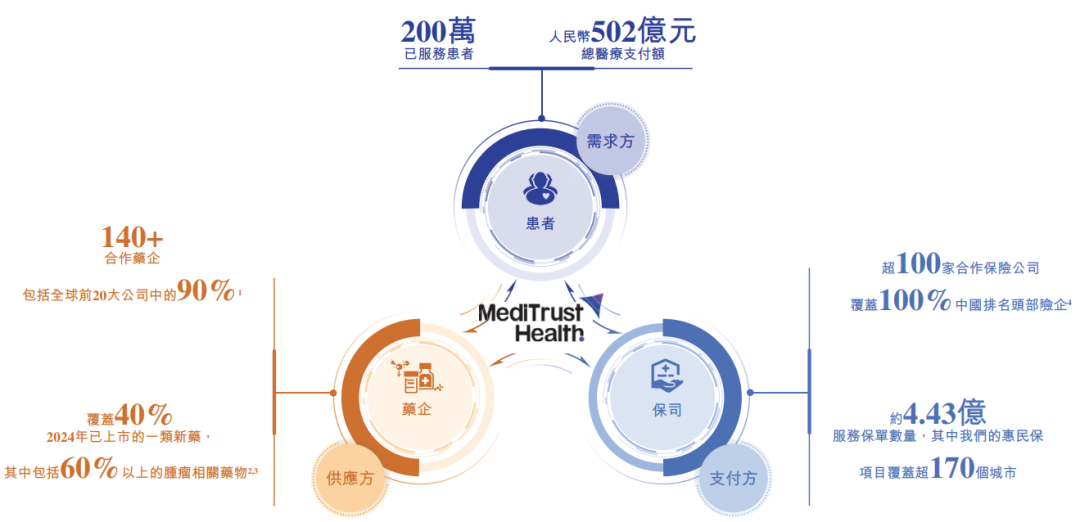
Core Viewpoint - The article discusses the progress of Shanghai Meixin Health Technology Group Co., Ltd. in its IPO process and highlights its role in transforming China's medical payment system, emphasizing its growth and innovative solutions in the healthcare sector [1][2]. Group 1: Company Performance - Meixin Health's revenue for the first ten months of 2025 increased by 33.85% year-on-year to 1.873 billion RMB, with a gross profit exceeding 600 million RMB [1]. - The company's revenue for 2022, 2023, and 2024 is projected to be 1.069 billion RMB, 1.255 billion RMB, and 2.035 billion RMB, respectively, outpacing the average growth rates of the Chinese healthcare and insurance industries [1]. - Adjusted net losses decreased from 87 million RMB in the first ten months of 2024 to 55 million RMB in the same period of 2025, indicating a trend towards sustainable profitability [1]. Group 2: Market Context - The Chinese innovative drug and medical device market is expected to grow from 92.3 billion RMB in 2019 to 162 billion RMB by 2024, with a compound annual growth rate (CAGR) of 11.9% [2]. - By 2030, the market size is projected to reach 2,356.8 billion RMB, with a CAGR of 15.8% from 2024 to 2030, driven by government policies encouraging the expansion of commercial health insurance [2]. Group 3: Business Model and Solutions - Meixin Health has developed a new model that integrates the needs of patients, insurers, and pharmaceutical companies, creating diverse payment solutions that alleviate the financial burden on patients [3]. - The company offers two main industry solutions: the Smart Drug Solution, which provides commercialization plans for pharmaceutical companies, and the Smart Insurance Solution, which integrates AI technology to enhance health insurance innovation [3][4]. - The "One Code Direct Payment" platform enhances user experience by offering various payment options and streamlining the payment process [4]. Group 4: Infrastructure and Technology - Meixin Health has established three key infrastructures: mind42.ai (an AI hub), MediTrust Rx (integrating the medical supply chain), and MediTrust Healthcare (optimizing patient treatment processes) [4][6]. - The AI medical review coverage has exceeded 60%, with review times reduced to under 10 minutes, significantly improving operational efficiency [6]. Group 5: Partnerships and User Base - As of October 31, 2025, Meixin Health has served approximately 2 million patients and partnered with all top 20 insurers in China by premium income [5]. - The company has collaborated with over 140 pharmaceutical companies, including 90 from the top 20 global revenue rankings for 2024 [5]. Group 6: Funding and Future Plans - Meixin Health has completed seven rounds of financing, with notable investors including Ant Group and GIC [7]. - The company’s valuation reached 11.6775 billion RMB prior to its IPO, with funds raised intended for service expansion, platform development, and operational efficiency improvements [8].
“惠民保”最大服务商再冲港股IPO!镁信健康半年两递表
Cai Jing Wang· 2026-02-10 01:46
Core Viewpoint - The company, Shanghai Magnesium Health Technology Group, is making a second attempt to go public on the Hong Kong Stock Exchange (HKEX) after its initial application expired in June 2025, driven by the need for financing amid ongoing losses and pressure from investors [1][2]. Company Summary - The company submitted its IPO application on January 16, 2026, with Goldman Sachs, CICC, and HSBC as joint sponsors [1]. - The latest financial data shows that the company's revenue has been growing, with operating income increasing from 1.069 billion yuan in 2022 to 2.035 billion yuan in 2024, and a 33.88% year-on-year increase in the first ten months of 2025 [2]. - Despite revenue growth, the company has been experiencing continuous losses, with net losses of 446 million yuan in 2022, 288 million yuan in 2023, and 76 million yuan in 2024, totaling nearly 1.2 billion yuan in cumulative losses over four years [3]. Financial Performance - The company's operating costs remain high, with sales and distribution expenses exceeding 1.8 billion yuan from 2022 to 2024, accounting for 41.36% of total revenue during that period [3]. - In the first ten months of 2025, sales and distribution expenses rose to 705 million yuan, with marketing and promotion costs reaching 404 million yuan [3]. - The proportion of sales and distribution expenses to revenue has shown a declining trend, from 52.1% in 2022 to 37.6% in the first ten months of 2025 [3]. Business Model Analysis - The company's "medical + pharmaceutical + insurance" integration model has structural imbalances, leading to a situation where revenue growth does not translate into profitability [4]. - The main business segments include intelligent pharmaceutical solutions and intelligent insurance solutions, with the former accounting for 62.7% of revenue but only achieving a gross margin of 10% [4]. - The "drug-to-insurance" model, a key component of the intelligent pharmaceutical solutions, faces regulatory scrutiny due to compliance issues [4]. Industry Context - The challenges faced by the company reflect broader issues within the multi-payment healthcare sector in China, where the payment structure is imbalanced, with personal cash expenditures making up 49% of the total [5]. - Despite ongoing policy efforts to integrate commercial health insurance with pharmaceutical payments, significant barriers remain, including the lack of precise risk management capabilities among insurers [5]. - The competitive landscape is intensifying, with several companies in the same sector, such as Ping An Good Doctor and Easy Health, already established and facing their own challenges [6]. Future Outlook - The success or failure of the company's IPO will serve as a critical indicator for investor confidence in the healthcare payment sector, potentially influencing future financing and valuations [6]. - The industry is expected to undergo a significant reshaping over the next 3-5 years, transitioning from a focus on "traffic connection" to "data empowerment," with compliance and value creation in medical payments becoming key differentiators [6].
医药支付龙头「镁信健康」二次递表,投后估值超116亿元
Xin Lang Cai Jing· 2026-01-25 09:01
Core Viewpoint - Magnesium Health is preparing for its second IPO attempt on the Hong Kong Stock Exchange, aiming to raise funds as a leading multi-payment platform in the pharmaceutical sector, with significant revenue growth and improving financial metrics [1][8]. Company Overview - Magnesium Health is the largest multi-payment platform in China for pharmaceuticals, ranking first in both the innovative smart drug solutions market and the innovative health insurance solutions market based on partnerships with pharmaceutical companies and processed health insurance policies [1][3]. Financial Performance - For the fiscal year ending December 31, 2024, the company reported revenues of approximately RMB 20.35 billion, a 60% year-on-year increase, with a net loss of RMB 0.76 billion, narrowing by 70% [1][8]. - In the first ten months of 2025, revenues reached RMB 18.73 billion, a 30% year-on-year increase, but the net loss expanded to RMB 3.89 billion, a 366.93% increase in losses compared to the previous year [1][8]. - The gross profit margin for 2024 was 35.83%, while the gross profit for the first ten months of 2025 was RMB 6.01 billion, reflecting a 10.47% year-on-year increase [6][8]. Market Position - The company has served approximately 2 million patients, with a total medical expenditure of RMB 50.2 billion, and has partnerships with over 100 insurance companies, including all of China's top 20 insurers by premium income for 2024 [5][10]. - The innovative smart drug solutions market in China is projected to grow from RMB 521 billion in 2019 to RMB 910 billion by 2024, with a compound annual growth rate of 11.8% [10]. Product and Service Offerings - Magnesium Health has developed two major industry solutions: smart drug solutions and smart insurance solutions, aimed at providing comprehensive commercialization plans for pharmaceutical companies and end-to-end solutions for insurance companies [3][8]. - The company also offers consumer-facing services, including BluePass and a DTC pharmacy platform, designed to enhance patient experience and outcomes [3][8]. Competitive Landscape - Magnesium Health's market performance highlights its leading competitive position, with a significant number of partnerships and processed health insurance policies compared to competitors [13][15]. - The company has undergone multiple rounds of financing, raising over RMB 31.8 billion, with a post-money valuation of approximately RMB 116.8 billion following its latest financing round in December 2022 [19].
镁信健康三闯港股:百亿估值光环下,盈利困局与现金流之考
Xin Lang Cai Jing· 2026-01-19 06:29
Core Viewpoint - Magnesium Health's IPO application is seen as a desperate move to address liquidity issues amid a backdrop of continuous losses and regulatory risks, despite its previous status as a "unicorn" in the healthcare technology sector [2][4][10] Financial Challenges - The company reported a significant cumulative net loss of 810 million yuan from 2022 to 2024, with annual losses of 446 million, 288 million, and 76 million yuan respectively, despite revenue growth from 1.069 billion yuan in 2022 to 2.035 billion yuan in 2024 [5][14] - Cash and cash equivalents plummeted by over 92%, from a peak of 2.2 billion yuan at the end of 2021 to 170 million yuan by April 2025, indicating severe cash flow issues [5][14] - The company has been trapped in a cycle of borrowing, with interest-bearing bank loans rising to 260 million yuan by April 2025 after repaying 590 million yuan in 2024 [5][14] Business Model Concerns - The revenue structure is heavily reliant on low-margin "Smart Drug Solutions" (10.8% gross margin) and underperforming "Smart Insurance Solutions" (81.5% gross margin), which has hindered overall profitability [6][14] - The "Smart Insurance" business is significantly dependent on the "Hui Min Bao" insurance segment, which has seen a drastic slowdown in growth, with participation rates dropping from nearly 150% in 2021 to just 6% in 2023 [7][17] Compliance and Operational Risks - The company faced regulatory scrutiny, with its subsidiary fined 330,000 yuan for multiple compliance violations, highlighting internal control deficiencies [9][18] - Market confidence has waned, as evidenced by a drop in valuation from 10 billion yuan in 2021 to 11.68 billion yuan in 2023, with funding amounts decreasing by over 90% [9][19] Conclusion - The upcoming IPO is viewed as a potential lifeline for Magnesium Health, but its success hinges on addressing fundamental issues such as dependency on low-margin businesses and improving compliance and internal controls [10][21]
上海镁信健康科技集团股份有限公司(H0321) - 申请版本(第一次呈交)
2026-01-15 16:00
香港聯合交易所有限公司與證券及期貨事務監察委員會對本申請版本的內容概不負責,對其準確性或完整 性亦不發表聲明,並明確表示概不就因本申請版本全部或任何部分內容而產生或因依賴該等內容而引致的 任何損失承擔任何責任。 Shanghai MediTrust Health Technology Group Co., Ltd.* 上海鎂信健康科技集團股份有限公司 (「本公司」) (於中華人民共和國註冊成立的股份有限公司) 的申請版本 警告 本申請版本乃根據香港聯合交易所有限公司(「聯交所」)及證券及期貨事務監察委員會(「證監會」)的要求 而刊發,僅用作提供資訊予香港公眾人士。 本申請版本為草擬本,當中所載資料並不完整,亦可能會作出重大變動。 閣下閱覽本文件,即代表 閣 下知悉、接納並向本公司、其聯席保薦人、整體協調人、顧問或包銷團成員表示同意: 倘於適當時候向香港公眾人士提出要約或邀請,準投資者務請僅依據經香港公司註冊處處長登記的本公司 招股章程作出投資決定;招股章程的文本將於發售期內向公眾刊發。 * 僅供識別 (a) 本文件僅為向香港公眾人士提供有關本公司的資料,概無任何其他目的。投資者不應根據本文件中 的資料作出任何 ...
“最大医药多元支付平台”镁信健康闯关港交所:业务模式存隐忧 被指窃取商业秘密
Xin Lang Cai Jing· 2025-12-12 07:01
Core Viewpoint - Magnesium Health, the largest provider of welfare insurance services in China, has submitted its IPO application to the Hong Kong Stock Exchange, with significant backing from major investors and banks [1][16]. Group 1: Company Overview - Magnesium Health was established in 2017 as a spin-off from Shanghai Pharmaceuticals and has since become the largest multi-payment platform in the pharmaceutical sector in China [1][17]. - The company has raised over 3 billion yuan in funding from investors including Ant Group and China Life Reinsurance [1][17]. - The revenue sources for Magnesium Health include smart pharmaceutical solutions for drug companies, smart insurance solutions for insurers, and services for consumers [1][17]. Group 2: Financial Performance - Revenue is projected to grow from 1.069 billion yuan in 2022 to 2.035 billion yuan in 2024, with smart pharmaceutical business revenue exceeding 1.207 billion yuan, accounting for nearly 60% of total revenue [1][17]. - Despite the revenue growth, the company has not yet achieved profitability, with cumulative losses exceeding 800 million yuan over three years [1][17]. Group 3: Business Model Concerns - Magnesium Health's business model focuses on creating a closed loop of "medical + pharmaceutical + insurance," but its connection with end consumers is weak, with only over 150,000 registered users on its direct-to-consumer platform [3][18]. - The company has not clearly defined customer acquisition scenarios and conversion paths for its core smart insurance and smart pharmaceutical businesses [19][21]. - Compared to competitors like Sipai Health and Yuanxin Technology, which have established direct patient engagement through physical pharmacies or online platforms, Magnesium Health's user engagement remains limited [3][19]. Group 4: Regulatory and Legal Issues - The company faces compliance risks, as it has been publicly named in regulatory investigations regarding its insurance and pharmaceutical collaboration models [12][27]. - Magnesium Health is involved in a long-standing commercial dispute with Beijing Tianxiao Technology, which has accused it of unfair competition and misappropriation of trade secrets [28][30]. - The ongoing legal issues may impact the company's reputation and operational stability, as the case has been formally investigated by law enforcement [28][29].
“惠民保”最大服务商赴港IPO,3年亏掉8个亿
凤凰网财经· 2025-10-25 12:18
Core Viewpoint - The article discusses the challenges faced by Meixin Health as it attempts to go public again after previous setbacks, highlighting its significant losses, regulatory scrutiny, and the complexities of its business model [1][2][14]. Financial Performance - Meixin Health has accumulated losses exceeding 800 million RMB over three years, with net losses of 446 million RMB in 2022, 288 million RMB in 2023, and 76 million RMB in 2024 [5][6]. - Despite revenue growth from 1.07 billion RMB in 2022 to 2.04 billion RMB in 2024, the company continues to face profitability challenges [2][4]. - The company's gross profit margin has improved but remains insufficient to offset ongoing losses, with the gross margin for its "Smart Drug Solution" at only 10.8% in 2024, while the "Smart Insurance Solution" boasts a much higher margin of 81.5% [10][11][13]. Business Model and Strategy - Founded in 2017, Meixin Health operates as an intermediary in the healthcare ecosystem, providing solutions to pharmaceutical companies and insurance firms [2]. - The company has raised over 3.1 billion RMB through multiple funding rounds, indicating strong interest from major industry players [13]. - Meixin Health's business model is under scrutiny due to its reliance on the "drug-to-insurance" model, which has faced regulatory challenges [15][18]. Regulatory Challenges - The "Hui Min Bao" insurance product, once a flagship offering, has seen a drastic decline in growth, with enrollment growth plummeting from nearly 150% in 2021 to just 6% in 2023 [15][17]. - Regulatory bodies have raised concerns about the compliance of Meixin Health's business practices, particularly regarding its "drug-to-insurance" model, which has been criticized for not providing genuine risk coverage [18][22]. - The China Securities Regulatory Commission has issued feedback requiring detailed disclosures about the company's business operations and compliance with foreign investment regulations [22][23]. Market Position and Competition - Meixin Health is competing in a challenging market alongside peers like Sipai Health and Yuanzhen Technology, both of which have successfully navigated the IPO process [21]. - The company is attempting to pivot its focus from traditional insurance products to more innovative solutions, such as the "One Code Direct Payment" platform, to enhance its service offerings [20].

镁信健康IPO:医药多元支付平台如何重构产业价值链
Sou Hu Cai Jing· 2025-10-22 04:42
Group 1: Market Potential - The aging population and healthcare system reforms in China are creating significant opportunities in the healthcare market, attracting substantial capital interest [1] - In Western countries, aging demographics and increased healthcare demands have led to sustained high growth in the performance of leading healthcare companies, which is expected to be replicated by quality listed companies in China's healthcare sector [1] Group 2: Investment Opportunities - Investors are focusing on companies that can integrate payers, service providers, and product suppliers to build a "Chinese version of UnitedHealth" ecosystem, as many platforms currently rely heavily on membership fees and online consultation charges, leading to a lack of customer stickiness [3] - Shanghai Meixin Health Technology Group Co., Ltd. (Meixin Health), which went public in Hong Kong in June, is gaining attention for its "medical + pharmaceutical + insurance" service model, addressing payment challenges faced by patients, insurance companies, and pharmaceutical firms [3] Group 3: Business Model and Solutions - Meixin Health has become China's largest multi-payment platform for pharmaceuticals, saving patients approximately 6.7 billion yuan in out-of-pocket expenses and driving sales growth for innovative drugs [4][6] - The company offers intelligent pharmaceutical and insurance solutions that better integrate resources from pharmaceutical companies and insurance firms, ensuring sustainable business development [4] Group 4: Financial Performance - Meixin Health's revenue is projected to grow from 1.069 billion yuan in 2022 to 2.035 billion yuan in 2024, with gross profit increasing from 332 million yuan to 729 million yuan during the same period, indicating a steady growth trend [6] - The company is enhancing its AI capabilities to improve operational efficiency and reduce costs, establishing a differentiated barrier with its "payment + service + AI" model [6]
擦边“药转保”受严监管、3年现金流萎缩92% 镁信健康再闯港股IPO能否如愿
Guan Cha Zhe Wang· 2025-10-17 08:46
Core Insights - The article discusses the challenges faced by Meixin Health, a company involved in the controversial "drug-to-insurance" model, which has come under regulatory scrutiny for its business practices [1][3][4] Business Model and Regulatory Environment - Meixin Health's main revenue comes from two segments: "Smart Drug Solutions" and "Smart Insurance Solutions," with the former expected to generate 1.207 billion yuan in 2024, accounting for 59.3% of total revenue [1] - The "Smart Drug Solutions" segment provides commercialization support for pharmaceutical companies, which is closely related to the regulated "drug-to-insurance" business [2][3] - Regulatory bodies have been actively targeting the "drug-to-insurance" model, labeling it as "pseudo-insurance" due to its lack of risk diversification [2][3] Financial Performance - Meixin Health has reported continuous net losses, totaling 810 million yuan over three years, with projected revenues exceeding 2.035 billion yuan in 2024 [4] - The company attributes its losses to significant upfront investments in infrastructure, but high sales and distribution expenses remain a concern [4][5] - Cash flow has been negative for three consecutive years, with cash reserves shrinking by over 92% [4] Business Risks - The low gross margin of the "Smart Drug Solutions" segment poses challenges for profitability, especially as the higher-margin "Smart Insurance Solutions" segment has seen a decline in revenue share [5] - The company faces potential operational risks due to declining participation rates and rising claims in its insurance products, leading to a "death spiral" risk [5] Legal Issues - Meixin Health is embroiled in a long-standing legal dispute with Tianxiao Technology over allegations of trade secret theft and bribery, complicating its reputation and compliance assessments [6][7] - The case has led to criminal investigations and civil lawsuits, adding further uncertainty to the company's operational landscape [7]