
暗鹰高超音速导弹

Search documents
美军公布“暗鹰”高超导弹最新照片,为何又速删?
Xin Lang Cai Jing· 2026-02-24 13:13
Core Viewpoint - The U.S. Army's recent display and subsequent removal of photos of the "Dark Eagle" hypersonic missile has raised questions about its operational readiness and potential deployment signals [1][4]. Group 1: Technical Details of the "Dark Eagle" Missile - The "Dark Eagle" hypersonic missile is a joint development by the U.S. Army and Navy, featuring a two-stage solid rocket engine and a hypersonic glide vehicle, capable of reaching speeds of 17 Mach and a range exceeding 2,800 kilometers [4]. - Recent tests have shown that the "Dark Eagle" can fly distances over 3,800 kilometers, with Russian estimates suggesting a potential range of up to 5,500 kilometers [4]. - The missile is reported to have high accuracy, with previous tests achieving a precision of around 15 centimeters [5]. Group 2: Deployment and Operational Readiness - The U.S. Army is expected to receive approximately one battalion of "Dark Eagle" missiles by the end of 2025, although this timeline has been pushed to mid-2024 [7]. - The "Dark Eagle" system has been described as being in a "gun without bullets" state for an extended period, with delays in missile delivery affecting its operational capability [6][7]. - There are indications that the "Dark Eagle" system may be deployed first in the Asia-Pacific region, which could heighten regional tensions [7][9]. Group 3: Strategic Implications - The "Dark Eagle" system is designed to be supported by air power and missile defense systems, enhancing its safety during operations [9]. - Potential deployment locations include Okinawa and Kyushu in Japan, which would extend its coverage over the Asian continent but may also reduce its survivability in a conflict scenario [9]. - The U.S. Navy's conventional rapid strike missile is essentially a naval variant of the "Dark Eagle," intended for use against both land and potentially maritime targets [9].

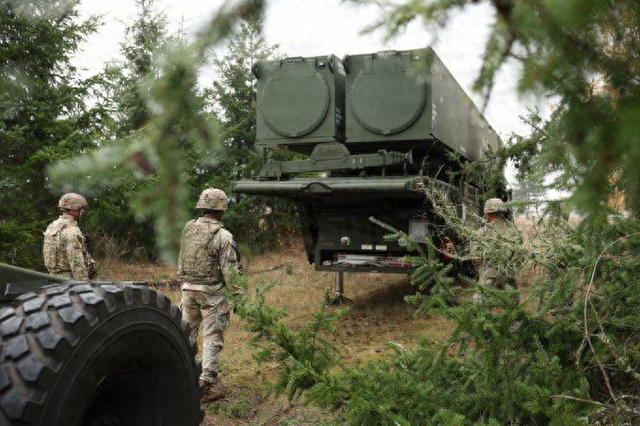
外媒:美陆军短暂公布“暗鹰”高超音速导弹最新照片,随即将其删除
Xin Lang Cai Jing· 2026-02-23 05:23
Core Insights - The U.S. Army briefly released and then deleted a photo of the "Dark Eagle" hypersonic missile, which has since circulated widely online, raising questions about the reasons for its removal [1][3] Group 1: Missile Development and Capabilities - The photo showcased the latest progress of the "Dark Eagle" hypersonic missile, coinciding with the Army's push for operational deployment of the system [3] - The missile is designed for long-range strikes against well-defended targets, with a maximum speed of 17 Mach and a claimed range of approximately 2,800 kilometers, although recent tests indicated a flight distance exceeding 3,800 kilometers [3] - The launch system for the "Dark Eagle" is based on the U.S. military's M870 trailer, capable of carrying two missiles sealed in individual launch boxes [3] Group 2: Financial Implications - The first operational unit of the "Dark Eagle" missile system is projected to cost around $2.7 billion, which includes the missiles and associated equipment [3]
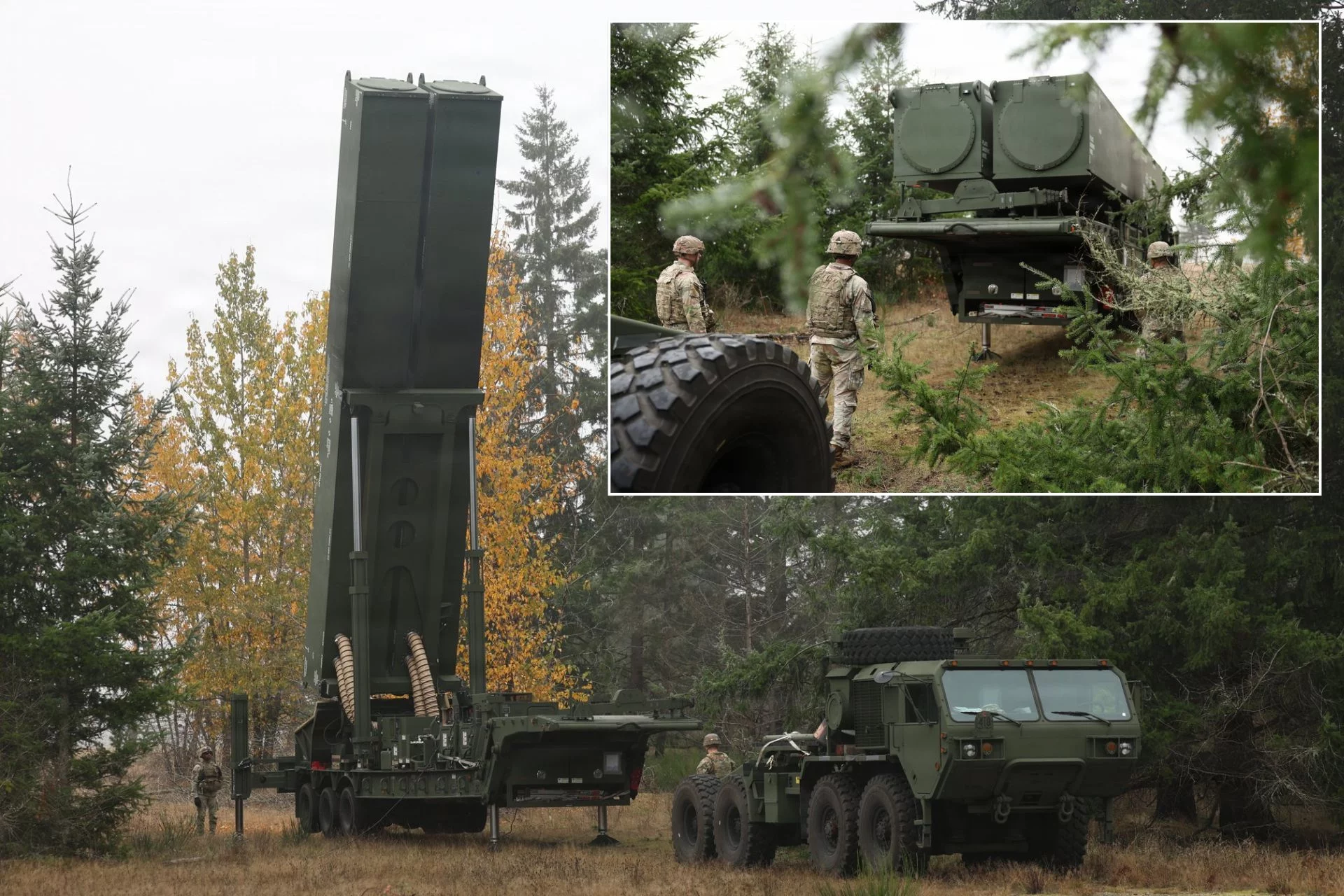
“暗鹰”短暂公布后 美陆军火速删除
Xin Lang Cai Jing· 2026-02-23 05:22
Core Viewpoint - The U.S. Army briefly released and then deleted photos of the "Dark Eagle" hypersonic missile, which showcases advancements in its long-range strike capabilities, coinciding with its deployment efforts [1] Group 1: Missile Development - The "Dark Eagle" hypersonic missile represents one of the most advanced long-range strike capabilities of the U.S. Army, designed to target well-defended objectives at extreme distances [1] - The missile is a joint development between the U.S. Army and Navy, capable of reaching speeds up to 17 Mach [1] - The claimed range of the "Dark Eagle" missile is approximately 2,800 kilometers, with recent tests indicating a flight distance exceeding 3,800 kilometers [1] Group 2: Photo Release Incident - The photos were taken down without explanation, raising questions about whether the deletion was due to operational security or an administrative error [1] - The incident has garnered attention due to the significance of the "Dark Eagle" missile in enhancing U.S. military capabilities [1]
美原油日产1400万桶,却难撑38万亿债务,骗局终难掩
Sou Hu Cai Jing· 2026-02-01 07:01
Group 1 - The article highlights the deep-seated anxieties and challenges within the U.S. economy, despite claims of American superiority over China [1][5] - The U.S. military strategy is criticized for its inability to effectively counter low-cost threats, indicating a potential long-term economic burden [3] - The U.S. national debt, which stands at $35 trillion, poses a significant risk to economic stability, as government revenues struggle to cover interest payments [5] Group 2 - Manufacturing output has increased, but a decline in exports has led to a slowdown in new orders and stagnation in job growth, suggesting that financial gains are not translating into real economic productivity [7] - The article discusses the U.S. media's tendency to distort facts to maintain a narrative of American success, reflecting a political agenda rather than an objective analysis [9] - The U.S. military's ambitious defense projects face challenges such as budget overruns and technological limitations, raising questions about their effectiveness [11] Group 3 - The article contrasts the U.S. approach with China's economic transformation, which emphasizes high-quality growth and innovation rather than mere numerical expansion [15] - China's advancements in technology, such as the commercial operation of the C919 aircraft and breakthroughs in quantum computing, signify a shift from following to leading in the tech sector [17] - The narrative presented by U.S. media is described as a "spiritual placebo," masking the reality of a declining empire and the erosion of dollar hegemony [19]
榛树导弹白俄罗斯部署地疑被发现
Xin Lang Cai Jing· 2025-12-27 12:31
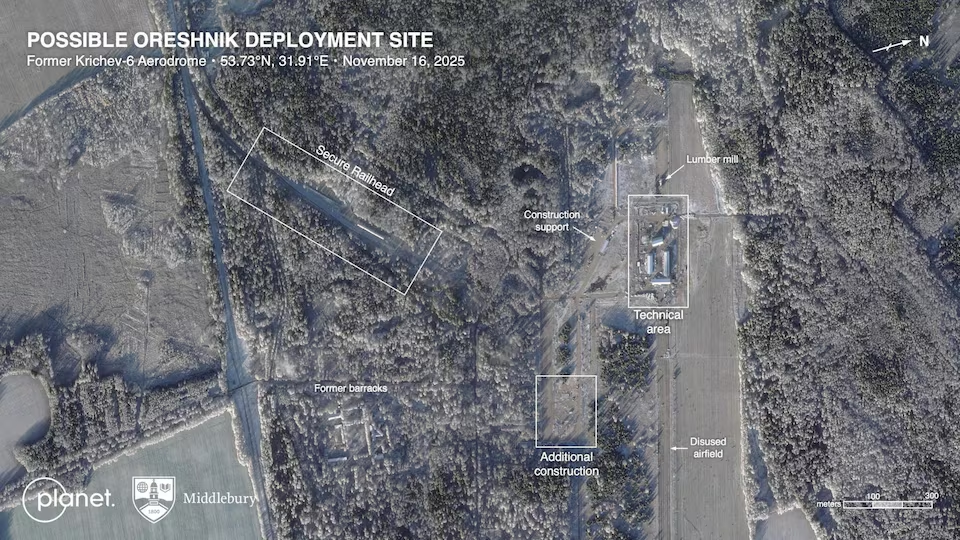
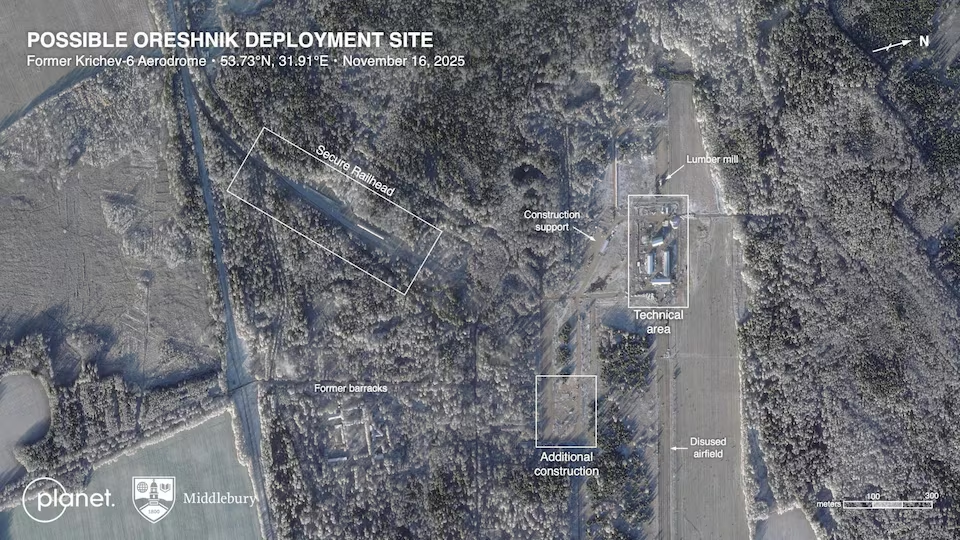
Core Viewpoint - The article discusses the potential deployment of Russia's "Zircon" hypersonic missiles in Belarus, which could enhance Russia's missile launch capabilities across Europe, as revealed by satellite imagery analysis from American researchers [1] Group 1: Deployment Details - Two American researchers identified a possible deployment site for the "Zircon" missiles at a former air force base in eastern Belarus, consistent with characteristics of Russian strategic missile bases [1] - The researchers expressed a 90% confidence level that the missile launch systems will be located near the town of Krichev, approximately 306 kilometers from Minsk and 483 kilometers from Moscow [1] Group 2: Strategic Context - The deployment of "Zircon" missiles in Belarus is viewed as a response to the U.S. plans to deploy conventional missiles, including the "Dark Eagle" hypersonic missile, in Germany next year [1] - Belarusian officials indicated that the number of Russian "Zircon" missile systems in Belarus would not exceed 10, with the defense minister stating that these missiles would be operational by the end of December [1] Group 3: Regional Military Dynamics - Neighboring countries, including those in the Baltic region and Poland, are expected to increase their military spending to 5% of GDP or higher, with Poland planning to expand its military to 300,000 personnel by 2035 [1] - Belarusian officials emphasized that the deployment of "Zircon" missiles is not intended as provocation but as a necessary measure for border protection in response to U.S. missile deployments in Europe [1]
部署地曝光?美研究员称有重要发现
Huan Qiu Wang· 2025-12-27 11:29
Core Viewpoint - U.S. researchers have identified potential deployment sites for Russia's "Zircon" hypersonic missiles in Belarus, which could enhance Russia's missile launch capabilities across Europe [1][3]. Group 1: Deployment Details - Two U.S. researchers analyzed satellite images and concluded that Russia may have deployed new hypersonic missiles capable of carrying nuclear warheads at a forward airbase in eastern Belarus [1]. - The researchers, affiliated with the Middlebury Institute and CNA, expressed a 90% confidence level that the "Zircon" missile launchers will be located near the town of Krichev, approximately 306 kilometers from Minsk and 483 kilometers from Moscow [1]. - The images analyzed were provided by the Planet Labs platform and showed characteristics consistent with Russian strategic missile bases [1]. Group 2: Strategic Context - The deployment of the "Zircon" missiles in Belarus is viewed as a response to the U.S. plans to deploy conventional missiles, including the "Dark Eagle" hypersonic missile, in Germany next year [3]. - Belarusian President Alexander Lukashenko stated that the number of "Zircon" missile systems in Belarus would not exceed 10, with the defense minister indicating that these missiles would be operational by the end of December [4]. - The Belarusian government emphasizes that the deployment is not intended as a provocation but rather a necessary measure for national defense in response to increased military spending and activities by neighboring countries [4].
卫星图曝光!美研究人员称疑发现“榛树”导弹在白俄罗斯部署地,美俄暂无回应
Huan Qiu Wang· 2025-12-27 11:15
Core Viewpoint - The deployment of the "Zircon" hypersonic missile system by Russia in Belarus is a strategic move that enhances its missile launch capabilities across Europe, potentially in response to U.S. missile deployments in Germany [1][3]. Group 1: Deployment Details - U.S. researchers have identified through satellite imagery that Russia may be deploying new hypersonic missiles capable of carrying nuclear warheads at a former airbase in eastern Belarus [1]. - The researchers, Jeffrey Lewis and Decker Eveleth, have high confidence (90%) that the "Zircon" missile launchers will be positioned near the town of Krichev, approximately 306 kilometers from Minsk and 483 kilometers from Moscow [1]. Group 2: Strategic Implications - The deployment of the "Zircon" missiles is viewed as a direct response to the U.S. plans to deploy conventional missiles, including the "Dark Eagle" hypersonic missile, in Germany next year [3]. - Belarusian officials have stated that no more than 10 "Zircon" missile systems will be deployed, with the defense minister indicating that these missiles will be operational by the end of December [5]. Group 3: Regional Military Context - Neighboring countries, including Poland and the Baltic states, are expected to increase their military spending to 5% of GDP or more, with Poland planning to expand its military to 300,000 personnel by 2035 [5]. - Belarusian officials assert that the deployment of the "Zircon" missiles is not intended as a provocation but rather a necessary measure for national defense in light of U.S. missile deployments in Europe [5].
美军称“暗鹰”导弹部署后能打到东亚大陆、莫斯科和德黑兰,专家:典型“差生”,“赶鸭子上架”
Xin Lang Cai Jing· 2025-12-20 17:01
Core Viewpoint - The U.S. military has disclosed new data on the "Dark Eagle" hypersonic missile, claiming a range of 3,500 kilometers, while it has yet to deploy any mature hypersonic weapon systems [1][2]. Group 1: Missile Capabilities - The "Dark Eagle" missile's effectiveness is relative; it shows advantages over similar weapons used by groups like the Houthis, but is considered entry-level compared to hypersonic missiles of major adversaries [1]. - The U.S. military's claim of a 3,500-kilometer range likely results from a change in calculation methods, specifically by reducing the warhead weight, as the missile's standard range is stated to be 2,700 kilometers [1]. Group 2: Strategic Deployment - If deployed in Guam, the "Dark Eagle" could reach the East Asian mainland; in the UK, it could target Moscow; and from Middle Eastern bases, it could cover Tehran [2]. - The U.S. military appears to be hastily positioning the "Dark Eagle" against other nations, despite its lack of advanced capabilities, indicating a forced competition [2].

美军宣称暗鹰导弹射程3500公里
Xin Lang Cai Jing· 2025-12-20 07:45
Core Viewpoint - The U.S. military claims that the "Dark Eagle" hypersonic missile has a range of 3,500 kilometers and plans to deploy it in Guam, the Middle East, and Europe, despite not having any operational hypersonic weapons yet [1] Group 1 - The "Dark Eagle" hypersonic missile is reported to have a range of 3,500 kilometers [1] - The U.S. military intends to use the missile to deter three major adversaries [1] - The missile's performance and its potential to provide an advantage in long-range firepower for the U.S. Army are questioned [1]