曦索X系列GPU

Search documents
上海智算产业向高质量要生产力
Zhong Guo Zheng Quan Bao· 2026-02-12 20:27
Core Insights - Shanghai is positioning itself as a leading hub for intelligent computing power, contributing approximately 8% to the national scale of intelligent computing, and driving high-quality development in the industry [1][2] - The average annual compound growth rate of China's intelligent computing scale is projected to reach 46.2% from 2023 to 2028 [1] Industry Development - Shanghai's intelligent computing scale has surpassed 120,000 PetaFLOPS, with nearly 20,000 PetaFLOPS managed by the municipal scheduling platform [2] - The industry is shifting focus from capital-driven growth to quality, efficiency, and sustainability, emphasizing the need for deep value cultivation and innovation [2][3] - The market is transitioning from measuring computing power in FLOPS to evaluating application effectiveness, marking a new phase of high-quality development [3] Innovation and Technology - Innovation is identified as the primary driver for high-quality development in the intelligent computing industry, with local companies like MuXi, BiRan Technology, and TianShu ZhiXin making significant breakthroughs [4][6] - MuXi has launched the X series GPU aimed at enhancing performance in scientific computing, supporting various complex simulations [5][6] - TianShu ZhiXin is focusing on creating a high-quality computing architecture with a three-year roadmap, aiming to deliver high-performance and cost-effective solutions [6] Ecosystem Collaboration - The development of the intelligent computing ecosystem in Shanghai is characterized by collaborative efforts among industry players, creating a network of shared value [7][8] - Companies like UCloud are playing a pivotal role in building a collaborative infrastructure that integrates high-performance computing with local industry needs [7][8] - The "Shanghai Intelligent Computing Industry High-Quality Development Initiative" was launched to promote the construction of new intelligent computing centers and a high-level cloud service system [9][10]
“国产AI芯片六小龙”竞速 上海助推“中国算力”破局
Shang Hai Zheng Quan Bao· 2026-02-12 17:42
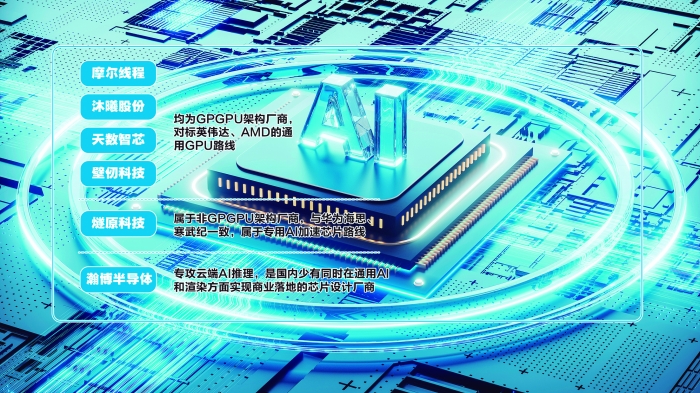
Core Viewpoint - The article highlights the rapid development and competitive landscape of domestic AI chip companies in China, particularly focusing on the six emerging players in Shanghai, which are poised for significant growth and innovation in the AI sector [2][10]. Group 1: Company Developments - Hanbo Semiconductor has completed its guidance for an IPO on the Sci-Tech Innovation Board and is progressing steadily towards its public offering [2]. - Suiruan Technology's IPO application has been accepted, indicating a growing interest in AI chip companies [2]. - The six domestic AI chip companies, including Hanbo Semiconductor, are collectively referred to as the "Six Little Dragons," with a strong emphasis on technological advancements and product development [2][4]. Group 2: Market Position and Strategy - The "Six Little Dragons" are primarily cloud-based AI chip manufacturers, with five of them focusing on GPGPU architecture to compete with global giants like NVIDIA and AMD [2][4]. - Hanbo Semiconductor specializes in cloud AI inference and has achieved commercial success in both general AI and rendering applications, positioning itself as a leader in the domestic market [3][4]. - The companies are actively updating their technology and product lines, with significant launches such as the new GPU brand by Muxi Co., which aims to enhance scientific research capabilities [3][4]. Group 3: Financial Performance and Projections - Muxi Co. anticipates a revenue of 1.6 billion to 1.7 billion yuan in 2025, reflecting a year-on-year growth of 115.32% to 128.78% [9]. - Moer Thread expects a revenue of 1.45 billion to 1.52 billion yuan in 2025, with a projected year-on-year increase of 230.70% to 246.67% [9]. - The domestic general GPU market share is expected to rise from 8.3% in 2022 to over 50% by 2029, indicating a structural transformation in the market [10]. Group 4: Government and Investment Support - Shanghai has been proactive in nurturing the AI chip industry through financial support and favorable policies, positioning itself as a leader in the integrated circuit sector [5][7]. - The Shanghai Sci-Tech Innovation Fund has been involved in early-stage investments in companies like Muxi, demonstrating strong government backing for local tech firms [6]. - Hanbo Semiconductor has received significant investments from local state-owned enterprises, benefiting from various policy supports aimed at fostering high-quality development in the tech sector [7].

“国产AI芯片六小龙”竞速,上海赚大了
Shang Hai Zheng Quan Bao· 2026-02-07 02:39
Core Viewpoint - The domestic AI chip industry in Shanghai is rapidly advancing, with six notable companies, referred to as the "Six Little Dragons," preparing for IPOs, indicating a strong growth trajectory in the AI sector and a significant opportunity for investment [1][9]. Group 1: Company Developments - Hanbo Semiconductor has completed its guidance for the Sci-Tech Innovation Board IPO and is progressing towards its public offering [1]. - Suiruan Technology has been accepted for its IPO application on the Sci-Tech Innovation Board, indicating a competitive landscape among domestic AI chip manufacturers [1]. - The "Six Little Dragons" include companies like Moer Thread, Muxi Co., Tian Shu Zhi Xin, and Bi Ran Technology, all of which are focusing on developing next-generation AI chips [2][3]. Group 2: Technological Advancements - The "Six Little Dragons" are primarily cloud-based AI chip manufacturers, with Moer Thread and Muxi Co. focusing on GPGPU architectures, while Suiruan Technology is developing specialized AI acceleration chips [2]. - Tian Shu Zhi Xin has announced a roadmap for its fourth-generation architecture, aiming to surpass NVIDIA's technology by 2027 [3]. - Moer Thread plans to unveil its new GPU architecture "Hua Gang" by the end of 2025, which will significantly enhance computing power and efficiency [3]. Group 3: Financial Performance and Projections - Moer Thread expects its revenue for 2025 to be between 1.45 billion to 1.52 billion yuan, reflecting a growth of approximately 230.7% to 246.67% compared to 2024 [9]. - Muxi Co. anticipates a revenue increase to between 1.6 billion to 1.7 billion yuan in 2025, marking a growth of 115.32% to 128.78% year-on-year [10]. - Both companies are experiencing a reduction in net losses, indicating a positive trend in financial performance amidst a growing market for AI chips [10][11]. Group 4: Government and Investment Support - Shanghai has positioned itself as a leader in the integrated circuit industry, ranking first in China and fourth globally, which has facilitated the growth of local AI chip companies [5]. - The Shanghai government has actively supported the development of the "Six Little Dragons" through funding and policy initiatives, enhancing their growth potential [6][8]. - Significant investments have been made in companies like Muxi Co. and Suiruan Technology, with funding from state-owned enterprises and investment funds aimed at bolstering their market positions [7][8].
沐曦股份商业化提速营收冲击17亿 GPU“双星”增收减亏总市值5143亿
Chang Jiang Shang Bao· 2026-01-29 03:12
Core Viewpoint - The rise of artificial intelligence has led to significant attention on domestic GPU companies, particularly Muxi Co., Ltd. and Moole Technology, which have shown substantial revenue growth and reduced losses in their recent performance forecasts [3][5][6]. Group 1: Financial Performance - Muxi Co., Ltd. expects to achieve revenue between 1.6 billion to 1.7 billion yuan in 2025, representing a year-on-year growth of 115.32% to 128.78%, while projecting a net loss of 650 million to 798 million yuan, a reduction in losses by 43.36% to 53.86% [3][5]. - Moole Technology anticipates revenue of 1.45 billion to 1.52 billion yuan in 2025, with a year-on-year growth of 230.7% to 246.67%, and a net loss of 950 million to 1.06 billion yuan, reducing losses by 34.5% to 41.3% [3][6]. - Both companies have shown significant revenue growth in their first year post-IPO, with Muxi's revenue increasing from 426,400 yuan in 2022 to 743 million yuan in 2024, and Moole's revenue rising from 46.1 million yuan to 438 million yuan in the same period [6][7]. Group 2: Market Position and Valuation - Muxi Co., Ltd. and Moole Technology have become highly sought after in the capital market, with their stock prices increasing over four times since their IPOs, leading to market capitalizations exceeding 200 billion yuan each, totaling 514.3 billion yuan [4][10]. - As of January 28, 2023, Moole's stock price was 602.88 yuan per share, and Muxi's was 577.2 yuan per share, ranking them sixth and seventh among A-share listed companies [4][10]. Group 3: R&D and Product Development - Both companies maintain high levels of R&D investment, with Muxi's R&D expenses from 2022 to 2025 being 648 million, 699 million, 901 million, and 695 million yuan, while Moole's were 1.116 billion, 1.334 billion, 1.359 billion, and 861 million yuan [8]. - Moole Technology has launched the MTT S5000, a flagship GPU that has achieved market-leading performance and is capable of supporting large-scale AI model training [8][9]. - Muxi Co., Ltd. introduced the X series GPU, designed for scientific computing, marking its fourth product line and completing its coverage in key AI-related sectors [9].
国产GPU独角兽上市后首份成绩单:营收翻倍、预亏8亿
Guan Cha Zhe Wang· 2026-01-28 09:51
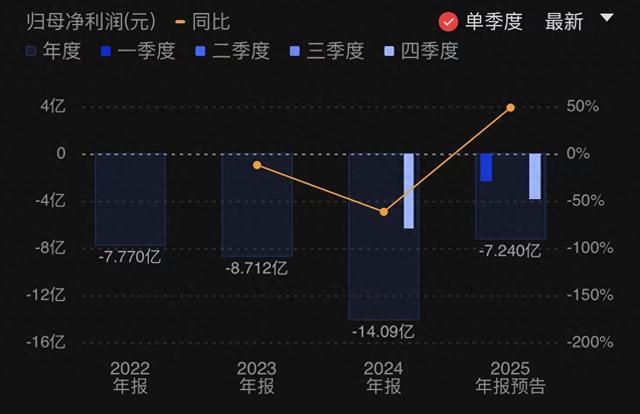
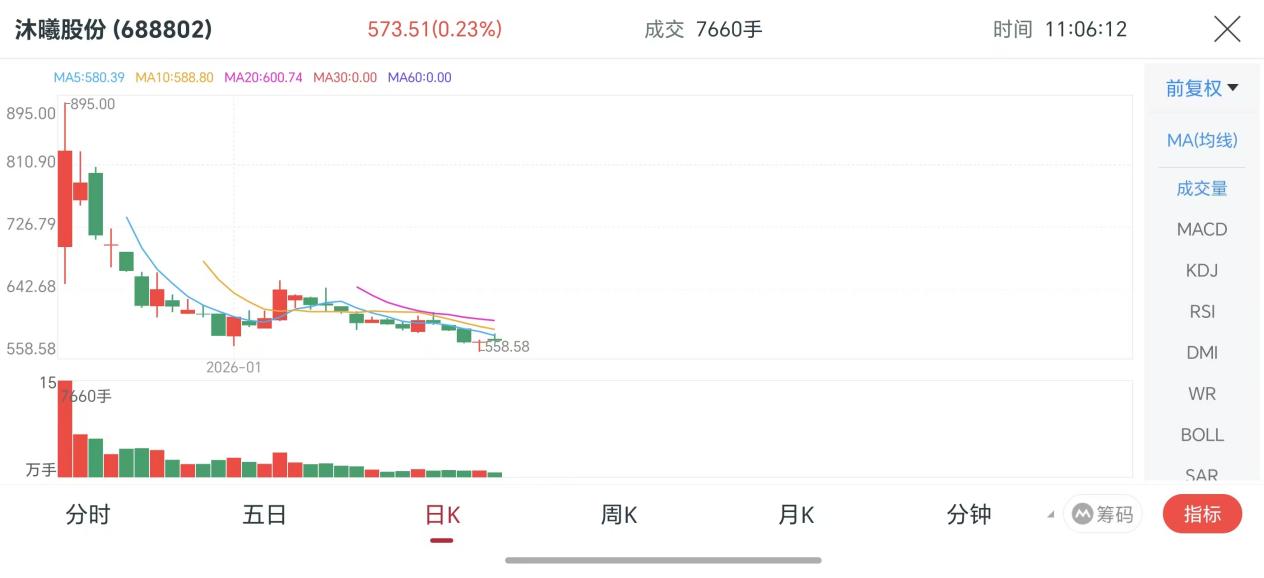
Core Viewpoint - Muxi Integrated Circuit (Shanghai) Co., Ltd. is expected to report significant revenue growth for 2025, with projected revenues between 1.6 billion to 1.7 billion yuan, marking an increase of 115.32% to 128.78% compared to the previous year, despite still facing net losses [1][2]. Group 1: Financial Performance - The company anticipates a net loss of 650 million to 798 million yuan for 2025, which represents a reduction of 43.36% to 53.86% compared to a net loss of 1.409 billion yuan in 2024 [1]. - The projected non-GAAP net loss is expected to be between 700 million to 835 million yuan, narrowing by 20.01% to 32.94% year-over-year [1]. - Muxi's revenue has grown from less than 50,000 yuan in 2022 to approximately 1.6 billion yuan in 2025, achieving a compound annual growth rate of over 1450% over the past three years [1]. Group 2: Market Position and Product Development - The company has gained widespread recognition and continuous procurement from downstream customers, contributing to significant revenue growth during the reporting period [2]. - Muxi's stock price has experienced a notable decline, falling over 30% from its peak of 895 yuan per share at IPO to 577.2 yuan per share as of January 28, with a current market capitalization of approximately 230 billion yuan [2]. - Muxi launched the X Series GPU brand and product line, aimed at enhancing AI for Science (AI4S) innovation, covering key areas such as AI inference, AI training, graphics rendering, and scientific intelligence [3].

“1+6+X”战略加持!沐曦股份2025年营收翻倍,亏损收窄,发力科学智能赛道
Jin Rong Jie· 2026-01-28 04:44
Core Viewpoint - Muxi Co., Ltd., known as the "second domestic GPU stock," has reported a significant increase in revenue and a notable reduction in losses for the year 2025, indicating a positive operational trend [1][3]. Financial Performance - For the fiscal year 2025, Muxi Co., Ltd. expects to achieve revenue between 1.6 billion to 1.7 billion yuan, representing a growth of 115.32% to 128.78% compared to the previous year's revenue of 743 million yuan, which translates to an increase of 857 million to 957 million yuan [3]. - The company is still in a loss position but has significantly narrowed its losses, with an expected net loss attributable to shareholders ranging from 650 million to 798 million yuan, a reduction of 43.36% to 53.86% compared to the previous year's loss of 1.409 billion yuan [5]. - The adjusted net loss, excluding non-recurring items, is projected to be between 700 million to 835 million yuan, down from a loss of 1.044 billion yuan in the previous year, reflecting a decrease of 20.01% to 32.94% [5]. Strategic Development - Muxi Co., Ltd. attributes its performance improvement to its "1+6+X" development strategy, which emphasizes market expansion and leverages its self-developed GPU product system and comprehensive software ecosystem, gaining widespread recognition and continuous procurement from downstream customers [5]. - The company has also seen a reduction in share-based payment expenses compared to the previous year, positively impacting its profitability [5]. Product Launch - On the same day as the earnings forecast, Muxi Co., Ltd. launched the new Xisuo X series GPU product line, which focuses on deep optimization for scientific intelligence scenarios, built on the company's proprietary GPU IP architecture [6]. - The Xisuo X series is the fourth product line introduced by the company, completing its product matrix across four core computational tracks: AI inference, AI training, graphics rendering, and scientific intelligence [7]. - The first product in this series, the Xisuo X206, features full-precision mixed computing capabilities and is designed to support both traditional high-performance computing tasks and AI-driven interdisciplinary research needs [7].
沐曦股份发布曦索X系列GPU 补齐科学智能赛道拼图
Xin Hua Cai Jing· 2026-01-27 15:41
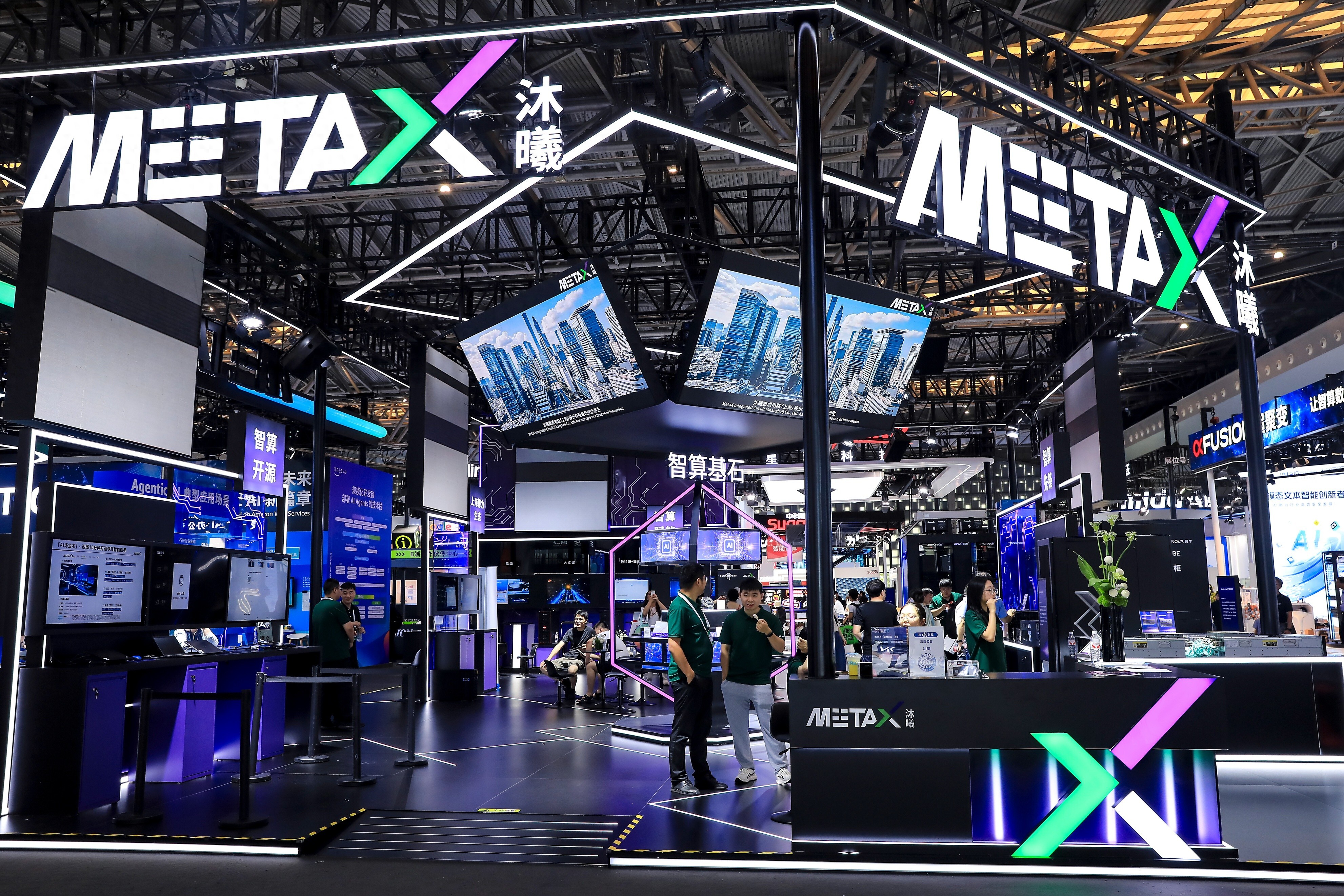
Core Viewpoint - The launch of the Xisuo X series GPU by Muxi Co., aimed at optimizing AI for scientific applications, marks a significant advancement in the integration of traditional scientific computing and AI-driven research paradigms [2]. Group 1: Product Launch and Features - Muxi Co. introduced the Xisuo X series, specifically designed for AI for Science scenarios, enhancing its product matrix across four core areas: AI inference, AI training, graphics rendering, and now scientific computing [2]. - The first product in this series, the Xisuo X206, features mixed precision computing capabilities, large memory capacity, and advanced multi-card interconnect technology to address memory limitations in large-scale model training [2]. Group 2: Software Ecosystem and Applications - The Xisuo X206 is equipped with Muxi's self-developed MXMACA software stack, ensuring compatibility with mainstream GPU programming models and international standards, which significantly reduces code migration and deployment costs for users [3]. - This GPU not only supports traditional high-performance computing tasks like climate and meteorological simulations but also provides computational support for AI-driven interdisciplinary fields such as materials prediction and life sciences exploration [3].
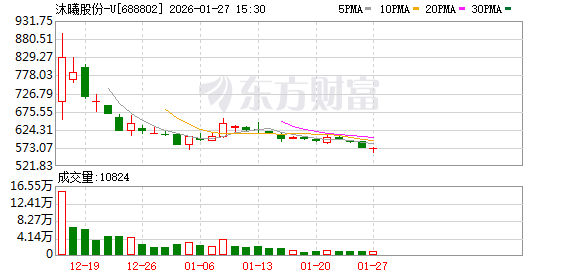
沐曦股份上市后首份业绩预告出炉!预计2025年亏损收窄50%左右 推出曦索X系列GPU品牌与产品线
Xin Lang Cai Jing· 2026-01-27 15:29
Core Viewpoint - Mu Xi Co., Ltd. has released its first earnings forecast since its IPO, projecting significant revenue growth while narrowing its losses for the fiscal year 2025 [1][3]. Financial Performance - The company expects to achieve revenue between 1.6 billion to 1.7 billion yuan in 2025, representing a year-on-year growth of 115.32% to 128.78% [1]. - The anticipated net loss for the parent company is projected to be between 650 million to 798 million yuan, a reduction of 43.36% to 53.86% compared to the previous year's loss of 1.409 billion yuan [1]. - The expected loss for the non-recurring net profit is estimated to be between 700 million to 835 million yuan, reflecting a year-on-year decrease of 20.01% to 32.94% [1]. Strategic Development - The company is implementing a "1+6+X" development strategy, focusing on market expansion and enhancing its position in the high-performance GPU industry [3]. - Mu Xi Co., Ltd. aims to integrate AI technology across various industries, which has led to increased recognition and sustained procurement from downstream customers [3]. Product Development - The company has introduced a full-stack GPU product line, including the Xi Si N series, Xi Yun C series, and Xi Cai G series [4]. - Upcoming products include the C600 and C700 series chips, with the C600 series expected to begin mass production in the first half of 2026 [4]. - The newly launched Xi Suo X series is designed for scientific intelligence applications, supporting various computational tasks and AI-driven research [5]. Market Position - Since its IPO, the stock price of Mu Xi Co., Ltd. has declined from a peak of 895 yuan per share to a closing price of 572.18 yuan, marking a decrease of 36.07% [6]. - The stock reached a historical low of 558.58 yuan per share on the same day [6].