
曲马多

Search documents
我国毒品案件数量大幅下降 涉毒次生风险、衍生犯罪危害增大
Ren Min Ri Bao· 2026-02-04 22:13
Core Points - The Supreme People's Court of China reported a significant decline in drug-related cases over the past three years, with a total of 23,732 drug cases concluded in first-instance trials in 2025, marking an 82.93% decrease from the peak in 2015 and a 33.82% decrease from 2024, returning to levels seen before 2000 [1] - Despite the crackdown on traditional drugs, there has been a rise in new drug cases, particularly involving medical narcotics and new psychoactive substances, with the abuse of etomidate surpassing heroin, making it the second most abused drug after methamphetamine [1] - The increase in drug-related secondary risks and derivative crimes poses a growing threat to public safety, with incidents of violence and accidents linked to the abuse of drugs like dextromethorphan and tramadol occurring frequently [1]
最高法:一些医院、诊所、药店等成为麻精药品流出的一个渠道
Zhong Guo Jing Ying Bao· 2026-02-03 17:35
Core Viewpoint - The rise of new psychoactive substances has surpassed traditional drugs, with some provinces reporting that new drug cases account for over half of all drug-related incidents. The involvement of minors in drug abuse is increasing, leading to a cycle of addiction and criminal activity [1][2]. Group 1: Current Drug Crime Trends - New psychoactive substances are becoming a significant issue, with a notable increase in cases involving medical narcotics and psychoactive drugs as substitutes for traditional drugs [2][3]. - In 2023-2025, courts are expected to adjudicate approximately 93,000 drug cases, with 133,000 defendants, of which 27,000 will receive prison sentences of five years or more, resulting in a heavy sentencing rate of 20% [2]. - The number of drug cases has significantly decreased, with a reported 23,732 cases concluded in 2025, marking an 82.93% decline from the peak in 2015 [1]. Group 2: Sources and Channels of Drug Distribution - Medical institutions, pharmacies, and clinics have become channels for the illegal distribution of narcotic drugs, with some medical professionals exploiting their positions for profit [3][4]. - The types of abused narcotic drugs are diverse but concentrated on specific substances such as etomidate, methadone, and synthetic cannabinoids [3]. Group 3: Legal and Regulatory Responses - The Supreme People's Court has issued guidelines to strengthen the judicial handling of cases involving narcotic drugs, particularly focusing on medical narcotics and psychoactive substances [3][5]. - Recent judicial recommendations have been made to the National Health Commission to enhance the regulatory framework surrounding narcotic drugs, addressing loopholes and weak points in current systems [5].
依托咪酯、美托咪酯、曲马多……这些医疗用麻精药品具有毒品属性,千万别滥用!
Xin Lang Cai Jing· 2026-02-02 14:55
Core Viewpoint - The Supreme People's Court has proposed strengthening the regulatory framework for medical narcotic drugs in response to rising abuse and trafficking issues, prompting the National Health Commission to take decisive actions to address these problems [1][3]. Group 1: Regulatory Actions - The Supreme People's Court has sent judicial recommendations to the National Health Commission to enhance the regulatory system for medical narcotic drugs [1]. - The National Health Commission is drafting relevant regulations to combat the misuse of narcotic drugs [1]. Group 2: Abuse and Trafficking Issues - Various narcotic drugs, including etomidate, methohexital, tramadol, dextromethorphan, and synthetic cannabinoids, are being abused and sold illegally [1]. - Some hospitals, clinics, and pharmacies have become channels for the illegal distribution of narcotic drugs, with certain medical personnel exploiting their positions for profit [1]. - There is a noted increase in new drug cases as illegal substances are being marketed as alternatives to traditional drugs [1]. Group 3: Public Awareness and Compliance - Patients and their families often resell leftover narcotic drugs due to a lack of understanding of regulations, convenience, or financial reasons, which can lead to legal repercussions [3]. - The Supreme People's Court emphasizes the importance of adhering to medical advice regarding narcotic drugs and properly disposing of any leftover medication to prevent legal issues [3].


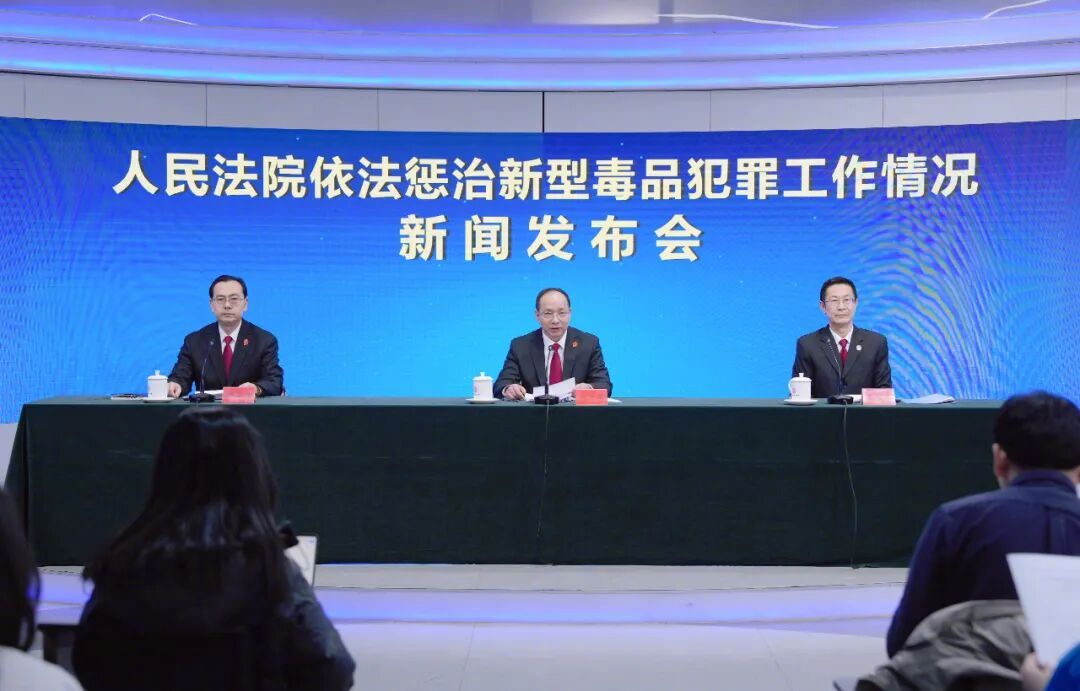
最高法举行“人民法院依法惩治新型毒品犯罪工作情况”新闻发布会
Xin Lang Cai Jing· 2026-02-02 12:49
Core Viewpoint - The Supreme People's Court of China is actively addressing the issue of new drug crimes in preparation for the upcoming National People's Congress, highlighting the importance of strict and fair judicial practices in combating drug-related offenses and ensuring public safety and welfare [1][4]. Group 1: Current Situation of New Drug Crimes - The number of drug cases in China has significantly decreased, with 23,732 drug cases concluded in 2025, marking an 82.93% decline from the peak in 2015 [4]. - New drug crimes are on the rise, with approximately 4,000 new drug cases concluded in 2023, and this number is expected to surge to about 14,000 in 2024, accounting for 39.1% of all drug cases [5]. - The structure of drug abuse is changing, with new drugs like etomidate surpassing traditional drugs like heroin in some provinces, indicating a shift in drug consumption patterns [5]. Group 2: Characteristics of New Drug Crimes - New drug cases are characterized by fluctuating growth and an increasing proportion of total drug cases, with new drugs becoming more prevalent as traditional drugs are effectively curtailed [5]. - The sources of involved substances are diverse, including smuggling from abroad and illegal production within the country, with medical institutions also being a source of abused drugs [6]. - New drugs often have strong concealment and disguise features, being sold in forms that resemble everyday products, which complicates enforcement efforts [6]. Group 3: Judicial Measures and Achievements - From 2023 to 2025, courts concluded 93,000 drug cases, with 133,000 defendants sentenced, including 27,000 receiving prison terms of five years or more, reflecting a strict approach to drug crime [10]. - The courts are implementing a dual approach of strict punishment and precise targeting, focusing on serious offenses such as trafficking and manufacturing new drugs [10]. - The Supreme People's Court has issued guidelines and case studies to enhance judicial responses to new drug crimes, ensuring consistent application of laws [12][13]. Group 4: Prevention and Governance - The courts are emphasizing a combination of punishment and prevention, issuing judicial recommendations to improve the regulation of medical drugs and enhance public awareness [14][15]. - Collaborative efforts with various departments are being strengthened to create a comprehensive governance model for drug-related issues, including initiatives to improve postal safety against drug trafficking [16].
行业洞察:国产新药迈入临床,癌痛治疗开辟新路径
Tou Bao Yan Jiu Yuan· 2026-01-13 12:13
Investment Rating - The report does not explicitly state an investment rating for the industry [1]. Core Insights - Adult cancer pain management is a systematic project aimed at achieving comprehensive pain control through standardized assessment, individualized treatment, and multidisciplinary collaboration [4]. - Cancer pain is a prevalent symptom among cancer patients, with a high incidence rate of 44.5%, and nearly one-third of patients suffer from moderate to severe pain [11]. - The adult cancer pain treatment market in China is expected to grow from 3.76 billion CNY in 2020 to 6.36 billion CNY by 2029, with a compound annual growth rate (CAGR) of 6.8% from 2020 to 2024 and 5.3% from 2025 to 2029 [20]. Summary by Sections Cancer Pain Management - Cancer pain management involves a comprehensive approach that includes pain screening, assessment, and management tailored to the patient's overall treatment goals [3][4]. - The management process is based on standardized screening and dynamic assessment, following principles of regularity, quantification, comprehensiveness, and dynamism [4]. Epidemiological Characteristics - Cancer pain has a high prevalence among patients, particularly in advanced stages, where over 80% experience pain [11]. - The main causes of cancer pain are tumor progression (over 90%) and treatment-related pain (approximately 20%) [11]. - Pain types include nociceptive pain (around 60%), neuropathic pain (19%), and mixed pain (20%) [11]. Treatment Medications - Common medications for cancer pain include weak opioids (e.g., codeine, tramadol), strong opioids (e.g., morphine, fentanyl), non-steroidal anti-inflammatory drugs (NSAIDs), and acetaminophen [15][16]. - There is a shift towards the development of non-opioid medications to provide safer and sustainable pain management options [16]. Market Outlook - The adult cancer pain treatment market is projected to expand significantly due to increasing clinical needs and the introduction of innovative non-opioid drugs [19][20]. - The treatment rate for cancer pain is expected to rise from approximately 70% to 90% by 2029, indicating a growing population receiving standardized treatment [20]. Innovation Trends - Treatment strategies are transitioning from reliance on opioids to a multimodal approach that includes NSAIDs and adjuvant analgesics [26]. - The focus on non-opioid innovative drugs is becoming a breakthrough direction in drug development [26]. - There is an emphasis on personalized medication management and the establishment of a comprehensive management network through medical alliances [26][27].