
机票选座服务

Search documents
线上购机票频现座位被“锁定” 新标准将规范航班预留座位行为
Yang Guang Wang· 2026-01-31 05:08
Core Viewpoint - The introduction of the draft standard for seat reservation rules by the China Air Transport Association aims to regulate the practice of seat locking by airlines, addressing consumer concerns regarding seat selection and enhancing transparency in the airline industry [1][2]. Group 1: Issues with Current Practices - Many passengers have reported that certain seats are locked during online booking, particularly desirable seats in the economy class, leading to limited free selection options [1][2]. - A report from the Jiangsu Consumer Protection Committee highlighted four main issues: the prevalence of seat locking, excessive locking of quality seats, opaque unlocking mechanisms that effectively charge fees, and unfair contract terms that infringe on consumer rights [2][4]. Group 2: Proposed Standards and Regulations - The draft standard specifies that for domestic flights, free seat selection must be at least 70% of the total economy class seats for flights with 160 seats or fewer, and up to 80% for larger aircraft [2][3]. - The standard also mandates that airlines must clearly inform passengers about the types of reserved seats, the release timing of these seats, and the criteria for free and paid seat selection [4]. Group 3: Industry Perspectives - Industry experts believe that the draft standard will better protect passenger rights and improve the market mechanism within civil aviation services [3][4]. - The standard encourages airlines to enhance service quality while allowing for a certain proportion of paid seat selection, thus balancing consumer needs with airline operational requirements [3][4]. Group 4: Consumer Rights and Transparency - The draft emphasizes the importance of transparency in the airline industry, shifting from "black box" competition to clearer options for consumers [2][4]. - It is noted that the selection service is considered an ancillary service rather than a basic transportation service, reflecting the need for diverse and personalized offerings in air travel [4][5].
飞机座位被“上锁”,“花钱选座”合法吗?丨小铭切瓜
Xin Lang Cai Jing· 2026-01-20 14:46
Core Viewpoint - The practice of "seat locking" by airlines, which restricts access to desirable seats unless additional fees or points are paid, is deemed illegal and constitutes "coerced consumption" [2]. Group 1: Overview of "Seat Locking" - "Seat locking" refers to the situation where passengers find that preferred seats are often locked and require either offline selection or the use of points or miles to access [1]. - A report from Jiangsu Consumer Protection Committee indicates that the "seat locking" phenomenon is widespread among airlines [1]. Group 2: Legal Implications - The method employed by airlines to lock premium seats under the guise of safety needs is criticized as a commercial strategy rather than a genuine safety concern [2]. - This practice infringes upon consumer rights as outlined in the Consumer Rights Protection Law of the People's Republic of China, particularly the right to choose and the right to fair trading [2]. - Consumers are entitled to file lawsuits based on these violations, and in cases of fraud, they may seek punitive damages of "three times the amount" [2].
“加价选座”不应成为“行业潜规则”
Zheng Quan Shi Bao· 2025-12-09 00:36
Core Viewpoint - The phenomenon of airlines "locking seats" is a controversial practice that appears to segment service levels but is essentially a method to increase revenue at the expense of passenger rights [1][4]. Group 1: Revenue Generation Tactics - Airlines are locking seats in the economy class, particularly those near the front or by emergency exits, requiring passengers to either redeem miles or pay fees to unlock these seats, which has become a significant pain point in the industry [1][4]. - One airline categorizes locked seats into three tiers: preferred seats (2000 points), first-choice seats (1600 points), and standard seats (1000 points), with additional fees of 400 yuan, 320 yuan, and 200 yuan respectively for unlocking these seats [1][4]. Group 2: Consumer Rights Violations - The practice of charging for seat selection infringes on multiple consumer rights, including the right to be informed about the true nature of the services purchased, as airlines do not clearly indicate which seats require additional fees or the basis for these fees [1][5]. - According to the Consumer Rights Protection Law, consumers have the right to choose products or services freely, and the airlines' practice of linking seat selection to additional fees restricts this freedom [2][5]. Group 3: Fair Trading Principles - The airlines' pricing strategy lacks a basis in actual service provided, as the economy class service remains the same regardless of seat selection, thus violating the principle of fair trading [2][5]. - The shift from a "first-come, first-served" model to a "pay-to-select" model exploits the airlines' market position, turning a previously free service into a revenue-generating mechanism, which increases the financial burden on consumers [2][5]. Group 4: Regulatory Concerns - The "pay-for-seat" practice may also violate pricing laws that require clear pricing and prohibit additional charges beyond the listed price [3][6]. - There is a call for coordinated action from relevant parties to compel airlines to enhance service levels and restore passenger rights, with a push for regulations to prevent the normalization of such practices in the industry [3][6].
江苏省消保委调查相关航司有偿选座服务
Zheng Quan Ri Bao· 2025-12-02 16:13
Core Viewpoint - The investigation by Jiangsu Consumer Protection Committee reveals that domestic airlines are locking a significant percentage of economy class seats, which raises concerns about consumer rights and fair pricing practices [1][2][3]. Group 1: Investigation Findings - The investigation found that all surveyed airlines exhibit varying degrees of "seat locking," with the percentage of locked seats ranging from 19.9% to 62.1%, averaging 38.7% [1]. - Spring Airlines and Shenzhen Airlines have particularly high locking rates, exceeding 60% and 50% respectively on specific routes [1]. - The locked seats are primarily located in preferred areas such as the front rows, window, and aisle seats, while available free seats are often in less desirable locations [2]. Group 2: Consumer Rights and Legal Perspectives - According to legal experts, the practice of charging for seat selection may violate consumer rights, as it transforms basic services into additional fees without proper disclosure [2]. - The Consumer Protection Law grants consumers the right to fair trading, which includes being informed about any additional charges related to seat selection [2]. Group 3: Industry Implications and Recommendations - The practice of "seat locking" is viewed as a method for airlines to increase revenue at the expense of customer experience, potentially harming long-term industry growth [3]. - Experts suggest that airlines should maintain a balance between commercial interests and consumer rights, ensuring that a majority of seats remain available for free selection while allowing a small percentage for premium pricing [4]. - Future regulatory scrutiny will focus on how airlines address these issues, emphasizing the need for a balance between market operations and public service responsibilities [4].
东航、南航、国航、海航、春秋等10家航司被约谈
Mei Ri Jing Ji Xin Wen· 2025-11-26 16:27
Core Viewpoint - The recent practice of airlines locking seats and charging for seat selection has raised consumer concerns, as it is perceived as a means for airlines to increase revenue at the expense of consumer rights [1][2]. Group 1: Investigation Findings - A special investigation by Jiangsu Consumer Council focused on 10 domestic airlines, revealing that seat locking is prevalent, with the proportion of locked seats in economy class ranging from 19.9% to 62.1%, averaging 38.7% [1][2]. - The locked seats are primarily desirable ones, such as those in the front row, window, and aisle, limiting consumer choice to less favorable options [1][2]. - The investigation identified four main issues: widespread seat locking, disguised payment mechanisms, lack of transparency, and unfair contractual terms [2]. Group 2: Consumer Rights and Responsibilities - Airlines are legally responsible for protecting consumer rights and must ensure transparency in seat distribution and pricing policies [3]. - Airlines should provide equal seat selection opportunities for all passengers at the same fare and respect consumer autonomy in choosing seats [3]. Group 3: Required Actions from Airlines - Jiangsu Consumer Council has mandated airlines to conduct self-assessments and rectify their seat selection rules, particularly addressing excessive locking and disguised payment models [4]. - Airlines must revise unfair contractual terms that limit consumer rights and ensure that their policies are clear and transparent [4]. Group 4: Industry Response - Representatives from Southern Airlines and Lucky Air acknowledged the situation and stated they are evaluating the requirements set by Jiangsu Consumer Council [5]. - Experts have pointed out that while some seat locking for safety or special needs is acceptable, excessive locking for profit could violate consumer rights [5][6].





买机票还要再花钱选座?10家航司被约谈!锁座比例平均超38%
Bei Jing Shang Bao· 2025-11-26 14:33
Core Viewpoint - The Jiangsu Provincial Consumer Protection Committee has raised concerns regarding the long-standing issues of seat locking and paid seat selection services among major Chinese airlines, highlighting the need for reform in these practices to protect consumer rights [1][2][3]. Group 1: Issues Identified - The practice of seat locking is widespread among the ten airlines, with the proportion of locked seats in the economy class ranging from 19.9% to 62.1%, averaging 38.7%, primarily affecting preferred seating areas [1][2]. - Airlines are increasingly using a mechanism that effectively charges consumers for seat selection, particularly disadvantaging non-members or infrequent travelers who lack the means to accumulate points for free seat selection [2]. - There is a lack of transparency in the information provided to consumers regarding seat locking rules and associated fees, with airlines often providing vague explanations that do not align with the high rates of seat locking [2]. Group 2: Required Reforms - The Jiangsu Provincial Consumer Protection Committee has mandated airlines to conduct self-assessments and rectify their seat selection rules within 15 working days, specifically addressing the excessive locking of seats and eliminating disguised paid seat selection models [3][4]. - Airlines are required to ensure a reasonable and balanced distribution of free seat options, retaining only necessary seat locks for special passengers or emergency purposes, while prohibiting the inclusion of standard economy seats in the paid category [3]. - The committee has called for a review and modification of unfair contractual terms related to seat locking, ensuring that consumer rights are not limited and that airlines' responsibilities are clearly defined within a transparent framework [4].


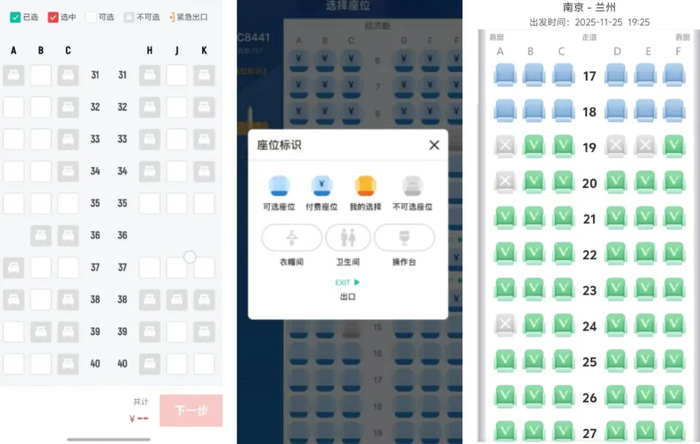
平均38.7%座位被锁定 江苏消保委约谈10家航司要求限期整改
Yang Shi Xin Wen· 2025-11-26 11:02
Core Viewpoint - The recent practice of airlines locking seats and charging for seat selection has raised consumer concerns, as it is seen as a way for airlines to increase revenue at the expense of consumer rights [1][2]. Group 1: Investigation Findings - A special investigation by Jiangsu Consumer Council targeted 10 domestic airlines, revealing that seat locking is prevalent, with the proportion of locked seats in economy class ranging from 19.9% to 62.1%, averaging 38.7% [1][2]. - The locked seats are primarily desirable ones, such as those in the front row, window, and aisle, limiting consumer choice to less favorable options [1][2]. Group 2: Consumer Rights Violations - The unlocking mechanism for preferred seats often requires payment through membership points or miles, disadvantaging non-members or occasional travelers who lack accumulation channels [2]. - Airlines have introduced additional paid options for unlocking seats, effectively splitting the basic seat selection rights into paid services, increasing travel costs for consumers [2]. - Information regarding seat locking rules and fees is often unclear, violating consumers' right to know, with customer service responses being inadequate and contradictory [2]. Group 3: Recommendations for Airlines - Airlines are urged to ensure transparency by clearly informing consumers about seat distribution and pricing policies [3]. - Fairness in rules must be maintained, ensuring equal seat selection opportunities for all passengers at the same fare [3]. - Airlines should respect consumer autonomy by safeguarding their right to choose and preventing disguised compulsory consumption [3]. Group 4: Required Actions - Airlines must conduct self-assessments to address excessive seat locking and eliminate disguised paid seat selection models, ensuring a reasonable and balanced distribution of free seat options [3][4]. - Unfair clauses in agreements related to seat locking should be reviewed and amended to avoid limiting consumer rights or increasing consumer responsibilities unfairly [4].