美伊军事对峙

Search documents
一触即发!双航母就位,美国呼吁所有在伊公民立即离境,特朗普:有时候不得不打!伊朗同意不拥有“可制造核弹的核材料”,金价油价大涨
Mei Ri Jing Ji Xin Wen· 2026-02-28 00:36
Group 1 - President Trump expressed a desire to reach an agreement with Iran while indicating that military action may be necessary at times, emphasizing that a final decision on military action has not been made [2][4] - The U.S. military has deployed two aircraft carriers, the USS Ford and USS Lincoln, in the Middle East, increasing military pressure on Iran [5] - The U.S. State Department has officially designated Iran as a "State Sponsor of Wrongful Detention" and urged all American citizens to leave Iran immediately [7][10] Group 2 - The third round of nuclear negotiations between the U.S. and Iran concluded recently, with a new round of technical discussions scheduled for March 2 in Vienna [11] - Despite some optimism following the negotiations, significant differences remain, particularly regarding Iran's nuclear facilities and the transfer of enriched uranium [12][15] - The international community is closely monitoring the situation, with multiple countries issuing travel warnings and advising their citizens to avoid the region [8][10] Group 3 - Following the escalation in tensions, international gold and oil prices have surged, with gold rising by 1.85% to $5,279.95 per ounce and oil prices increasing by over 3% [16][17] - The U.S. stock market experienced volatility, with all three major indices declining and nearly 3,800 stocks falling [17]


多国撤人、航母抵以 美伊战争风险急剧升高
Xin Lang Cai Jing· 2026-02-27 14:17
Group 1 - The U.S. State Department has approved the evacuation of non-emergency personnel and their families from Israel due to security risks, with the U.S. Ambassador urging immediate departure [1] - The arrival of the U.S. aircraft carrier "Ford" in Israel has heightened concerns about the risk of conflict between the U.S. and Iran, as military pressure on Iran continues to increase [2] - Canada and India have advised their citizens to leave Iran immediately due to escalating tensions in the region, with Canada previously issuing travel warnings [2] Group 2 - Iran's military has vowed to respond "devastatingly" to any acts of aggression from the U.S., indicating a readiness to defend national interests amid rising tensions [3] - Iranian officials claim that the U.S. military presence in the region is part of a psychological warfare strategy, emphasizing their preparedness for potential conflict [3]
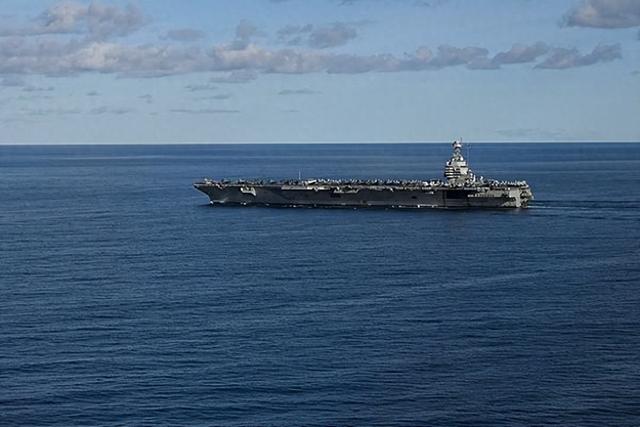
美“福特”号航母抵达以色列水域,美军在中东地区同时部署两艘航母
Xin Lang Cai Jing· 2026-02-27 10:13
Core Viewpoint - The deployment of the USS Ford aircraft carrier to Israeli waters signifies a significant military presence by the U.S. in the Middle East, alongside the USS Lincoln, amidst ongoing indirect negotiations with Iran [2]. Military Deployment - The USS Ford arrived in Israeli waters on February 27, having set sail from Crete, Greece, where it had previously resupplied at a U.S. Navy base [2]. - Approximately 20 U.S. military refueling aircraft arrived at Ben Gurion Airport in Israel on the evening of February 26 [2]. Diplomatic Negotiations - Indirect negotiations between Iran and the U.S. took place in Muscat, Oman, and Geneva, Switzerland, on February 6 and 17, respectively [2]. - The third round of indirect talks occurred on February 26 in Geneva, which did not result in an agreement but was positively evaluated by the parties involved [2]. - A plan was announced to continue technical discussions on March 2 in Vienna, Austria [2]. Military Strategy - U.S. President Trump acknowledged considerations for a "limited military strike" against Iran, indicating a potential escalation in military strategy [2].
美方证实:增派大批F-22
Xin Lang Cai Jing· 2026-02-25 16:56
Group 1 - The U.S. has deployed over a dozen F-22 Raptors to Israel, marking a continuation of military buildup in the Middle East amid rising tensions with Iran regarding its nuclear program [1] - This deployment is reportedly the first known instance of F-22s being sent to the region during the current escalation of U.S.-Iran tensions, with some aircraft recently transferred from the U.S. to a base in England before heading to Israel [1] - The deployment is part of a larger military presence in the region, which includes two aircraft carrier strike groups and over 60 fighter jets stationed at a base in Jordan, representing the largest U.S. military buildup in the area since the 2003 invasion of Iraq [3] Group 2 - Retired U.S. Air Force Major General David A. Deptula stated that the deployment of F-22s signifies a potential shift towards a more aggressive U.S. stance against Iran, possibly indicating collaboration with Israel for military action if Iran does not comply with U.S. conditions [2] - The region has seen a significant increase in military activity, with dozens of fighter jets, including F-35s, F-22s, F-15s, and F-16s, being tracked heading to the Middle East since mid-February, along with numerous refueling and cargo flights [3] - Iranian officials have reiterated their commitment to diplomatic efforts, with the Foreign Minister suggesting that an agreement is imminent, provided that diplomatic avenues are prioritized, while simultaneously conducting military exercises by the Islamic Revolutionary Guard Corps [3]
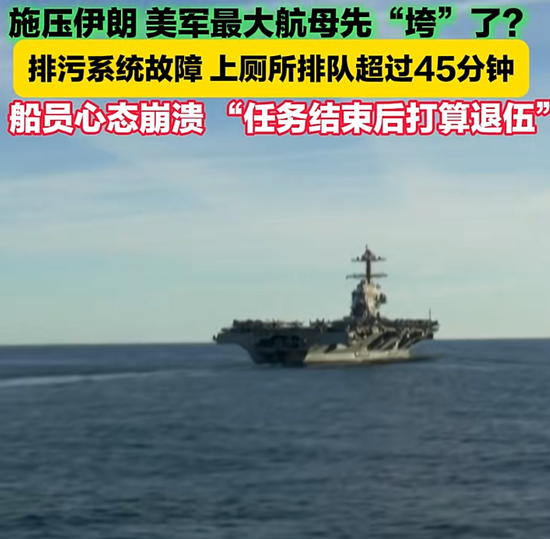
正对伊朗施压,美军最大航母650个马桶堵上了
Xin Lang Cai Jing· 2026-02-25 14:52
Core Viewpoint - The USS Gerald R. Ford aircraft carrier, the largest and most expensive nuclear-powered aircraft carrier, is facing significant operational challenges, including frequent toilet malfunctions and declining crew morale, amidst heightened military pressure on Iran as new negotiations approach [1][9]. Group 1: Operational Challenges - The Ford carrier's vacuum sewage system frequently malfunctions, requiring daily repairs for approximately 650 toilets onboard, with crew members sometimes waiting over 45 minutes to use the facilities [3][7]. - Reports indicate that the engineering department had alerted military leadership about the worsening toilet issues as early as March of the previous year, citing 205 malfunctions within four days and maintenance personnel working 19-hour shifts to manage the situation [3][7]. - Crew members are experiencing negative mental health effects, including anxiety and depression, due to the ongoing operational stress [3][7]. Group 2: Deployment and Morale - The Ford carrier has been on continuous deployment since June of the previous year, with its mission extended from the Mediterranean to the Caribbean and now to the Middle East to support potential military actions against Iran [8][9]. - The deployment duration has reached 8 months, with projections suggesting it could extend to 11 months, potentially breaking the record for continuous deployment of U.S. Navy vessels [4][8]. - Many crew members have expressed a desire to leave the Navy after this deployment due to the extended separation from their families and the physical and mental toll of their duties [5][8]. Group 3: Strategic Context - The upcoming negotiations between the U.S. and Iran are set for the 26th in Geneva, with reports indicating that President Trump may consider limited military strikes against Iran, escalating the situation further [9]. - The Ford carrier is viewed as a critical component of the U.S. military's strategy in the region, with significant troop deployments already assembled in the Middle East and surrounding areas [9].
伊朗:霍尔木兹海峡部分区域将关闭数小时
财联社· 2026-02-17 12:31
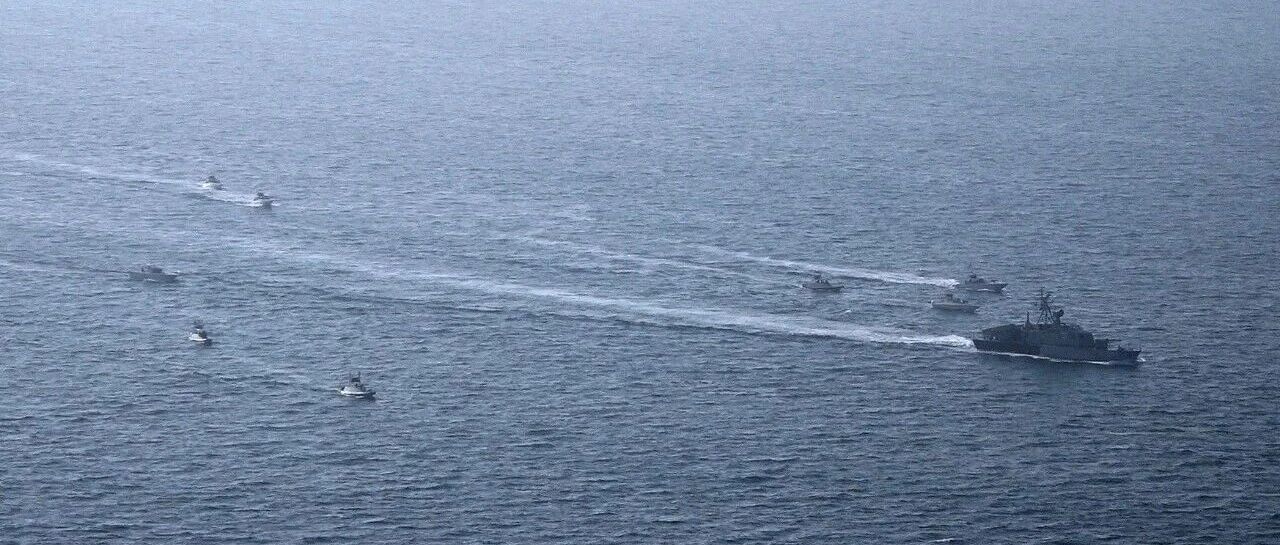
Core Viewpoint - The article discusses the ongoing tensions between Iran and the United States, highlighting Iran's military exercises in the Strait of Hormuz and the statements made by Iranian Supreme Leader Ali Khamenei regarding U.S. military threats and Iran's resilience against them [1]. Group 1: Military Exercises and Regional Security - As part of the "Hormuz Strait Smart Control Exercise," certain areas of the Strait of Hormuz will be closed for several hours to ensure navigation safety [1]. - The military exercises are a response to perceived threats from the U.S., emphasizing Iran's commitment to maintaining control over its territorial waters [1]. Group 2: Statements from Iranian Leadership - Iranian Supreme Leader Ali Khamenei stated that the U.S. has attempted to destroy Iran for the past 47 years but has failed, asserting that this failure will continue [1]. - Khamenei criticized the U.S. military, claiming that even the strongest army can suffer significant losses, referencing the dangers posed by weapons capable of sinking aircraft carriers [1]. - He also mentioned U.S. President Trump's acknowledgment of the failure to destroy Iran, interpreting it as a confession of the U.S.'s inability to achieve its objectives against Iran [1].
突发!美军F-35战机,集体出动!
Xin Lang Cai Jing· 2026-02-17 10:30
Group 1: Military Deployment - The U.S. continues to increase military presence in the Middle East, deploying 18 F-35 fighter jets, marking the largest single deployment in recent months [1][2][10] - The U.S. has also sent defense systems to the region, with dozens of military transport aircraft delivering equipment to Jordan, Bahrain, and Saudi Arabia [1][3][11] - The deployment reflects the U.S. strategy to exert pressure on Iran ahead of indirect negotiations [3][11] Group 2: U.S.-Iran Negotiations - President Trump indicated he would "indirectly" participate in the upcoming negotiations with Iran, emphasizing the importance of reaching an agreement [1][9] - Iran's Foreign Minister stated that Iran would not yield to threats and is prepared to negotiate a fair agreement [4][12] - The negotiations scheduled for February 17 in Geneva are expected to cover economic interests, including oil fields and mining investments [6][15] Group 3: Iranian Position - Iran has proposed to dilute its 60% enriched uranium, indicating a willingness to compromise, but insists on the necessity for the U.S. to demonstrate sincerity [5][12][15] - Iranian officials express cautious optimism about the negotiations, while also highlighting significant past grievances with the U.S. [5][13] - Iran's military exercises in the Strait of Hormuz are part of its strategy to showcase readiness against potential threats [14]
美总统特使据称周五与伊外长会面,伊朗强调美伊核谈核心诉求:解除制裁
Hua Er Jie Jian Wen· 2026-02-02 20:31
Core Viewpoint - The United States and Iran are attempting to resolve tensions through diplomatic negotiations, but significant differences remain in their positions regarding the scope of discussions, particularly on nuclear issues and sanctions [1][4]. Group 1: Diplomatic Efforts - Iranian President Pezeshkian has ordered the initiation of nuclear talks, with high-level negotiations expected to occur soon between U.S. Special Envoy Wittekopf and Iranian Foreign Minister Zarif in Istanbul [1][3]. - The upcoming meeting in Istanbul will include foreign ministers from Turkey, Qatar, Egypt, Oman, UAE, Saudi Arabia, and Pakistan, indicating a broad international interest in the negotiations [1][3]. - U.S. Defense Secretary Esper has warned that if Iran refuses to negotiate on its nuclear program, the U.S. is prepared to take action [2][4]. Group 2: Divergent Positions - The core disagreement lies in the negotiation agenda, with the U.S. insisting on a comprehensive agreement that includes Iran's nuclear, missile, and regional proxy issues, while Iran is focused solely on nuclear discussions [4][5]. - Iranian officials emphasize that the lifting of sanctions is a critical demand for their participation in negotiations, asserting that any agreement must be mutually beneficial [2][4]. Group 3: Regional Dynamics - Regional countries, including Jordan and Saudi Arabia, have expressed neutrality and will not support any military actions against Iran, indicating a cautious approach to the escalating tensions [7]. - The U.S. has significantly increased its military presence in the Gulf region, with the Abraham Lincoln aircraft carrier strike group positioned to respond quickly if necessary [2][6].
特朗普称与伊朗对话,并暗示达成避免军事打击的协议
Xin Lang Cai Jing· 2026-02-01 01:44
Group 1 - The core strategy of the Trump administration involves "pressuring while negotiating," as indicated by recent communications regarding Iran's willingness to engage in talks to avoid military action [1] - President Trump stated that Iran is currently in communication with the U.S. to explore the possibility of reaching an agreement, while also emphasizing the deployment of a significant naval fleet to the region [1] - The U.S. has positioned a naval strike group led by the USS Lincoln near Iran's coast, alongside a substantial number of aircraft, indicating a heightened military presence [1] Group 2 - Iran has warned that any attack would result in missile strikes against U.S. military bases, vessels, and allies, particularly Israel [3] - Iranian officials, including the Chairman of the Supreme National Security Council, expressed a willingness to resume nuclear negotiations if missile and defense capabilities are included in the discussions [3] - The Iranian military has entered a state of full defense and readiness, signaling a strong response to any perceived threats from the U.S. and Israel [3] Group 3 - The U.S. Central Command has cautioned Iran against conducting unsafe military exercises near U.S. forces, as the Iranian Revolutionary Guard plans a two-day live-fire naval drill in the Strait of Hormuz [4] - Iran's Foreign Minister criticized U.S. military presence in the region, asserting that the U.S. should not dictate how Iran conducts its military training [5] - Concerns about a potential larger-scale conflict in the region have resurfaced, with experts suggesting that Iran's response will depend on its perception of the threat level [5]
伊朗:“航母被炸”,警告美国!
中国能源报· 2026-01-27 14:38
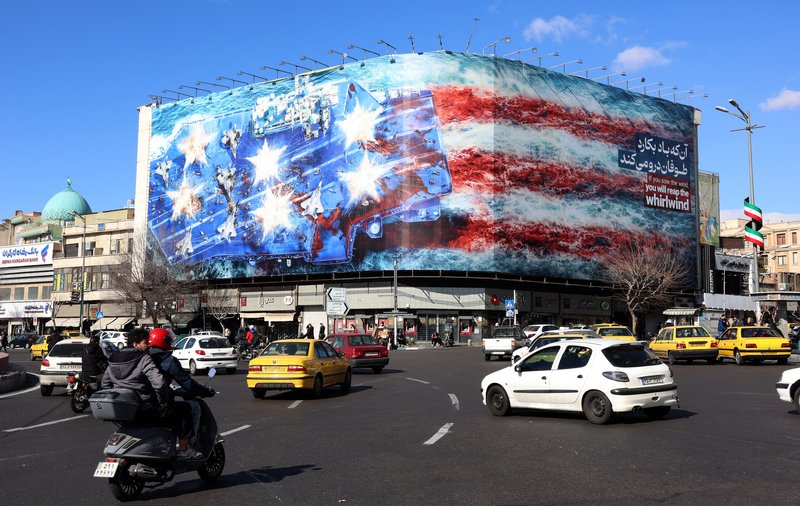
Core Viewpoint - The article discusses the escalating tensions between the U.S. and Iran, highlighting military movements and threats from both sides, particularly focusing on the deployment of the U.S. aircraft carrier Abraham Lincoln to the Middle East and Iran's warnings of retaliation if war is imposed upon them [1][2]. Group 1: Military Movements - The U.S. Navy's Abraham Lincoln carrier strike group has entered the Middle East waters, joining the U.S. Fifth Fleet, indicating a significant military presence in the region [1]. - The U.S. Central Command confirmed the carrier's presence in the Indian Ocean, although it did not specify any immediate military actions against Iran [1]. - President Trump mentioned that the U.S. naval fleet near Iran is larger than that near Venezuela, emphasizing the military readiness while also stating that diplomacy remains an option [2]. Group 2: Iran's Response - Iran's Foreign Ministry spokesperson warned that any imposed war would lead to a response that would make aggressors "regret" their actions, indicating a strong defensive posture [2]. - A large propaganda mural in Tehran depicted a U.S. aircraft carrier being destroyed, symbolizing Iran's defiance and warning against U.S. aggression, with the caption "The instigator will face the storm" [1][4]. - Iran possesses a significant arsenal of medium and long-range missiles, as well as drones, which could be utilized in military actions, particularly in the context of potential conflicts with Israel [4].