梨园戏

Search documents
在福建泉州,过一场非遗中国年(神州看点)
Ren Min Ri Bao· 2026-02-11 23:27
Core Viewpoint - The article highlights the vibrant cultural and culinary celebrations in Quanzhou during the Spring Festival, showcasing its recognition as a "World Food City" and the integration of historical heritage with modern festivities [1][5]. Group 1: Cultural Events - Quanzhou is hosting various cultural events during the Spring Festival, including a light show titled "Song Bridge Reflects the Year," which aims to bring historical heritage to life through modern artistic expressions [1]. - The "Ancient Bridge Echoes: New Year Music Concert" features a blend of traditional and contemporary music, showcasing local talent and creating a festive atmosphere for both residents and visitors [2]. - Over 280 themed street performances will take place across 40 landmark areas, emphasizing the significance of street culture in Quanzhou's collective memory [2]. Group 2: Culinary Highlights - Quanzhou's designation as a "World Food City" is celebrated through a vibrant food market, where local delicacies evoke nostalgia and cultural identity [3][4]. - Traditional dishes such as "Qun Tiao" and "Ginger Duck" are highlighted, reflecting the region's culinary diversity and the importance of food in family gatherings during the New Year [4]. - The article emphasizes that food serves as a medium for cultural fusion and community bonding, illustrating how culinary traditions are integral to the local identity [5].
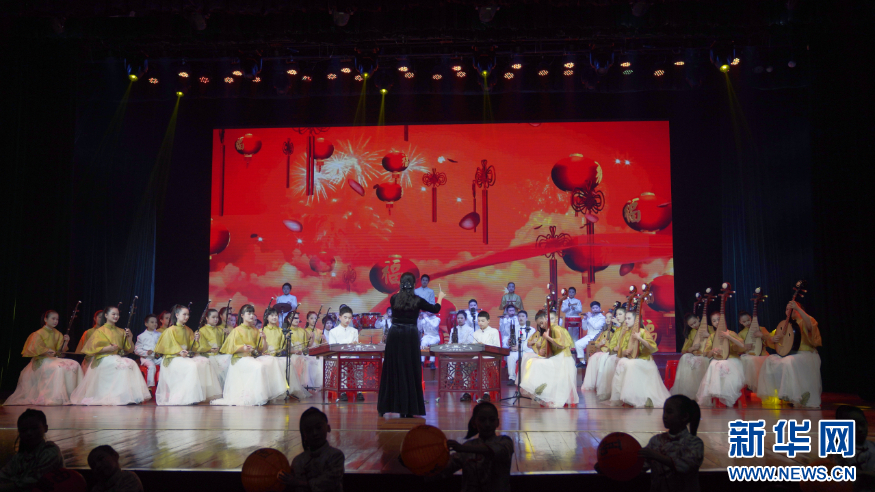
组图丨“艺”启新光:泉州青少年用民乐奏响新年乐章
Xin Hua Wang· 2025-12-28 02:55
Group 1 - The event "Art Lights New Year 2026 Music Concert" was held on December 26, co-hosted by Quanzhou Youth Palace and Quanzhou Second Central Primary School, featuring a variety of performances to welcome the new year [1] - The concert included performances by the traditional music class and choir of Quanzhou Second Central Primary School, showcasing a rich auditory and visual experience [1] - Various musical pieces were performed, including ensemble "Joyful" and Erhu performance "Horse Racing," highlighting the talent of young musicians [3][4] Group 2 - The concert featured a Pipa ensemble performance of "Dance of the Golden Snake," demonstrating the skills of young performers in traditional music [4] - A choir performance titled "Dear You" was part of the concert, along with a traditional storytelling segment "Red Lantern Song," emphasizing cultural heritage [5] - Young actors from the Peking Opera and puppet theater also performed, adding diversity to the event [6]

从《陈三五娘》看梨园戏传承
Ren Min Ri Bao· 2025-10-29 22:41
Core Viewpoint - The article highlights the significance of the traditional Fujian opera "Chen San Wu Niang," emphasizing its historical importance and ongoing relevance in contemporary performances [2][3]. Group 1: Historical Context - Fujian opera, known as a "living fossil of Song and Yuan southern opera," is one of China's oldest theatrical forms, with "Chen San Wu Niang" being its most representative work [2]. - The opera has a history of over 800 years, with "Chen San Wu Niang" having been passed down for at least 600 years through six clear editions from the Ming and Qing dynasties [2]. Group 2: Preservation and Adaptation - In 1952, efforts were made to rescue the nearly extinct Fujian opera by forming the Jinjiang Dali Yuan Opera Troupe, which aimed to preserve traditional repertoires and enhance their literary quality [3]. - The first play produced by this troupe was "Chen San Wu Niang," which gained significant recognition after its performance at the East China Opera Observation Meeting in 1954, elevating the status of Fujian opera [3]. Group 3: Performance Evolution - The traditional version of "Chen San Wu Niang" has been preserved and re-staged, with notable performances by award-winning artists, showcasing its adaptability and continued appeal [4]. - The opera has various adaptations, including traditional, immersive, and AI-integrated versions, demonstrating its versatility across different theatrical forms [2][4].

重新认识地方戏的灵魂(坚持“两创”·关注新时代文艺)
Ren Min Ri Bao· 2025-06-11 08:18
Core Viewpoint - The new regulation from the National Arts Fund aims to encourage local theater companies to cultivate their own creative talents and avoid over-reliance on external creators, which could lead to a loss of the unique characteristics of local theater forms [2][4]. Group 1: Importance of Dialects - Dialects and vocal styles are considered the soul of local theater, and any innovation should not compromise these essential elements [2][5]. - For example, the Fuzhou dialect retains many ancient Chinese linguistic features, which play a crucial role in the rhythm and vocal style of Min opera [2][3]. - Other dialects, such as Cantonese and Puxian, also contribute unique tonal qualities that enhance the expressiveness of their respective operas [2][3]. Group 2: Rich Vocabulary and Characterization - Local dialects possess diverse vocabulary systems that enrich character portrayal in performances, allowing for distinct language images that enhance the overall theatrical experience [3][4]. - The use of dialects enables the creation of vivid and relatable characters, making local theater more engaging and culturally resonant [3][4]. Group 3: Challenges with External Creators - External creators may lack the time and understanding to fully grasp the complexities of local dialects, which can lead to a dilution of the unique characteristics of local theater [4][5]. - There is a concern that younger local playwrights may not possess the same level of proficiency in dialects as their predecessors, risking the authenticity of local theater [4][5]. Group 4: Vocal Styles and Musical Integration - Each local theater form has its own distinctive musical style and instruments, which are integral to its identity [5][6]. - However, the trend of using standardized orchestration and composition by prominent directors may overshadow the unique musical elements of local theater, leading to a loss of differentiation between musical theater and traditional opera [5][6]. Group 5: Innovation vs. Tradition - While innovation in local theater is necessary, it should be approached with caution to preserve the essence of dialects and vocal styles [6][7]. - Successful adaptations and innovations should respect and integrate traditional elements rather than replace them, ensuring that the unique cultural heritage of local theater is maintained [6][7].