
楷书

Search documents
坚定文化自信 建设文化强国丨千年汉字贯古今
Zhong Yang Ji Wei Guo Jia Jian Wei Wang Zhan· 2026-01-30 00:45
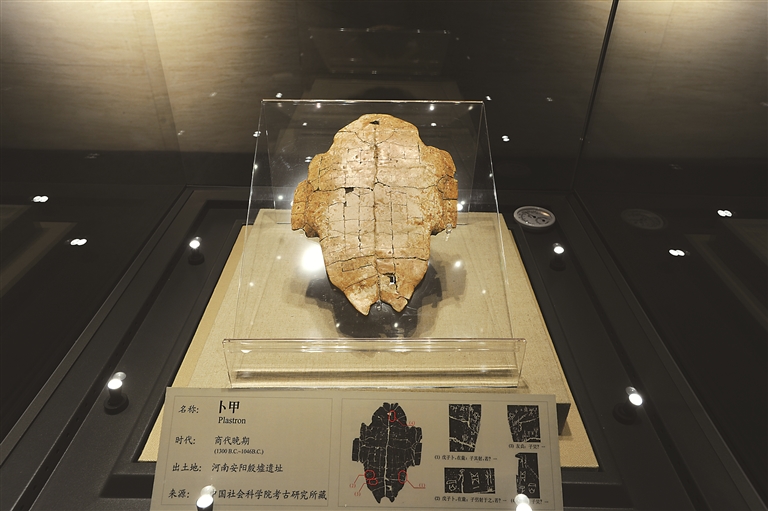
Core Viewpoint - The exhibition at the China Character Museum showcases the evolution of Chinese characters, emphasizing their historical significance and continuity over 3,000 years, which is seen as a vital part of Chinese cultural heritage [7][10][16]. Group 1: Historical Significance of Oracle Bone Script - Oracle bone script is recognized as the earliest systematic form of Chinese characters, dating back to the Shang Dynasty, and serves as a crucial link to understanding early Chinese civilization [8][9][10]. - The discovery of oracle bone inscriptions has provided substantial evidence for the social, religious, and agricultural practices of the Shang Dynasty, reflecting the cultural roots of the Chinese nation [9][10]. Group 2: Evolution of Chinese Characters - The development of Chinese characters has progressed from oracle bone script to bronze inscriptions, small seal script, and eventually to clerical and regular scripts, showcasing a continuous evolution that aligns with practical writing needs [13][14][16]. - The transition from small seal script to clerical script during the Han Dynasty marked a significant shift towards more practical and efficient writing styles, which facilitated the spread of literacy and culture [13][14]. Group 3: Cultural Transmission and Identity - Chinese characters serve as a powerful medium for cultural transmission, linking generations and reinforcing national identity through their historical continuity [16]. - The ongoing evolution of Chinese characters reflects the dynamic nature of Chinese civilization, which has adapted while maintaining its core identity over millennia [16].

大兴区拟新增两家“类博物馆”
Xin Jing Bao· 2025-11-19 01:56
Core Insights - The article discusses the recent approval of two "quasi-museum" institutions in Daxing District, Beijing, which are now recognized as important cultural dissemination platforms [1] Group 1: Quasi-Museum Developments - The Beijing Municipal Bureau of Cultural Heritage has conducted a centralized acceptance inspection for various district applications, resulting in the approval of the Beijing Hongwen Boya Thangka Museum and the Beijing Zhongyuan Hanzi Cultural Museum after necessary improvements [1] - Currently, there are a total of seven "quasi-museums" in Daxing District, contributing significantly to local cultural communication [1] Group 2: Beijing Hongwen Boya Thangka Museum - Located in Weishanzhuang Town, the museum focuses on the intangible cultural heritage of Thangka art, showcasing its creation process, thematic evolution, and cultural integration [1] - The museum houses a significant collection of Thangka artworks, ranking among the top in Beijing, and serves as a vital resource for studying Tibetan culture and the exchange between Tibetan and Han cultures [1] - The museum enhances national identity through the introduction of cultural and creative products and various experiential activities [1] Group 3: Beijing Zhongyuan Hanzi Cultural Museum - Situated within the China Calligraphy Institute, this museum specializes in Hanzi culture and calligraphy, featuring over a hundred exhibits [1] - The museum presents the evolution of Chinese characters through seven styles, including oracle bone script and regular script, arranged chronologically to illustrate the development of Hanzi culture [1] - It aims to preserve and promote the profound heritage of Chinese character culture through its exhibits [1]