汉字演变

Search documents
马年说马
Ren Min Ri Bao· 2026-02-17 03:05
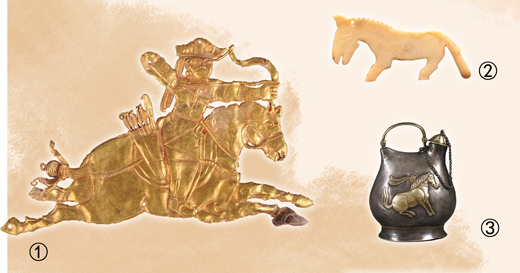
Group 1 - The article discusses the historical significance of horses in human civilization, highlighting their evolution from prey to domesticated companions and symbols of power and culture [9][10][12] - It emphasizes the transformation of horses from being a food source to becoming essential tools for transportation, warfare, and status symbols in various ancient cultures [10][11][12] - The narrative includes archaeological findings that illustrate the domestication of horses and their integration into human society, particularly in ancient China [10][11][12] Group 2 - The article details the peak of horse culture during the Tang Dynasty, where horses were not only used for military purposes but also became symbols of luxury and social status [13] - It notes the decline of horse significance in military contexts during the Ming and Qing Dynasties, leading to a shift in their cultural representation [13] - The article concludes by reflecting on the enduring cultural symbolism of horses, particularly in the context of the Lunar New Year celebrations and traditional art forms [34][35]

坚定文化自信 建设文化强国丨千年汉字贯古今
Zhong Yang Ji Wei Guo Jia Jian Wei Wang Zhan· 2026-01-30 00:45
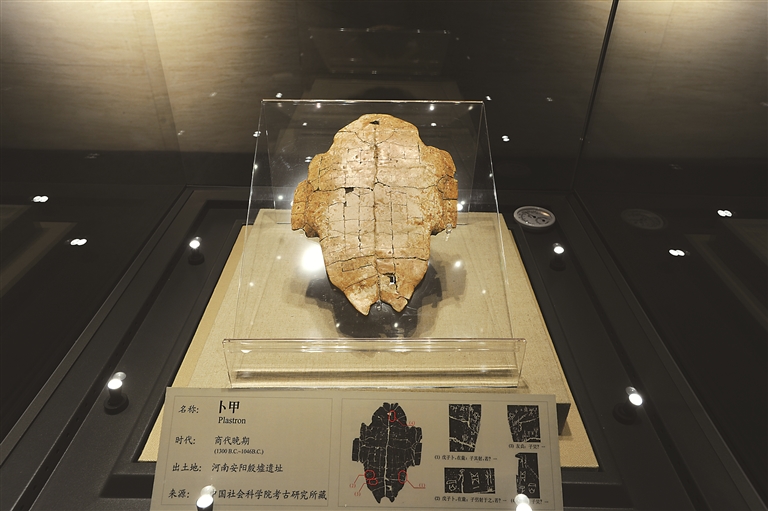
Core Viewpoint - The exhibition at the China Character Museum showcases the evolution of Chinese characters, emphasizing their historical significance and continuity over 3,000 years, which is seen as a vital part of Chinese cultural heritage [7][10][16]. Group 1: Historical Significance of Oracle Bone Script - Oracle bone script is recognized as the earliest systematic form of Chinese characters, dating back to the Shang Dynasty, and serves as a crucial link to understanding early Chinese civilization [8][9][10]. - The discovery of oracle bone inscriptions has provided substantial evidence for the social, religious, and agricultural practices of the Shang Dynasty, reflecting the cultural roots of the Chinese nation [9][10]. Group 2: Evolution of Chinese Characters - The development of Chinese characters has progressed from oracle bone script to bronze inscriptions, small seal script, and eventually to clerical and regular scripts, showcasing a continuous evolution that aligns with practical writing needs [13][14][16]. - The transition from small seal script to clerical script during the Han Dynasty marked a significant shift towards more practical and efficient writing styles, which facilitated the spread of literacy and culture [13][14]. Group 3: Cultural Transmission and Identity - Chinese characters serve as a powerful medium for cultural transmission, linking generations and reinforcing national identity through their historical continuity [16]. - The ongoing evolution of Chinese characters reflects the dynamic nature of Chinese civilization, which has adapted while maintaining its core identity over millennia [16].
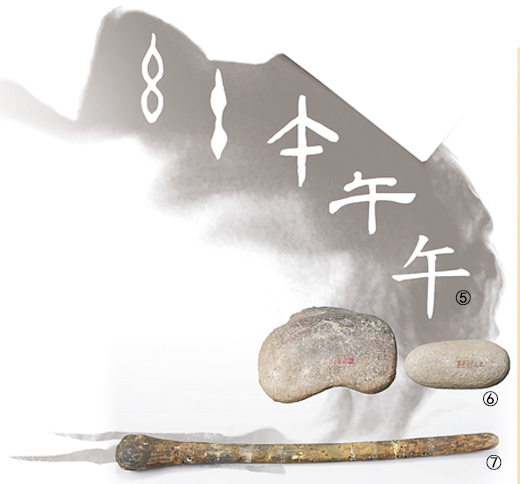
午:从舂米之杵到日中之时(文物有话说·文物里的汉字)
Ren Min Ri Bao· 2025-11-14 22:03
Group 1 - The character "午" has evolved from its ancient form resembling a grain pounding tool, indicating its historical significance in agriculture and food processing [2][4] - The earliest known grain processing tools were stone grinding plates and sticks, which were later supplemented by the invention of the pestle and mortar to meet increasing agricultural demands [2][3] - Archaeological findings, such as the wooden pestle from the Hemudu site in Zhejiang, demonstrate that the pestle was invented during the Neolithic period, highlighting advancements in food processing technology [3] Group 2 - The coexistence of pestles and mortars with stone grinding tools during the Yangshao culture period provides valuable insights into the development of productivity and living conditions of that era [4] - The character "午" transitioned from representing a grain pounding tool to denoting "midday," with interpretations linking it to the concept of the sun's position and seasonal changes [4]