模拟和嵌入式处理芯片

Search documents
芯片并购潮开启
半导体芯闻· 2026-02-05 10:19
Core Viewpoint - The semiconductor industry is experiencing a wave of mergers and acquisitions, with four significant deals occurring recently, involving over $10 billion in total [1]. Group 1: Texas Instruments Acquires Silicon Labs - Texas Instruments (TI) announced the acquisition of Silicon Labs for $75 billion, paying $231 per share in cash, aiming to enhance its position in embedded wireless connectivity solutions [3][8]. - The merger will combine TI's leading analog and embedded processing products with Silicon Labs' strong product portfolio in mixed-signal solutions, creating a global leader in embedded wireless connectivity [3][5]. - TI expects to generate approximately $450 million in annual manufacturing and operational synergies within three years post-transaction [7]. Group 2: Infineon Acquires ams OSRAM Sensor Business - Infineon plans to acquire ams OSRAM's non-optical analog/mixed-signal sensor product portfolio for €570 million, enhancing its position in the automotive and industrial sensor markets [9][10]. - The acquisition is expected to generate approximately €230 million in revenue by 2026 and will immediately enhance Infineon's earnings per share [9][10]. - Infineon aims to leverage the complementary product offerings to provide comprehensive system solutions for its customers [9][11]. Group 3: SiTime Acquires Renesas Timing Business - SiTime is set to acquire certain assets of Renesas' timing business for $1.5 billion in cash and stock, significantly expanding its product offerings and customer base [12][16]. - The acquisition is projected to help SiTime achieve its goal of $1 billion in revenue and enhance its financial performance, with expectations of a gross margin increase to 60%-65% [15][16]. - SiTime's CEO emphasized that the acquisition will allow the company to address critical timing challenges in high-performance applications [12][15]. Group 4: Siemens Acquires Canopus AI - Siemens announced the acquisition of Canopus AI, a company specializing in AI-driven measurement solutions for semiconductor manufacturing, to strengthen its position in the semiconductor manufacturing ecosystem [18][19]. - The integration of Canopus AI's advanced measurement technology with Siemens' existing product portfolio aims to enhance precision and efficiency in semiconductor manufacturing [18][20]. - This acquisition reflects Siemens' commitment to leveraging industrial AI to address key challenges in semiconductor manufacturing [19][20].






芯片行业,两天四桩收购
半导体行业观察· 2026-02-05 01:08
Core Viewpoint - The semiconductor industry is currently experiencing a wave of mergers and acquisitions, with four significant deals occurring in just two days, involving over $10 billion in total [2]. Group 1: Texas Instruments Acquires Silicon Labs - Texas Instruments (TI) has signed a definitive agreement to acquire Silicon Labs for $231.00 per share in cash, totaling approximately $7.5 billion [4][8]. - The acquisition aims to combine TI's leading analog and embedded processing products with Silicon Labs' strong product portfolio in mixed-signal solutions, enhancing their position in the embedded wireless connectivity market [4][6]. - The merger is expected to generate about $450 million in annual manufacturing and operational synergies within three years post-transaction [7]. Group 2: Infineon Acquires ams OSRAM Sensor Business - Infineon has agreed to acquire ams OSRAM's non-optical analog/mixed-signal sensor product portfolio for €570 million, which will strengthen its position in the automotive and industrial sensor markets [10]. - The acquisition is projected to generate approximately €230 million in revenue by 2026 and will immediately enhance Infineon's earnings per share post-transaction [10][11]. Group 3: SiTime Acquires Renesas Timing Business - SiTime Corporation has signed an agreement to acquire certain assets related to Renesas' timing business for $1.5 billion in cash and approximately 4.13 million shares of SiTime common stock [18]. - This acquisition is expected to accelerate SiTime's goal of achieving $1 billion in revenue and significantly expand its product offerings in the timing market [14][16]. - The acquired business is anticipated to generate $300 million in revenue within 12 months post-transaction, primarily driven by SiTime's sales expertise [14]. Group 4: Siemens Acquires Canopus AI - Siemens has announced the acquisition of Canopus AI, a company focused on AI-driven measurement solutions for semiconductor manufacturers [20]. - This acquisition aims to enhance Siemens' position in the semiconductor manufacturing ecosystem by integrating advanced AI capabilities into its measurement technologies [20][21]. - Canopus AI's innovative solutions are expected to address the increasing complexity of semiconductor manufacturing, thereby improving yield and quality [20][21].


德州仪器官宣:收购Silicon Labs
半导体行业观察· 2026-02-04 14:35
Core Viewpoint - Texas Instruments (TI) has agreed to acquire Silicon Labs for $7.5 billion, aiming to expand its market share in wireless connectivity chips for industrial and consumer applications [1][3]. Group 1: Acquisition Details - The acquisition price is set at $231 per share, representing a 69% premium over Silicon Labs' last closing price prior to the announcement [1][8]. - The deal is expected to be completed in the first half of 2027, pending regulatory approvals and other customary closing conditions [2][8]. - Texas Instruments plans to finance the acquisition through a combination of cash and debt [2][8]. Group 2: Strategic and Financial Benefits - The merger will enhance TI's position as a leading supplier in the embedded wireless connectivity solutions market, adding approximately 1,200 new products that support various wireless standards and protocols [5][6]. - The combined company is projected to achieve annual manufacturing and operational synergies of about $450 million within three years post-acquisition [7]. - TI's existing manufacturing capabilities will allow for the relocation of Silicon Labs' manufacturing from external foundries back to the U.S., leveraging TI's advanced internal production capacity [6]. Group 3: Market and Customer Impact - The acquisition is expected to deepen customer interactions and expand market channels, capitalizing on TI's established customer relationships and sales expertise [6]. - Silicon Labs has experienced a compound annual revenue growth of approximately 15% since 2014, indicating strong market demand for its products [6]. - The merger aims to accelerate innovation and growth by combining TI's technology and manufacturing capabilities with Silicon Labs' product offerings [4][5].

德州仪器巨型晶圆厂,官宣投产
半导体行业观察· 2025-12-18 01:02
Core Viewpoint - Texas Instruments (TI) has officially launched its semiconductor factory in Sherman, Texas, which represents a significant investment of $40 billion and aims to produce millions of chips essential for various industries, including automotive, smartphones, and data centers [1][4]. Group 1: Factory Overview - The new factory, named SM1, will gradually increase its production capacity to eventually produce millions of chips daily, serving nearly all electronic devices [4][5]. - TI is the largest analog and embedded processing semiconductor manufacturer in the U.S., and the Sherman facility will enhance its ability to control the supply chain and manufacturing processes [5][7]. - The investment in the Sherman factory is part of a broader plan to invest over $60 billion in semiconductor manufacturing across Texas and Utah, marking the largest investment in foundational semiconductor manufacturing in U.S. history [5][7]. Group 2: Employment Impact - The Sherman factory is expected to create 3,000 new jobs directly and support thousands of additional jobs in related sectors [1][5]. - Many of these jobs do not require a college degree, as vocational training can suffice for obtaining well-paying positions with good benefits [2]. Group 3: Technological Advancements - The factory will initially focus on producing power management chips, which are crucial for various applications, including battery management systems and enhancing the efficiency of electronic devices [8]. - TI's technology is positioned to drive innovations across multiple sectors, including automotive safety, personal electronics, robotics, and data centers [9][10]. - The company emphasizes that its semiconductor technology is integral to powering essential devices, from medical equipment to next-generation data centers [11].
投资600亿美元!德州仪器扩建7座晶圆厂!
国芯网· 2025-06-19 13:04
Core Viewpoint - Texas Instruments announced a historic investment of over $60 billion to build seven chip factories in Texas and Utah, marking the largest investment in semiconductor manufacturing in U.S. history [2]. Group 1: Investment and Expansion Plans - The investment will create 60,000 jobs and includes the construction and expansion of factories in Sherman, Richardson, and Lehi [2][3]. - The company plans to produce billions of chips daily at these new facilities, focusing on reliable and low-cost 300mm wafer production for essential analog and embedded processing chips [3]. Group 2: Financial Performance - Texas Instruments reported a revenue of $4.07 billion for Q1 2025, a 2% increase quarter-over-quarter and an 11% increase year-over-year, marking the first year-over-year revenue growth since Q4 2022 [3].
美国史上最大基础芯片制造投资,超600亿美元,创造超60000个新岗位
3 6 Ke· 2025-06-19 04:14
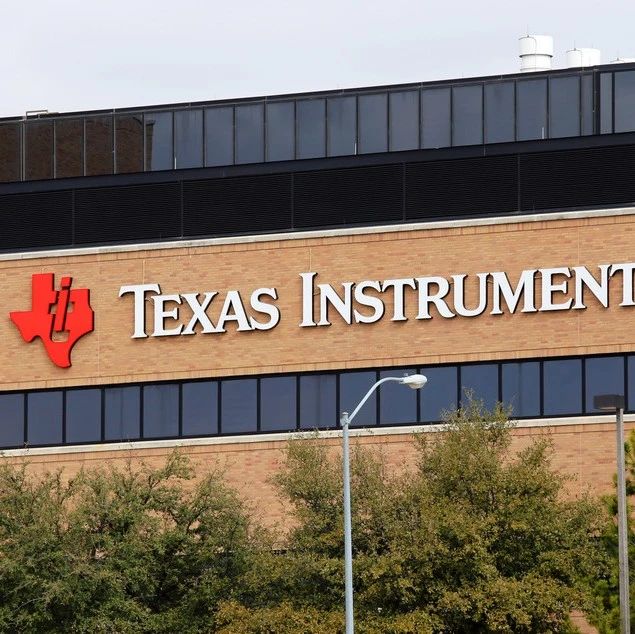
Group 1 - Texas Instruments plans to invest over $60 billion in seven semiconductor factories in the U.S., marking the largest investment in basic semiconductor manufacturing in U.S. history [1][2] - The investment will include three major manufacturing plants in Texas and Utah, producing billions of chips daily and creating over 60,000 new jobs in the U.S. [1] - Texas Instruments is the largest basic chip manufacturer in the U.S., producing essential chips for smartphones, vehicles, data centers, satellites, and nearly all electronic devices [1] Group 2 - The specific timeline for this significant investment has not yet been disclosed by Texas Instruments [2] - The investment aligns with the U.S. government's push for semiconductor supply chain reshoring and revitalizing domestic manufacturing, with other companies like GlobalFoundries and Micron also announcing similar spending plans [2] - U.S. Secretary of Commerce Howard Lutnick emphasized the importance of Texas Instruments in driving technological and manufacturing innovation in the U.S. [2]
TI巨型晶圆厂,即将量产
半导体行业观察· 2025-05-20 01:04
Core Viewpoint - Texas Instruments (TI) is making significant investments in semiconductor manufacturing in Sherman, Texas, with the completion of its first factory, which will produce over 100 million semiconductors daily, crucial for various technologies [2][3]. Group 1: Investment and Economic Impact - TI's investment plan includes a potential $30 billion investment to build four wafer fabs, creating up to 3,000 direct jobs and supporting local economic growth [5][7]. - The growth rate of Sherman has increased from approximately 1% to nearly 5% due to such private investments, highlighting the importance of TI's presence in the community [2][5]. Group 2: Manufacturing Capacity and Technology - The new factory will have nearly 1.5 million square feet of production space and is expected to start shipping chips later this year [3]. - TI's new 300mm wafer fabs will adhere to LEED Gold certification standards, focusing on sustainability and efficiency, which will reduce waste, water, and energy consumption [5][6]. Group 3: Future Plans and Expansion - TI plans to establish six 300mm wafer fabs by 2030, with two already completed in Sherman and others planned for construction between 2026 and 2030 [7]. - The company is also expanding its existing 300mm capacity, including a second fab in Lehi, Utah, expected to begin production in 2026 [7].