每益添

Search documents
“味动力”不动了!均瑶健康陷两年净利润亏损,控股润盈生物业绩承诺“打水漂”
Hua Xia Shi Bao· 2026-02-15 10:12
Core Viewpoint - Hubei Junyao Health Beverage Co., Ltd. (stock code: 605388.SH) forecasts a net loss of between 216 million yuan and 144 million yuan for the year 2025, indicating a significant decline in profitability compared to the previous year [2][3]. Financial Performance - The company's net profit attributable to shareholders is expected to decrease by 115 million yuan to 187 million yuan, representing a year-on-year decline of 395.14% to 642.71% from a loss of 29.12 million yuan in the same period last year [3]. - The forecasted net profit, excluding non-recurring gains and losses, is projected to be between 233 million yuan and 155 million yuan, a decrease of 97.05 million yuan to 175 million yuan, equating to a year-on-year decline of 167.33% to 301.00% from a loss of 57.99 million yuan last year [3]. Market Environment - The performance decline is attributed to a challenging market environment, with a reduction in market share for dairy beverages and weak downstream customer demand, particularly affecting the traditional room-temperature yogurt business [3][4]. - The company is facing dual challenges: stagnation in its core product "Weidongli" and disproportionate returns from new business investments [8]. Product Performance - "Weidongli," a flagship yogurt product, has seen a continuous decline in net profit over the years, with a drop in revenue from 770 million yuan in 2020 to 580 million yuan in 2023 [10]. - Sales volume for yogurt products has also decreased significantly, with declines of 28.37%, 2.72%, 16.11%, and 10.99% from 2020 to 2023 [10]. Strategic Changes - The company is attempting to optimize its revenue structure by expanding e-commerce, new retail channels, and chain KA channels, which has led to increased upfront sales and marketing expenses [3]. - Junyao Health has initiated a "second entrepreneurship" focusing on the probiotic sector, but the financial contribution from this segment remains limited [13][14]. R&D and Challenges - Increased R&D investment has also contributed to profit erosion, with the company facing scrutiny over the effectiveness of its self-developed strains [15]. - The subsidiary Junyao Runying has not met its profitability targets, with a net profit of only 3.91 million yuan, far below the set annual goal of 180 million yuan [14][15].



养乐多告别广州首厂!广州益力多回应:扩大及进一步增长中国市场的方针并未改变
Hua Xia Shi Bao· 2025-10-24 13:36
Core Insights - Yakult will close its first factory in Guangzhou on November 30, 2023, marking a significant shift in its operations in China, where it has been a prominent player since entering the market in 2002 [2][3] - The closure is part of a broader strategic adjustment aimed at enhancing competitiveness and sustainable growth in the Chinese market, despite ongoing challenges in the industry [2][4] Company Performance - Yakult's daily sales in China have declined for three consecutive years, dropping from 625.7 million bottles in 2022 to an estimated 443.9 million bottles in 2024 [3][4] - In Guangzhou, daily sales decreased from 259.6 million bottles in 2022 to 184.6 million bottles in 2024, reflecting a significant contraction in its core market [3] Industry Trends - The traditional yogurt drink market is facing challenges due to rising health consciousness among consumers, leading to a shift towards low-sugar and functional beverages [5][7] - The market for sugar-free beverages in China has grown from 3.12 billion yuan in 2016 to an estimated 19.96 billion yuan in 2022, with projections to reach 61.56 billion yuan by 2025 [5] Strategic Adjustments - The closure of the Guangzhou factory is part of a structural adjustment strategy to improve production efficiency and resource allocation in response to slowing growth, rising costs, and intensified competition [4][6] - Yakult is attempting to innovate its product offerings, introducing new variants such as a high-fiber, high-calcium drink and a sugar-free option to cater to evolving consumer preferences [6][7] Market Challenges - The competitive landscape has intensified, with similar products now offering features like zero sugar and high fiber, which have become standard in the market [6][7] - If Yakult cannot transition from a focus on sweetened probiotic drinks to a more diversified product line that emphasizes low sugar and functional benefits, it risks stagnation or marginalization in the market [7]

关闭工厂、业绩腰斩,养乐多败退中国市场
3 6 Ke· 2025-10-23 04:13
Core Insights - The company Yakult is undergoing significant operational restructuring in China, including the closure of its first factory in Guangzhou, which is part of a broader strategy to enhance competitiveness and achieve sustainable development in the market [2][4]. Performance Decline - Yakult's average daily sales in Guangzhou for the first quarter of this year were only 1.49 million bottles, which is less than half of the 2.82 million bottles sold daily in 2021 [4]. - Nationally, Yakult's daily sales peaked at 7.61 million bottles in 2019 but have since dropped to 4.44 million bottles in 2024, representing a decline of over 40% [4]. - The company's net sales for the first three quarters of the 2025 fiscal year showed a slight decrease of 0.4%, while operating profit fell by 9.2% [4][5]. Market Challenges - The closure of the Guangzhou factory is attributed to aging equipment and excess production capacity due to declining sales [2][6]. - The competitive landscape has changed significantly, with local dairy companies launching similar products, which has eroded Yakult's market dominance [6][7]. - Consumer perceptions have shifted, with a growing skepticism towards health claims associated with probiotics, further impacting sales [9]. Strategic Responses - In response to market challenges, Yakult has introduced new product variations, including low-sugar options and flavored drinks to cater to changing consumer preferences [9][10]. - Despite these efforts, overall sales remain significantly below peak levels, indicating that the company is facing both external competition and internal brand challenges [10].

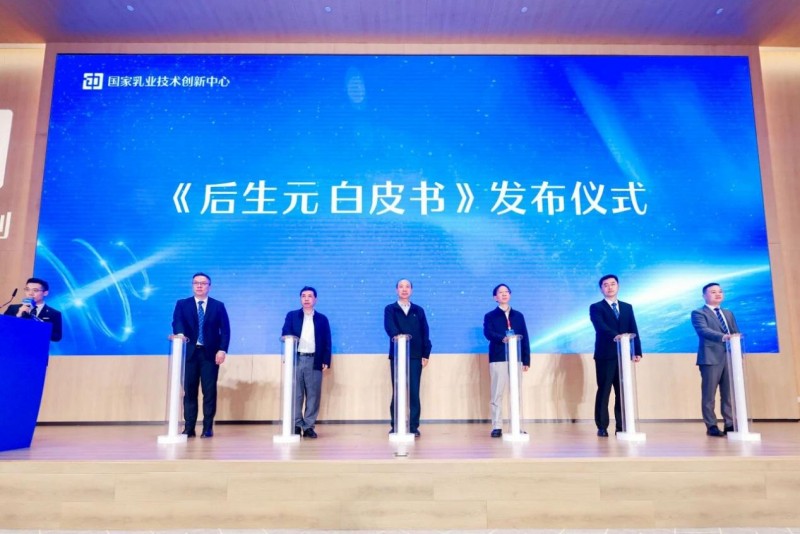
锦旗生物:携后生元方案亮相国家中心年会,联合发布《后生元白皮书》
Zhong Guo Shi Pin Wang· 2025-09-29 10:37
Core Insights - The National Dairy Technology Innovation Center held its third annual conference focusing on technological advancements in the dairy industry, showcasing the latest progress and industrialization achievements in dairy technology [1][2] - The "Postbiotics White Paper" was jointly released, providing authoritative guidance for understanding postbiotics and serving as a critical decision-making tool for R&D and market strategies for companies in the industry [1][2][3] Industry Overview - Postbiotics, defined as non-viable microorganisms and their metabolites, are rapidly gaining traction in the global health food and supplement market, with a projected market size growth from $1.2 billion in 2024 to $4.5 billion by 2031, reflecting a compound annual growth rate (CAGR) of 21.3% [2] - China has made significant progress in postbiotic research, achieving initial results in areas such as gut microbiota regulation, immune enhancement, skin health, and infant nutrition [2] Challenges and Initiatives - The industry faces challenges in the research and industrialization of postbiotics, including a lack of unified definitions and classifications, unclear mechanisms of action, absence of relevant standards, and difficulties in technology transfer [2] - The National Dairy Technology Innovation Center initiated a special technology project in 2022 to systematically advance the field of postbiotics, integrating resources from academia and industry to promote scientific standards and industrial innovation [2] Product Development and Innovation - The conference highlighted the release of the "Postbiotics White Paper," which systematically outlines the scientific connotations, efficacy components, and health effects of postbiotics, focusing on representative strains such as Lactobacillus casei ET-22 and Bifidobacterium longum infantis YLGB-1496 [3] - Jin Qi Biological showcased its evidence-based postbiotic products, including Lactobacillus casei ET-22, which has undergone extensive clinical trials demonstrating its efficacy in oral health [7][10] Company Strategy and Future Plans - Jin Qi Biological has developed a complete industrial chain system for functional probiotics, from strain selection to market production, and aims to leverage global resources from partners like Yili and Ausnutria to enhance its offerings in the health sector [11]