比亚迪RACCO

Search documents
中国汽车市场一周行业信息快报——2026年2月第3期
Zhong Guo Zhi Liang Xin Wen Wang· 2026-02-25 05:20
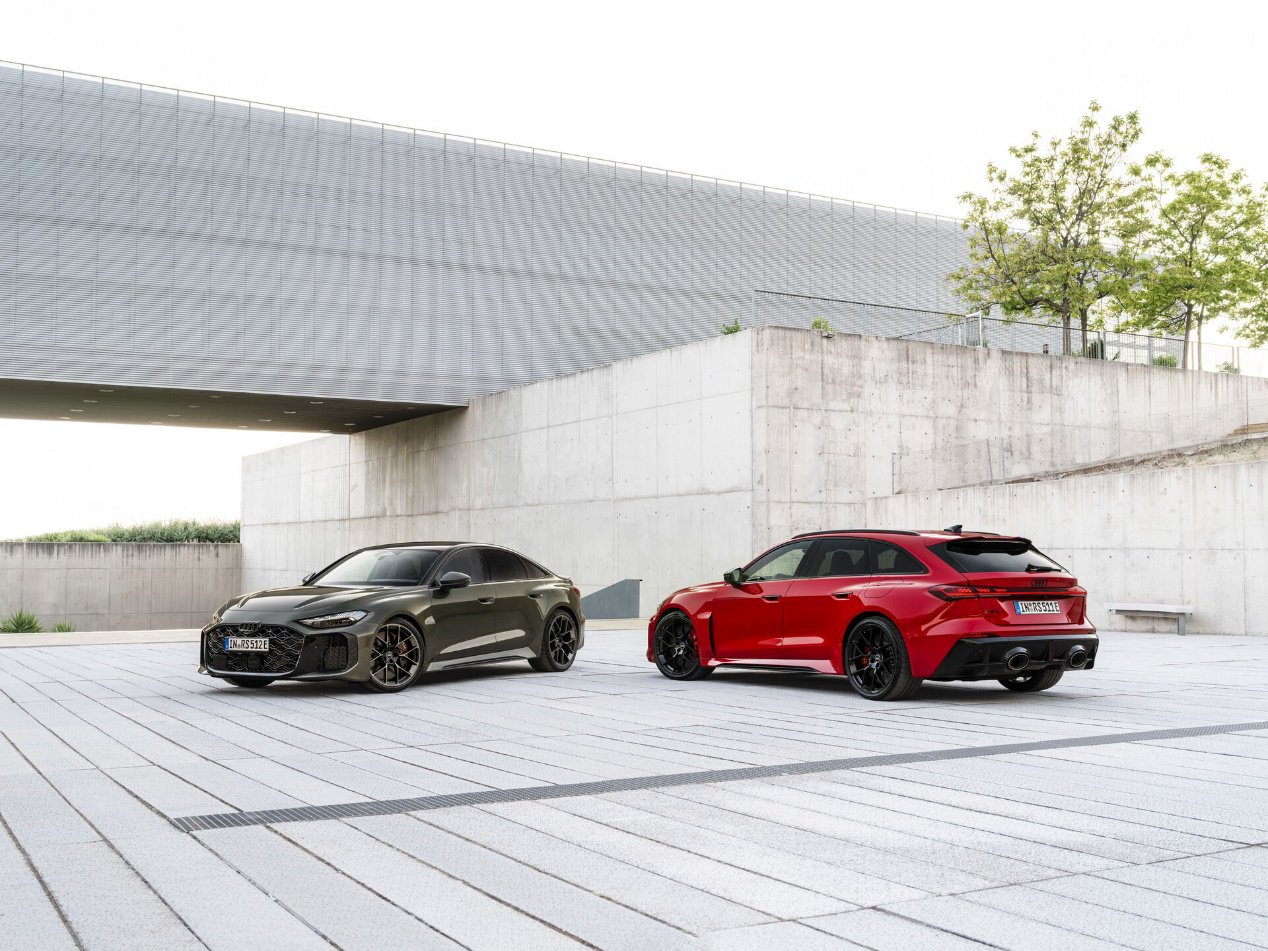
Group 1: Automotive Industry Developments - BYD's first pure electric K-Car model, RACCO, has been unveiled with a design based on "ocean aesthetics," featuring compact dimensions of 3395×1475×1800mm and seating for four [4] - The new Audi RS 5 has been launched, offering both sedan and Avant versions, with a powerful plug-in hybrid system that delivers a total output of 470 kW (639 hp) and a torque of 825 Nm, achieving 0-100 km/h in 3.6 seconds [3] - NIO announced a record of 177,627 battery swaps on February 22, 2026, marking a historical high for the company, with an average swap time of less than 0.5 seconds [7] Group 2: Market Performance and Trends - The National Energy Administration reported that during the first three days of the Spring Festival, the charging volume for new energy vehicles on highways increased by 63.05% year-on-year, totaling 140.99 million charging instances [6] - SAIC MG announced that its cumulative sales in Europe and the UK have surpassed one million units, with a significant increase in sales from 50,000 units in 2021 to over 200,000 units in 2023, reflecting a nearly 30% growth [6]

比亚迪2025年海外销量破100万辆!蔚来换电单日总量再创新高!奥迪发布全新RS5,采用插混动力总成!丨一周大事件
电动车公社· 2026-02-22 16:06
New Vehicle Launches - BYD's RACCO is expected to be sold in Japan by summer 2026, featuring a front-wheel drive and lithium iron phosphate battery, tailored for the Japanese K-Car market [2][4] - Audi has launched the new RS5, its first high-performance plug-in hybrid, equipped with a 2.9T V6 engine and a 25.9kWh battery, with a starting price of approximately 86.6万元 RMB in Germany [6][8] - Tesla has opened reservations for the entry-level Cybertruck, starting at $59,990 (approximately 42.5万元 RMB), featuring a dual motor AWD and an EPA range of 523 km [10][12][14] - Linghui Automotive, a new brand under BYD, has unveiled its first model, the Linghui e9, aimed at the B2B market, focusing on services for taxis and ride-hailing [15][17] Company Developments - BYD aims to achieve overseas sales of 1.0496 million vehicles by 2025, representing a 145% year-on-year increase, marking a significant milestone for Chinese automotive exports [18][23] - Lantu Automotive has achieved annual profitability with a projected sales volume of 150,169 vehicles by 2025 and a revenue of 34.86 billion RMB, maintaining a gross margin of 20.9% [24][27] - The establishment of Times Chery, a joint venture between CATL and Chery, signifies a strategic upgrade in their collaboration, enhancing supply chain efficiency and market reach [28][30] - Tesla's first Cybercab has rolled off the production line, designed for Robotaxi services, with plans for mass production starting in April 2024 [31][35] Market Trends and Challenges - Nissan anticipates a net loss of 650 billion yen (approximately 29.33 billion RMB) for the fiscal year 2025, attributed to declining global sales and increased operational costs [36][38] - NIO has set a new record for battery swaps, achieving 175,976 swaps in a single day during the Spring Festival, indicating the growing acceptance of battery swap technology in China [39][42] - Polestar plans to launch four new models over the next three years, aiming to enhance its market presence, particularly in China [44][47] - Lucid Motors is reportedly planning to cut about 12% of its workforce to optimize costs amid slowing demand for luxury electric vehicles [48][51] Regulatory and Infrastructure Developments - A new national standard is being proposed to include physical controls for vehicle operation, emphasizing safety in automotive design [52][55] - During the Spring Festival, over 1.4 million fast charging sessions were recorded, reflecting a 63.05% increase from the previous year, driven by the growing number of electric vehicles [56][57]



今日新闻丨春节假期前3天高速充电超140万次!比亚迪RACCO预计今年夏季在日本销售!
电动车公社· 2026-02-20 00:36
Group 1 - The core point of the article highlights the significant increase in electric vehicle charging during the Spring Festival holiday, with over 1.4 million charging sessions recorded on highways, representing a 63.05% increase compared to the same period last year [2][3]. - The average daily charging volume reached 11.8 million kilowatt-hours during the holiday, indicating a growing demand for charging services as the number of electric vehicles increases [2][3]. - The expansion of fast charging stations and improvements in charging speed have effectively met the needs of consumers traveling during the holiday season [3]. Group 2 - BYD is set to launch the RACCO model in Japan during the summer of 2026, specifically designed to cater to the Japanese market with a popular K-Car design [4][5]. - The RACCO will feature front-wheel drive and utilize lithium iron phosphate batteries, incorporating BYD's latest three-electric technology [5]. - The vehicle's design aligns with Japanese market preferences, and if priced appropriately, it is expected to receive positive market feedback [8].

被铃木视作巨大威胁?比亚迪刘学亮:我们不是来和日企竞争,希望能够为日本消费者提供更多选择
Qian Zhan Wang· 2025-11-05 07:40
Core Insights - BYD is set to launch a new pure electric K-Car model named "RACCO" at the 2025 Tokyo Motor Show, with plans to enter the Japanese market in the summer of 2026 [2] - The K-Car segment accounts for 35%-40% of new car sales in Japan, with 2024 sales projected at 1.2021 million units, but pure electric vehicles currently represent only 2.1% of this market, indicating a significant opportunity for BYD [3] - BYD's entry into the Japanese market is seen as a strategic move to capitalize on the transition towards electric vehicles in the K-Car segment, which is currently dominated by Suzuki [3] Market Position and Strategy - Suzuki's president expressed optimism about the competition, noting that BYD's choice to adhere to Japan's light vehicle standards is welcomed, indicating a new competitive landscape [3] - BYD's Asia-Pacific automotive sales general manager stated that the primary competitors in Japan are other imported car manufacturers, not local Japanese companies [3] - BYD has a long-standing presence in Japan, having established a branch in Tokyo around 2001, but has only sold 7,123 vehicles in three years, highlighting the challenges faced in penetrating the market [3] Global Expansion and Performance - BYD's global strength is attributed to its leadership in the new energy vehicle sector, holding a 31.7% market share in China in 2022, significantly outperforming other brands [3] - The company has achieved remarkable growth in overseas sales, with a 132% year-on-year increase, totaling 701,600 units in the first three quarters of 2023, surpassing the total overseas sales for 2024 [6] - BYD's products are now available in 117 countries and regions, reflecting a strategic focus on key market breakthroughs and global network expansion [7]
被铃木视作巨大威胁?比亚迪刘学亮:我们不是来和日企竞争,希望能够为日本消费者提供更多选择【附新能源汽车行业市场分析】
Qian Zhan Wang· 2025-11-05 06:57
Core Viewpoint - BYD is set to launch a new pure electric K-Car model named "RACCO" at the 2025 Tokyo Motor Show, targeting the Japanese market, which presents a significant opportunity as K-Cars account for 35%-40% of new car sales in Japan, yet pure electric models only represent 2.1% of that market [2][3]. Group 1: Market Entry and Strategy - BYD plans to officially enter the Japanese market in the summer of 2026, aiming to capitalize on the transition of the K-Car market towards electric vehicles [2]. - The company has been active in Japan since 2001 but only entered the passenger car market in July 2022, indicating a long-term commitment to the region [2]. - BYD has sold a total of 7,123 vehicles in Japan over three years, which reflects a growing recognition and acceptance among Japanese consumers [3]. Group 2: Competitive Landscape - Suzuki's president expressed concerns about BYD's entry into the K-Car market, acknowledging the potential threat posed by the Chinese automaker as Japanese consumers become more open to Chinese products [2]. - BYD's response emphasizes that its primary competition in Japan will be other imported brands rather than local Japanese manufacturers, aiming to provide more choices for consumers [2]. Group 3: Global Expansion and Performance - BYD's overseas sales reached 701,600 units in the first three quarters of 2025, marking a 132% year-on-year increase, significantly surpassing the total overseas sales for 2024 [7]. - The company has established a presence in 117 countries and regions, focusing on key market breakthroughs and global network expansion [8]. - The competitive advantage of BYD in the global market is attributed to its comprehensive supply chain in the new energy sector, with production costs significantly lower than those in Europe [4].
日本K-CAR市场还能封闭多久?
3 6 Ke· 2025-11-02 23:40
Core Insights - The article discusses the unique characteristics and cultural significance of Japan's K-CAR market, highlighting its closed nature and the strong consumer loyalty towards domestic brands [4][11][17] - The entry of foreign brands, particularly BYD with its electric K-CAR, is seen as a potential disruptor in this market, but challenges remain due to historical consumer preferences and regulatory barriers [10][15][17] Group 1: K-CAR Market Overview - The K-CAR concept has maintained consumer enthusiasm in Japan for decades, creating a distinct industrial culture that permeates various aspects of society [4][11] - Japanese automakers have established a stronghold in the K-CAR segment, with each brand creating a unique niche through their products [4][6] Group 2: Sales Performance - In 2024, Honda's N-BOX dominated the K-CAR market with sales of 206,272 units, surpassing the best-selling regular car, Toyota Corolla [6] - Suzuki's Spacia and Daihatsu's Tanto also performed well, with sales of 165,679 and 93,759 units respectively, indicating a robust competitive landscape among domestic brands [6] Group 3: Foreign Brand Challenges - Historical attempts by foreign brands like smart and Caterham to enter the K-CAR market have failed due to misalignment with local consumer preferences and regulatory standards [8][11] - The K-CAR market is characterized by a strong emphasis on practicality and affordability, making it difficult for foreign brands to succeed without a product tailored specifically for Japanese consumers [8][11] Group 4: Future Prospects - The introduction of BYD's electric K-CAR, RACCO, at the Tokyo Mobility Show introduces new competition, particularly against Nissan's Sakura, which has become the best-selling EV in Japan [10][15] - Despite the potential for disruption, the article emphasizes that foreign brands face significant hurdles in gaining acceptance in the K-CAR market due to entrenched consumer loyalty to domestic brands [15][17]