
氢动力机器狗

Search documents
从“盯补贴”到“拓场景”,广东氢能产业找到“第二增长曲线”
2 1 Shi Ji Jing Ji Bao Dao· 2025-10-24 04:10
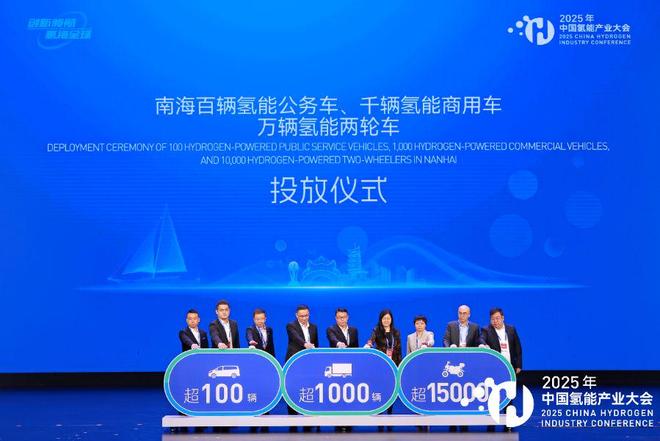
Core Insights - The hydrogen energy industry in Guangdong is experiencing a significant transformation, moving from policy-driven demonstrations to market-driven applications, with a focus on cost reduction and scenario adaptation [2][12] - Guangdong has established itself as a leader in the hydrogen energy sector, with a complete industrial chain and diverse application scenarios, particularly in the Nanhai District of Foshan [3][10] Industry Trends - The hydrogen energy application is expanding from traditional vehicle use to high-temperature industrial applications, energy storage, and long-distance heavy transport, forming a "second growth curve" [3][6] - Innovative applications, such as hydrogen-powered coffee machines and robotic dogs, are emerging, showcasing the versatility of hydrogen energy [4][6] Market Developments - The launch of 100 hydrogen-powered public vehicles, 1,000 commercial vehicles, and 10,000 hydrogen two-wheelers in Nanhai District marks a significant step in building a comprehensive hydrogen transportation system [7][9] - The rapid growth of orders for fuel cell systems and hydrogen production technologies indicates a robust demand in both domestic and international markets [2][8] Technological Advancements - Guangdong's hydrogen energy sector is benefiting from technological innovations, including the successful localization of core components and a significant reduction in production costs [10][12] - The establishment of the first "Hydrogen Fuel Cell Industry Innovation Alliance" in Guangdong aims to enhance collaboration and innovation across the hydrogen energy supply chain [10] Future Outlook - The hydrogen energy market in China is projected to grow significantly, with estimates suggesting a potential production capacity of 300 million tons of green hydrogen by 2030, creating a market worth over one trillion yuan [9][12] - The ongoing collaboration between Guangdong and Hong Kong in developing the "Hydrogen Energy Bay Area Corridor" is expected to further enhance the region's hydrogen energy capabilities [11]

从剪接烫染发到复原《大闹天宫》:北京“手艺人”征战全国大赛
Xin Jing Bao· 2025-09-21 23:06
Group 1 - The third National Skills Competition will be held from September 19 to 23 in Zhengzhou, Henan, featuring 106 competition projects with 3,420 contestants and 3,275 judges from across the country [1] - The Beijing delegation includes 105 contestants competing in 96 projects such as hairdressing, graphic design, and traditional Chinese pastry [1] - The event showcases both advanced technology and traditional craftsmanship, including the revival of a 20-year-lost animation production technique and demonstrations of robotics and traditional glass-making skills [1][4][6] Group 2 - The hairdressing competition consists of seven modules over three days, testing various skills such as cutting, coloring, and styling, aligning with international standards [2] - Young contestants, particularly those born after 2000, make up over 60% of the participants, indicating a trend of increasing youth involvement in skilled trades [3] - The competition features innovative technologies like a hydrogen-powered robot dog capable of navigating complex terrains and an AI examination system that can recognize over 40 dialects with 99% accuracy [4][5] Group 3 - The event includes a showcase of 40 selected traditional skills and crafts, highlighting the importance of preserving cultural heritage [6] - The revival of the cel animation technique, once a dominant method in animation production, is being led by a team from Beijing, emphasizing the educational value and craftsmanship involved [7][8]
全国技能大赛上,北京成果展示派出氢动力机器狗和“天工”机器人
Xin Jing Bao· 2025-09-20 14:40
Group 1: Technological Innovations - The third National Skills Competition showcased advanced technologies such as a hydrogen-powered robotic dog capable of navigating complex terrains, with a static endurance of 8 hours and dynamic walking endurance of 5 hours [1] - An AI examination system designed for domestic workers can recognize over 40 dialects in China with an accuracy rate of 99%, facilitating real-time interaction [2] Group 2: Traditional Craftsmanship - The exhibition featured traditional craftsmanship, including the official glazed pottery technique, which is a national intangible cultural heritage, demonstrated by a young artisan who creates intricate pieces using specific clay and firing techniques [3] - A coffee-making demonstration highlighted the growing demand for skilled baristas, with a noted shortage in the market as coffee consumption rises among younger demographics [4] Group 3: Industry Trends - The coffee industry is experiencing rapid growth, leading to a significant demand for barista talent, with educational institutions reporting full enrollment in coffee-related programs [4] - The National Skills Competition included various exhibits showcasing high-tech innovations such as satellite return capsules and domestic chips, alongside interactive projects like AI smart glasses for CPR training [4]
