氢溴酸他泽司他片

Search documents
进口肿瘤药因致癌撤市 专家:上市撤市都是“救命”
经济观察报· 2026-03-11 11:24
Core Viewpoint - The global first innovative drug, Hydrochloride Tazemetostat, was withdrawn from the market due to safety concerns, highlighting the risks associated with innovative drug approvals in the industry [1][2]. Group 1: Drug Withdrawal Details - Hydrochloride Tazemetostat was approved conditionally in China in March 2025 for treating eligible lymphoma patients but was announced for withdrawal on March 9, 2023, due to potential risks of secondary hematologic malignancies [2][3]. - The withdrawal was based on new data from ongoing clinical trials suggesting that the risks of secondary malignancies outweighed the potential benefits of the treatment [6][12]. - The drug had previously filled clinical gaps, being the first approved treatment for certain rare cancers, including epithelioid sarcoma and EZH2 mutation-positive follicular lymphoma [3][9]. Group 2: Patient Impact and Market Response - The affected patient population is expected to be small, as the drug's sales were projected to be limited, with an estimated revenue of $90,000 in 2024 and $250,000 in 2025 [4][15]. - The drug's high cost, approximately 38,700 yuan per month, further limits its patient base [14]. - Following the withdrawal, the National Healthcare Security Administration removed the drug from the commercial insurance innovation drug directory [4]. Group 3: Clinical and Regulatory Insights - The drug was initially approved through expedited regulatory pathways due to urgent clinical needs, allowing for conditional market entry while requiring ongoing clinical trials to confirm efficacy and safety [11][12]. - The emergence of secondary malignancies as a side effect necessitates a reevaluation of the risk-benefit ratio for drugs approved under similar conditions [12][16]. - The case raises questions about whether conditionally approved drugs should be included in insurance directories, emphasizing the need for long-term safety and efficacy data before formal approval [16][17].


重大突破,5款百万一针抗癌药被纳入商保
21世纪经济报道· 2025-12-15 13:38
Core Viewpoint - The inclusion of 19 drugs in the first version of the commercial health insurance innovation drug directory marks a significant step towards improving access and affordability of innovative drugs, particularly high-cost CAR-T therapies, while presenting challenges for insurance companies in product development and risk management [1][4][10]. Group 1: Policy and Implementation - The National Medical Security Work Conference emphasized the support for the development of commercial health insurance and the establishment of a multi-tiered medical security system, with a focus on the implementation of the commercial health insurance innovation drug directory by January 1, 2026 [1][2]. - The first version of the commercial health insurance innovation drug directory includes 19 drugs, focusing on high-cost and innovative treatments, including five CAR-T products and drugs for rare diseases [2][4]. Group 2: Challenges for Insurance Companies - Insurance companies face significant challenges in translating the drug directory into viable insurance products, including issues related to pricing, risk control, and compliance [4][5]. - Accurate pricing for insurance products relies on detailed data regarding potential patient populations, disease incidence, treatment cycles, and real-world efficacy, which are primarily held by pharmaceutical companies and hospitals [4][5]. Group 3: Risk Management and Compliance - The inclusion of Alzheimer's disease treatments raises concerns about adverse selection risks, as these drugs have high costs and long treatment durations, necessitating strict eligibility criteria for insurance coverage [5][6]. - Establishing transparent and compliant financial flows between insurance companies and pharmaceutical firms is crucial for effective collaboration [5][6]. Group 4: Data Sharing and Integration - The "医保+商保" one-stop clearing and settlement model aims to break down data silos, enhancing the efficiency of claims processing and improving patient experiences [6][8]. - Successful implementation of data sharing initiatives in regions like Shanghai and Beijing indicates potential for nationwide adoption, which could facilitate better integration of commercial health insurance with innovative drug offerings [8][10]. Group 5: Investment in Innovative Drugs - The policy encourages insurance funds to invest in the upstream of the pharmaceutical industry, positioning them as "patient capital" for innovative drug development [10][11]. - Major insurance companies are already investing in health industry funds, supporting numerous innovative drug companies and enhancing the overall funding environment for drug development [10][11]. Group 6: Future Outlook - Despite the potential for increased investment in innovative drugs, insurance companies remain cautious due to the high risks and costs associated with drug development, which may lead to a preference for established pharmaceutical firms over smaller, innovative companies [12].


首版商保创新药目录纳入19种药品
Nan Fang Du Shi Bao· 2025-12-07 23:09
Core Insights - The 2025 Innovation Drug High-Quality Development Conference was held in Guangzhou, announcing the new drug directories for national basic medical insurance and commercial health insurance [1] Group 1: Drug Directory Adjustments - A total of 114 new drugs were added to the directory, including 50 first-class innovative drugs [2][6] - The first version of the commercial health insurance innovative drug directory includes 19 drugs, featuring CAR-T therapies for tumors, treatments for rare diseases like neuroblastoma and Gaucher disease, and Alzheimer's disease medications [2][4] Group 2: Complementarity of Insurance Directories - The commercial health insurance innovative drug directory is designed to complement the basic medical insurance, focusing on high-innovation drugs with significant clinical value that exceed basic insurance coverage [4] - The directory aims to clarify the boundaries of basic medical insurance and promote the development of a multi-tiered medical security system [4] Group 3: Financial Implications for Patients - The inclusion of CAR-T therapies, which can cost around 1.2 million yuan per treatment, is expected to significantly reduce out-of-pocket expenses for patients, potentially saving them hundreds of thousands of yuan [5] Group 4: Implementation Timeline - The new drug directory adjustments will be officially implemented nationwide on January 1, 2026, marking the eighth adjustment since the establishment of the National Medical Insurance Administration [6][7]
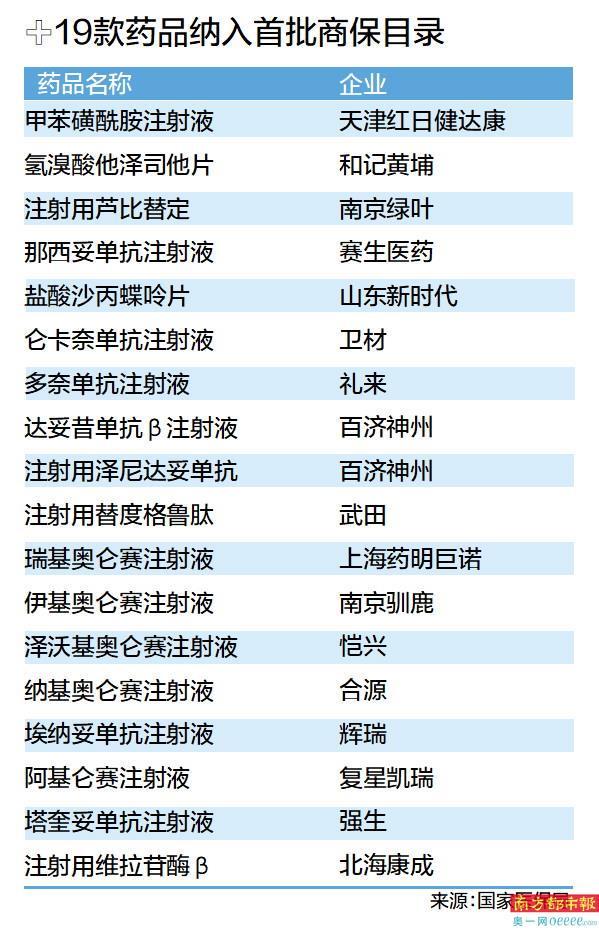
一图看懂首版商保创新药目录,含5款“天价抗癌药”
Di Yi Cai Jing· 2025-12-07 22:40
Core Insights - The first version of the commercial insurance innovative drug directory has been released, including 19 new drugs from 18 innovative pharmaceutical companies, with a roughly equal share of domestic and imported drugs [1][2] - Approximately 70% of the drugs included are oncology treatments, featuring five high-cost CAR-T products, indicating a significant focus on cancer therapies [1][8] - The inclusion of rare disease medications and Alzheimer's treatments in the directory is expected to enhance commercial insurance payment opportunities and favorable policies for hospital access [1][10] Summary by Category Drug Inclusion - A total of 19 drugs have been included in the first commercial insurance innovative drug directory, with a selection rate of about 16%, aligning with industry expectations [4][6] - The directory features a mix of oncology drugs, rare disease treatments, and Alzheimer's medications, with a notable emphasis on high-priced innovative drugs [1][8] Market Dynamics - The directory's limited number of drugs (around 20) is seen as a strategic move to facilitate implementation and avoid complications in local insurance products [6][10] - The commercial insurance market is expected to leverage the directory to enhance patient access to high-value drugs, particularly in the oncology sector [9][11] Regulatory and Policy Framework - The National Healthcare Security Administration (NHSA) encourages local insurance departments to support the integration of the commercial insurance innovative drug directory into retail pharmacies and monitor pricing [7][14] - The directory aims to provide a reference for various commercial insurance entities, allowing them to negotiate with innovative drug companies without the need for exclusive selections [11][14] Patient Impact - The drugs listed in the directory are characterized by a small patient base or specific indications, minimizing the risk of clinical misuse and aligning with commercial insurance risk management strategies [8][13] - The directory includes several drugs for rare diseases, which are expected to fill clinical gaps and provide essential treatments previously unavailable in China [12][13]
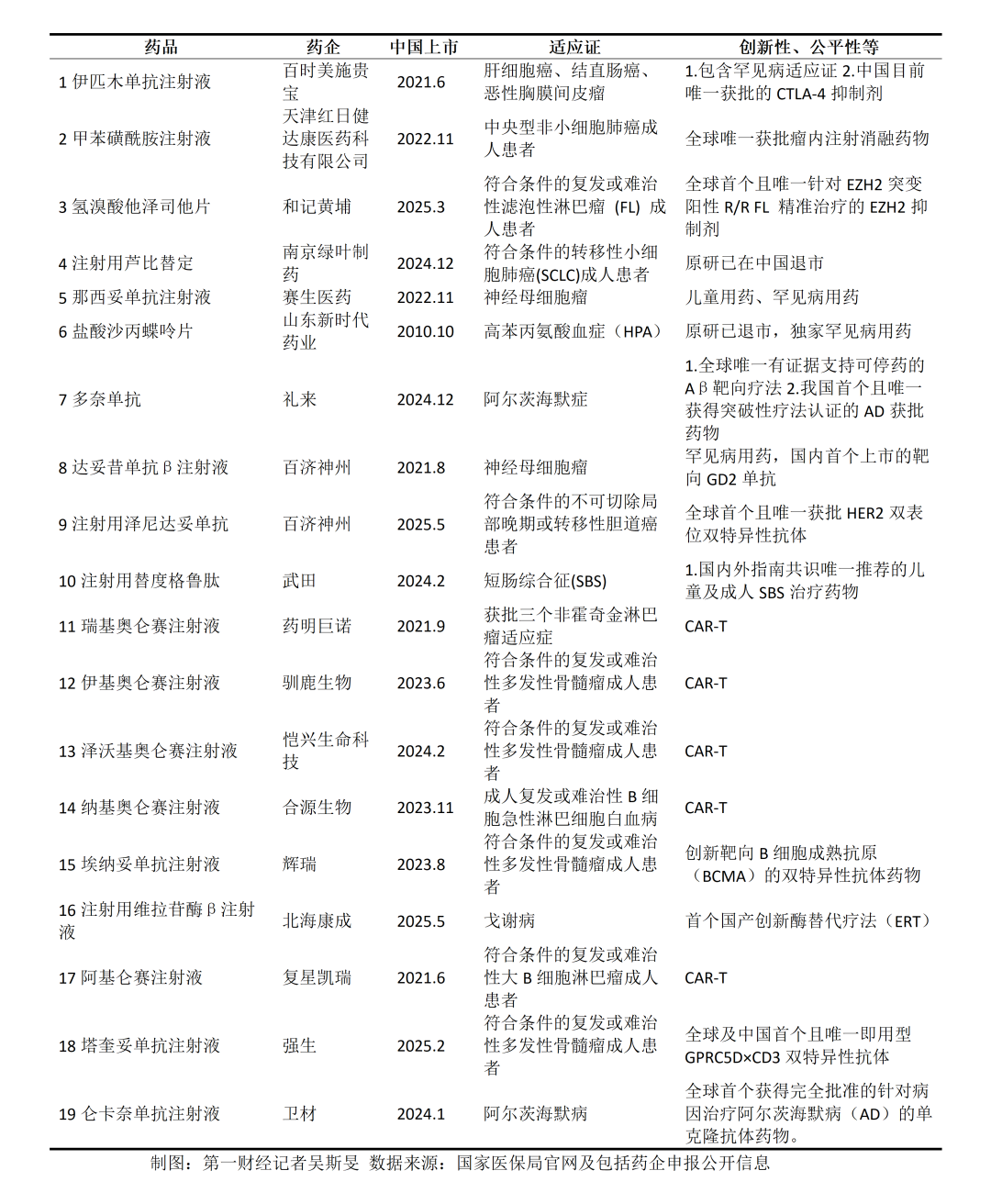
一图看懂首版商保创新药目录,含5款“天价抗癌药”
第一财经· 2025-12-07 15:53
Core Insights - The first version of the commercial health insurance innovative drug directory has been released, including 19 new drugs from 18 innovative pharmaceutical companies, with a roughly equal share of domestic and imported drugs [3][4] - Approximately 70% of the drugs included are oncology treatments, featuring five high-cost CAR-T products, indicating a significant focus on cancer therapies [3][4] - The inclusion of rare disease medications and Alzheimer's treatments in the directory is expected to enhance commercial insurance payment options and facilitate hospital access [3] Summary by Sections Inclusion Criteria - A total of 121 drug names passed the review for the commercial health insurance innovative drug directory, with only 19 ultimately included, resulting in an acceptance rate of about 16% [6] - The directory aims to balance the number of drugs included to ensure effective implementation and avoid overwhelming the system [8] Drug Characteristics - The drugs in the directory generally have a small patient base or clear indications, minimizing the risk of clinical misuse [10] - High innovation and the ability to fill clinical gaps are common traits among the selected drugs, particularly in rare diseases and pediatric treatments [11] - The directory includes a significant number of oncology drugs, with 14 out of 19 being cancer treatments, primarily targeting niche patient populations [11][12] Market Dynamics - The CAR-T products included represent over half of the CAR-T therapies available in China, highlighting their importance in the market [12] - The directory's structure allows for multiple similar drugs to coexist, enhancing patient choice and supporting real-world evidence accumulation [13][14] - The focus on rare disease treatments is evident, with at least five rare diseases represented in the directory, including neuroblastoma and Gaucher disease [14] Future Implications - The directory is expected to influence local health insurance products, prompting adjustments to existing special drug lists in various regions [16][17] - The commercial health insurance sector is encouraged to design new products and adjust reimbursement strategies based on the directory to better meet patient needs [17]