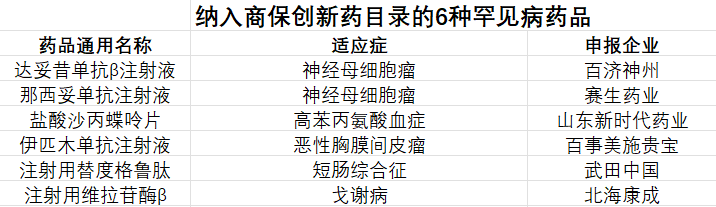
伊匹木单抗注射液

Search documents
药物受理最新动态:Bristol-Myers Squibb Holdings Pharma,...
Xin Lang Cai Jing· 2026-02-06 23:46
Group 1 - The application for Ipilimumab injection by Bristol-Myers Squibb Holdings Pharma, Ltd. has been accepted, with acceptance number JTS2600018, on February 7, 2026 [1] - Ipilimumab is classified as a biological product and is being registered for import [1] - Shanghai Junshi Biosciences Co., Ltd. is a key player in this application, alongside Bristol-Myers Squibb [1] Group 2 - Shanghai Junshi Biosciences Co., Ltd. was established on June 26, 2014, and is a medium-sized foreign-invested enterprise with a registered capital of 74 million RMB [1] - The company has 774 insured employees and is located at 1289 Yishan Road, Xuhui District, Shanghai [1] - The sole shareholder of Shanghai Junshi Biosciences is Junshi Biosciences Co., Ltd., which holds 100% of the shares [1]
商保创新药药房遇冷,这些进口药院内渗透快
第一财经· 2026-01-22 13:23
Core Viewpoint - The article discusses the implementation and sales performance of the newly established commercial insurance innovative drug directory, highlighting the concentration of sales in major cities and the challenges faced in expanding access to these drugs across the country [3][7]. Summary by Sections Sales Performance of New Drug Directories - As of January 20, 2026, 99 new drugs from the basic medical insurance directory have been sold in 12,198 designated medical institutions, while 14 drugs from the commercial insurance innovative drug directory have been sold in 223 institutions [3][4]. - Over 70% of the commercial insurance innovative drugs have recorded sales, with Alzheimer's disease treatments showing the highest penetration in the hospital market [4][5]. Specific Drug Sales Insights - The drug Lecanemab, developed by Eisai, has been sold in 158 institutions, while Eli Lilly's Donanemab has been recorded in 46 institutions [4]. - The number of patients with mild cognitive impairment or mild dementia due to Alzheimer's disease in China is projected to reach 17 million by 2024, indicating a broad patient base for these treatments [5]. Challenges in Rare Disease Drug Sales - Rare disease drugs face challenges due to their limited patient populations and the concentration of prescriptions in specialized hospitals, resulting in sparse sales data [5][6]. - For instance, Takeda's drug for short bowel syndrome has only been sold in one designated pharmacy in Shenzhen this year [5]. Market Access and Policy Implications - Five innovative drugs have yet to achieve sales in designated medical institutions, including CAR-T products priced between 990,000 to 1.3 million yuan per injection [6]. - The National Healthcare Security Administration has implemented a "three exclusions" policy to facilitate the entry of high-cost drugs into hospitals, but the transition from "entry" to "sales" remains complex due to various factors [6][7]. Regional Disparities in Sales - Sales of commercial insurance innovative drugs are still concentrated in major provinces like Beijing, Shanghai, Jiangsu, and Guangdong, with retail pharmacies accounting for less than 10% of sales [7][8]. - Some regions, such as Guangdong and Chongqing, have begun to support the prescription flow of commercial insurance innovative drugs, but broader implementation is needed [8].

商保创新药药房遇冷,这些进口药院内渗透快
Di Yi Cai Jing· 2026-01-21 13:48
Core Insights - The sales of commercial insurance innovative drugs remain concentrated in public hospitals in a few provinces such as Beijing and Shanghai, with a low proportion of sales through pharmacies [1][5] - As of January 20, 2023, 99 new basic medical insurance drugs were sold in 12,198 designated medical institutions, while 14 commercial insurance innovative drugs were sold in 223 institutions [1][5] Group 1: Sales Data and Trends - Over 70% of commercial insurance innovative drugs have recorded sales, but the specific sales performance varies among the 14 drugs [2] - Alzheimer's disease treatment drugs have the highest penetration in the hospital market, with drugs like Lecanemab and Donanemab achieving sales in 158 and 46 institutions respectively [2] - Multiple anti-tumor drugs are also penetrating the hospital market, with drugs like Ipilimumab and Lurbinectedin being sold in 35 and over 10 institutions respectively [2] Group 2: Challenges and Market Dynamics - Five innovative drugs have not yet formed sales in designated medical institutions, including CAR-T products priced between 990,000 to 1,300,000 yuan per injection [3] - The lack of sales does not imply that these drugs are not benefiting from the supportive policies for commercial insurance innovative drugs [3] - The transition from "hospital entry" to "sales" involves several factors, including physician prescriptions and patient payments, which may hinder the sales volume of these drugs [3] Group 3: Policy and Implementation - Most provinces have clarified that the entry of commercial insurance innovative drugs into hospitals will follow the guidelines of "nationally negotiated drugs" [4] - There is a push for the inclusion of all 19 drugs in the commercial insurance innovative drug directory into the procurement lists of hospitals, which may improve access for patients [4] - The integration of commercial insurance innovative drugs with the dual-channel policy of medical insurance is essential for enhancing confidence in the allocation of these drugs in hospitals [5]
21健讯|湖南推动基本医保省级统筹;向日葵遭证监会立案
2 1 Shi Ji Jing Ji Bao Dao· 2026-01-16 04:26
Policy Developments - Hunan Province has issued an implementation plan to promote provincial-level coordination of basic medical insurance, aiming to enhance the level of medical security and the fund's risk resistance by 2029 [2] Drug and Device Approvals - Zai Lab has received approval for clinical trials of injectable ZGGS18 and ZG005 for use in advanced solid tumors, although this will not significantly impact the company's recent performance [4] - Jianfeng Group has voluntarily withdrawn its clinical trial application for "C2235 and C2235 tablets," with plans to resubmit after further research [5] Capital Markets - WuXi AppTec has made a conditional cash acquisition offer of HKD 4.00 per share for all shares of Dongyao Pharmaceutical, representing a premium of approximately 114.67% over the average closing price for the last 30 trading days [7] - Yinuo Micro Pharmaceuticals has submitted a listing application to the Hong Kong Stock Exchange, with Citigroup and CICC as joint sponsors [8] Industry Events - Over 11,000 designated medical institutions are equipped to purchase 105 new drugs added to the medical insurance catalog for 2025, with 6,537 being medical institutions and 4,592 retail pharmacies [10][11] - France has launched a roadmap to address national obesity issues, setting four key objectives to curb obesity growth and improve health outcomes [12] Public Opinion Alerts - Sunflower has been investigated by the China Securities Regulatory Commission for misleading statements in its restructuring plan, leading to a 20% drop in its stock price [14]

湖南推动基本医保省级统筹;向日葵遭证监会立案
2 1 Shi Ji Jing Ji Bao Dao· 2026-01-16 04:11
Policy Developments - Hunan Province has issued an implementation plan to promote provincial-level coordination of basic medical insurance, aiming to enhance the level of medical security and fund risk resistance by 2029 [1] Drug and Device Approvals - Zai Lab has received clinical trial approval for injectable ZGGS18 and ZG005 for use in advanced solid tumors, although this will not significantly impact the company's recent performance [2] - Jianfeng Group has voluntarily withdrawn its clinical trial application for "C2235 and C2235 tablets," with plans to resubmit after further research [3] Capital Markets - WuXi AppTec has made a conditional cash acquisition offer of HKD 4.00 per share for all shares of Dongyao Pharmaceutical, representing a premium of approximately 114.67% over the average closing price for the previous 30 trading days [4] - Yinuo Micro Pharmaceuticals has submitted a listing application to the Hong Kong Stock Exchange, with Citigroup and CICC as joint sponsors [5] Industry Developments - Over 11,000 designated medical institutions are equipped to purchase 105 new drugs added to the 2025 medical insurance catalog, with 6,537 being medical institutions and 4,592 retail pharmacies [6][7] - France has launched a roadmap for addressing national obesity issues, with goals to curb obesity growth, improve health conditions, enhance accessibility to personalized medical services, and support innovative care methods from 2026 to 2030 [8] Public Opinion Alerts - Sunflower has been investigated by the China Securities Regulatory Commission for alleged misleading statements in its restructuring plan, leading to a 20% drop in its stock price [9]

超11000家定点医药机构可买2025年医保目录新药
Yang Shi Xin Wen· 2026-01-14 12:33
Core Insights - The National Healthcare Security Administration (NHSA) is facilitating the implementation of negotiated drugs in the 2025 medical insurance catalog, providing a list of new negotiated drugs and innovative commercial insurance drugs for 2025 [1][2] Group 1: New Drug Distribution - As of January 11, 2026, 105 new negotiated drugs have been included in the medical insurance catalog, distributed across 11,129 designated medical institutions nationwide [1] - Among the 105 new negotiated drugs, 88 have available distribution information, with two drugs, namely Increlex and Liposomal Irinotecan, available in all 31 provinces and the Xinjiang Production and Construction Corps [1] - 20 drugs are available in more than 30 provinces, 53 drugs in more than 20 provinces, and 67 drugs in more than 10 provinces [1] Group 2: Commercial Insurance Drugs - There are 19 innovative commercial insurance drugs, with 16 having distribution information, and the drug Ipilimumab is available in over 30 provinces [1] - Seven commercial insurance drugs are distributed in more than 20 provinces, and 12 drugs are available in more than 10 provinces [1] Group 3: Monitoring and Compliance - The NHSA will focus on monitoring drugs that have not yet been distributed to designated medical institutions, ensuring that companies comply with distribution requirements to protect the medication rights of insured individuals [2]
重大突破,5款百万一针抗癌药被纳入商保
21世纪经济报道· 2025-12-15 13:38
Core Viewpoint - The inclusion of 19 drugs in the first version of the commercial health insurance innovation drug directory marks a significant step towards improving access and affordability of innovative drugs, particularly high-cost CAR-T therapies, while presenting challenges for insurance companies in product development and risk management [1][4][10]. Group 1: Policy and Implementation - The National Medical Security Work Conference emphasized the support for the development of commercial health insurance and the establishment of a multi-tiered medical security system, with a focus on the implementation of the commercial health insurance innovation drug directory by January 1, 2026 [1][2]. - The first version of the commercial health insurance innovation drug directory includes 19 drugs, focusing on high-cost and innovative treatments, including five CAR-T products and drugs for rare diseases [2][4]. Group 2: Challenges for Insurance Companies - Insurance companies face significant challenges in translating the drug directory into viable insurance products, including issues related to pricing, risk control, and compliance [4][5]. - Accurate pricing for insurance products relies on detailed data regarding potential patient populations, disease incidence, treatment cycles, and real-world efficacy, which are primarily held by pharmaceutical companies and hospitals [4][5]. Group 3: Risk Management and Compliance - The inclusion of Alzheimer's disease treatments raises concerns about adverse selection risks, as these drugs have high costs and long treatment durations, necessitating strict eligibility criteria for insurance coverage [5][6]. - Establishing transparent and compliant financial flows between insurance companies and pharmaceutical firms is crucial for effective collaboration [5][6]. Group 4: Data Sharing and Integration - The "医保+商保" one-stop clearing and settlement model aims to break down data silos, enhancing the efficiency of claims processing and improving patient experiences [6][8]. - Successful implementation of data sharing initiatives in regions like Shanghai and Beijing indicates potential for nationwide adoption, which could facilitate better integration of commercial health insurance with innovative drug offerings [8][10]. Group 5: Investment in Innovative Drugs - The policy encourages insurance funds to invest in the upstream of the pharmaceutical industry, positioning them as "patient capital" for innovative drug development [10][11]. - Major insurance companies are already investing in health industry funds, supporting numerous innovative drug companies and enhancing the overall funding environment for drug development [10][11]. Group 6: Future Outlook - Despite the potential for increased investment in innovative drugs, insurance companies remain cautious due to the high risks and costs associated with drug development, which may lead to a preference for established pharmaceutical firms over smaller, innovative companies [12].


6款罕见病药物纳入首版商保创新药目录,如何吸引更多商保承接
Di Yi Cai Jing· 2025-12-10 09:38
Core Insights - The newly released commercial insurance innovative drug directory includes 19 drugs, with 6 specifically for rare diseases, addressing conditions such as neuroblastoma and Gaucher disease [1][3] - The directory aims to provide a reference for multi-tiered medical insurance systems, but attracting more commercial insurance participation remains a challenge [1][6] Summary by Sections Rare Disease Drug Inclusion - The innovative drug for short bowel syndrome, injection of teduglutide, is set to be the first GLP-2 analog approved in China, filling a long-standing gap in treatment options [3][4] - Gaucher disease, affecting approximately 3,000 patients in China, now has a locally developed enzyme replacement therapy, injection of velaglucerase alfa, included in the directory [5] Challenges in Commercial Insurance - The increasing pressure on basic medical insurance funds makes it unrealistic to rely solely on them for rare disease drug coverage, highlighting the need for commercial insurance products like Huiminbao [6][8] - Huiminbao has made strides in covering certain rare disease drugs, but the number of drugs and policies available for rare diseases still needs improvement [8] Future Directions - Experts suggest that a multi-tiered approach involving basic insurance, commercial insurance, and charitable support is essential for effective rare disease drug coverage [9][10] - The focus should shift from post-reimbursement to comprehensive service and long-term health management for rare disease patients [10]
2025医保目录深度解读:114个新品种准入,19款创新药获商保联动,药企市场格局重塑在即
Ge Long Hui· 2025-12-09 20:20
Core Points - The article discusses the inclusion of 19 new drugs in the commercial health insurance innovation drug directory, highlighting their significance in the pharmaceutical market [10] - It emphasizes the advancements in CAR-T therapies and their impact on treating various cancers, particularly multiple myeloma and acute lymphoblastic leukemia [11][14][17] - The article also mentions the introduction of innovative drugs targeting Alzheimer's disease, showcasing their potential to change treatment paradigms [25][28] Group 1: New Drug Listings - A total of 19 new drugs have been added to the commercial health insurance innovation drug directory, including notable entries like Bristol-Myers Squibb's ipilimumab injection and Green Leaf Pharmaceutical's albituzumab injection [10] - The list includes various companies such as Pfizer, Novartis, and Jiangsu Hengrui Medicine, indicating a diverse range of pharmaceutical players involved [2][3][4] Group 2: CAR-T Therapies - The article highlights the global first approval of fully human CAR-T therapies, specifically targeting BCMA for treating relapsed or refractory multiple myeloma, with a five-year overall survival rate of 76.9% [12] - It mentions the efficacy of the CAR-T drug targeting GD2 for high-risk neuroblastoma, which has shown a real-world effectiveness rate exceeding 90% [14] - The introduction of dual-targeting CAR-T therapies, such as the one from Pfizer, is noted for significantly extending progression-free survival and overall survival in patients [15] Group 3: Alzheimer's Disease Treatments - The article discusses the launch of the first targeted drug for Alzheimer's disease in China, which aims to modify the disease's progression rather than just alleviate symptoms [25] - It highlights the significance of drugs like donanemab, which is the first to receive breakthrough therapy designation for Alzheimer's treatment, emphasizing its unique mechanism of action [28]

首版商保创新药目录公布,细胞疗法等19个高价值新药被纳入
Bei Ke Cai Jing· 2025-12-08 13:40
Core Points - The National Healthcare Security Administration and the Ministry of Human Resources and Social Security released the new National Basic Medical Insurance, Maternity Insurance, and Work Injury Insurance Drug Catalog (2025) along with the first Commercial Health Insurance Innovative Drug Catalog (2025), focusing on high-innovation and clinically valuable drugs [1] - A total of 24 drugs participated in the price negotiation, with 19 successfully included, achieving a success rate of approximately 79% [1] - The included innovative drugs feature 5 CAR-T cell therapies, 6 rare disease drugs, and the only immune oncology drug in the commercial health insurance catalog [1] Group 1: CAR-T Cell Therapies - Five CAR-T cell therapies have been included in the commercial health insurance innovative drug catalog, which had previously attempted to enter the national insurance catalog four times without success [2][3] - The therapies included are from various companies, with the first approved CAR-T therapy being the Axicabtagene Ciloleucel injection from Fosun Kite [3] - Despite high treatment costs, the inclusion in the commercial catalog is expected to improve patient access and reduce financial burdens [3] Group 2: Oncology Drugs - The commercial health insurance innovative drug catalog includes a significant number of oncology drugs, with 14 drugs in total, accounting for nearly 74% of the catalog [5] - Notably, the CTLA-4 inhibitor Ipilimumab injection, the only immune oncology drug included, is expected to enhance treatment accessibility for liver cancer patients [6] Group 3: Rare Disease Drugs - The catalog also includes 6 innovative drugs for rare diseases, such as the drugs for neuroblastoma and phenylketonuria [8][10] - These drugs are aimed at addressing urgent patient needs and are part of a broader strategy to enhance treatment options for rare diseases [8] Group 4: Policy Implications - The establishment of the commercial health insurance innovative drug catalog is a significant step towards improving the multi-tiered medical insurance system in China [9] - The government encourages commercial health insurance providers to incorporate these drugs into their coverage, promoting a more comprehensive healthcare solution for patients [9]