氨溴索

Search documents
春节“健康关”:从备药到用药,家中常备药如何守住健康?
2 1 Shi Ji Jing Ji Bao Dao· 2026-02-17 02:20
Group 1 - The article discusses the importance of having a well-stocked medicine cabinet during the Chinese New Year, as health issues often arise due to festive eating and cold weather [3][4][10] - Common health problems during this period include colds, digestive issues, and potential infections, necessitating the use of specific medications [2][9][10] - Families are advised to prepare a variety of medications, including cold remedies, digestive aids, and treatments for viral infections, to address these health concerns effectively [5][7][9] Group 2 - The article highlights the risks associated with improper medication use, particularly the misuse of antibiotics and the importance of adhering to medical guidelines [15][16] - It emphasizes the need for caution when using adult medications for children, as dosages must be carefully calculated based on age and weight [16][20] - The potential dangers of expired medications are discussed, stressing that expired drugs can lose efficacy and may even become harmful [18][20] Group 3 - The article notes the increasing presence of traditional Chinese medicine in home medicine cabinets, but warns against misconceptions regarding the shelf life of these products [19][20] - It underscores the necessity of not only having medications available but also ensuring they are used correctly and safely to maintain health during the festive season [21][22]
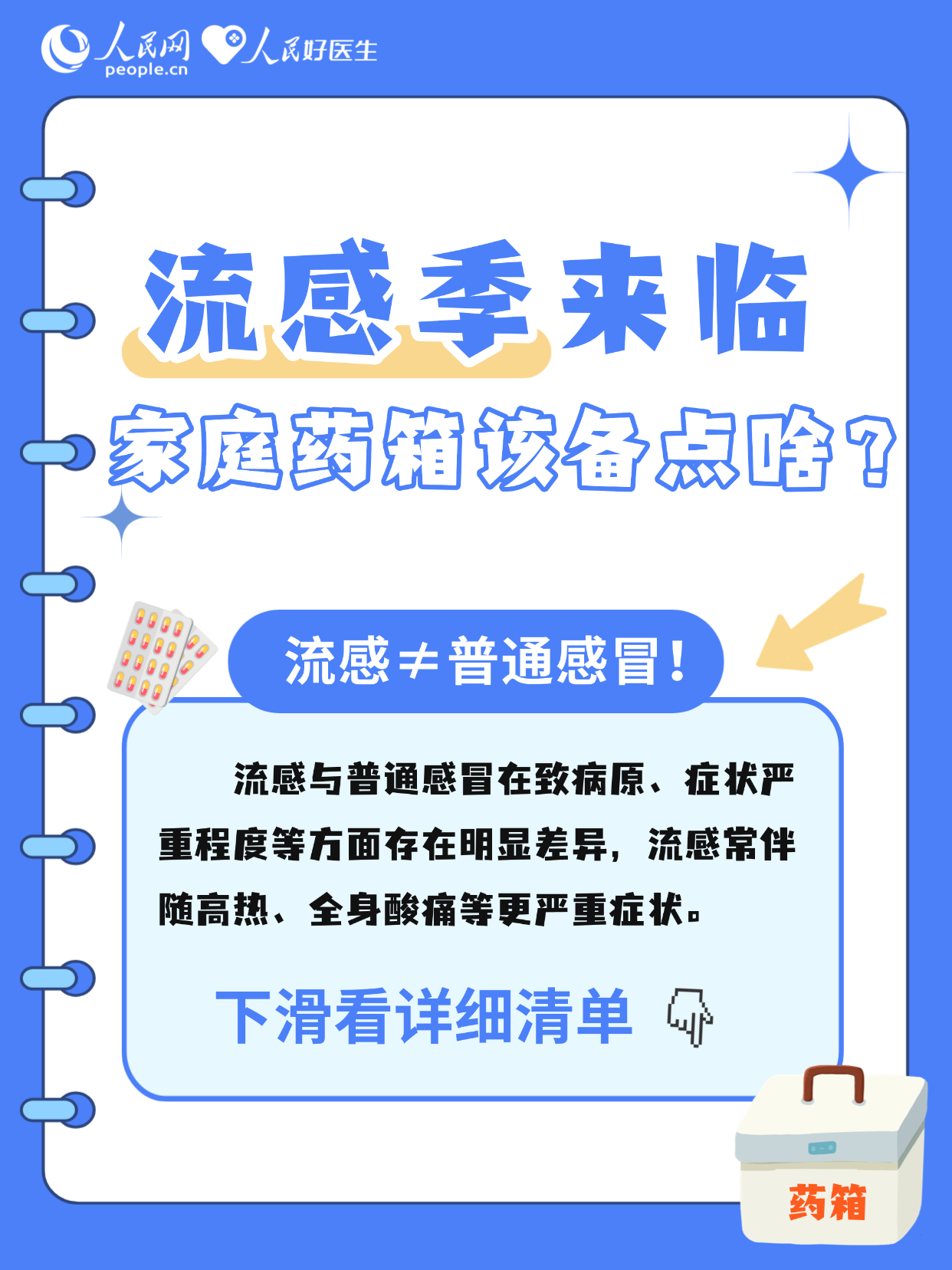
流感≠普通感冒!流感季来临,家庭药箱该备点啥?
Ren Min Wang· 2025-12-04 03:30
Core Viewpoint - The article emphasizes the importance of distinguishing between influenza and the common cold, highlighting their differences in pathogens and symptom severity, and provides a practical medication list for families to prepare for the flu season [1]. Group 1: Differences Between Influenza and Common Cold - Influenza and common cold have similar symptoms but differ significantly in pathogens and severity [1]. Group 2: Medication Recommendations - Acetaminophen is recommended for alleviating fever symptoms caused by influenza, suitable for adults, pregnant women, and children aged 3 months and older, with dosage strictly calculated based on weight for infants and children [4]. - Ibuprofen is effective for fever reduction and relieving mild to moderate pain, appropriate for children over 6 months and adults, with specific formulations for children [4]. - Oseltamivir should be used as soon as influenza is diagnosed, ideally within 48 hours of onset, and is suitable for both types A and B influenza [6][7]. - Baloxavir marboxil is a viral RNA polymerase inhibitor for adults and children over 5 years old with influenza [8]. - Oral rehydration salts are recommended to prevent dehydration due to vomiting and diarrhea associated with influenza, suitable for both adults and children [9]. - Dextromethorphan is indicated for dry cough symptoms caused by influenza, suppressing the cough reflex [10]. - Expectorants can help thin mucus and promote its expulsion, beneficial for patients with thick phlegm [11]. Group 3: Medication Usage Guidelines - Antibiotics, such as amoxicillin, are ineffective against influenza unless there is a concurrent bacterial infection, and their misuse should be avoided [15]. - Special populations, including children, pregnant women, and elderly individuals with underlying conditions, should consult a doctor before using medications [15]. - Regularly check and clear expired medications from home medicine cabinets every 3-6 months to avoid using ineffective or harmful substances [17]. - Expired medications should not be discarded casually; they should be disposed of through community drug recycling points or hospital collection boxes to prevent environmental and health hazards [18].