连花清瘟

Search documents
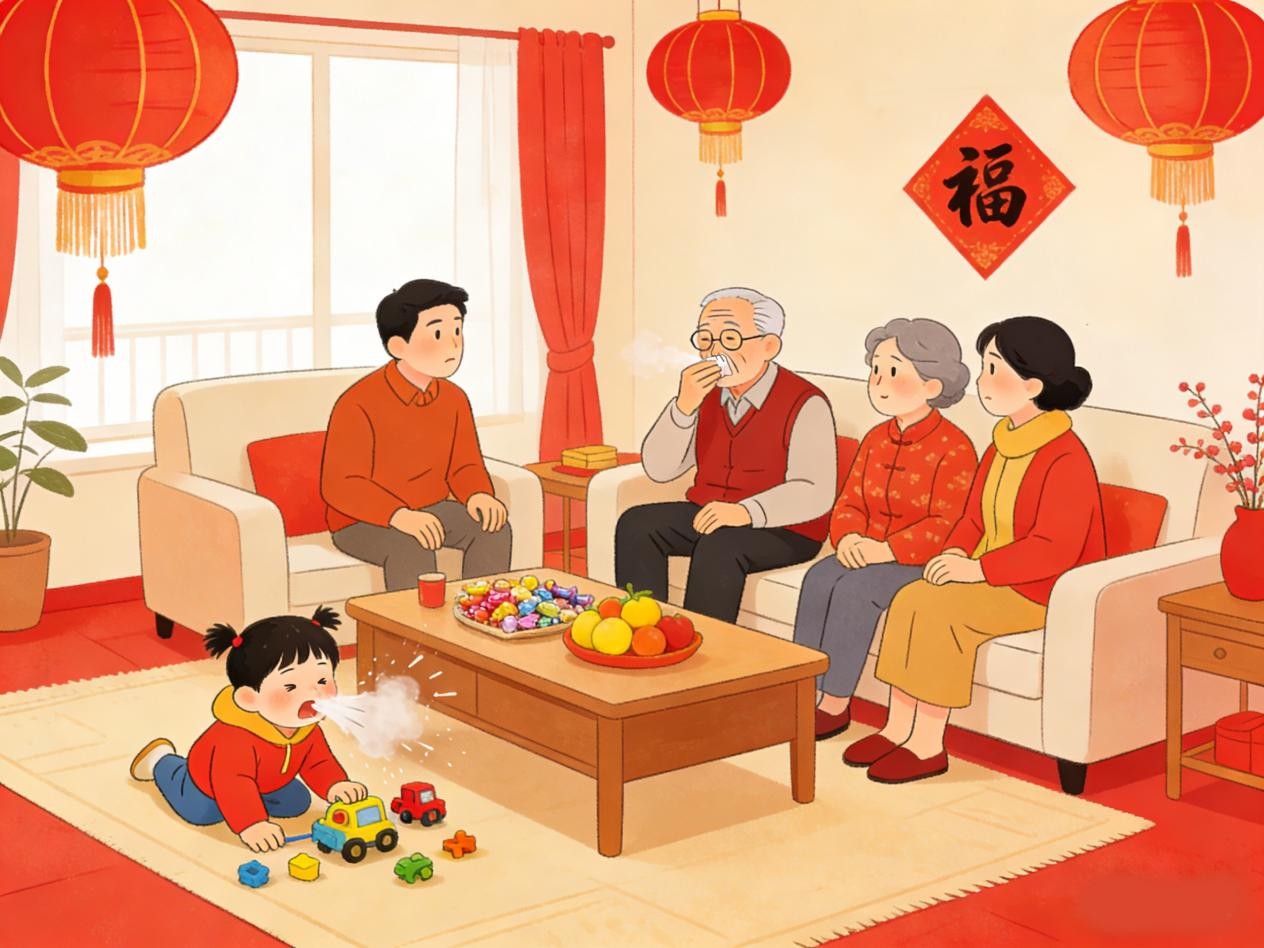
过年聚会扎堆,老人小孩易交叉感染!家庭应对流感三步走
Sou Hu Wang· 2026-02-19 12:04
Core Viewpoint - The article emphasizes the increased risk of influenza infection among children and the elderly during the Spring Festival, highlighting the need for effective preventive measures and timely interventions to maintain health during this festive period [1][3]. Group 1: Reasons for Increased Infection Risk - The Spring Festival coincides with the transition from winter to spring, a period when influenza virus activity rises [3]. - Children have underdeveloped immune systems and weaker respiratory defenses, making them more susceptible to influenza [3]. - Elderly individuals often have declining respiratory function and underlying health conditions, leading to more severe symptoms and slower recovery if infected [3]. - Disruption of regular routines during the festival, such as late nights and temperature fluctuations, further compromises respiratory health [3]. Group 2: Key Protective Measures - Actively reduce time spent in enclosed spaces, adjusting travel plans to avoid peak crowds, and wearing well-fitting medical masks when necessary [4]. - Maintain indoor air circulation by opening windows for ventilation, which can significantly lower the concentration of airborne viruses [4]. - Appropriately adjust clothing and wear masks to protect against temperature changes that can irritate the respiratory tract [4]. Group 3: Timely Intervention for Infection - Influenza symptoms are more severe than those of a common cold, and early antiviral treatment is crucial, especially for vulnerable populations like the elderly and children [5]. - The article recommends "Lianhua Qingwen" as an effective medication for treating influenza symptoms, which is included in recent flu prevention guidelines from various regions [6]. - "Lianhua Qingwen" is noted for its broad-spectrum antiviral properties and does not cause drowsiness, making it suitable for use during the day [6].

春节“健康关”:从备药到用药,家中常备药如何守住健康?
2 1 Shi Ji Jing Ji Bao Dao· 2026-02-17 02:20
Group 1 - The article discusses the importance of having a well-stocked medicine cabinet during the Chinese New Year, as health issues often arise due to festive eating and cold weather [3][4][10] - Common health problems during this period include colds, digestive issues, and potential infections, necessitating the use of specific medications [2][9][10] - Families are advised to prepare a variety of medications, including cold remedies, digestive aids, and treatments for viral infections, to address these health concerns effectively [5][7][9] Group 2 - The article highlights the risks associated with improper medication use, particularly the misuse of antibiotics and the importance of adhering to medical guidelines [15][16] - It emphasizes the need for caution when using adult medications for children, as dosages must be carefully calculated based on age and weight [16][20] - The potential dangers of expired medications are discussed, stressing that expired drugs can lose efficacy and may even become harmful [18][20] Group 3 - The article notes the increasing presence of traditional Chinese medicine in home medicine cabinets, but warns against misconceptions regarding the shelf life of these products [19][20] - It underscores the necessity of not only having medications available but also ensuring they are used correctly and safely to maintain health during the festive season [21][22]
连花清呼吸,健康中国年——以岭药业连花品牌登陆春运+央视矩阵,守护全民新春呼吸健康
Quan Jing Wang· 2026-02-12 07:02
Core Viewpoint - Yiling Pharmaceutical officially launched the "Lianhua Qingxie, Healthy China Year" brand communication plan during the 2026 Spring Festival, promoting its core products Lianhua Qingwen and Lianhua Qingke across various media platforms to enhance public awareness of respiratory health [1][4]. Group 1: Company Overview - Yiling Pharmaceutical has adhered to the corporate mission of "inheritance and innovation for the benefit of humanity" for over 30 years, focusing on a market-leading and technology-driven innovation development strategy [4]. - The company has established a comprehensive operational model integrating theory, clinical practice, new drug development, industry, and education, forming a development cluster from medicine to pharmaceuticals to health [4]. Group 2: Product Highlights - Lianhua Qingwen, developed under the guidance of traditional Chinese medicine's network disease theory, is recognized for its broad-spectrum antiviral properties, effectively alleviating symptoms of colds and flu [4]. - The product has been included in national treatment guidelines for infectious public health events 36 times, gaining widespread recognition for its efficacy and safety [4]. - Lianhua Qingke is another innovative traditional Chinese medicine that alleviates cough and phlegm symptoms associated with respiratory diseases, demonstrating triple efficacy in clearing the lungs, phlegm, and cough [6]. Group 3: Market Recognition - The Lianhua brand has received multiple industry awards and is recognized by both medical professionals and consumers, being named a preferred cold medicine in various rankings [8]. - The brand's strong presence in the Spring Festival communication matrix signifies an elevation in its influence and credibility, reflecting the company's commitment to upgrading respiratory health services and contributing to the construction of a healthy China [8].

从“数量扩张”向“质量优先”,院士专家回应中成药产业升级
2 1 Shi Ji Jing Ji Bao Dao· 2026-01-29 08:20
Core Viewpoint - The Chinese traditional medicine industry is undergoing significant regulatory and market changes, leading to a rapid phase of industry reshuffling and upgrading as the deadline for new registration regulations approaches [1][2][4]. Regulatory Changes - The new regulations set to take effect on July 1, 2026, will require clear safety information on drug labels, pushing the industry towards higher quality standards and potentially leading to the delisting of products with ambiguous safety data [2][6]. - Current data indicates that over 40,000 of the 57,000 approved traditional Chinese medicine (TCM) products have unclear safety information, which will impact products with unclear clinical value and high safety risks [3][4]. Industry Dynamics - The dual pressures of funding and technology are intensifying the differentiation among companies, with larger firms able to invest in data compliance and mergers, while smaller firms struggle with funding and may abandon low-value licenses [4][5]. - The market share is expected to concentrate among high-quality enterprises, leading to a significant increase in industry concentration and a shift towards innovative and improved traditional medicines [4][5]. Market Performance - Recent earnings forecasts indicate a recovery in the TCM sector, with leading companies like Jiangzhong Pharmaceutical and Yiling Pharmaceutical showing significant profit growth, with Yiling expected to turn a loss of 7.25 billion yuan in 2024 into a profit of 1.2 to 1.3 billion yuan in 2025, marking a profit increase of up to 279.43% [7]. Quality and Pricing Trends - The upcoming centralized procurement and adjustments to the basic drug catalog are expected to accelerate industry upgrades, with a focus on quality over price, as the market will likely see a reduction in low-quality products [8][9]. - The new procurement process will include a comprehensive quality evaluation system to ensure that different manufacturers produce equivalent therapeutic effects and quality, addressing the challenges posed by the complexity of TCM ingredients [9].
中成药出清将主要影响两类药品
2 1 Shi Ji Jing Ji Bao Dao· 2026-01-29 08:03
Core Viewpoint - The Chinese traditional medicine (CTM) industry is undergoing significant regulatory and market changes, leading to a phase of "low-quality" product elimination and industry upgrading as the deadline for new registration regulations approaches [1][2]. Regulatory Changes - The new regulations, effective from July 1, 2026, will require clear safety information on CTM product labels, with products marked as "unclear" facing delisting [1]. - The regulations aim to address the lack of safety information in CTM product labels, which has been a significant issue, with over 40,000 product approvals marked as "unclear" in critical safety areas [3]. Industry Impact - The regulatory countdown is causing a notable impact on the industry, with many companies voluntarily canceling or transferring low-value approvals due to increasing compliance costs [1][4]. - The industry is expected to see a fundamental shift in market dynamics, with a concentration of market share among high-quality enterprises as low-efficiency approvals are eliminated [4][5]. Financial Performance - Recent earnings forecasts indicate a recovery in the CTM sector, with leading companies like Jiangzhong Pharmaceutical and Yiling Pharmaceutical showing significant profit growth due to improved cost management and marketing reforms [7]. - Yiling Pharmaceutical is projected to turn a profit of 1.2 to 1.3 billion yuan in 2025, marking a substantial turnaround from a loss in 2024 [7]. Market Dynamics - The upcoming fourth batch of centralized procurement for CTM is set to further accelerate industry upgrades, with a focus on quality and compliance [8]. - The procurement process will involve a comprehensive evaluation of quality, with strict penalties for non-compliance, ensuring that only high-quality products remain in the market [9]. Future Outlook - The industry is expected to continue moving towards high-quality development over the next 3-5 years, with a focus on modernizing classic formulations and innovating new products [5][6]. - The establishment of a comprehensive quality evaluation system for CTM is crucial for ensuring product efficacy and safety, which will be essential for the industry's global competitiveness [9].


中成药出清将主要影响两类药品
21世纪经济报道· 2026-01-29 08:01
Core Viewpoint - The Chinese traditional medicine (CTM) industry is undergoing significant regulatory and market changes, leading to a phase of "low-quality" product elimination and industry upgrade as the deadline for new registration regulations approaches [1][2][4]. Regulatory Changes - The new regulations, effective from July 1, 2026, will require clear safety information on CTM product labels, with products marked as "unclear" facing delisting [1][4]. - A significant number of CTM approvals, approximately 40,000, currently lack essential safety information, which will impact products with unclear clinical value and high safety risks [4]. Industry Dynamics - The dual pressure of funding and technology is intensifying the differentiation among industry players, with leading companies able to enhance their core products and acquire quality approvals, while smaller firms struggle with funding and research capabilities [5]. - The industry landscape is expected to fundamentally change post-regulation, with a reduction in ineffective approvals and a concentration of market share among high-quality enterprises [5][6]. Market Trends - The market for CTM is anticipated to shift towards high-quality development, focusing on classic formulations and innovative products, while the concentration of market share will increase as low-market-share products exit [8][9]. - Recent performance reports indicate a recovery in the CTM sector, with leading companies like Jiangzhong Pharmaceutical and Yiling Pharmaceutical showing significant profit growth due to cost improvements and marketing reforms [9][10]. Pricing and Competition - The upcoming centralized procurement process is expected to enhance market competition, leading to potential cost reductions for high-quality products as low-quality options are phased out [8][11]. - The new procurement regulations will include a comprehensive quality evaluation system to ensure that different manufacturers' products meet consistent efficacy and quality standards [12].

以岭药业丰富产品研发管线 化药专利新药苯胺洛芬注射液获批上市
Zheng Quan Ri Bao Wang· 2026-01-23 04:47
Core Viewpoint - Yiling Pharmaceutical has achieved a dual benefit with the approval of its new drug, Anilinofen Injection, and a positive profit forecast for 2025, marking a significant step in its transition to a dual-driven model of traditional Chinese medicine and chemical drugs [1][2]. Group 1: Financial Performance - Yiling Pharmaceutical expects a net profit of 1.2 billion to 1.3 billion yuan for 2025, successfully turning a profit [1]. - The company has maintained high R&D investment, with 544 million yuan spent in the first three quarters of 2025, accounting for 9.27% of its revenue [2]. Group 2: Product Development - Anilinofen Injection is the first patented chemical drug developed by Yiling Wanzhou and is aimed at the postoperative analgesia market [1]. - The approval of Anilinofen Injection enhances the company's product pipeline and is expected to contribute to new cash flow, supporting further R&D investments [2]. Group 3: Market Opportunity - The postoperative analgesia market is experiencing rapid growth, with 104 million surgical procedures expected in 2024, an 8% increase from 2023 [1]. - The approval of Anilinofen Injection provides a new treatment option for postoperative pain management, aligning with clinical guidelines emphasizing the role of non-steroidal anti-inflammatory drugs [1]. Group 4: Strategic Direction - Yiling Pharmaceutical has established a "one body, two wings" strategy, focusing on traditional Chinese medicine while expanding into chemical drugs and health products [3]. - The approval of Anilinofen Injection signifies a key milestone in the company's strategy, transitioning from a traditional Chinese medicine leader to a comprehensive pharmaceutical enterprise [3].
流感疫情持续,防控系统工程再受考验
Guan Cha Zhe Wang· 2025-12-31 09:13
Group 1 - The flu epidemic in China is at a high level, primarily driven by the H3N2 strain, with increased transmission risk due to upcoming population movements during the New Year holiday [1] - Demand for antiviral and symptomatic medications has surged, with a reported over 500% increase in flu-related drug purchases on Alibaba Health and over 100% increase in orders for traditional Chinese medicine on Meituan [1] - The pharmaceutical industry is responding effectively across the supply chain, from vaccine production to drug distribution, indicating a well-coordinated effort to manage the public health challenge [1][2] Group 2 - Vaccine companies are ramping up production, with Hualan Vaccine reporting 55 batches of flu vaccine issued since November, reflecting increased public willingness to get vaccinated [2] - Diagnostic companies like Dian Diagnostics and Kingmed Diagnostics are seeing increased business, supporting the trend of testing before treatment, which enhances rational drug use [2] - The treatment landscape is diversifying, with both chemical and traditional Chinese medicines being utilized, indicating a shift in market dynamics [3][5] Group 3 - Traditional Chinese medicine is gaining traction, with companies like China Resources Sanjiu and Kangyuan Pharmaceutical seeing strong growth in their antiviral product lines [5] - The distribution sector is crucial, with companies like Yiyigou ensuring rapid delivery of essential medications during peak demand periods [5] - The clinical relevance of traditional Chinese medicine is increasing, supported by government policies that endorse its use in flu treatment, leading to a rise in evidence-based research [6][9] Group 4 - Companies are focusing on clinical research to validate the efficacy of traditional Chinese medicines, with Kangyuan Pharmaceutical conducting head-to-head trials against conventional drugs [7][9] - The competitive landscape in the respiratory system traditional Chinese medicine market is diverse, with companies like China Resources Sanjiu and Yiling Pharmaceutical leveraging brand strength and market recognition [9] - As the industry moves towards evidence-based medicine, companies with strong research capabilities and clinical data are likely to capture more market opportunities [9]




长期主义的较量:银发经济的价值重塑与生态构建
Huan Qiu Wang· 2025-12-31 05:11
Core Insights - The "Silver Economy" is transitioning from a passive defense strategy against aging population issues to an active development strategy, indicating a significant market opportunity in a trillion-yuan sector [1] - By 2025, the scale of the Silver Economy in China is expected to exceed 9 trillion yuan, accounting for 6% of GDP, with a projected compound annual growth rate of 15.7% until 2035 [2] Industry Overview - As of 2025, 76 non-financial listed companies in the A-share market are deeply engaged in Silver Economy-related businesses, showcasing a diverse strategic approach [1] - The main participants in the Silver Economy can be categorized into three groups: pharmaceutical health leaders, technology enablers, and cross-industry entrants, all targeting the needs of the elderly population [1][6] Policy Support - The Chinese government has elevated the Silver Economy to a strategic position, with multiple policies aimed at promoting its development, including financial support for eligible elderly care projects and the establishment of a supportive policy network [3][4] - Local governments have also initiated specific policies to support the Silver Economy, with significant investments in areas such as community care and talent training [3] Market Dynamics - The number of enterprises related to the Silver Economy has reached approximately 531,300, with a notable increase in new registrations, indicating strong market vitality [5] - Emerging business models such as "Silver + Culture and Tourism" and "Silver + Education" are gaining traction, reflecting the rapid integration of digital technologies in the sector [5] Company Strategies - Pharmaceutical companies are leading the Silver Economy, expanding their focus from drug sales to comprehensive health service chains that include prevention, treatment, and rehabilitation [6][10] - Companies like China Resources Sanjiu are leveraging their strengths in the pharmaceutical sector to create a full-cycle health service ecosystem, while also exploring innovative products tailored for the elderly [11][12] Financial Performance - Companies that have strategically positioned themselves in the Silver Economy are experiencing significant revenue growth, with some firms reporting double-digit profit increases [10] - The focus on chronic disease management and rehabilitation services is becoming a key growth area for many pharmaceutical companies, with plans to enhance their market presence by 2028 [10] Challenges and Opportunities - Despite the promising outlook, the Silver Economy faces challenges such as supply shortages, talent gaps, and the need for innovative service models to meet the diverse needs of the elderly [11][12] - Leading companies are exploring integrated solutions that combine products, services, and care, aiming to create a more comprehensive approach to elderly care [12]
中国药谷:谱好生命健康的乐章
Bei Jing Ri Bao Ke Hu Duan· 2025-12-28 23:40
Core Insights - Daxing Biopharmaceutical Industry Base has achieved significant milestones, including being recognized as a national-level "Green Industrial Park" and a five-star national new-type industrialization demonstration base, with plans for expansion and development in the biopharmaceutical sector [1][2][8] Group 1: Development Milestones - In 2021, Daxing Biopharmaceutical Industry Base was approved for a 9.1 square kilometer expansion, marking its entry into the trillion-level industrial park category [1] - The base was awarded the title of "Green Industrial Park" in 2022 and has been recognized for its innovative development strategies [1][2] - The construction of the new campus for Capital Medical University commenced in 2023, enhancing the collaborative innovation framework of "medical education, research, and production" [1][8] Group 2: Expansion Projects - The first industrial land project in the southern expansion area, the Ande Medical Health Industry Park, broke ground in February 2025, with a total investment of approximately 300 million yuan [7] - The northern expansion area, covering 5.5 square kilometers, focuses on living and service facilities, with the new campus of Capital Medical University as a key project [8] - During the "14th Five-Year Plan" period, the base completed 12 transactions for industrial land, emphasizing high-standard planning before construction [8] Group 3: Industry Focus and Innovation - The base has established a "3+5" industrial development roadmap, focusing on traditional Chinese medicine, vaccines, and high-end medical devices, while also exploring emerging fields like cell and gene therapy [10][11] - Daxing has become a hub for vaccine production, housing leading companies in the sector, and has transitioned from "following innovation" to "original breakthroughs" [10] - The base is also strengthening its position in high-end medical devices, with advancements in surgical robots and innovative medical implants [11] Group 4: Service and Support for Enterprises - Daxing Biopharmaceutical Industry Base provides comprehensive services for enterprises, including project site selection, business registration, environmental assessments, and policy applications [14] - A one-stop service platform has been established, integrating government services and industry resources, which has facilitated over 26,000 services to enterprises [14] - The base has organized various events to enhance collaboration and visibility for enterprises, leading to successful international market expansions for over 20 companies [15] Group 5: Future Outlook - The base aims to further optimize its industrial system by focusing on the "3+2+N" model, which includes strengthening existing industries and exploring new potential sectors [17] - The "15th Five-Year Plan" emphasizes the development of new productive forces and high-quality economic growth, aligning with Daxing's strategic goals [17] - Daxing Biopharmaceutical Industry Base is committed to continuing its role as a key player in the biopharmaceutical industry, with plans for further expansion and innovation [17]