水务

Search documents
第一太平:MPIC 2025年度综合核心溢利净额增加15%至271亿披索
Zhi Tong Cai Jing· 2026-03-11 05:16
Core Viewpoint - Metro Pacific Investments Corporation (MPIC) reported a strong financial performance for the year ending December 31, 2025, with a 15% increase in core net profit to 27.1 billion pesos compared to 23.6 billion pesos in 2024 [1] Financial Performance - MPIC's operational contribution increased by 13% to 32.1 billion pesos, driven by strong growth in the power generation business of Manila Electric Company (MERALCO), tariff adjustments by Maynilad Water Services, Inc. (MAYNILAD), and an increase in patient numbers across the Metro Pacific Hospitals network [1] - The electricity sector remains the largest contributor to the company's core business, accounting for 22.1 billion pesos or 69% of the operational net profit [1] - Water and toll road segments contributed 7.2 billion pesos and 6.1 billion pesos respectively, together representing 42% of the operational net profit [1] Profit Growth - Reported net profit growth slowed to 5% due to one-time gains from subsidiaries in the previous year, although the underlying performance remained strong [1]

一线游资作手新一、陈小群等重仓押注,金风科技10天6板成“团宠”
Xin Lang Cai Jing· 2026-01-10 01:39
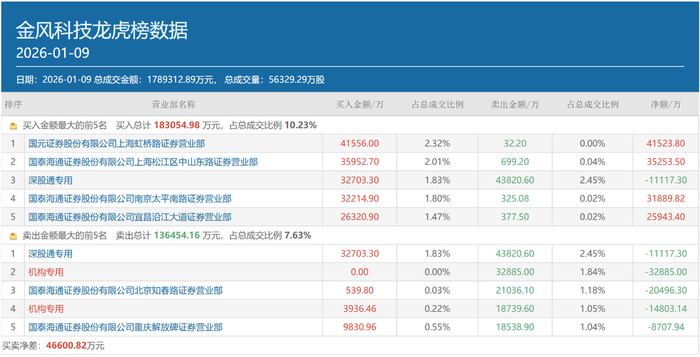
Core Viewpoint - Jinpeng Technology (002202.SZ) has experienced a significant surge in stock price, achieving a 4-day consecutive limit-up, with a total trading volume of 17.893 billion yuan on January 9, 2026, and a price increase of 83.25% over the last 10 trading days [1][7]. Trading Activity - On January 9, 2026, the top five buying seats included four well-known speculative trading desks, with the highest buy amount from Guoyuan Securities at 415.6 million yuan, followed by Guotai Junan Securities at 359.5 million yuan [1][2]. - The total net buying amount from these four major speculative trading desks reached 1.346 billion yuan on that day [1]. Recent Performance - Jinpeng Technology has recorded six limit-up days in the last ten trading days, with a total price increase of 83.25% since December 25, 2025 [1][3]. - The stock price has risen significantly from a low of 7.54 yuan per share on April 9, 2025, to a closing price of 17.43 yuan per share on December 24, 2025, marking a 132.4% increase [7]. Institutional Activity - Despite the surge in speculative trading, institutional investors have been reducing their holdings, with a total net selling amount of 1.734 billion yuan from institutional proprietary seats between December 25, 2025, and January 9, 2026 [8]. Business Context - Jinpeng Technology operates in wind turbine manufacturing, wind power services, and wind farm investment and development, with a net profit of 1.86 billion yuan in 2024 and 2.584 billion yuan in the first three quarters of 2025, reflecting year-on-year growth of 39.78% and 44.21% respectively [7]. - The recent interest in Jinpeng Technology is partly due to its stake in Blue Arrow Aerospace, a leading commercial aerospace company in China, which is pursuing an IPO on the Sci-Tech Innovation Board [8].

首创环保股价跑输市场,公司业绩断崖式下滑,负债规模高达700亿元以上
Zheng Quan Shi Bao Wang· 2026-01-06 11:05
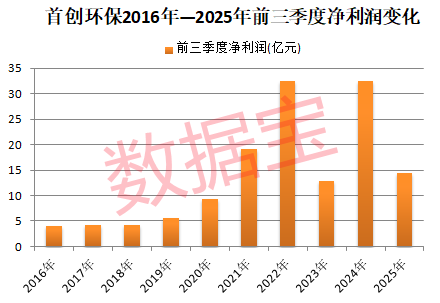
Core Viewpoint - The company, Beijing Enterprises Water Group (首创环保), is facing challenges with declining profits despite being the largest player in the water and waste management industry in terms of market capitalization and revenue [1][2]. Group 1: Company Performance - As of January 6, the company's stock price was 3.05 CNY per share, with a market capitalization of 22.389 billion CNY, making it the largest in the water and waste management sector [1]. - For the first three quarters of 2025, the company reported revenue of 13.453 billion CNY, ranking first in the industry [1]. - The net profit for the same period was 1.434 billion CNY, reflecting a significant year-on-year decline of 55.96%, primarily due to the absence of large investment gains from the previous year [2]. - The company's non-recurring net profit for the first three quarters of 2025 was 1.373 billion CNY, showing a modest growth of 0.3%, marking the lowest growth rate in nearly seven years [2]. Group 2: Operational Capacity - The company operates over 700 projects across 170 cities in China, with a water treatment capacity of 27.3526 million tons per day and solid waste treatment capacity of 1.498 million tons per year, placing it among the leaders in the environmental protection industry [1]. Group 3: Financial Health - The company's asset-liability ratio stood at 63.59% for the first three quarters of 2025, ranking 13th in the water and waste management sector [5]. - As of the end of the third quarter of 2025, the total liabilities reached 70.849 billion CNY, which is 3.16 times the company's current market capitalization [5].

黄晓军:助力山东打造低碳转型标杆园区,深化绿色合作
Qi Lu Wan Bao· 2025-11-26 04:10
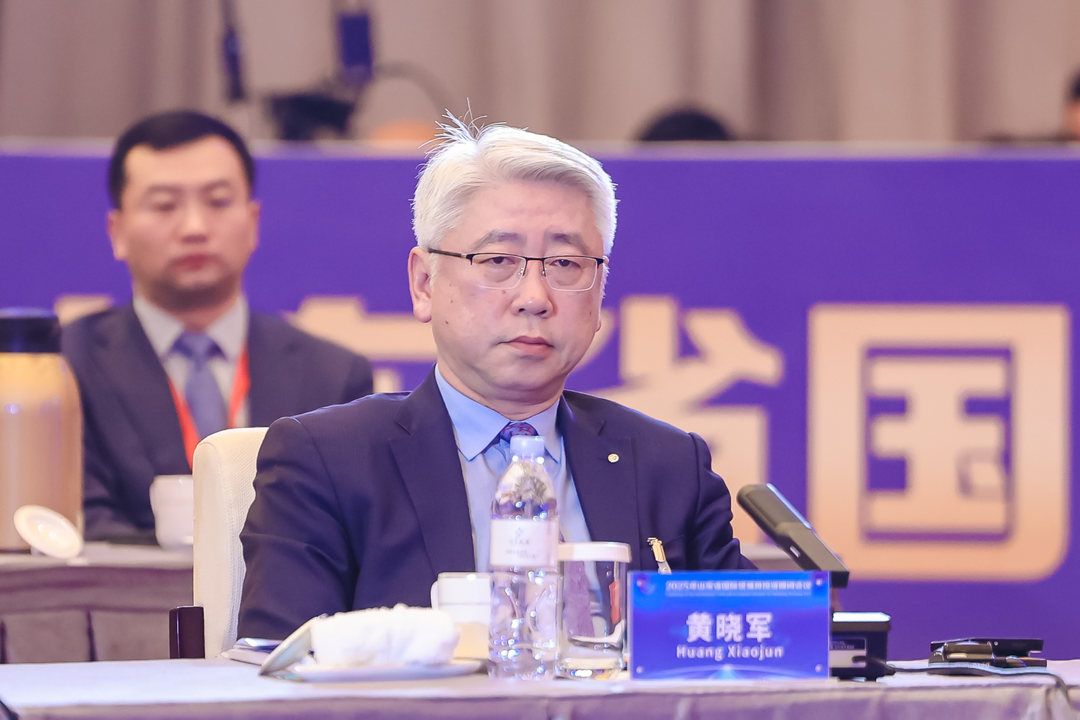
Core Insights - Shandong is recognized as a strong manufacturing province with a complete industrial and supply chain, as well as being an energy-rich province [1] - Veolia's senior vice president highlighted specific cooperation paths to assist Shandong in its green and low-carbon transition [1] Group 1: Greenhouse Gas Emission Reduction - Veolia shared successful case studies from Shanghai and Hong Kong, indicating that these innovative models can be replicated in Shandong's industrial context [3] - The company has invested in various projects across multiple cities in Shandong, including biomass energy, water services, solid waste management, and soil remediation [3] Group 2: Circular Economy Development - Veolia has established operations in cities such as Jinan, Qingdao, Yantai, Binzhou, Jining, and Dongying, focusing on circular economy initiatives [3] - The company aims to deepen cooperation with heavy chemical enterprises in Shandong to address environmental challenges posed by emerging industries [3] Group 3: Technological Innovation - Veolia has a global research and development strength with 14 R&D centers and an additional investment of €200 million to enhance digital innovation technologies [3] - The company is exploring the application of innovative carbon-rich technologies, leveraging Shandong's complete industrial chain to provide extensive application scenarios for these green innovations [3] Group 4: International Cooperation - The push for green and low-carbon development aligns with Shandong's goals for high-quality development and is also central to Veolia's mission [3] - Veolia looks forward to deepening cooperation with Shandong and promoting international collaboration in the green and low-carbon sector between China and Europe, as well as China and France [3]
什么是重庆国企改革概念,涵盖哪些产业链
Sou Hu Cai Jing· 2025-10-07 01:23
Core Insights - The reform of state-owned enterprises (SOEs) in Chongqing is becoming a focal point in the capital market, driven by mixed-ownership reform, asset integration, governance optimization, and operational efficiency improvements [1][2] - The reform process encompasses several key industrial chains, including transportation infrastructure, public utilities, and manufacturing [1] Group 1: Transportation Infrastructure - SOEs in the transportation infrastructure sector, such as rail transit, highways, and port logistics, are enhancing service and profitability by attracting strategic investors and promoting market-oriented operations [1] Group 2: Public Utilities - Public utility enterprises, including water, gas, and electricity supply, are focusing on improving management efficiency and service quality while exploring diversified business models [1] Group 3: Manufacturing - The manufacturing sector, particularly in automotive, equipment manufacturing, and new materials, is undergoing transformation through technology upgrades, divestment of non-core assets, and the promotion of smart manufacturing [1] - Some enterprises are actively participating in the Chengdu-Chongqing economic circle construction to expand regional collaborative development [1] Group 4: Financial Services - The reform in the financial services sector involves local financial platforms integrating resources, strengthening risk control, and supporting the real economy to build a more robust financial support system [2] Group 5: Consumer Sector - Consumer-oriented SOEs in sectors like culture, tourism, and commerce are attempting to activate growth potential through brand revitalization and digital transformation [2] Group 6: Overall Impact - The overall reform of Chongqing's SOEs is expected to enhance corporate value and inject new momentum into the high-quality development of the regional economy [2] - Investors are encouraged to understand the underlying industrial logic of the reforms and focus on fundamental improvements and long-term growth rather than chasing short-term concepts [2]
大公国际:2025年以来平台公司债券首发融资特征分析
Da Gong Guo Ji· 2025-08-25 06:30
1. Report Industry Investment Rating There is no information about the report industry investment rating in the provided content. 2. Core Viewpoints of the Report - The implementation of the debt - resolution package has restricted the financing of traditional urban investment companies, and localities have established industrial companies. The report analyzes the characteristics of platform companies that achieved their first - time bond financing since 2025 to provide references for industrial companies' bond financing [1]. - Platform companies should focus on market - oriented operations, policy alignment, and combine external support with self - development for successful bond financing and long - term development [27][28][29]. 3. Summary by Relevant Catalogs 3.1 Bond First - time Financing Subject Characteristics 3.1.1 Overall Overview - From January to July 2025, 149 platform companies achieved their first - time bond financing, reaching 84% of the whole year of 2024. Only 7 out of these companies had over 30% of their revenue from public welfare business, indicating the positive progress of the industrial transformation of urban investment companies [2]. 3.1.2 Regional Distribution - In the past two years, the regional distribution of first - time bond - issuing platforms was highly concentrated in four eastern coastal provinces (Zhejiang, Shandong, Jiangsu, and Guangdong), accounting for over 50%. However, from January to July 2025, their combined proportion decreased, while the proportion of central provinces such as Anhui, Henan, and Hubei increased slightly, and some of the twelve key provinces also had new additions [5]. 3.1.3 Credit Rating - From January to July 2025, the credit levels of first - time bond - issuing platforms were still mainly AA +, but the structure changed. The proportion of AAA and AA + level platform companies decreased year - on - year, while that of AA level increased, and the central level shifted down. Also, 3 platform companies without a subject rating issued bonds, indicating a marginal relaxation of market access [7]. 3.1.4 Shareholder Hierarchy - From January to July 2025, the direct shareholding ratio of the government and related institutions in platform companies dropped to 44%, showing a transformation from "direct intervention" to "indirect control". Platform companies prefer to expand financing through their subsidiaries, which have competitive advantages in the bond market [9]. 3.1.5 First - time Bond Fund - Raising Purposes - In recent years, the purposes of platform companies' first - time bond fund - raising were characterized by "stabilizing debt + promoting development". From January to July 2025, the proportion of using funds for debt repayment and working capital replenishment decreased, while the proportion of bonds invested in major projects such as industrial park renewal and rural revitalization, science and technology innovation projects, and those supporting small and medium - sized enterprises increased [11][12]. 3.1.6 Business Direction - In 2025, only 5% of the first - time bond - issuing platforms still focused on public welfare businesses such as infrastructure construction and land consolidation, while industrial park operation, public utilities, real estate, finance, and cultural and tourism operation became the main areas of transformation [14]. 3.1.7 Financial Performance - Asset scale: The central value of the total asset scale of high - level platforms was significantly higher than that of low - level platforms, and it was positively correlated with the subject level. The central value of the total asset scale in 2025 was lower than that in 2024 [16]. - Asset - liability ratio: The differences in the asset - liability ratio among different levels of platforms were not large, and the central value in 2025 was lower than that in 2024 [16]. - Net profit: The central value of net profit of high - level platforms was significantly higher than that of low - level platforms, and it was positively correlated with the subject level. The central value of net profit in 2025 was lower than that in 2024, and the overall net profit of platform companies was still at a low level [16]. 3.2 Case Analysis 3.2.1 Case 1: Industrial Investment - Reorganization: Acquired a listed company in the material field in 2023 and received capital injection and asset transfer from the county state - owned assets office in 2024 [18]. - Business structure: Formed a complementary model of "strategic emerging industry support + people's livelihood guarantee" with copper - based alloy materials, irradiated special cables, and medical device distribution as the main businesses [21]. - Financial performance: All revenues were from market - oriented operations, but government subsidies accounted for a relatively high proportion. It achieved first - time financing due to successful market - oriented transformation, strategic alignment, and regional franchise advantages [21]. 3.2.2 Case 2: Public Utilities - Reorganization: The company's equity was transferred up one level in 2024 and received large - scale capital injection, building a business pattern centered on public utilities [22]. - Business structure: Formed a "heating + water services" dual - wheel - driven public utility system with significant regional franchise advantages [22]. - Financial performance: The proportion of quasi - public welfare income was over 80%, and government subsidies contributed significantly to profits. It achieved first - time financing due to enhanced capital strength and strong regional franchise advantages [22][23]. 3.2.3 Case 3: Cultural and Tourism Operations - Reorganization: Built a diversified business pattern by incorporating multiple subsidiaries in 2022 [25]. - Business structure: Market - oriented business revenue accounted for over 90%, forming a collaborative model of "cultural export leadership, cultural and tourism service support, and transportation network support" [25]. - Financial performance: Operating income accounted for over 90%, but government subsidies were relatively high. It achieved first - time financing due to complementary business sectors, policy support, and improved financial stability [25][26]. 3.3 Platform Company Bond First - time Issuance Insights - Market - oriented operation should be the core of transformation. Platform companies need to transform into industrial operation entities, and the bond market's evaluation logic has shifted from "government credit endorsement" to "self - sustainable operation" [27]. - Policy alignment is the key to financing. Companies should align their resource endowments with national needs and serve major national strategies [28]. - External support and self - development are both necessary. External support provides a foundation for first - time financing, but self - development is crucial for long - term competitiveness [28].
第一太平:MPIC中期综合核心溢利净额增加20%至150亿披索
Zhi Tong Cai Jing· 2025-08-06 04:42
Core Insights - Metro Pacific Investments Corporation (MPIC) reported a strong growth momentum for the first half of 2025, with core net profit increasing by 20% to 15 billion pesos compared to 12.5 billion pesos in the same period of 2024 [1] - The financial and operational performance across MPIC's business portfolio improved, leading to an 18% increase in operational contribution to 17.5 billion pesos, driven by strong growth in MERALCO's power generation business, tariff adjustments by MAYNAD, and an increase in patient numbers across the MetroPacific Hospitals network [1] - In MPIC's core business, electricity remains the largest contributor, accounting for 11.2 billion pesos or 64% of operational net profit, while water and toll roads contributed 3.8 billion pesos and 3.3 billion pesos, representing 41% of operational net profit [1] - Reported net profit surged by 36% to 17 billion pesos, primarily driven by the proceeds from the sale of MPIC's oil storage company, Philippine Coastal Storage and Pipeline Corporation [1]
“回归基础”战略获市场认可 RBC上调Algonquin Power(AQN.US)目标价至6.50美元
Zhi Tong Cai Jing· 2025-07-30 06:53
Group 1 - RBC Capital Markets raised the target price for Algonquin Power & Utilities Corp. from $6 to $6.50 while maintaining a "market perform" rating [1] - The company's new "Back to Basics" strategy outlines earnings per share targets before 2027, predicting an 8.5% return on equity and approximately 5% compound annual growth rate [1] - The strategic presentation by Algonquin Power's management exceeded investor expectations, particularly regarding the guidance for the company's outlook before 2027, leading to a nearly 16% stock price increase on June 3 [1] Group 2 - Algonquin Power's "Back to Basics" plan is a key initiative to strengthen its financial foundation and achieve stable growth in the coming years [2] - The company, headquartered in Oakville, Canada, focuses on regulated operations in electricity, water, wastewater, and natural gas systems [2]