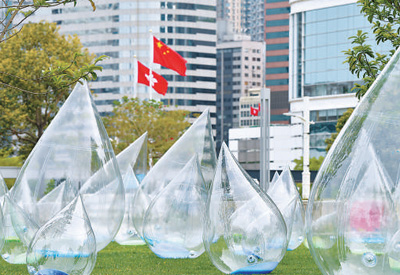
水质自动监测站

Search documents
华测检测:华测已经在林芝地区为雅江项目建设了多个水质自动监测站
Zheng Quan Ri Bao Wang· 2026-01-23 13:15
证券日报网讯1月23日,华测检测(300012)在互动平台回答投资者提问时表示,华测已经在林芝地区 为雅江项目建设了多个水质自动监测站,后续将继续积极争取,与相关单位共同参与雅江水电建设过程 的生态保护工作。 ...

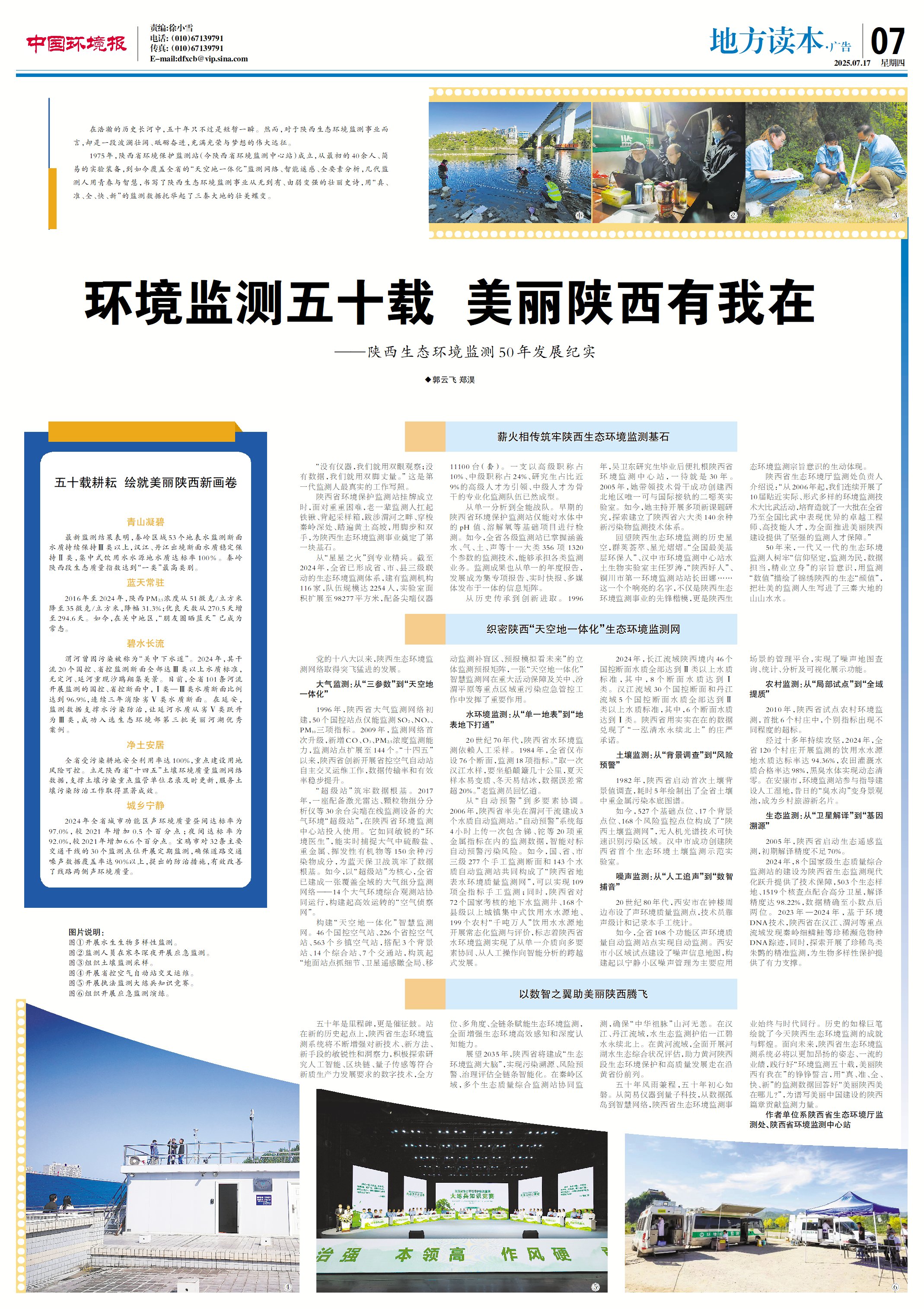
环境监测五十载 美丽陕西有我在 ——陕西生态环境监测50年发展纪实
Zhong Guo Huan Jing Bao· 2025-07-17 01:36
Core Viewpoint - The development of ecological environment monitoring in Shaanxi Province over the past 50 years has transformed from basic manual methods to a sophisticated, integrated monitoring network that utilizes advanced technology and data analysis to ensure environmental protection and improvement [5][9][27]. Group 1: Historical Development - The Shaanxi Provincial Environmental Protection Monitoring Station was established in 1975, starting with over 40 personnel and basic equipment, evolving into a comprehensive monitoring network covering the entire province [5][9]. - By 2024, the province has developed a three-tiered ecological environment monitoring system with 116 monitoring institutions and a workforce of 2,254, equipped with 11,100 advanced instruments [9][12]. Group 2: Technological Advancements - The monitoring capabilities have expanded from basic parameters like pH and dissolved oxygen to 1,320 parameters across 11 categories, including water, air, soil, and noise [9][17]. - The establishment of a "super station" in 2017 equipped with over 30 advanced monitoring devices has strengthened the data foundation for air quality monitoring [16][14]. Group 3: Environmental Achievements - As of 2024, all 46 national control sections of water quality in the Yangtze River Basin within Shaanxi meet Class II standards, with 8 sections achieving Class I [18]. - The PM2.5 concentration in Shaanxi decreased from 51 µg/m³ in 2016 to 35 µg/m³ in 2024, a reduction of 31.3%, with the number of good air quality days increasing from 270.5 to 294.6 [25][26]. Group 4: Future Outlook - By 2035, Shaanxi aims to establish an "Ecological Environment Monitoring Brain" for intelligent pollution tracing, risk warning, and assessment [30]. - The province plans to leverage new technologies such as artificial intelligence and blockchain to enhance ecological monitoring capabilities [27].

东深线上护水人
Ren Min Ri Bao· 2025-05-24 21:52
Core Viewpoint - The "Dancing Water Droplet Exhibition" in Hong Kong celebrates the 60th anniversary of water supply from the Dongjiang River to Hong Kong, highlighting the importance of this water source for the region's development and prosperity [4][26]. Group 1: Water Supply and Infrastructure - The Dongjiang water supply project has been operational for 60 years, providing over 30 billion cubic meters of water to Hong Kong, meeting approximately 80% of its water needs [14][24]. - The project has undergone multiple expansions and improvements, increasing its supply capacity significantly since its inception [17][24]. - In 2024, the Pearl River Delta Water Resource Allocation Project will provide an emergency backup water source for Hong Kong, enhancing the reliability of water supply [18]. Group 2: Environmental and Community Impact - The Dongjiang water source area has seen significant ecological restoration, with vegetation coverage increasing from 10.2% to 95% and the number of plant species rising from 6 to over 100 [7][8]. - Local communities have made sacrifices, such as reducing agricultural land and relocating from protected areas, to ensure the preservation of water quality [11][12]. - The transformation of former mining areas into green spaces and sustainable agricultural practices reflects the community's commitment to environmental protection [6][7]. Group 3: Technological Advancements - The Dongjiang water supply system has integrated advanced technologies for monitoring and managing water quality and flow, including automated sampling and real-time data transmission [22][23]. - The implementation of smart water management systems has improved operational efficiency and environmental protection measures [22][23]. Group 4: Cultural Significance - The water supply from Dongjiang to Hong Kong symbolizes the deep connection between the two regions, fostering a sense of gratitude and shared identity among residents [26][28]. - Educational initiatives and community events emphasize the importance of water conservation and the historical significance of the water supply project [26][27].