
汽车以旧换新补贴

Search documents
去年摇号未中车主能否享受补贴?
Xin Lang Cai Jing· 2026-01-11 22:26
Core Viewpoint - The implementation of the 2026 automobile trade-in subsidy policy in Sichuan has raised concerns among consumers who participated in the 2025 lottery but did not win, as they are ineligible for the new subsidies [2][7]. Affected Population - The majority of affected individuals are those who participated in the automobile trade-in lottery from October 31, 2025, to January 5, 2026, but did not win and have not yet received subsidies [2]. Subsidy Eligibility - According to current national policy, individuals who did not win the 2025 automobile trade-in lottery are not eligible for the 2026 subsidy [2][7]. Policy Implementation - The business department has committed to listening to consumer feedback and improving measures to meet consumer needs during the new policy's implementation [2][7]. Consumer Inquiries - Consumers have expressed concerns about whether they can benefit from the new 2026 subsidy and the fairness of the lottery process [3][4]. Lottery Process and Results - From October 31, 2025, to January 5, 2026, Sichuan conducted seven rounds of public lotteries for automobile trade-ins, with over 156,000 participants and 34,500 winners [5]. Fairness of the Lottery - The lottery process is overseen by a public notary, ensuring transparency through video recording and government supervision [5]. Previous Subsidy Fund Management - In 2025, the subsidy funds were subject to total amount control, leading to a surge in applications and funding usage, which reached a critical threshold in mid-October [4]. 2026 Subsidy Implementation Guidelines - The guidelines for the 2026 automobile trade-in subsidy specify that all application materials must be submitted after January 1, 2026, excluding those who did not win in 2025 from eligibility [7]. Scope of Trade-in Subsidy - In 2025, Sichuan saw 737,000 automobile trade-ins, indicating a significant impact of the subsidy policy on the local market [7].

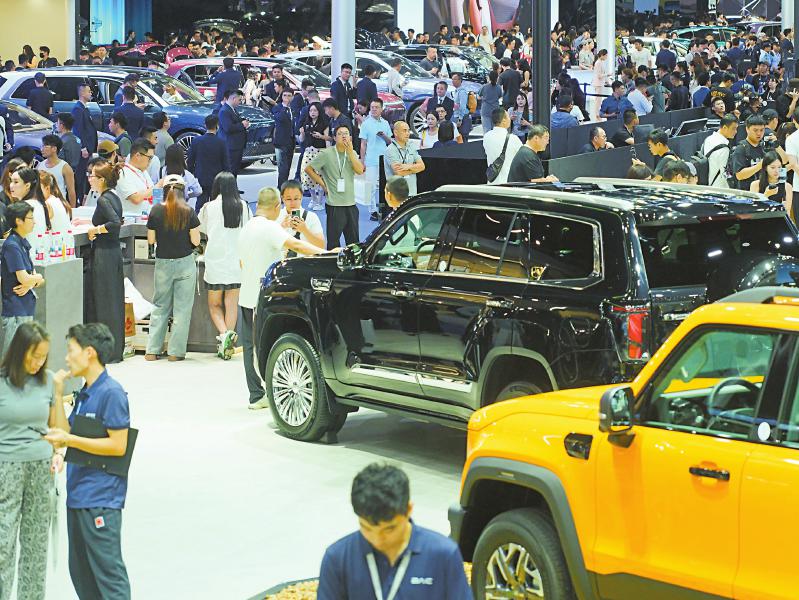
汽车消费遇上补贴耗尽,我们怎么办
汽车商业评论· 2025-09-12 23:08
Core Viewpoint - The sudden suspension of the vehicle replacement subsidy policy in Guangzhou has caused significant concern among car owners and potential buyers, highlighting the volatility of subsidy policies and their impact on consumer behavior and the automotive market [3][5][11]. Group 1: Policy Changes and Impacts - Guangzhou's announcement to suspend the vehicle replacement subsidy with no buffer period has led to anxiety among car owners who have already purchased new vehicles but have not sold their old ones [3][5]. - Consumers who obtained invoices for both new and old vehicles before August 29 are still eligible for subsidies, but the specific timeline for applications remains uncertain [5][11]. - The suspension of subsidies is attributed to the depletion of the funding pool, which is primarily sourced from central and local government finances [5][11]. Group 2: Consumer Behavior - The uncertainty surrounding subsidy approvals has led to a split among consumers, with some eager to submit applications while others adopt a wait-and-see approach due to fears of policy changes [6][10]. - The reduction or elimination of subsidies has made consumers, especially in lower-tier cities, more cautious about purchasing decisions, as they are sensitive to price changes [9][10]. Group 3: Regional Variations in Subsidy Policies - Since May 2025, multiple regions have tightened their subsidy policies, with at least six provinces and around 30 cities halting vehicle replacement subsidies [11][12]. - The types of suspensions vary, with some regions experiencing complete cessation of funding while others have temporarily paused and then resumed their subsidy programs [12][14]. - The "coupon" model for subsidies has emerged in some areas, allowing consumers to claim subsidies in a more controlled manner, which aims to prevent fraudulent claims [15]. Group 4: Market Effects - The tightening of subsidy policies has negatively impacted over 75% of automotive dealerships, with many reporting significant declines in sales [18][19]. - The inventory warning index for dealerships has risen, indicating growing concerns about stock levels and sales performance [19]. - Automotive manufacturers are also feeling the pressure, as reduced subsidies are squeezing profit margins, leading to increased competition and the need for strategic adjustments [19][20].


汽车消费贷款也有“国补”了
Sou Hu Cai Jing· 2025-08-26 01:57
Group 1 - The core viewpoint of the news is the introduction of a new fiscal subsidy policy for personal consumption loans, aimed at stimulating the automotive market by providing interest subsidies to consumers [1][2][3] - The policy includes a 1% annual interest subsidy, with a maximum subsidy limit of 3,000 yuan for eligible personal consumption loans, which corresponds to a total consumption amount of 300,000 yuan [1][6] - The policy is part of a broader set of measures to boost automotive consumption, including trade-in subsidies and tax exemptions for new energy vehicles, targeting the reduction of consumer costs and enhancing purchasing willingness [2][3] Group 2 - The implementation of the subsidy policy is expected to provide a significant boost to the automotive market, which has been facing challenges due to low consumer confidence and economic uncertainty [4][5] - Despite the potential benefits, initial market feedback indicates that the actual impact of the subsidy on automotive consumption has yet to be realized, with consumers showing low awareness of the policy [4][5] - The automotive finance sector may see a restructuring of market shares, as the 1% subsidy can enhance the competitiveness of bank loans, potentially attracting more customers [7][8] Group 3 - Banks are actively preparing to implement the subsidy policy, focusing on defining eligible loan products, optimizing application processes, and ensuring timely disbursement of subsidy funds [8][9] - The policy's coverage extends beyond vehicle purchases to include insurance and maintenance, although practical challenges may limit its effectiveness in these areas [9]