
活字印刷

Search documents
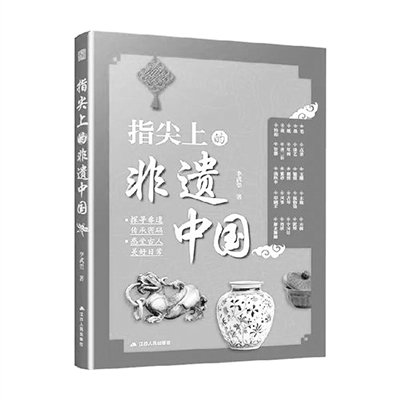
解码非遗何以“活”在掌心
Xin Lang Cai Jing· 2026-01-11 17:16
Core Perspective - The book "The Intangible Cultural Heritage of China at Your Fingertips" by Li Wuwang serves as a bridge connecting ancient cultural heritage with modern life, emphasizing the importance of traditional craftsmanship in a fast-paced digital age [3][4]. Group 1: Cultural Significance - The author has engaged with over 300 artisans to capture their stories and skills, covering more than 20 intangible cultural heritage techniques that reflect historical depth and the artisans' dedication [3][4]. - Each technique, from daily items to artistic treasures, embodies the wisdom and emotions of ancestors, acting as a link between the past and present [3][4]. Group 2: Artistic Presentation - The narrative flows seamlessly, immersing readers in various cultural scenes, such as the elegance of the Four Treasures of the Study and the festive spirit of New Year paintings, making traditional crafts accessible and relatable [4][6]. - The book avoids rigid chapter divisions, instead using a fluid storytelling approach that enhances the reader's experience of traditional aesthetics and cultural practices [4][6]. Group 3: Knowledge and Engagement - The chapter on movable type printing illustrates its historical significance and the evolution of the craft, highlighting the intricate processes involved in knowledge dissemination [5][6]. - The author incorporates lesser-known facts and anecdotes, making traditional culture more relatable and engaging for readers, while maintaining a straightforward narrative style [6].

科技碰撞非遗!这场校园嘉年华玩出“文科创融”新花样
Xin Lang Cai Jing· 2026-01-08 11:46
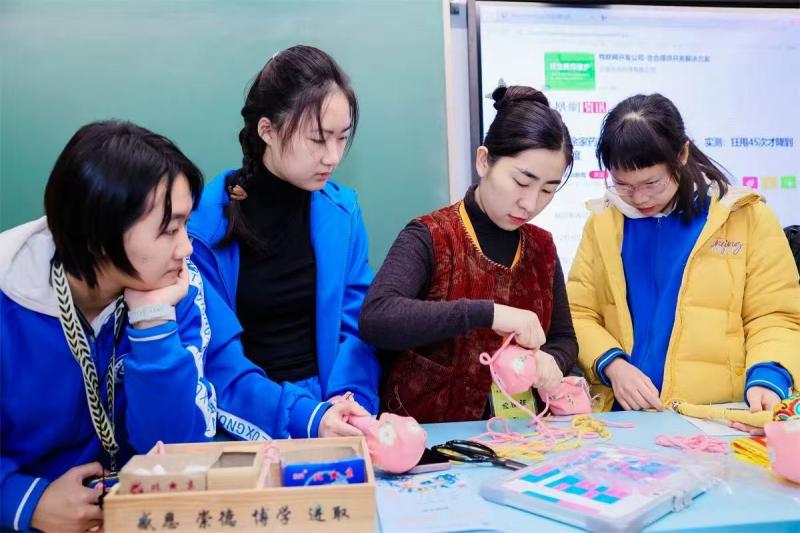
Group 1 - The core event is the 10th Science and Culture Carnival held at Beijing Yuyuantan Middle School, which integrates traditional culture and cutting-edge technology through four dimensions: traditional cultural performances, technology achievements display, immersive experiences, and collective competitions [2] - The carnival features two main experience sections: traditional culture and technology, achieving a dual empowerment of "living heritage transmission" and "fun technology popularization" [2] - The traditional culture experience section includes 18 unique projects categorized into "traditional competitions" and "craft experience," showcasing folk charm and traditional martial arts spirit, while hands-on activities allow teachers and students to engage with intangible cultural heritage [2] Group 2 - The technology experience section consists of 24 fun projects, including VR stress experiences and the Magdeburg hemispheres experiment, as well as hands-on projects like assembling racing cars and making recorders, which broaden students' technological understanding and enhance their logical thinking and practical skills [2] - Class collective activities and grade-level football competitions further strengthen students' collective cooperation spirit, with unique projects like "Creative Racing" and "Gas Rockets" integrating technology exploration and cultural transmission [4] - The principal of Beijing Yuyuantan Middle School, Ma Yaoguo, stated that the carnival is an important exploration of the deep integration of traditional cultural education and technology education, providing a quality platform for cultural immersion and technological exploration [4]
研学经济成文旅产业新支柱?2025年市场规模或突破2132亿元
Hua Xia Shi Bao· 2025-06-24 15:34
Core Insights - The Chinese study tour market is experiencing unprecedented growth, with a projected market size of 1.791 trillion yuan in 2024, representing a year-on-year increase of 21.9%, and expected to exceed 2.132 trillion yuan in 2025, with a growth rate of over 15% [1][2] Group 1: Market Growth and Economic Impact - The study tour economy has become a significant driver of growth in the cultural tourism industry, with its market share increasing annually [2] - During the "May Day" holiday in 2025, the study tour market is expected to reach 18 to 22 billion yuan, accounting for 8% to 10% of total cultural tourism consumption during that period [2] Group 2: Policy and Demand Drivers - The explosive growth is attributed to a dual drive of policy support and increasing demand, with the Ministry of Education incorporating study tours into compulsory education and providing annual subsidies of up to 20 billion yuan [3] - Local governments are also offering subsidies, with some provinces covering up to 50% of project costs, enhancing the affordability and attractiveness of study tours [3] Group 3: Innovative Offerings and Market Adaptation - Various regions and scenic spots are actively developing unique study tour products, transforming traditional visits into immersive learning experiences [4] - The integration of educational elements into tourism is evident, with projects like military-agriculture combined study tours attracting young talent and revitalizing rural economies [4] Group 4: Transformation of Traditional Scenic Areas - Traditional scenic areas are rapidly transitioning into "educational complexes," with innovative courses being developed that leverage local cultural resources [5] - Major companies like Ctrip are expanding their offerings in both domestic and international study tour projects, indicating a robust market response [5] Group 5: Challenges and Future Directions - Despite the promising outlook, the industry faces challenges such as homogenization of courses, safety standard deficiencies, and a shortage of qualified instructors [7] - To overcome these challenges, a three-dimensional support system is proposed, focusing on talent development, standardization, and content innovation to ensure a balance between cultural depth and educational effectiveness [8]