
济南云巴

Search documents
济南地铁“三线齐发”重构城市格局,三期规划正在编制
Xin Lang Cai Jing· 2025-12-29 05:23
Core Viewpoint - The opening of three new metro lines in Jinan marks a significant transformation from single-line operation to a networked system, enhancing the city's public transportation infrastructure and connectivity [1][3]. Group 1: Metro Line Developments - Jinan's metro system has expanded to six lines with the recent opening of Line 4, Line 6 East Section, and Line 8, which are key components of the city's transportation network [1][3]. - Line 4, the longest at 40.3 kilometers with 33 stations, significantly alleviates traffic pressure along Jinan's major thoroughfare, connecting various urban core areas [3]. - Line 8 spans 25.3 kilometers with 14 stations, linking multiple districts and serving as a crucial connector for industrial and educational hubs [3]. - The East Section of Line 6 enhances connectivity in the eastern urban area, linking key development zones and providing rapid transit for high-density passenger flows [3]. Group 2: Impact on Daily Life - The new metro lines are expected to transform daily commuting for residents, reducing travel times significantly; for instance, the commute from the West Railway Station to the CBD is cut from one hour to 40 minutes [7][9]. - The integration of the new lines facilitates a "half-hour commuting circle" for residents of Zhangqiu, making it feasible to live outside the city while working in the urban center [9]. - The "Jinan Yunba" system, which connects to the metro, addresses short-distance commuting challenges for employees in industrial parks [9]. Group 3: Economic and Urban Development - The metro's expansion is anticipated to drive commercial growth, with new business opportunities emerging around transit hubs and along the lines, enhancing the city's economic landscape [10]. - The TOD (Transit-Oriented Development) model is being leveraged to upgrade Jinan's commercial structure, with new urban complexes being developed near key stations [10]. - The metro lines are reshaping the urban landscape, promoting resource optimization and collaborative development across various districts [15][16]. Group 4: Technological Innovations - Jinan's metro construction has incorporated advanced technologies to address geological challenges, ensuring minimal impact on the local ecosystem while facilitating urban transit [12][13]. - The use of intelligent tunneling machines has enhanced safety and efficiency in construction, setting a precedent for future urban transit projects in complex environments [13]. Group 5: Future Outlook - The ongoing development of Jinan's metro system is part of a broader strategy to enhance urban mobility and connectivity, with plans for further expansions and improvements already underway [16][17].

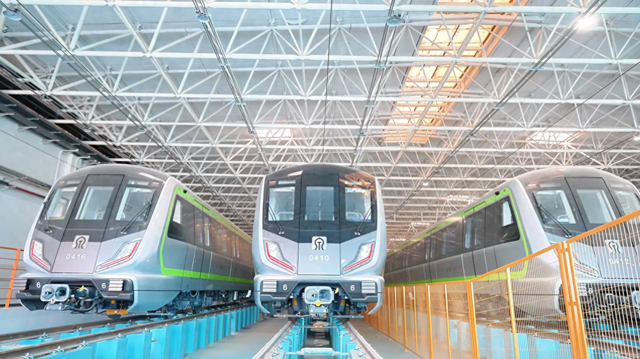
一趟车如何串联出“同城新生活”
Qi Lu Wan Bao· 2025-12-07 16:48
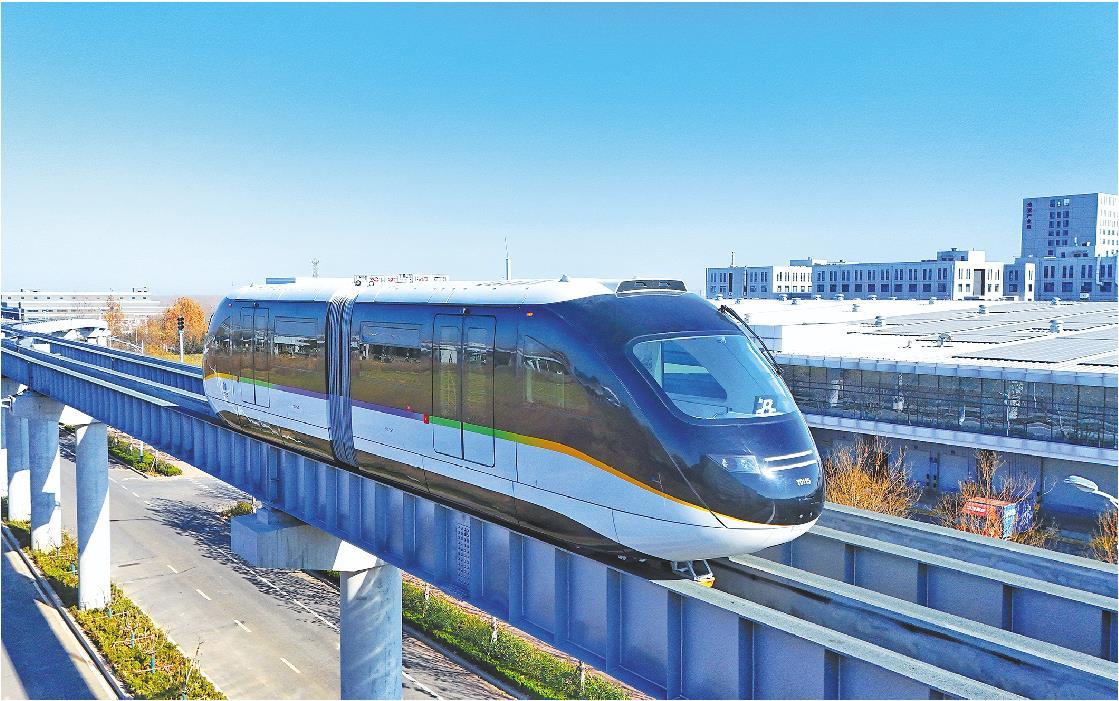
Core Insights - The Jinan Yunba, Shandong's first cloud bus line, officially opened on December 6, featuring a 30.55 km elevated loop line with 32 stations, aimed at enhancing urban mobility and connectivity [3][4]. Group 1: Operational Details - The Yunba operates with a peak frequency of 5 minutes and a starting fare of 2 yuan, providing a convenient commuting option for residents [3]. - The line connects key areas including the High-tech Zone and Licheng District, significantly improving travel times for commuters, with some reporting a 20-minute reduction compared to driving [3][4]. Group 2: Connectivity and Integration - The Yunba includes five transfer stations that link with existing metro lines (Lines 2, 4, and 8), facilitating seamless transfers with minimal walking distances [4][6]. - The design promotes a "door-to-door" travel experience, connecting residential areas with schools, hospitals, and industrial parks, thus enhancing the living radius for residents [6][8]. Group 3: Economic and Social Impact - The opening of the Yunba is expected to alleviate traffic pressure in the eastern new city of Jinan, fostering regional cohesion and resource integration in education and healthcare [8][9]. - Businesses along the route anticipate reduced commuting costs, with one company estimating a halving of their shuttle bus requirements due to the new service [9]. Group 4: Environmental Considerations - The elevated design of the Yunba minimizes ground-level disruption, aligning with ecological goals and promoting a "green travel + eco-friendly living" environment [7][6]. Group 5: Future Development and Strategy - Experts suggest that the long-term success of the Yunba will depend on its integration with the broader urban transport network and the exploration of dynamic scheduling to adapt to varying passenger demands [11][12]. - The potential for developing a "15-minute living circle" is highlighted, where residents can access essential services within a short travel time, enhancing the area's attractiveness [11][12].
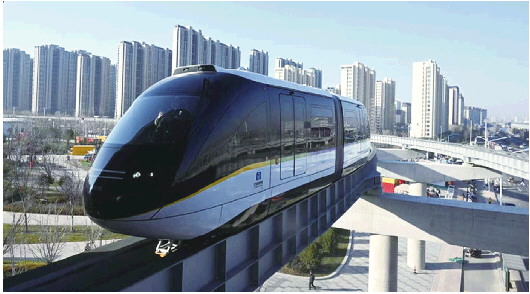
济南云巴通车首日 “尝鲜”市民排起队
Da Zhong Ri Bao· 2025-12-07 01:08
Core Viewpoint - The opening of the "Jinan Yunba" line marks the first cloud rail transit system in Shandong, providing a new transportation option that alleviates ground traffic congestion and enhances urban mobility [1][2]. Group 1: Project Overview - The Jinan Yunba line spans 30.55 kilometers with 32 elevated stations, designed as a circular route with independent right-of-way, allowing it to operate without interference from ground traffic [1]. - The initial operation features two-car trains with a capacity of 140 passengers each, achieving a maximum speed of 80 kilometers per hour [1]. Group 2: Operational Details - Daily operation hours are from 6:00 AM to 10:00 PM, with peak service intervals of approximately 5 minutes during rush hours and 11 minutes during off-peak times and weekends [2]. - The fare system is distance-based, starting at 2 yuan for the first 5 kilometers, with a maximum fare of 5 yuan for the entire journey [2]. Group 3: Connectivity and Integration - The Yunba line connects with three metro lines, including the existing Line 2 and the upcoming Lines 4 and 8, facilitating seamless transfers at five interchange stations [2]. - Key interchange stations include Pengjiazhuang, which connects with Lines 2 and 4, and other stations that link with Line 8, enhancing overall accessibility for commuters [2].
5座车站与地铁无缝换乘,济南云巴开通运营
Feng Huang Wang Cai Jing· 2025-12-06 23:59
Core Insights - The Jinan Yunba, a new elevated transportation system, officially commenced operations on December 6, marking Shandong Province's first Yunba line and the only circular Yunba line in the country [1] - The line spans 30.55 kilometers with 32 stations, providing independent right-of-way and enhancing commuting efficiency for residents and employees in the Jinan High-tech East District [1][3] - The Yunba system addresses the "last mile" connectivity issue, significantly reducing travel time between key industrial sectors such as automotive, smart manufacturing, and biomedicine [1][10] Group 1: Operational Features - The Yunba operates on a fully automated system with advanced "train-to-train communication" technology, allowing for autonomous operation and improved reliability [3] - The design allows for a maximum speed of 80 kilometers per hour, utilizing a unique U-shaped track beam and rubber wheel system to navigate complex urban terrains [3] Group 2: Construction and Environmental Impact - The construction of the Jinan Yunba set a record for speed among similar projects in China, minimizing ecological disruption by reducing construction barriers and preserving over 600 mature trees [5] - The project emphasizes efficient integration with the existing mass transit network, featuring five transfer stations that connect seamlessly with Jinan's metro lines [5] Group 3: Strategic Importance - The Yunba is expected to enhance the flow of talent, technology, and capital within the region, addressing commuting challenges and attracting more professionals to the High-tech East District [10] - It plays a crucial role in transforming the area from an "industrial highland" to a "vibrant new city," supporting Jinan's strategic development goals [10]
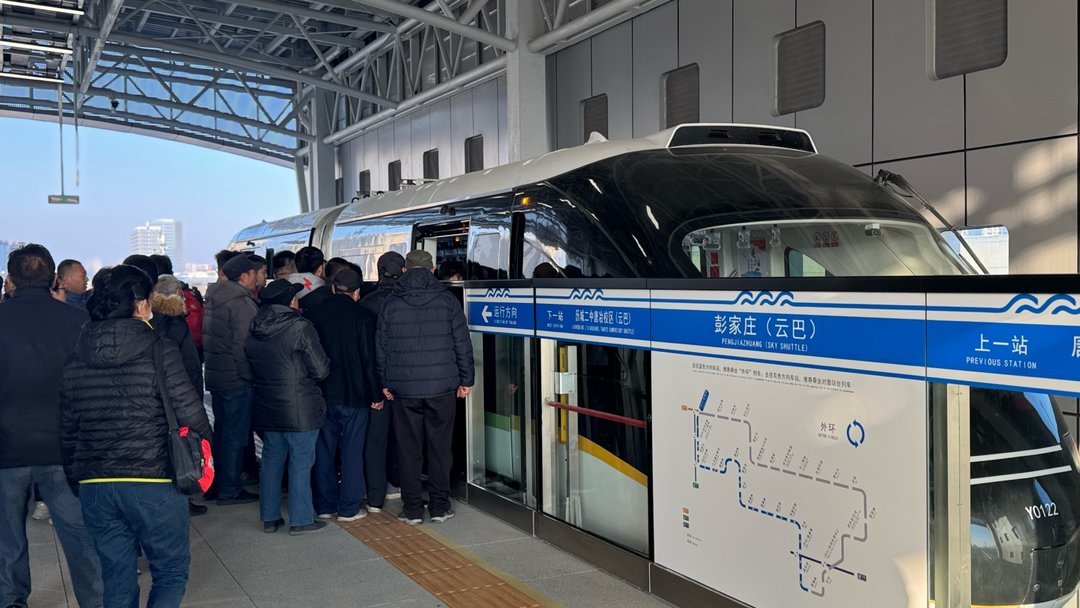
山东省首条云巴线路开通运营
Xin Hua She· 2025-12-06 06:18
Core Insights - The Jinan Yunba officially commenced operations on December 6, marking the first Yunba line in Shandong Province, which connects multiple industrial parks, residential areas, and ecological parks in eastern Jinan, injecting new vitality and momentum into the city [1] Summary by Sections Line Specifications - The Jinan Yunba line spans a total length of 30.55 kilometers with a maximum design speed of 80 kilometers per hour, featuring an elevated structure and comprising 32 stations, forming a closed loop around certain areas in eastern Jinan [1] Connectivity and Efficiency - The line effectively addresses the long-standing issue of insufficient high-capacity rail transit coverage in the region, providing residents and employees with a punctual and efficient "last mile" travel solution [1] - To ensure efficient integration with the city's main transportation network, the Jinan Yunba includes five transfer stations that facilitate convenient transfers to the existing Jinan Metro Line 2 and the upcoming Jinan Metro Lines 4 and 8, expected to open by the end of this year [1] Operational Management - The Jinan Yunba is operated by Shenzhen BYD Rail Transit Co., Ltd., incorporating several advanced technologies and utilizing a train autonomous operation system (TACS) based on "train-to-train communication," significantly enhancing operational efficiency and reliability [1]

济南云巴今日通车,32座车站“环抱”高新东区
Qi Lu Wan Bao· 2025-12-06 01:12
Core Viewpoint - The opening of the Jinan Yunba marks a significant advancement in the public transportation system of Jinan, being the first Yunba line in Shandong Province, and aims to enhance connectivity in the region [1][3]. Group 1: Infrastructure and Connectivity - The Jinan Yunba line spans 30.55 kilometers with 32 stations, forming a closed loop around the High-tech East District, effectively addressing the long-standing issue of insufficient mass transit coverage in the area [3][14]. - The line connects four major districts: Tangye, Sun Village, Lianghe, and Zhuangke, linking multiple industrial parks and providing efficient "last mile" travel solutions for residents and employees [3][14]. Group 2: Integration with Existing Transport Networks - Five transfer stations have been established to facilitate seamless connections with existing Metro Line 2 and the upcoming Lines 4 and 8, positioning the Yunba as an extension of metro services and a connector for commuter traffic [6][14]. Group 3: Technology and Innovation - The Jinan Yunba employs advanced technologies, including the highest level of unmanned driving technology and a train autonomous operation system (TACS) based on vehicle-to-vehicle communication, significantly enhancing operational efficiency and reliability [8]. - The trains are designed to reach a maximum speed of 80 kilometers per hour and are equipped to navigate complex urban terrains due to their unique U-shaped track beams and rubber wheel systems [8]. Group 4: Environmental Considerations - The construction of the Yunba project demonstrated a balance between efficiency and environmental protection, successfully avoiding over 600 trees aged 20 years or more and reducing construction barriers by approximately 23,000 square meters [10]. Group 5: Operational Management - The operation of the Jinan Yunba is managed by BYD's rail transit operation company, with the Jinan Rail Transit Group overseeing operational service management, ensuring passenger safety through strict adherence to safety standards and regular training [11]. Group 6: Economic and Urban Development Impact - The opening of the Jinan Yunba is expected to enhance the flow of production factors, improve regional connectivity, and contribute to the implementation of Jinan's "East Strong" strategy, fostering deep integration of industry and urban development [14].
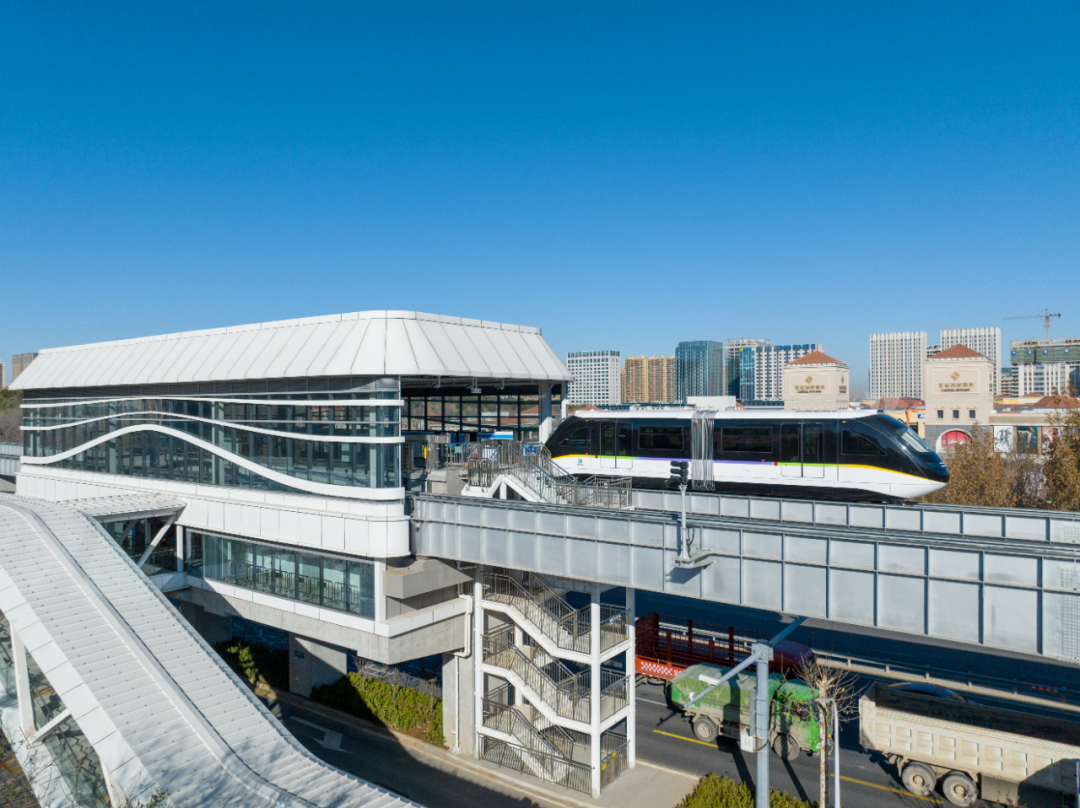
济南云巴开通运营 全长30.55公里起步价2元
Xin Hua Wang· 2025-12-06 00:42
Core Viewpoint - Jinan Yunba, the first cloud bus circular line in China, is set to open on December 6, aiming to address the "last mile" transportation challenge for citizens with its independent road rights and flexible efficiency [2][3] Group 1: Project Overview - The Jinan Yunba line spans 30.55 kilometers and includes 32 stations, making it the longest cloud bus line in the country [2] - It utilizes low-capacity guided rubber-tired vehicles and features an autonomous operation system powered by efficient and environmentally friendly batteries [2] Group 2: Technical Features - The system operates with a fully automated driverless technology, featuring a unique U-shaped track beam and lateral guiding rubber wheel design, which enhances safety and adaptability to complex terrains [2] - The vehicles are equipped with permanent magnet synchronous motors and energy recovery systems, significantly reducing energy consumption [2] - Noise levels during operation are effectively controlled through active noise reduction technology [2] Group 3: Operational Details - The service operates from 6 AM to 10 PM, with multiple departure points for the first train to facilitate passenger convenience [3] - During peak hours (7:00-9:00 and 17:00-19:00 on weekdays), the train frequency is approximately every 5 minutes, while off-peak times see a frequency of about 11 minutes [3] - The fare system follows a distance-based pricing model, starting at 2 yuan for the first 5 kilometers and capping at 5 yuan [3] Group 4: Regional Impact - The Jinan Yunba is expected to significantly enhance commuting convenience for residents and employees in the Jinan High-tech East District, promoting deeper integration of industry and urban development [3]
济南|济南:交通“营城”强枢纽
Da Zhong Ri Bao· 2025-08-21 00:41
Core Insights - Jinan is accelerating the construction of a comprehensive and efficient multi-dimensional transportation system, aiming to enhance urban connectivity and facilitate population growth towards the northern Yellow River area [2][3][7] Transportation Infrastructure Development - Recent major transportation projects in Jinan have reached significant milestones, including the opening of the Jinan Jiluo Road North Extension Yellow River Tunnel and the ongoing construction of the Yunba and subway lines, expected to be operational by the end of 2025 [2][3] - The Jinan Yellow River Bridge has recorded over 10.96 million vehicles since its opening, averaging nearly 44,000 vehicles per day, significantly improving traffic flow and reducing congestion during peak times [3][4] Urban Planning and Population Distribution - The northern Yellow River area, designated as a new urban sub-center, covers 798 square kilometers and is part of Jinan's overall spatial planning to attract population and economic activities [3][4] - The city aims to guide population growth towards this area, enhancing the development of new economic zones and improving living conditions for residents [3][6] Public Transport Integration - Jinan is focusing on integrating bus and subway systems to create seamless transfers for residents, with over 218 bus routes already connecting to subway lines, and plans to increase this number as new subway lines open [5][6] - The city is enhancing public transport efficiency by ensuring that bus services complement subway operations, addressing the "last mile" connectivity for commuters [5][6] Airport and Logistics Hub Development - The second phase of Jinan Airport's expansion is underway, aiming to increase passenger capacity to 55 million annually and enhance international flight capabilities [7][8] - Jinan is developing multiple logistics hubs, including the Dongjia Railway Logistics Hub and the Jinan Air Cargo Center, to strengthen its position as a key inland logistics and transportation hub [7][8] Future Transportation Plans - Jinan plans to improve its highway network and expand its high-speed rail connections, enhancing regional accessibility and supporting economic growth [8]