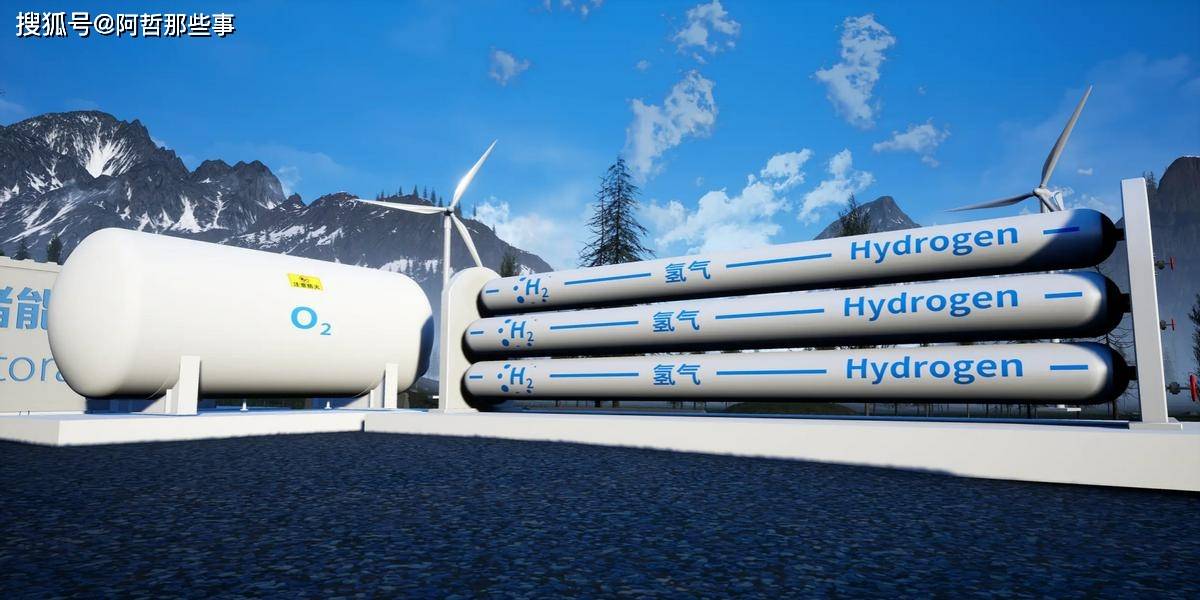
海水制氢技术

Search documents
中国又一科技突破,海水制氢新技术,或引领能源革命
Sou Hu Cai Jing· 2026-02-10 09:14
Core Insights - A breakthrough by a research team from Shenzhen University has solved the "scaling" problem in seawater electrolysis for hydrogen production, achieving a cost of $0.698 per kilogram, which could revolutionize the global energy economy [2][15][19] Group 1: Technological Breakthrough - The Shenzhen University team shifted the focus from preventing scaling to making electrodes resistant to scaling, leading to a significant innovation in seawater electrolysis [4][11] - The new electrode design allows for over 5000 hours of stable operation under industrial conditions, addressing the critical issue of stability in hydrogen production [6][11] Group 2: Economic Implications - The production of high-purity magnesium hydroxide as a byproduct of hydrogen production can offset the costs of electricity and equipment, making hydrogen production economically viable [15][19] - The new cost structure allows green hydrogen to compete with fossil fuel-derived hydrogen, marking a significant shift in the economic landscape of the hydrogen industry [15][19] Group 3: Strategic and Geopolitical Impact - This technology could enhance China's energy security by utilizing its extensive coastline to produce clean hydrogen, reducing dependence on foreign fossil fuels [17][19] - The potential widespread adoption of this technology may disrupt the traditional energy power dynamics, challenging Western dominance in high-end energy technologies and prompting a new global technological competition [19][21] Group 4: Future Prospects - The industrialization of this technology is accelerating, with plans for large-scale demonstration projects by 2027, particularly in offshore wind power areas [21][23] - A new trillion-dollar ecosystem around green hydrogen production, storage, transportation, and application is anticipated to emerge, positioning China as a key player in the global market [23]


中国攻克海水制氢技术,石油或变白菜价?全球能源将迎来大变局
Sou Hu Cai Jing· 2025-10-26 12:23
Core Insights - The emergence of seawater hydrogen production technology marks a significant breakthrough for China's energy landscape, potentially leading to a major shift in global energy dynamics [1][16] - This technology allows for hydrogen production without reliance on freshwater resources, significantly reducing environmental pollution and production costs [3][5] Group 1: Seawater Hydrogen Technology - Seawater hydrogen production technology utilizes direct electrolysis of seawater, offering advantages over traditional methods that rely on freshwater or fossil fuels [3] - The technology addresses challenges such as salt corrosion and low electrolysis efficiency through the development of corrosion-resistant coatings and new catalysts [3][5] - By 2025, the cost of producing hydrogen from seawater in China is projected to fall below 20 yuan per kilogram, establishing a strong foundation for large-scale industrialization [5] Group 2: Green Hydrogen Industry - The green hydrogen industry is rapidly emerging, primarily relying on renewable energy for water electrolysis, aligning with global carbon neutrality goals [8] - The development of hydrogen fuel cell vehicles and the establishment of hydrogen refueling stations are expected to reduce oil demand in the transportation sector [8][10] - China's green hydrogen projects span 25 provinces, with a total capacity of 1,182 megawatts, indicating significant progress in the sector [10] Group 3: Impact on Oil Demand and Market Dynamics - The demand for oil is increasingly influenced by the substitution effect of clean energy, with green hydrogen poised to replace a portion of oil consumption [12][14] - As green hydrogen becomes more cost-effective, it is expected to exert downward pressure on oil prices, potentially leading to a scenario where oil prices drop significantly [14][16] - The international energy agency predicts that the global hydrogen market could reach a trillion-dollar scale by 2030, diminishing oil's competitiveness in certain sectors [12] Group 4: Strategic Implications for China - China's advancements in seawater hydrogen technology position it as a leader in energy transition, enhancing both energy independence and international competitiveness [16] - The widespread application of hydrogen technology is anticipated to drive a transformation in the traditional oil industry, necessitating adaptation to new market realities [14][16] - The integration of renewable energy resources for hydrogen production not only supports domestic energy autonomy but also enhances China's role in global energy transitions [14][16]
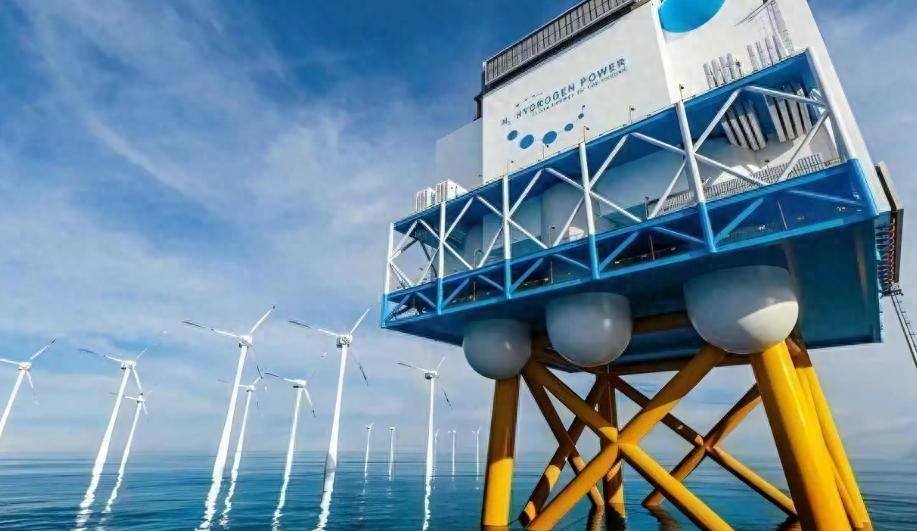
世纪难题被破解!中国攻克海水制氢,外媒:石油要变“廉价货”?
Sou Hu Cai Jing· 2025-10-02 09:46
Core Insights - The global research community has been exploring seawater hydrogen production as a clean fuel alternative to fossil fuels, but challenges such as high costs and efficiency have hindered progress [2][5] Group 1: Technological Advancements - A team led by Academician Xie Heping in China has developed a method to directly electrolyze seawater without the traditional desalination step, utilizing phase transition technology [5][9] - The first offshore trial of this technology, named "Dongfu No. 1," demonstrated stable hydrogen output with a purity of 99.9% and a cost of 0.4 yuan per cubic meter, significantly cheaper than coal-based hydrogen [7][9] - In 2025, a 250 kW seawater hydrogen production system was tested, achieving a direct current consumption of 3.8 kWh per cubic meter of hydrogen with a purity of 99.999% [11] Group 2: Industry Impact - The hydrogen demand in China is projected to exceed 10 million tons by 2030, positioning the country as a major player in the hydrogen industry [11] - The successful integration of renewable energy sources, such as wind and solar, with seawater electrolysis addresses water scarcity issues and enhances the feasibility of hydrogen production in coastal areas [9][11] - International media has highlighted China's advancements in seawater hydrogen production, suggesting a potential shift in the global energy landscape, particularly concerning oil prices [13][15] Group 3: Market Dynamics - In 2023, global hydrogen production reached 97 million tons, with low emissions accounting for less than 1%, while China's electrolyzer manufacturing capacity doubled to 25 GW, representing 60% of the global market [15] - The technology's ability to utilize seawater directly could alleviate water shortages in arid regions, making it a viable solution for countries facing water scarcity [15] - The rapid development of hydrogen technology in China contrasts with Japan's earlier investments, which faced higher production costs, indicating a competitive edge for China in the hydrogen market [15]
石油要“跌下神坛”?中国海水制氢技术能否改写全球能源格局?
Sou Hu Cai Jing· 2025-08-21 02:11
Core Viewpoint - China's seawater hydrogen production technology is poised to disrupt the global energy landscape, with hydrogen costs expected to drop below 20 yuan per kilogram by 2025, as geopolitical tensions and financial speculation cause fluctuations in international oil prices [1] Group 1: Seawater Hydrogen Production - Traditional hydrogen production relies on fossil fuels or land-based electrolysis, which is energy-intensive and prone to equipment corrosion. A Chinese research team has developed a corrosion-resistant catalyst that reduces operating voltage from 2.1 volts to 1.59 volts, achieving a direct current consumption of only 3.80 kilowatt-hours per cubic meter of hydrogen [3] - By 2025, a hundred-kilowatt system will be operational in Qingdao, producing 20 cubic meters of hydrogen per hour, directly integrating into urban gas networks for vehicle refueling [3] - As of mid-2025, China holds 41% of global hydrogen energy patents, driven by the "Hydrogen Industry Development Medium and Long-term Plan," which has led to significant innovations in hydrogen production processes [3] Group 2: Rise of Green Hydrogen - By 2025, China's green hydrogen projects will reach a scale of 1,182 megawatts across 25 provinces, with a target production of 100,000 to 200,000 tons by 2030. As green hydrogen costs approach 15 yuan per kilogram, the "irreplaceability" of oil begins to wane [5] - In the transportation sector, fuel cell heavy trucks will achieve a range of over 1,000 kilometers with a refueling time of just five minutes. In the industrial sector, green hydrogen can replace gray hydrogen for ammonia synthesis, reducing costs by 300 yuan per ton [5] - China's "on-site conversion" model for green hydrogen offers a competitive advantage over projects in California, which suffer from a 15% transmission loss due to reliance on land-based wind power [5] Group 3: Employment and Environmental Impact - By mid-2025, China's oil imports will have decreased by 8.7% year-on-year, while the hydrogen-related industry has created over 500,000 jobs. The world's largest pure hydrogen power plant in Inner Mongolia will reduce carbon dioxide emissions by 2 million tons annually [6] - Technological independence in hydrogen production provides China with strategic leverage, moving from a 70% reliance on imported oil to a projected 40% self-sufficiency in green hydrogen by 2030 [6] Group 4: International Cooperation and Market Leadership - China is reshaping global energy rules through international collaborations, such as building offshore hydrogen production platforms with Germany and exporting integrated photovoltaic hydrogen solutions to Southeast Asia [8] - The World Bank predicts that by 2035, China will dominate 60% of the global hydrogen trade, generating over $80 billion in foreign exchange income annually [8] Group 5: Energy Revolution - The transition from oil to hydrogen signifies a shift in national power dynamics, as hydrogen vehicles begin to replace traditional fuel vehicles and hydrogen refueling stations take the place of gas stations [10] - The energy transformation experiments of 2025 demonstrate that technological breakthroughs can turn the "impossible" into the "new normal," highlighting that energy security lies in innovation rather than underground resources [10]