
力箭一号运载火箭

Search documents
商业航天“五小龙”,谁是中国版SpaceX?
凤凰网财经· 2026-03-23 11:58
Core Viewpoint - The commercial space industry is experiencing a significant surge, particularly with the upcoming IPO of SpaceX, which has reached a valuation of $1.75 trillion, surpassing Meta and nearing Amazon. This has led to increased investment and interest in China's private space companies and related industries, with notable growth in stock prices and funding rounds [4][6]. Group 1: Market Dynamics - The commercial space sector in China has seen a dramatic increase in investment, with 67 financing rounds recorded in 2025, nearly double that of 2024 [4]. - The private rocket company, Galactic Glory, recently completed a financing round of 5.037 billion yuan, setting a record for private rocket financing in China [4]. - The valuation of the five leading private rocket companies in China exceeds 100 billion yuan, with Blue Arrow Aerospace leading the way in the IPO process [5]. Group 2: Technological and Business Model Insights - The success of SpaceX is attributed to its reusable rocket technology and the Starlink satellite internet service, which generates continuous cash flow and reduces launch costs [7][9]. - The Chinese commercial space sector currently lacks advancements in reusable technology and the rapid deployment of its satellite internet systems, which are crucial for future growth [11][12]. - The planned satellite constellations, GW and Qianfan, aim to deploy 12,992 and 15,000 low-orbit satellites by 2027 and 2030, respectively, but as of December 2025, only 244 satellites have been launched [11][12]. Group 3: Investment Valuations and Market Potential - The total valuation of the five leading private rocket companies has increased significantly, with a combined valuation of approximately 1 billion yuan as of early 2026, reflecting a growth of over 325 million yuan in just over a year [16]. - Investors believe that the combined valuation of these companies should not exceed SpaceX's valuation of $1.5 trillion, indicating a speculative market environment [16]. - The market for satellite manufacturing and launch services in China is projected to reach approximately 26.8 billion yuan by 2026, with a growth rate of 49% [39]. Group 4: Challenges and Future Outlook - Despite the optimistic market sentiment, the financial performance of companies like Blue Arrow Aerospace shows significant losses, with cumulative losses exceeding 3.5 billion yuan from 2022 to mid-2025 [6][36]. - The industry consensus suggests that achieving cost-effective rocket recovery is essential for sustainable operations, yet no Chinese private rocket company has successfully implemented this technology to date [38]. - The future of the commercial space industry in China may see consolidation, with expectations that only a few private rocket companies will survive in the long term [42].


商业航天“五小龙”,谁是中国版SpaceX?
创业邦· 2026-03-23 10:20
Core Viewpoint - The commercial space industry is experiencing significant growth, with a focus on private rocket companies in China, which are seen as potential counterparts to SpaceX. The valuation of SpaceX has reached $1.75 trillion, prompting increased investment and interest in China's private space sector [6][8]. Group 1: Market Dynamics - The commercial space sector has seen a surge in investment, with 67 financing rounds in 2025, nearly double that of 2024. The private rocket company, Space Honor, raised 5.037 billion yuan, setting a record for private rocket financing in China [6][8]. - The commercial space industry in China has experienced a stock price increase of over 40% in a short period, although it has faced volatility since then, with a year-to-date increase of nearly 10% [6][8]. Group 2: Key Players - Five private rocket companies in China are on track for IPOs, with a combined valuation exceeding 100 billion yuan. These companies include Blue Arrow Aerospace, Tianbing Technology, Zhongke Aerospace, Space Honor, and Xinghe Power [7][8]. - Blue Arrow Aerospace is currently in the review process for listing on the Sci-Tech Innovation Board, while the other four companies are in the counseling stage [8]. Group 3: Technological Challenges - The commercial space industry is heavily reliant on launch vehicles, which are essential for satellite deployment and network formation. However, the Chinese private sector has yet to achieve successful rocket recovery, which is crucial for reducing launch costs [9][22]. - The lack of a successful recovery technology in the Chinese commercial space sector is a significant hurdle, as it requires substantial investment and technological advancement [22][23]. Group 4: Financial Performance - Blue Arrow Aerospace reported cumulative losses exceeding 3.5 billion yuan from 2022 to mid-2025, highlighting the financial challenges faced by private rocket companies [23]. - The company generated revenue of 36.43 million yuan in the first half of 2025, with 97.96% coming from single rocket launch services, indicating a heavy reliance on this revenue stream [23]. Group 5: Future Outlook - The market for satellite manufacturing and launch services in China is projected to reach approximately 26.8 billion yuan by 2026, with a growth rate of 49% [25]. - The valuation of private rocket companies is influenced by their ability to secure launch orders within the framework of China's satellite network, with expectations that only a few companies will survive in the long term [28][30].

航空航天晋升为新兴支柱产业,商业航天“十五五”前景可期
第一财经· 2026-03-07 02:43
Core Viewpoint - The development of aerospace and satellite internet is positioned as a new pillar industry in China, emphasizing its importance for national security and technological advancement [3][4]. Group 1: Industry Overview - The global aerospace economy is projected to reach $612 billion by 2024, with commercial aerospace contributing $480 billion, accounting for 78% of the total [6]. - The commercial aerospace sector is experiencing a compound annual growth rate (CAGR) of 7.7% from 2015 to 2024, indicating a shift towards scalable and cost-effective launch capabilities [6]. - The industry encompasses a wide range of activities, including raw material manufacturing, rocket development, satellite operations, and data applications across various sectors [6]. Group 2: Technological Advancements - The "space computing network" is a significant upgrade direction for satellite internet, promising to enhance various industries through advanced applications like low-altitude economy and autonomous driving [7]. - The development of commercial aerospace is crucial for the realization of key infrastructure like satellite internet, as it provides necessary funding and encourages cost-reducing technologies [7]. Group 3: Investment and Market Dynamics - The commercial aerospace sector is attracting significant investment from government, policy capital, and market investors, creating a robust investment landscape [10]. - Capital infusion is essential for addressing the high costs and long cycles associated with aerospace development, promoting resource concentration among leading firms [10]. Group 4: Regional Development Strategies - Regions with existing aerospace foundations, such as Sichuan, are rapidly advancing their commercial aerospace plans, including the establishment of launch sites and collaborative frameworks [12]. - Guangdong is focusing on nurturing key enterprises within the aerospace supply chain, aiming to attract influential industry players and enhance local capabilities [13]. - Hainan is accelerating its commercial launch capabilities, aiming to build a comprehensive commercial aerospace infrastructure [14]. Group 5: Future Outlook - The future of commercial aerospace is expected to see an increase in the number of regions participating in the industry, with some areas specializing in specific segments rather than a broad approach [15]. - The core development focus for China's commercial aerospace industry in the coming years will be on reducing launch costs, increasing launch frequency, and enhancing satellite constellation networks [15].

2025“越来越好”国际设计大赛颁奖典礼举行
Huan Qiu Wang· 2026-02-03 07:45
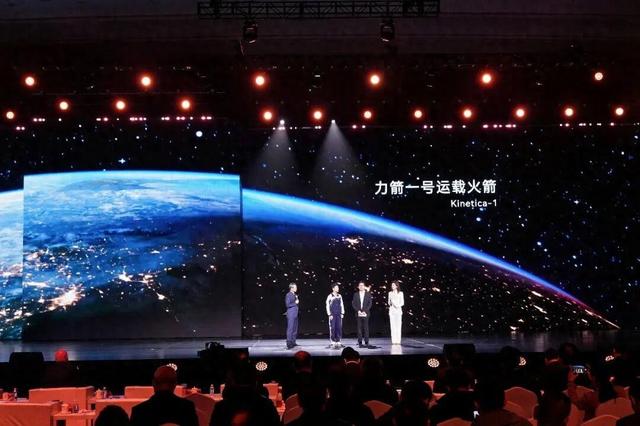
Core Insights - The "2025 Better and Better" International Design Competition emphasizes designs that address national strategies, solve real pain points, and enhance human happiness and dignity [1][12] - The competition showcases innovative designs that integrate national strategy, technological independence, and humanistic care, addressing contemporary issues such as energy security and space exploration [4] Group 1: Awarded Designs - The "Mingyang Tiancheng" floating wind power platform offers a low-cost, reliable, and eco-friendly solution for deep-sea wind power development, transforming typhoons into clean energy [5] - The "Exploration No. 3" research vessel redefines polar research equipment with a 90% autonomy rate, addressing technical monopolies and emphasizing ecological protection [5] - The "Lijian No. 1" rocket significantly reduces launch costs through innovative design, making space technology accessible for agriculture and meteorology, thus embodying the concept of "inclusive sharing" in commercial space [5] Group 2: Design Values - The first value of design is its scope, addressing major contemporary challenges while integrating national strategy and humanistic concerns [4] - The second value is its penetrative ability, enhancing efficiency in various settings while restoring the human scale [7] - The third value is its ability to be unobtrusive, allowing complex technologies to serve human instincts and emotional connections [9] Group 3: Cross-Disciplinary Perspectives - Experts from various fields emphasize the need for design to overcome engineering barriers and serve national projects effectively [10] - Industrial design is highlighted as a crucial engine for cultivating new productive forces, requiring market relevance and competitiveness [10] - The importance of designs that resonate with cultural heritage and human care is underscored, particularly in the medical field [10]
粤开证券以“慢投资”之道陪伴企业成长
Zhong Guo Zheng Quan Bao· 2026-01-28 20:59
Core Viewpoint - Yuekai Securities, a state-owned comprehensive securities company, emphasizes a culture of compliance, integrity, professionalism, and stability, aiming to become a boutique broker in the Guangdong-Hong Kong-Macao Greater Bay Area, focusing on long-term investments in sectors like new energy, biomedicine, commercial aerospace, and low-altitude economy [1][2] Strategic Advantages - The company leverages its "professional judgment" and "state-owned attributes" to support patient capital, focusing on long-term value rather than short-term returns [2][3] - By enhancing its research capabilities, Yuekai Securities aligns its investment decisions with industry trends and project potential, identifying quality targets for long-term partnerships [2][3] Industry Focus - The company is strategically investing in new energy, biomedicine, commercial aerospace, and low-altitude economy, avoiding short-term speculation and focusing on technology-driven enterprises with core technologies and long-term growth potential [5][6] - The global market for AI data center energy storage batteries is projected to grow nearly 20 times from approximately 15 GWh in 2025 to over 300 GWh by 2030, indicating significant opportunities in the new energy sector [4] Investment Practices - Yuekai Securities adopts a "slow investment" approach, which involves patient capital and deep empowerment, allowing companies to navigate challenges and focus on core technology development [5][6] - The company has established a comprehensive empowerment system that integrates investment, investment banking, and wealth management, supporting companies throughout their growth cycles [6][7] Case Studies - In the low-altitude economy, Yuekai Capital led a strategic investment in XPeng Huitian, facilitating the construction of the world's first mass production flying car factory, with over 5,000 orders expected for delivery by 2026 [6][7] - In the biomedicine sector, Yuekai Capital has supported innovative companies like Anjisheng Biotech, accelerating the global clinical development of breakthrough treatments for severe diseases [7] Economic Impact - The company's investments are driving the formation of industrial clusters in commercial aerospace and low-altitude economy, contributing to regional industrial structure optimization and high-quality economic development [7]
独家揭秘中国首个星际航行学院:从近地到深空 星际航行梦何以照进现实
Xin Jing Bao· 2026-01-27 13:13
Core Insights - The establishment of the "Interstellar Navigation" college at the University of Chinese Academy of Sciences marks a significant step in addressing the shortage of top interdisciplinary talent in China's space exploration efforts [1][2][4] - The college aims to integrate various disciplines, including aerospace engineering, physics, chemistry, biology, artificial intelligence, and materials science, to foster collaboration among scientists and engineers [2][3] - A total of 22 new core courses have been added to the curriculum, focusing on cutting-edge topics such as interstellar dynamics, planetary habitability, and interstellar sociology [3][5] Talent Acquisition and Funding - The college is actively recruiting talent with substantial funding support, offering project funding ranging from 10 million to 100 million yuan for individual projects [4][5] - Innovative training models will be implemented, emphasizing real-world problem-solving and practical skills, while moving away from traditional publication-centric evaluation [5] Educational Infrastructure - The college will leverage existing platforms and establish new ones, such as drone simulation and space science satellite teaching platforms, to provide immersive training environments for students [5] - The curriculum will cover a comprehensive knowledge system from space engineering to interstellar navigation, preparing students for various roles in the aerospace sector [5][6] Future Prospects - The next 10 to 20 years are seen as a critical window for breakthroughs in interstellar navigation, with foundational research and technological advancements expected to reshape deep space exploration [6][7] - The college's establishment is anticipated to lead to a surge in innovative outcomes in the aerospace field, contributing to China's competitive edge in space exploration [7]
独家揭秘中国首个星际航行学院:从近地到深空,星际航行梦何以照进现实
Xin Jing Bao· 2026-01-27 12:36
Core Insights - The establishment of the "Interstellar Navigation" college at the University of Chinese Academy of Sciences marks a significant step in addressing the shortage of top interdisciplinary talent in China's space exploration efforts [1][2][4] - The college aims to integrate various disciplines, including aerospace engineering, physics, chemistry, biology, artificial intelligence, and materials science, to foster collaboration among scientists and engineers [2][3] - A total of 22 new core courses have been introduced, focusing on cutting-edge topics such as interstellar dynamics, planetary habitability, and interstellar sociology, enhancing the curriculum to support interdisciplinary learning [3][5] Talent Acquisition and Funding - The college is actively recruiting talent with substantial funding support, offering project funding ranging from 10 million to 100 million yuan for individual research projects [4][5] - Innovative training models will be implemented, emphasizing real-world problem-solving and practical skills, moving away from traditional paper-based evaluation systems [5][6] Future Prospects - The college's initiatives are expected to cultivate a new generation of versatile talents equipped with both solid foundations and strategic vision, crucial for advancing China's space exploration capabilities [6][7] - The next 10 to 20 years are identified as a critical window for breakthroughs in interstellar navigation, with the college positioned to play a pivotal role in transforming the landscape of deep space exploration [7][8]
商业航天资本热潮下的冷思考:万亿赛道破局亟待技术与商业化双线突围
Zhong Guo Zheng Quan Bao· 2026-01-20 23:15
Core Viewpoint - The commercial aerospace sector is experiencing a capital frenzy, with the Wind Commercial Aerospace Theme Index rising nearly 60% in two months, but underlying challenges and risks are becoming apparent in the industry [1][2][3]. Group 1: Market Dynamics - The commercial aerospace concept stocks are witnessing a surge, with the Wind Commercial Aerospace Theme Index increasing nearly 60% from November 21, 2025, to January 20, 2026, and several stocks reaching historical highs [2]. - In the primary market, companies are aggressively pursuing financing, with Micro Nano Star completing 1.56 billion yuan in equity financing in 2025, aimed at enhancing R&D and production capacity [2]. - The IPO process for commercial aerospace companies is accelerating, with Blue Arrow Aerospace's application to raise 7.5 billion yuan accepted by the Shanghai Stock Exchange, and other companies like Zhongke Aerospace and Star River Power also moving forward with their IPOs [2]. Group 2: Financial Performance - Blue Arrow Aerospace reported revenues of 780,000 yuan, 3.95 million yuan, and 4.28 million yuan for 2022, 2023, and 2024 respectively, with net losses of 800 million yuan, 1.188 billion yuan, and 876 million yuan; in the first half of 2025, revenue increased to 36.43 million yuan but still recorded a net loss of 597 million yuan, totaling over 2.8 billion yuan in net losses over three and a half years [3]. Group 3: Industry Challenges - The commercial aerospace industry is still in its early stages, with significant challenges in validating low-cost, reusable heavy-lift rocket technology and improving the mass production capabilities of commercial satellites [4]. - Recent failures in two rocket launches on January 17, 2026, highlight the high-risk nature of aerospace launches and the difficulties in transitioning from single technical breakthroughs to stable mass production [4]. - The submission of over 200,000 satellite orbit frequency applications to the International Telecommunication Union (ITU) has been clarified as a routine operation, emphasizing the need for rational market expectations regarding satellite deployment [5]. Group 4: Future Outlook - Despite current challenges, the long-term development direction of the commercial aerospace industry is becoming clearer, with 2026 expected to be a pivotal year for technological breakthroughs, particularly in reusable heavy-lift rockets [5][6]. - The successful completion of the first launch mission at the Hainan commercial aerospace launch site in January 2026 indicates progress in enhancing launch efficiency [5]. - Industry experts predict that 2026 will witness a transition from quantitative to qualitative changes in the commercial rocket sector, marking China's entry into the era of reusable rockets [5][6].
商业航天资本热潮下的冷思考: 万亿赛道破局亟待技术与商业化双线突围
Zhong Guo Zheng Quan Bao· 2026-01-20 21:52
Core Insights - The commercial aerospace sector is experiencing a capital frenzy, with the commercial aerospace theme index rising nearly 60% in two months, leading to accelerated financing and IPO processes for companies in the industry [1][2] - Despite the enthusiasm, there are signs of rationality emerging, as several mergers and acquisitions in the sector have failed, highlighting the challenges of technological breakthroughs and engineering validation [1][4] Market Trends - The primary market is also witnessing intense competition for commercial aerospace companies, with significant equity financing completed, such as Micro Nano Star's 1.56 billion yuan funding for R&D and capacity expansion [2] - The IPO process for commercial aerospace companies is accelerating, with notable applications like Blue Arrow Aerospace seeking to raise 7.5 billion yuan [2] Financial Performance - Companies in the sector are facing substantial losses despite revenue growth, with Blue Arrow Aerospace reporting revenues of 0.78 million yuan, 0.395 million yuan, and 0.428 million yuan for 2022, 2023, and 2024 respectively, while incurring net losses of 800 million yuan, 1.188 billion yuan, and 876 million yuan [2] Mergers and Acquisitions - Recent attempts at cross-industry mergers and acquisitions have faced obstacles, such as Hualing Cable terminating its agreement with Star Xin Aerospace due to a lack of consensus on core transaction terms [3] - East Pearl Ecology also announced the termination of its acquisition of satellite communication company Kai Rui Xing Tong due to market changes and unresolved commercial terms [3] Technological Challenges - The commercial aerospace industry in China is still in its early stages, with significant challenges in validating low-cost, reusable heavy-lift rocket technology and improving the mass production capabilities of commercial satellites [4] - Recent failures in rocket launches, including two incidents on January 17, underscore the high-risk nature of aerospace development and the difficulties in achieving frequent commercial launches [4] Future Outlook - The long-term development direction of the commercial aerospace industry is becoming clearer, with expectations for significant technological breakthroughs by 2026, particularly in reusable rocket technology [6] - The industry is predicted to transition from quantitative to qualitative changes in commercial rockets, marking China's entry into the era of rocket reusability [6] - The development of integrated space information infrastructure is anticipated to unlock broader application scenarios, following the principle of "infrastructure first, then application" [6]


万亿赛道破局亟待技术与商业化双线突围
Zhong Guo Zheng Quan Bao· 2026-01-20 21:05
Core Insights - The commercial aerospace sector is experiencing a capital frenzy, with the Wind Commercial Aerospace Theme Index rising nearly 60% in two months, leading to accelerated financing and IPO processes in the primary market [1][2] - Despite the enthusiasm, rational signals are emerging, as several mergers and acquisitions in the sector have failed, and two launch failures occurred in one day, highlighting the challenges of technological breakthroughs and engineering validation [1][4] Market Trends - The commercial aerospace concept stocks are expected to see a surge from late 2025 to early 2026, with the Wind Commercial Aerospace Theme Index showing a significant increase of nearly 60% from November 21, 2025, to January 20, 2026 [2] - Companies like Weina Starry Sky completed 1.56 billion yuan in equity financing in 2025, with plans to use the funds for R&D and capacity expansion [2] - The IPO process for commercial aerospace companies is accelerating, with notable applications such as Blue Arrow Aerospace seeking to raise 7.5 billion yuan [2] Financial Performance - Blue Arrow Aerospace reported revenues of 780,000 yuan, 3.95 million yuan, and 4.28 million yuan for 2022, 2023, and 2024, respectively, with net losses of 800 million yuan, 1.188 billion yuan, and 876 million yuan [3] - In the first half of 2025, the company's revenue increased to 36.43 million yuan, but it still recorded a net loss of 597 million yuan, accumulating over 2.8 billion yuan in net losses over three and a half years [3] Industry Challenges - Recent failures in launch attempts, including the Long March 3B rocket and the private company Star River's launch, underscore the high-risk nature of aerospace ventures and the challenges of frequent commercial launches [4] - The submission of over 200,000 satellite orbit frequency applications to the International Telecommunication Union (ITU) was clarified as a routine operation, emphasizing the need for rational market expectations regarding satellite deployment [4] Future Outlook - The commercial aerospace industry is expected to reach a critical development phase, with 2026 predicted to be a year of significant technological breakthroughs, particularly in reusable heavy-lift launch vehicles [5][6] - The industry is anticipated to follow a "first infrastructure, then application" approach, aiming to build integrated space information infrastructure and advance applications in space computing and storage [6] - The chairman of China Aerospace Science and Technology Corporation emphasized the need to seize opportunities in the space economy era and promote high-quality development in commercial aerospace [6]