
深蓝AI模型

Search documents
真正的AI战场在产业
虎嗅APP· 2025-12-16 13:38
Core Insights - The AI industry is experiencing a unique state of high activity as it approaches 2025, with a surge in the release of large models and an emphasis on their enhanced capabilities [2][3] - Despite the technological advancements, the practical experience for users and enterprises is not as seamless as advertised, leading to concerns about the effectiveness of AI investments [4][5] - The true value of AI technology is expected to emerge from real-world applications rather than theoretical models, necessitating integration into industries with low tolerance for error and complex processes [6][7][8] Industry Dynamics - The AI sector is at a critical juncture where the competition based on model parameters is becoming unsustainable; the focus must shift to practical applications and industry-specific adaptations [12][18] - Advanced manufacturing, particularly represented by companies like TCL, is seen as a key area for AI implementation, where the stakes are high due to low tolerance for errors and intricate process chains [13][14][15] Company Case Study: TCL - TCL has invested significantly in R&D, with over 60 billion RMB projected from 2019 to 2024, establishing a robust foundation for AI applications across its diverse product lines [21][22] - The company has developed specialized AI models tailored to its manufacturing processes, such as the Xingzhi model for display technology and the Deep Blue model for photovoltaic applications, which address specific industry challenges [27][23] - TCL's approach emphasizes collaboration with ecosystem partners to create domain-specific models that integrate seamlessly into existing manufacturing processes, enhancing efficiency and reducing costs [23][24] Practical Applications and Outcomes - In the semiconductor display sector, TCL's collaboration with Alibaba Cloud has led to a model that improves defect diagnosis efficiency by approximately 20% and material development efficiency by 30% [31] - In the photovoltaic sector, AI has enabled operators to manage over 300 crystal growth furnaces, increasing efficiency and reducing operational costs by about 21% [34] - These advancements not only enhance B2B operations but also translate into improved consumer products, with TCL's innovations leading to higher market shares and better user experiences [41][43] Future Outlook - The ongoing evolution of large models will continue, but companies lacking real-world applications may struggle to remain relevant in the industry [45][49] - The integration of AI into manufacturing processes is expected to redefine operational efficiencies and user experiences, positioning AI as an essential infrastructure in the future [48][49]


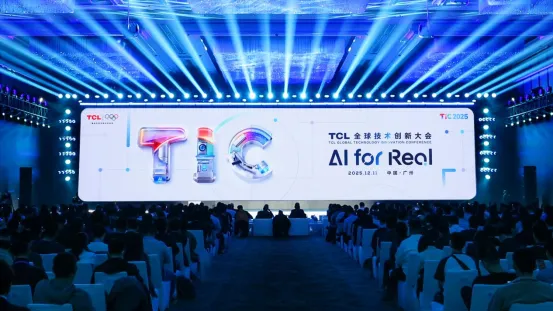
聚焦“AI向实”,2025TCL全球技术创新大会举办
Cai Jing Wang· 2025-12-11 15:42
Core Viewpoint - The 2025 TCL Global Technology Innovation Conference emphasizes the theme "AI for Real," focusing on the practical application of AI in real-world scenarios to enhance efficiency and redefine various aspects of life, including travel, health, and entertainment [1][3]. Group 1: AI Application and Development - TCL is committed to increasing investment in AI technology to drive innovation across the entire supply chain, including research, manufacturing, and operations, aiming for significant value realization [5][7]. - The "X-Intelligence 3.0" model, launched by TCL Huaxing, is the first domain-specific large model in the display field with strong reasoning capabilities, expected to become a central AI intelligence hub for semiconductor display R&D and manufacturing [5][14]. - The ADC (Auto Defect Classification) technology has improved defect detection accuracy from 85% to 95%, showcasing the effectiveness of AI in enhancing manufacturing processes [12][13]. Group 2: AI in Manufacturing - TCL integrates AI into the semiconductor display and new energy photovoltaic industries, enhancing manufacturing, R&D, and operational efficiency, which in turn improves the core value of consumer products [10][19]. - The application of AI in TCL Huaxing has led to cost reductions in large-screen manufacturing and the mass production of printed OLED technology, facilitating the early entry of advanced display technologies into the consumer market [10][18]. - The "Star Intelligence" model ranks first in the display field and significantly enhances product development efficiency, with a 20% improvement in problem-solving and a 30% increase in material development efficiency [14][16]. Group 3: AI in Consumer Products - TCL aims to redefine consumer experiences by returning products to their "first principles," enhancing various smart living scenarios such as travel, health, and entertainment through AI [19][21]. - The AI/AR glasses developed by TCL serve as personal AI assistants, enabling users to explore the world freely [21]. - TCL's smart appliances, such as the new air conditioning system and washing machine, utilize AI to improve health and energy efficiency, providing personalized solutions based on user habits [23][29]. Group 4: Future Outlook - TCL plans to continue responding to the "Artificial Intelligence+" initiative, focusing on original and disruptive technological innovations, with smart manufacturing as a primary battlefield for practical applications of AI [29].
2025TCL全球技术创新大会举办 落实AI应用年内创造综合效益超10亿元
Zheng Quan Shi Bao Wang· 2025-12-11 11:23
Core Insights - The 2025 TCL Global Technology Innovation Conference (TIC2025) focused on the theme "AI for Real," discussing the practical application of AI in real-world scenarios and the creation of tangible value [1][2] - TCL aims to generate comprehensive benefits exceeding 1 billion yuan by advancing AI applications in various sectors by 2025 [1] Group 1: AI Integration in Industry - TCL emphasizes the integration of AI with the real economy, moving beyond theoretical concepts to practical applications that create real value [2] - The company is investing heavily in AI technology to drive innovation across the entire supply chain, including research, manufacturing, and operations [2] - The X-Intelligence 3.0 model, launched by TCL Huaxing, is the first domain-specific large model in the display field, enhancing knowledge systems and learning capabilities [2][3] Group 2: AI Empowerment in Manufacturing - In the semiconductor display and new energy photovoltaic sectors, TCL is integrating AI to enhance manufacturing, research, and operational efficiency [3][4] - The Auto Defect Classification (ADC) technology has improved defect detection accuracy from 85% to 95%, significantly enhancing production efficiency [3] - The X-Intelligence model ranks first in the display field and has improved product development efficiency by 20% and material development efficiency by 30% [3] Group 3: AI Applications in New Energy - TCL Zhonghuan utilizes the Deep Blue AI model for automated operations in single crystal growth, allowing remote control of up to 384 furnaces [4] - The company has achieved zero human contact in the intelligent packaging line, with silicon wafer production waste reduced to below 0.1% [4] Group 4: AI Empowerment in Consumer Products - TCL is redefining consumer experiences through AI in various scenarios, including travel, health, and entertainment [6] - The AI/AR glasses developed by TCL serve as personal AI assistants, enhancing user experiences in exploration [6] - The TCL AiMe robot offers emotional companionship and human-like interaction, representing a new frontier in technology-assisted companionship [6]