温奶器

Search documents
贝因美:应对行业挑战,书写价值竞争新篇章
Jin Tou Wang· 2026-01-28 08:27
Core Viewpoint - The article discusses the challenges and strategies of Beingmate, a prominent Chinese infant formula brand, in the context of a shrinking market and increasing competition, emphasizing its commitment to quality and fair pricing. Group 1: Industry Context - The Chinese infant formula market is experiencing a significant decline, with the number of newborns dropping below 10 million and the market size shrinking from nearly 2000 billion yuan in 2019 to 1635 billion yuan in 2024 [5] - The industry is undergoing a transformation due to stricter regulations and changing consumer preferences, leading to a shift from growth to competition in a saturated market [4][5] - Beingmate's market share has decreased to approximately 1.7%, falling out of the top ten brands in the industry [5] Group 2: Company Strategy - Beingmate has adopted a "genuine and reasonable" strategy, focusing on product quality and fair pricing, with a commitment to only earning a 5% profit margin [10][12] - The company aims to enhance its supply chain management and product quality, as demonstrated by its response to a recent ARA ingredient recall incident [7][18] - Beingmate is diversifying its product offerings beyond infant formula to include organic A2 milk powder, adult nutrition products, and other family health products, aiming to create a comprehensive ecosystem for family health [8][9][10] Group 3: Financial Performance - In 2024, Beingmate reported a revenue increase of 9.7% to 2.773 billion yuan and a net profit growth of 116.92%, indicating a positive turnaround after years of losses [14] - The company has improved its operational efficiency, with a 7.51% decrease in sales expenses while increasing targeted advertising on platforms like Xiaohongshu and Douyin [12][14] - Beingmate's financial stability is reflected in its cash reserves of 1.543 billion yuan and manageable short-term debt of 1.123 billion yuan as of the first quarter of 2025 [14] Group 4: Market Positioning - Beingmate ranks among the top four domestic infant formula brands, indicating a solid brand foundation and market recognition despite recent challenges [14] - The company's focus on quality and consumer trust is crucial in a market where consumers are increasingly discerning about product safety and nutritional value [15][18] - The "genuine and reasonable" approach is seen as a potential way to rebuild consumer trust and differentiate itself in a highly competitive market [19][22]

货真价实,为爱坚守,贝因美以真诚重塑市场格局
Sou Hu Wang· 2026-01-20 04:58
Core Insights - The article discusses the complex history and current challenges faced by the Chinese domestic milk powder brand, Beingmate, particularly in the context of declining birth rates and increased competition in the industry [1][2][5]. Group 1: Industry Context - The Chinese milk powder market has shifted from growth to a competitive environment due to a decline in newborn registrations, with the market size shrinking from nearly 2000 billion yuan in 2019 to 1635 billion yuan in 2024 [5]. - Regulatory changes, including the implementation of stricter national standards for milk powder in 2023, have raised industry entry barriers and prompted supply-side reforms [4]. - The market has seen a consolidation trend, with leading brands like Feihe, Yili, and Junlebao expanding their market shares, while Beingmate's market share has dropped to approximately 1.7%, falling out of the top ten in the industry [5]. Group 2: Beingmate's Strategy - Beingmate has adopted a "genuine and affordable" strategy, emphasizing product quality and a commitment to only earning a 5% profit margin, aiming to build consumer trust and long-term relationships [10][12]. - The company is focusing on supply chain management and product safety, as highlighted by its response to a recent recall incident involving ARA ingredients, ensuring that its products use different, safe sources [7][8]. - Beingmate is diversifying its product offerings beyond infant formula to include organic A2 milk powder, baby food, and family health products, aiming to create a comprehensive ecosystem for family nutrition [9][10]. Group 3: Financial Performance - In 2024, Beingmate reported a revenue increase of 9.7% to 2.773 billion yuan, with a significant net profit growth of 116.92%, indicating a positive trend in operational efficiency [14]. - The company has reduced sales expenses by 7.51% while strategically increasing advertising on platforms like Xiaohongshu and Douyin, reflecting a shift towards more effective marketing [12][14]. - Despite facing debt issues from its controlling shareholder, Beingmate has maintained stable operations, with cash reserves of 1.543 billion yuan and manageable short-term debt [14]. Group 4: Market Position and Future Outlook - Beingmate ranks among the top four domestic milk powder brands, indicating a solid brand foundation and market recognition despite recent challenges [14]. - The company's focus on product safety, scientific formulation, and consumer trust is crucial in a market where consumers are increasingly discerning about quality and brand values [15][18]. - The commitment to a "genuine and affordable" approach may resonate with price-sensitive consumers, especially in light of new childcare subsidy policies that enhance consumer focus on value [16][18].
3600元育儿补贴,能撬动什么?
首席商业评论· 2025-08-02 04:14
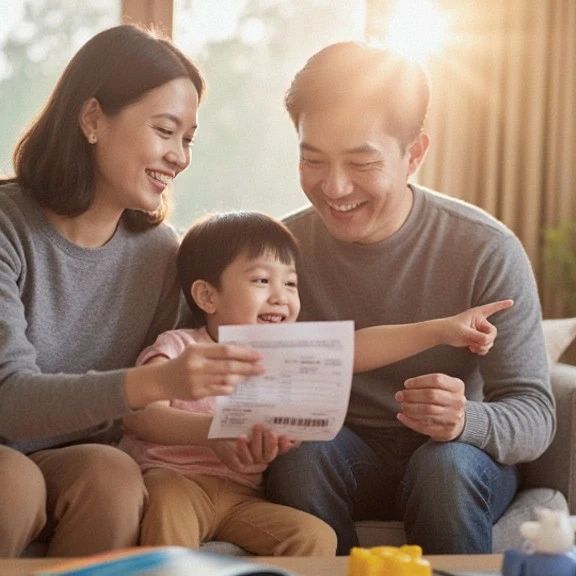
Core Viewpoint - The introduction of a nationwide child-rearing subsidy in China aims to stimulate birth rates and alleviate the financial burden on families, potentially creating a significant consumption market in the mother and baby sector [4][8][12]. Group 1: Subsidy Details - Starting January 1, 2025, families with children under three years old will receive an annual subsidy of 3,600 yuan per child, regardless of the number of children [4][6]. - The total annual subsidy scale is estimated at 72 billion yuan, with 60% expected to be spent on mother and baby consumption, leading to an annual consumption increase of approximately 43.2 billion yuan in the sector [6][8]. - The subsidy is designed to be accessible, with online application systems and some regions already implementing automatic disbursement methods [9]. Group 2: Market Impact - The subsidy is expected to create a consumption increase of around 0.2 percentage points in social retail sales, particularly benefiting essential consumer goods like baby food [11][12]. - The policy is anticipated to activate related industries, potentially generating over 300 billion yuan in additional consumption across sectors such as healthcare and education [11][12]. Group 3: Industry Opportunities - The mother and baby market will see immediate benefits, especially in essential products like formula and diapers, where the subsidy can cover about 30% of expenses [19][20]. - There is a growing opportunity in service consumption, including parent-child travel and childcare services, with the childcare market projected to reach 232.3 billion yuan by 2030 [19][20]. - Companies are encouraged to focus on high-value essential products and enhance user experience through partnerships and improved service delivery [24][26]. Group 4: Long-term Considerations - The subsidy is viewed as a starting point for a broader supportive environment for families, with additional measures needed in childcare services, education, and housing to truly encourage higher birth rates [17][26]. - Companies must innovate and avoid dependency on subsidies, focusing on capturing consumer trends and addressing parenting challenges to maintain competitive advantages in the evolving market landscape [26].