火箭发动机推力室内壁产品

Search documents
明确里程碑节点,商业火箭未盈利企业登科“说明书”来了
Di Yi Cai Jing· 2025-12-26 11:49
Core Viewpoint - The Shanghai Stock Exchange has released guidelines for commercial rocket companies to issue IPOs on the Sci-Tech Innovation Board, providing a pathway for these companies to access capital markets and support technological innovation in the aerospace sector [1][2]. Group 1: Guidelines for Commercial Rocket Companies - The guidelines specify that commercial rocket companies must demonstrate significant technological advantages, including the successful launch of a medium to large reusable rocket payload into orbit as a milestone achievement [1][2][3]. - Companies are required to have relevant qualifications for research and manufacturing, and must obtain launch permits before conducting rocket launches [3]. - The guidelines emphasize the importance of market positioning, requiring companies to have a clear target market and a competitive edge over rivals, along with a feasible commercialization plan [3][4]. Group 2: Industry Context and Strategic Importance - The commercial aerospace sector is recognized as a strategic emerging industry in China, with significant government support reflected in recent economic work reports and action plans aimed at enhancing the development of commercial space capabilities [6][7]. - There are currently over 20 commercial rocket companies in China, many of which have successfully launched solid or small liquid rockets, indicating a growing industry [6][7]. - The commercial rocket industry is seen as crucial for the development of satellite constellations and overall high-quality growth in the commercial aerospace sector, addressing the current imbalance of "many satellites but few rockets" [7][8].
商业航天燃起来了,资本竞逐万亿新赛道
3 6 Ke· 2025-12-17 10:09
Core Insights - The commercial space industry, encompassing rocket launches, satellite manufacturing and operation, and space tourism, is experiencing rapid growth with a potential market size reaching trillions [1][2] - Investor sentiment in the A-share market has been significantly influenced by commercial space concept stocks, with several companies experiencing substantial stock price increases in December 2025 [1][2] Investment and Market Activity - The commercial space sector has seen a surge in investment, with multiple companies like Tongguang Cable and Zhongsteel Luonai hitting trading limits [1] - Significant stock price increases were noted, such as Tianli Composite rising by 18.49% on December 16, and a cumulative increase of nearly 200% over seven trading days [1] - The establishment of "Space Technology City" in Beijing by major state-owned enterprises indicates a strong commitment to developing the commercial space sector [1][2] Industry Developments - The Beijing Economic-Technological Development Area has become a key hub for commercial space enterprises, with a focus on rocket development and satellite applications [3] - A 10-point policy initiative was launched to support the commercial space industry, including a 10 billion yuan investment fund and rewards for successful launches [3] - Local governments are actively promoting commercial space development, with Guangdong aiming for a 300 billion yuan industry scale by 2026 [4] Company Strategies and Innovations - Companies are adopting diverse strategies, with some focusing on high-frequency, low-cost launch services while others are specializing in niche areas within the industry [5][6] - Innovations such as the intelligent framework recovery system by Linghang Star Arrow aim to reduce costs and improve efficiency in rocket design [6] - New companies are emerging, with over 15 commercial space-related firms established in August 2025 alone, indicating a growing interest in the sector [5] Capital Market Dynamics - The capital market is becoming more discerning, with investors seeking companies that can deliver tangible results within the commercial space industry [9] - Companies like Sry New Materials and Superjet Co. are experiencing increased orders and stock price appreciation due to their involvement in the commercial space sector [9][10] - The transition from project-based to assembly line production in satellite manufacturing is reshaping the industry, leading to increased efficiency and order volumes [10] National and Private Sector Collaboration - State-owned enterprises are shifting their focus to commercial markets, with adjustments in their operational structures to enhance competitiveness [13][15] - Collaborations between private companies and state-owned enterprises are becoming more common, with shared resources and expertise aimed at reducing costs and improving efficiency [14][15] - The establishment of "Space Technology City" is intended to foster an open and innovative ecosystem for the commercial space industry, emphasizing collaboration over competition [15]
商业航天燃起来了 资本竞逐万亿新赛道
经济观察报· 2025-12-17 08:50
Core Viewpoint - The commercial space industry, encompassing rocket launches, satellite manufacturing and operation, and space tourism, is experiencing rapid growth and transformation, with a potential market size reaching trillions of yuan, marking a significant shift from policy discussions to a vibrant economic sector by the end of 2025 [1][3]. Market Dynamics - Investor sentiment has been significantly boosted by commercial space concept stocks, with notable price surges in companies like Tongguang Cable and Zhonggang Luoni, reflecting a strong market interest [2]. - The establishment of "Space Technology City" in Beijing, in collaboration with major state-owned enterprises, indicates a strategic push towards developing a robust commercial space ecosystem [2][5]. Government Initiatives - Local governments are actively promoting the commercial space sector, with Guangdong aiming for a 300 billion yuan industry scale by 2026 and offering financial incentives for companies setting international standards [6]. - The Beijing Economic and Technological Development Zone has launched a 10-point plan to support the commercial space industry, including a 10 billion yuan investment fund [5]. Industry Developments - The number of new commercial space enterprises has surged, with over 15 companies established in August 2025 alone, indicating a growing interest in the sector [7]. - Major companies like Star Glory and Blue Arrow are collaborating with local state-owned enterprises to explore ecosystem development [5]. Capital Involvement - The commercial space sector has seen a rise in financing activities, with significant funding rounds for leading companies like Star Glory and Tianbing Technology [8]. - The inclusion of commercial space in the Sci-Tech Innovation Board's listing criteria has opened new avenues for funding, allowing unprofitable companies with core technologies to access capital markets [8]. Competitive Landscape - Companies are adopting diverse strategies, with some focusing on high-capital, high-risk rocket launches, while others are carving niches in specialized segments of the industry [9][10]. - The trend of "R&D in Beijing, production in the Yangtze River Delta" is becoming common among commercial space firms, optimizing their operational efficiency [12]. Market Evaluation - The capital market is increasingly scrutinizing commercial space companies, emphasizing the need for tangible performance and profitability [14]. - Companies like Srey New Materials and Superfast Co. are experiencing growth due to increased orders from the commercial space sector, reflecting a positive market response [15][16]. Role of State-Owned Enterprises - State-owned enterprises are transitioning to compete in the commercial market, focusing on market competitiveness and restructuring to align with commercial objectives [19]. - Collaborations between state-owned and private enterprises are becoming more prevalent, with state-owned firms leveraging their technological advantages while private firms offer efficiency and cost control [20][21]. Future Outlook - The commercial space market is projected to reach $680.25 billion globally, with China's market potentially exceeding 2.5 trillion yuan, highlighting the immense growth potential [21]. - The integration of state-owned and private enterprises is expected to foster innovation and efficiency, positioning them for success in the evolving commercial space landscape [22].



商业航天燃起来了 资本竞逐万亿新赛道
Sou Hu Cai Jing· 2025-12-17 03:21
Group 1 - The commercial aerospace sector in China is experiencing significant growth, with multiple stocks in the sector seeing substantial price increases in December 2025, indicating strong investor sentiment [2][3] - Major developments include the establishment of the "Aerospace Technology City" in Beijing, which aims to enhance collaboration among key players in the industry, including state-owned enterprises and private companies [3][26] - The market for commercial aerospace activities, which includes rocket launches, satellite manufacturing, and space tourism, is projected to reach a scale of trillions of yuan, reflecting a rapid acceleration in industrialization [3][4][5] Group 2 - Local governments are actively promoting the commercial aerospace industry, with Guangdong aiming for a related industry scale of 300 billion yuan by 2026 and other provinces like Shandong and Henan also prioritizing aerospace in their development plans [9][10] - The establishment of a 10 billion yuan industry investment fund in Beijing's Economic and Technological Development Zone is part of the efforts to support the commercial aerospace sector [8] - The number of new commercial aerospace companies has surged, with over 15 new firms established in August 2025 alone, indicating a robust entrepreneurial environment [10] Group 3 - The China Securities Regulatory Commission has included commercial aerospace in the fifth set of listing standards for the Sci-Tech Innovation Board, allowing unprofitable companies with core technologies to go public [11] - Companies are adopting diverse strategies, with some focusing on core rocket launch capabilities while others are specializing in niche areas within the aerospace supply chain [12][13] - The trend of "R&D in Beijing, production in the Yangtze River Delta" is becoming common among commercial aerospace firms, optimizing their operational efficiency [16][17] Group 4 - The capital market is becoming more discerning, with investors seeking companies that can deliver tangible results within the commercial aerospace supply chain [18] - Companies in upstream materials and core components are experiencing increased orders, reflecting a growing demand as the industry expands [19][20] - The shift from project-based satellite production to a more streamlined assembly line approach is transforming the satellite manufacturing sector, leading to increased efficiency and order volumes [21] Group 5 - State-owned enterprises are adapting to market dynamics, with the China Aerospace Science and Technology Corporation restructuring to focus on commercial market competitiveness [24][26] - Collaborations between state-owned and private enterprises are becoming more common, with private firms providing efficiency and cost advantages in non-core areas of the aerospace supply chain [25][26] - The establishment of the "Aerospace Technology City" aims to create an open and innovative industrial ecosystem, emphasizing the importance of collaboration across the aerospace sector [26][27]


预计2026年商业航天业务营收实现较快增长 商业航天概念股20CM涨停 本周机构密集调研相关上市公司
Xin Lang Cai Jing· 2025-12-14 13:57
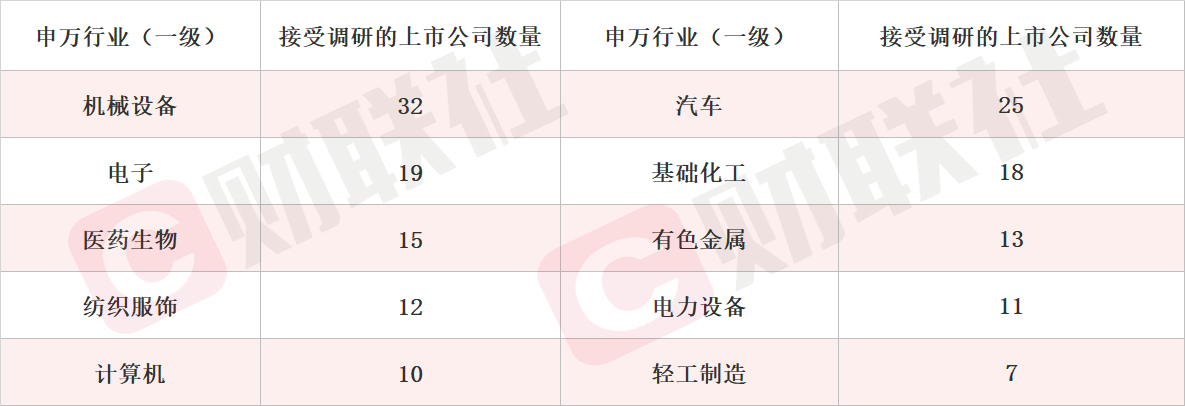
Core Insights - A total of 214 listed companies in the Shanghai and Shenzhen markets have undergone institutional research this week, with the machinery, automotive, and electronics sectors receiving the highest frequency of attention [1] Industry Summary - **Top Industries by Institutional Research**: - Machinery Equipment: 32 companies - Automotive: 25 companies - Electronics: 19 companies - Basic Chemicals: 18 companies - Pharmaceutical Biology: 15 companies - Non-ferrous Metals: 13 companies - Textile and Apparel: 12 companies [2] - **Subsector Focus**: - The top three subsectors attracting institutional interest are automotive parts, specialized equipment, and general equipment. Additionally, interest in industrial metals and home textiles has increased [2] Company Summary - **Most Frequently Researched Companies**: - Both Boying Special Welding and Oke Yi have been researched 4 times each - The top three companies by institutional visit reception are Zhongke Shuguang and Haiguang Information, each receiving 341 visits, followed by Weichuang Electric with 112 visits [3][5] - **Market Performance**: - Companies in the commercial aerospace sector have shown active market performance, with Chaojie Co. reporting significant business developments in commercial rocket manufacturing and expected revenue growth in 2026 [5][6] - Huazhong Cable has secured a market share of 70%-80% in supporting major rocket series and has also reported strong market performance [8] - Sry New Materials has achieved over 17% increase in stock price following successful tests related to reusable rocket engines [10] - Hualaiwo has seen a 20% increase in stock price due to a surge in orders for satellite testing systems [12]


盘前公告淘金:摩尔线程将发布新一代GPU架构,复星医药拿下辉瑞1.5亿美元里程碑付款,莱茵生物控股股东筹划控制权变更
Jin Rong Jie· 2025-12-10 08:41
Group 1: Important Developments - Moore Threads is set to release a new generation of GPU architecture [1] - Jiechuan Intelligent has launched an all-in-one machine product in collaboration with Moore Threads for the education sector [1] - Hengyin Technology reports that multiple banks are actively testing domestic GPU chips with a positive procurement attitude [1] - Fosun Pharma's subsidiary, Yaoyou Pharmaceutical, has signed a licensing agreement with Pfizer [1] - Unisoc's automotive domain control chip THA6 has entered mass production [1] - Xi'an Yicai expects total production capacity to exceed 1.2 million pieces per month by 2026, with products already in mass production for advanced DRAM storage chips [1] - Zhongtian Rocket is a supplier for Lingkong Tianxing [1] - Holleywo has seen rapid growth in satellite testing system orders, primarily from commercial aerospace satellite manufacturers [1] - Srey New Materials' rocket engine thrust chamber products have successfully assisted Blue Arrow Aerospace's reusable launch vehicle testing [1] - Guokai Military Industry provides comprehensive support services for commercial aerospace companies, including rocket research and design [1] - Hualing Cable supplies products for Long March and Shenzhou series rockets [1] - Guanglian Aviation covers major domestic rocket models including Long March, Zhuque, and Tianlong [1] - Triangle Defense has received multiple orders for rocket structural components [1] - Zhongke Xingtou will collaborate with Zhongke Shuguang to build a space computing network [1] - Yiwan Yichuang is exploring cooperation possibilities in e-commerce and local industries with relevant business departments in Fujian Province [1] - Jiechuan Intelligent's AI electromagnetic network patrol dog has generated certain orders and revenue [1] - Huagong Technology has shipped small batch orders of 1.6T optical modules [1] Group 2: Investments & Contracts - Tongyizhong plans to invest approximately 198 million yuan to establish a 2,400-ton annual production project for ultra-high molecular weight polyethylene fibers, expanding applications in humanoid robots [2] - Longi Green Energy expects a maximum daily balance limit of 30 billion yuan for entrusted wealth management using its own funds by 2026 [2] - Xingfu Electronics intends to invest 480 million yuan to build a 40,000-ton annual electronic-grade phosphoric acid project [2] - Longjiang Transportation's subsidiary plans to invest 2.679 billion yuan in a graphite mining and selection joint project [2] Group 3: Performance - China Life's total premium income exceeded 700 billion yuan in the first 11 months of this year [3]